
Institute for European Studies
Coping with Defeat: Sunni Islam, Roman Catholicism and the Modern State
October 20, 2023
3:00 pm
Uris Hall, G08
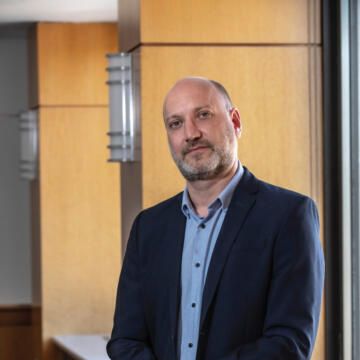
This lecture, based on the book with the same title, presents a historical panorama of the Islamic and Catholic political-religious empires and exposes striking parallels in their relationship with the modern state. Drawing on interviews, site visits, and archival research in Turkey, North Africa, and Western Europe, Jonathan Laurence demonstrates how, over hundreds of years, both Sunni and Catholic authorities experienced three major shocks and displacements—religious reformation, the rise of the nation-state, and mass migration. As a result, Catholic institutions eventually accepted the state’s political jurisdiction and embraced transnational spiritual leadership as their central mission. Laurence reveals an analogous process unfolding across the Sunni Muslim world in the twenty-first century.
Jonathan Laurence is Professor of Political Science and Director of the Clough Center for the Study of Constitutional Democracy at Boston College, and an affiliate of the Center for European Studies at Harvard. Prof. Laurence's latest book is Coping with Defeat: Sunni Islam, Roman Catholicism and the Modern State (Princeton University Press, 2021). Previously, The Emancipation of Europe's Muslims, was published by Princeton University Press in 2012, and received awards for Best Book in religion and politics and migration and citizenship from the American Political Science Association. Professor Laurence is a former fellow of the American Academy in Berlin, Wissenchaftszentrum Berlin, Transatlantic Academy at the German Marshall Fund, Fafo Institute/Norwegian Research Council, LUISS University-Rome, Sciences Po-Paris and the Brookings Institution (nonresident, 2003-2018).
Additional Information
Program
Einaudi Center for International Studies
Institute for European Studies


N. K. Jemisin: Building Our World Better

October 4, 2023
5:30 pm
Cornell University, Rhodes Rawlings Auditorium, Klarman Hall
Bartels World Affairs Lecture
Fantasy author N. K. Jemisin discusses how she learned to build unreal worlds by studying our own—and how we might in turn imagine a better future for our world, and reshape it to fit that dream.
Jemisin's lecture kicks off The Future—a new Global Grand Challenge at Cornell. We invite thinkers across campus to use their imaginations to reach beyond the immediate, the tangible, the well-known constraints. How can we use our creativity to plan and build for a future that is equitable, sustainable, and good? Learn more on October 4.
After her talk, Jemisin joins a panel of distinguished Cornell faculty to explore how we can take a brave leap into the visionary future. What can we collectively achieve when we focus on "what we want," rather than "what I can do"? And when we've imagined a better future for our world, how do we chart the path—starting today—with practical steps to take us there?
Anindita Banerjee, Associate Professor of Comparative Literature, College of Arts and SciencesJohn Albertson, Professor of Civil and Environmental Engineering, College of EngineeringKaushik Basu, Carl Marks Professor of International Studies, Professor of Economics, A&S***
A reception with refreshments will follow the lecture and panel.
Lecture: 5:30 | Rhodes Rawlings Auditorium, Klarman HallThe Future panel, featuring Jemisin and Cornell faculty: 6:15Reception and book signing: 7:00-8:00 | Groos Family AtriumReserve your free ticket for the in-person watch party.
General admission seating is now sold out. By registering for a watch party ticket, you will have an in-person seat reserved in an adjacent classroom near the auditorium where the lecture will be livestreamed. Please follow signage upon your arrival. All watch party attendees are invited to join the post-lecture reception and book signing at 7:00 in Groos Family Atrium, Klarman Hall.
Livestream: For Local, National, and International Viewers
The lecture and panel will be livestreamed. Register to attend virtually at eCornell.
***
How are N. K. Jemisin’s novels acts of political resistance? Read a Bartels explainer by Anindita Banerjee.
***
Book Signing
Ithaca’s cooperatively owned independent bookstore, Buffalo Street Books, will be selling a wide selection of N. K. Jemisin’s books after the lecture.
Meet N. K. Jemisin and get your book signed at the reception!
***
About N. K. Jemisin
N. K. Jemisin is the first author in the science fiction and fantasy genre’s history to win three consecutive Best Novel Hugo Awards, for her Broken Earth trilogy. Her work has also won the Nebula and Locus Awards. She was a 2020 MacArthur Fellow. Jemisin’s most frequent themes include resistance to oppression, the inseverability of the liminal, and the coolness of Stuff Blowing Up. She has been an advocate for the long tradition of science fiction and fantasy as political resistance and previously championed the genre as a New York Times book reviewer. She lives and works in New York City.
***
About Global Grand Challenges at Cornell
Global Grand Challenges bring together Cornell's world-class strengths—vision, expertise, people, and resources—in a multiyear focus to understand humanity's most urgent challenges and create real-world solutions. Global Cornell organizes and supports related research collaborations, courses and academic programs, student experiences, campus events, and more. Cornell's first Global Grand Challenge is Migrations, launched in 2019.
***
About the Bartels World Affairs Lecture
The Bartels World Affairs Lecture is a signature event of the Mario Einaudi Center for International Studies. This flagship event brings distinguished international figures to campus each academic year to speak on global topics and meet with Cornell faculty and students, particularly undergraduates. The lecture and related events are made possible by the generosity of Henry E. Bartels ’48 and Nancy Horton Bartels ’48.
Additional Information
Program
Einaudi Center for International Studies
Reppy Institute for Peace and Conflict Studies
East Asia Program
Southeast Asia Program
Latin American and Caribbean Studies
Institute for African Development
Institute for European Studies
South Asia Program
Graduate Fellows 2026-27
The Institute for European Studies aims to become a focal point at Cornell for an interdisciplinary European Studies research community.
Priyanka Sen

IES Graduate Fellow 2024-2025
Priyanka Sen is a Ph.D. candidate in the HAUD program. Her research investigates architectural entanglements with spatial geographies, migration and environmental histories, focusing on the South Asian diaspora and its intertwinement with settlement, citizenship, and the transnational immigrant experience.
Additional Information
Four Maps Explain How Sweden and Finland Could Alter NATO’s Security

Cristin Florea, IES/PACS/GPV
Cristina Florea, assistant professor of history, discusses Finland's relationship with Russia.
Additional Information
The West Attacked Russia’s Economy. The Result Is Another Stalemate.

Nicholas Mulder, IES/PACS
Nicholas Mulder, professor of history, discusses the West's attempt to sanction Russia.
Additional Information
Lingua Mater Competition Deadline
November 9, 2023
12:00 am
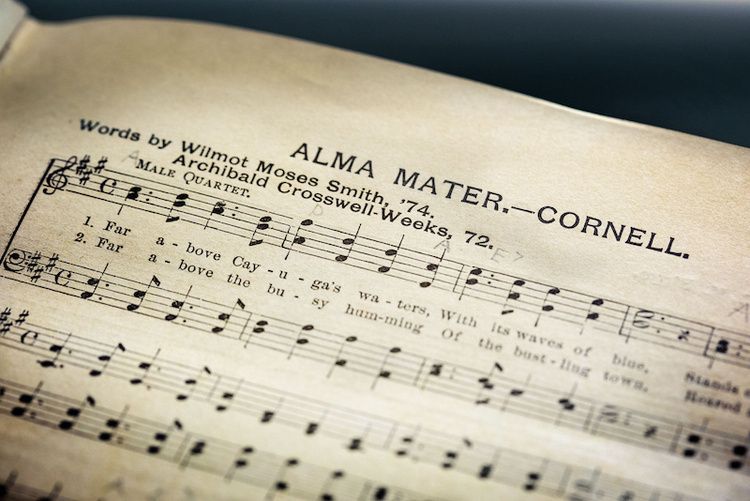
The Lingua Mater competition invites students and alumni to translate Cornell's Alma Mater into a different language and submit a video of the performed translation. The inaugural Lingua Mater alumni competition took place in 2018 as part of Cornell's Global Grand Challenges Symposium. The top videos received cash prizes.
2023 competition details
Can you translate Cornell’s Alma Mater into your mother tongue (or a language you are learning/have learned at Cornell) and sing it? We invite you to translate “Far Above Cayuga’s Waters” and submit a video of you (and your friends!) performing it, wherever you may be!
Translations do not need to be exact or perfectly in meter but should capture the feel and tune of our university’s Alma Mater. As is customary, include the first verse, refrain, second verse, and refrain in your video submission (for guidance, listen to a performance and read the lyrics).
Video submissions need to be MP4 files at 1920 x 1080 (1080p), in landscape mode with an aspect ratio of 16:9. Please ensure that you have copyright permission for any images/videos you use.
Entries will be reviewed by a panel of judges. Submissions will be judged equally on the translation, the musical quality, and the creativity in visual presentation.
The top three student entries will win cash prizes, the top alumni entry will receive financial support and Cornell swag for a local alumni event.
Winners will be announced during International Education Week (November 13-17, 2023), and the top video will be posted online that week. For alumni, be sure to subscribe to our weekly newsletter to stay in the know of this competition and international alumni activities.
Student entries may be submitted by any registered Cornell student or group of students.
Alumni entries may be submitted by any Cornell alumni groups outside of the United States and Canada.
Submission deadline: Thursday, November 9, 2023
SUBMIT YOUR VIDEO AND LYRICS HERE
Please contact Angelika Kraemer, Director of the Language Resource Center, if you have any questions.
The Lingua Mater competition is co-sponsored by the Language Resource Center, the Office of the Vice Provost for International Affairs, and the Office of International Alumni Relations.
Additional Information
Program
Einaudi Center for International Studies
Southeast Asia Program
Institute for European Studies
South Asia Program
How Russia's Invasion of Ukraine is Changing Europe

October 26, 2023
12:00 pm
Uris Hall, G08
Mitchell A. Orenstein, Professor of Russian and East European Studies at the University of Pennsylvania, will discuss how Russia's full-scale invasion of Ukraine on February 24, 2022 changed Europe. It shattered any remaining illusions that the EU could achieve peaceful coexistence with Russia through greater integration and united Europe instead around NATO. While Europe quickly reshaped its energy strategy and imposed unified sanctions on Russia, the invasion revealed Europe's continuing reliance on the United States for basic security and initiated a period of soul searching about Europe's lack of "strategic autonomy." Central and East European states that had long warned of Russia's violent intentions rose in importance, while France and Germany saw their influence diminished after decades of accommodating Russia. European leaders had to admit that they had been wrong to ignore the warnings of front-line states. In addition, the invasion reignited European Union and NATO enlargement, with Finland and Sweden joining NATO and Ukraine and Moldova offered EU candidate status. The result of these trends is a more geopolitical Europe with a sharper dividing line between an internal zone of integration and an external zone of power projection.
About the speaker
Dr. Mitchell Orenstein is Professor of Russian and East European Studies at the University of Pennsylvania and Senior Fellow at Foreign Policy Research Institute. His sole-authored and co-authored works on the political economy and international affairs of Central and Eastern Europe have won numerous prizes. His most recent book, Taking Stock of Shock (Oxford University Press, 2021), co-authored with Prof. Kristen Ghodsee, evaluates the social consequences of the 1989 revolutions that ended communism in Central and Eastern Europe and the former Soviet Union. Orenstein is also the author of The Lands in Between: Russia vs. The West and the New Politics of Hybrid War (Oxford University Press, 2019), a study of how intensifying geopolitical conflict has shaped politics in the lands in between Russia and the West.
Cohosts
Institute for European Studies
Judith Reppy Institute for Peace and Conflict Studies
Additional Information
Program
Einaudi Center for International Studies
Reppy Institute for Peace and Conflict Studies
Institute for European Studies