
Institute for European Studies
The Return of the Native: Can Liberalism Safeguard Us Against Nativism?
October 2, 2023
5:30 pm
Uris Hall, G08
This talk, based on the 2022 book with the same title, explores how diverse phenomena, such as populism, anti-black racism, and islamophobia in various countries share the same core: nativism. It Includes an in-depth, original analysis of political developments in three countries: the US, France, and the Netherlands, some of the most liberal countries in the world, and shows why liberalism is not a safeguard against the rise of nativism. The talk offers a distinct approach from alternate explanations of the rise of far-right nativist discourses.
Speaker
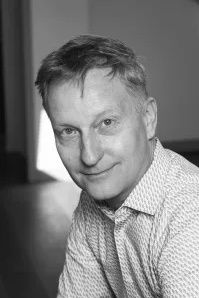
Jan Willem Duyvendak is the Director of the Netherlands Institute for Advanced Study in the Humanities and Social Sciences (NIAS-KNAW) and Distinguished Research Professor of Sociology at the University of Amsterdam (UvA). His main fields of research currently are belonging, urban sociology, 'feeling at home' and nativism.
Additional Information
Program
Institute for European Studies
Einaudi Center for International Studies
40 New York State Teachers Attend ISSI

Testimonies of Migration in the Classroom
Forty elementary, middle, and high school educators from across New York State participated in the 2023 International Studies Summer Institute (ISSI), hosted annually by the Mario Einaudi Center for International Studies.
This year’s theme, “Testimonies of Migration,” explored personal narratives from migrants and offered resources for teachers to engage with migrant stories and students in a culturally responsive way.
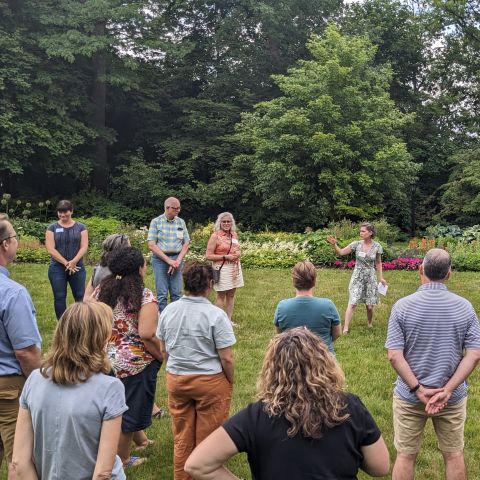
Teachers learned from scholars and experts in panel discussions, networked with each other in breakout groups, and engaged in hands-on activities around the Cornell campus.
Panels and workshops included scholars and experts from the Migrations initiative, who cosponsored the event, and community partners who work with migrant populations in the state.
A morning panel discussion on ethical and culturally responsive engagement preceded a conversation with Mary Jo Dudley of the Cornell Farmworker Program on supporting immigrant families in schools.
"I personally felt this was the best workshop I have attended. The material was so tangible and relatable regardless of population taught."
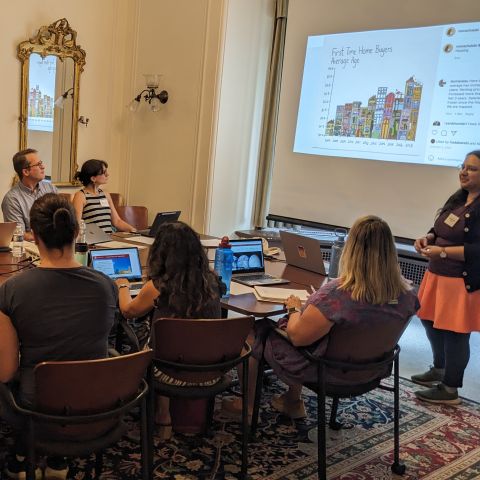
Afternoon sessions brought teachers together in small groups to explore migrant narratives using hands-on, project-based learning. A session led by Nausheen Husain, a journalist and assistant professor in the Newhouse School of Public Communications at Syracuse University, shared tools for exploring data sets with students to better understand people’s experience of migration.
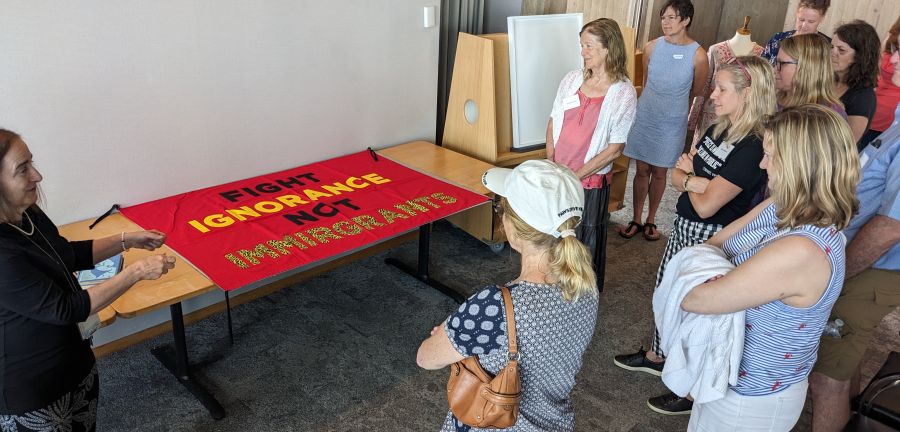
The final session of the day took place at the Herbert F. Johnson Museum of Art. Inspired by a past museum exhibit called "how the light gets in," museum staff displayed artwork on migration ranging from a collaborative handmade dress to that might influence curriculum in teachers' classrooms.
Among artworks from Ai Weiwei, Mohamad Hafez, and Meschac Gaba, participants were especially struck by the collaborative fabric piece “DAS KLEID / THE DRESS” by Elisabeth Masé. A group of immigrant women created this piece, embroidering their hopes for the future with red thread on tan cloth, which was then sewn into a dress.
"I am excited to incorporate what I have learned into my lessons. I also feel more at ease teaching about other cultures. I realize I don't have to know everything and can learn with my students about new cultures."
View more photos from the institute on Facebook.
ISSI was sponsored by the Einaudi Center, East Asia Program, Institute for African Development, Institute for European Studies, Latin American and Caribbean Studies, South Asia Program, Southeast Asia Program, Migrations: A Global Grand Challenge, the South Asia Center at Syracuse University, TST-BOCES, and the U.S. Department of Education Title VI Program.
Additional Information
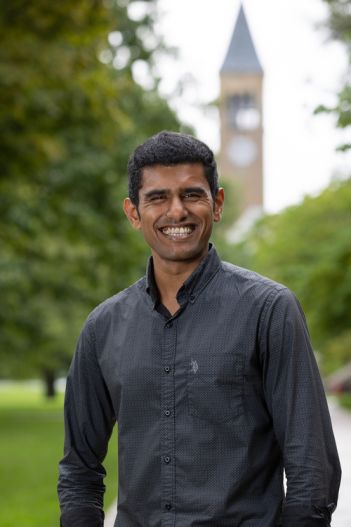
"Your Past is My Present": The Case of Ukraine
October 5, 2023
12:00 pm
Uris Hall, G08
Does evoking historical parallels change public opinion regarding foreign policy?
Seeking international support to counter Russia’s February 2022 invasion, Ukrainian President Volodymyr Zelensky has publicly addressed foreign politicians and public in several democratic nations. Media coverage paid special attention to his explicit comparison of Ukraine’s current situation to salient historical events in the audiences' countries.
Since public opinion can influence foreign policy decisions in democracies, we investigate whether evoking the past of the audience's country effectively increases popular support for aiding Ukraine.
Anil Menon and colleagues conducted survey experiments simultaneously in four countries where Zelensky delivered speeches rich in historical parallels – Germany and Israel (Holocaust), United Kingdom (WWII), and the United States (Pearl Harbor and 9/11). Exposure to excerpts from Zelensky's speeches triggered distinctive emotional reactions in all countries consistent with the content tailored for each country.
Only in Israel did exposure increase public support for bolstering Ukraine’s war efforts. Thus, while rhetoric emphasizing past-present commonalities might evoke emotional reactions, its persuasive potential appears limited.
About the Speaker
Anil Menon is an Assistant Professor of Political Science at the University of California, Merced. Previously, he was a Klarman Postdoctoral Fellow in the Department of Government at Cornell University and a Visiting Research Fellow at the Center for the Resolution of Intractable Conflict at Harris Manchester College, Oxford University. He earned his Ph.D. in Political Science at the University of Michigan – Ann Arbor.
His research is motivated by three broad questions. How do traumatic experiences – ranging from interstate wars and forced migration to public health crises – shape short- and long-term political attitudes, behaviors, and institutions? What are the historical roots of contemporary patterns of economic and political development? Are rhetorical appeals to the past persuasive?
Cohosts
Institute for European Studies
Judith Reppy Institute for Peace and Conflict Studies
Additional Information
Program
Einaudi Center for International Studies
Reppy Institute for Peace and Conflict Studies
Institute for European Studies
The War in Ukraine

August 31, 2023
12:00 pm
Biotechnology Building, G10
Assessing Paths to Peace
On February 24, 2022, Russia invaded the sovereign nation of Ukraine. The ensuing war has yielded many surprises, including Russia’s botched invasion, division and instability in Russian military leadership, and strength of the Ukrainian defense. Nonetheless, many questions remain about the conflict and prospects for peace. What would be needed to achieve real peace in Ukraine? Can we identify a viable path to peace that does not further injustices against the Ukrainian people, and that does not embolden similar invasions by Russia or other expansionist states? What role has sanctions played in shaping the conflict and alliances around the world, and what role can they play in the future? How are ethnic politics evolving within Russia? Panelists will speak to these and related questions, with ample time allocated for discussion with the audience.
Panelists
Nicholas Mulder, Assistant Professor and Milstein Faculty Fellow, Department of History, Cornell UniversityCristina Florea, Assistant Professor, Department of History, Cornell UniversityLeila Wilmers, Postdoctoral Associate, Department of Sociology, Cornell UniversityModerator
Matthew Evangelista, President White Professor of History and Political Science, Department of Government
Host
Judith Reppy Institute for Peace and Conflict Studies
Cosponsor
Institute for European Studies
Additional Information
Program
Einaudi Center for International Studies
Reppy Institute for Peace and Conflict Studies
Institute for European Studies
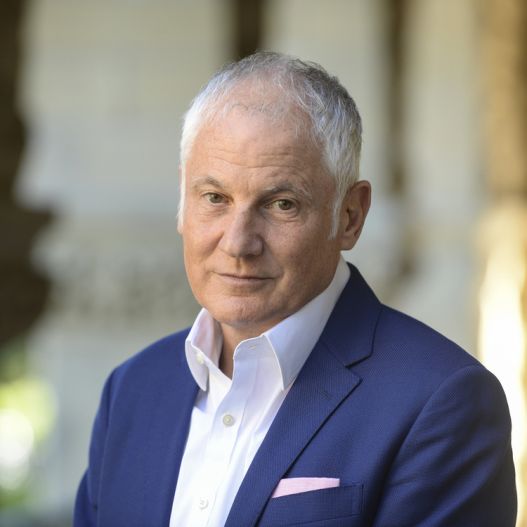
Soviet Collapse in the Fullness of Time: Lessons for Putin's Russia, Xi's China, and Beyond
September 13, 2023
5:00 pm
Clark Hall, 700
What lessons have Vladimir Putin and Xi Jinping drawn from the Soviet collapse, and what lessons are they failing to draw? Renowned historian Stephen Kotkin, Kleinheinz Senior Fellow at the Hoover Institution at Stanford University and Professor in History and International Affairs emeritus at Princeton University, will talk about how we might see the Soviet collapse, looking back more than three decades. Was the collapse predictable? Did a new world order emerge, and is one emerging now? Could such a collapse be repeated? How can we use history to illuminate the present, and potential futures, and when does history fail us?
Professor Kotkin's talk is the Institute for European Studies' inaugural Luigi Einaudi Distinguished Lecture.
This event will also be livestreamed. No pre-registration is required.
Additional Information
Program
Institute for European Studies
Reppy Institute for Peace and Conflict Studies
Einaudi Center for International Studies
Amelia C. Arsenault
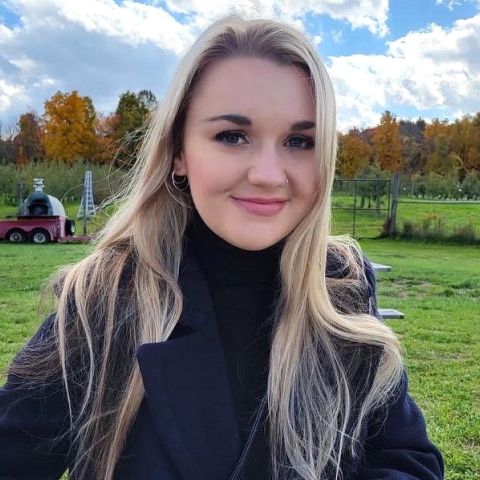
Reppy Fellow 2023-24, IES Graduate Fellow 2024-25
Amelia C. Arsenault is a PhD student at Cornell University’s Department of Government. Her research considers the effects of artificial intelligence on international politics, with a particular interest in the global proliferation of contemporary surveillance and smart city technologies.
Additional Information
Program
Role
- Student
- PACS Past Graduate Fellow
- Graduate Fellow
- Graduate Student
Contact
Email: aa2758@cornell.edu
International Fair 2023

August 30, 2023
11:00 am
Uris Hall, Uris Hall Terrace
The annual International Fair showcases Cornell's global opportunities for undergraduate and graduate students. Explore the fair and find out about international majors and minors, language study, study abroad, funding opportunities, global internships, Cornell Global Hubs, and more.
The International Fair is sponsored by the Mario Einaudi Center for International Studies and Office of Global Learning (both part of Global Cornell), with Cornell's Language Resource Center.
Register for the event on Campus Groups.
Additional Information
Program
Einaudi Center for International Studies
Reppy Institute for Peace and Conflict Studies
East Asia Program
Southeast Asia Program
Latin American and Caribbean Studies
Institute for African Development
Institute for European Studies
South Asia Program
IES 2023 Awards and Fellowships

We are pleased to announce the Institute for European Studies 2023 awards for graduate and undergraduate students. Our grants and fellowships support research in Europe and projects focused on European studies.
Our awardees study in a variety of disciplines, including Government, Archaeology, German Studies, Romance Studies, History, Plant Pathology, Classics, Architecture, Public Policy, Sociology, Music, and more. They will travel for research to Spain, the United Kingdom, Italy, Denmark, Israel, Belgium, Greece, France, and the Netherlands.
Congratulations to all winners of our awards, and best of luck with research and travel to Europe!
Additional Information
Program
Testimonies of Migration: International Studies Summer Institute 2023

June 27, 2023
9:00 am
A.D. White House
Registration for this event is now closed. You can ask to be put on the waitlist be emailing SBP84@Cornell.edu
The 2023 International Studies Summer Institute (ISSI) will explore testimonies of migration. The ISSI is a professional development workshop for practicing and pre-service K–12 educators hosted annually by the Mario Einaudi Center for International Studies, in collaboration with the South Asia Center at Syracuse University.
During this cross-curriculum conference, educators will engage in discussions, workshops, and lectures that explore and amplify personal narratives of migration. Professors, postdoctoral fellows and other scholars from Cornell University and Syracuse University will share their cutting-edge research on migrant experiences from across different regions of the world, including South Asia, Southeast Asia, Latin America and the Caribbean, and Sub-Saharan Africa. Speakers will focus on individual narratives, as well as systemic reasons for migration, such as politics, conflict, and climate change.
Sessions will also explore culturally responsive practices when working with migrant students and discussing migrant narratives. Teachers will gain tools for leading conversations and developing projects with their students about migrant experiences.
Teachers will leave the conference with concrete resources to use in their classrooms, a deeper awareness of how to enter into conversation with students about their own and others’ migration experiences, and an understanding of contemporary migrant experiences from across the world.
The 2023 ISSI will be applicable for elementary, middle, and high school educators from all subject areas. Participating teachers will have the option to complete a lesson plan for PD credit that incorporates content from the workshop, with the support and guidance of our outreach staff.
Conference Schedule:
8:45-9:00 Breakfast and check-in
9:00-9:15 Introductory Remarks by Rachel Beatty Riedl
9:15-10:20 Panel: "Ethical and culturally responsive engagement with migrant narratives"
Panelists: Farah Bakaari, Juhwan Seo, Rose Anderson
Moderator: Shannon Gleeson
10:20-10:30 Break
10:30-11:30 Workshop with Mary Jo Dudley, “Supporting Immigrant Families in Schools”
11:30-12:00 Networking and reflection activity
12:00-1:00 Lunch
1:00-1:45 Breakout Sessions
Focus: Project-based learning around themes of migration (same sessions offered twice)
Option 1: Nicole Thuzar Tu-Maung, “Photovoice Methodology” Option 2: Maria Gimma, “Understanding the Global Phenomenon of Migration, a Project-Based Curriculum” Option 3: Nausheen Husain, “Storytelling With Data” 1:45-1:50 Break
1:50-2:35 Breakout Sessions, repetition of above options
2:35-3:00 Break / walk to Johnson Art Museum
3:00-4:00 Workshop with Carol Hockett and Maryterese Pasquale-Bowen, “How the Light Gets In: Contemporary Art and Migration”
4:00-4:20 Introduction to Einaudi Resources with Sarah Plotkin
4:20-4:30 Closing remarks with Sarah Pattison
Sponsored by: Syracuse University, Moynihan Institute for Global Affairs, South Asia Center, Cornell University’s Mario Einaudi Center for International Studies, Southeast Asia Program, South Asia Program, Institute for African Development, East Asia Program, Latin American and Caribbean Studies, Institute for European Studies, Migrations Initiative, TST-BOCES, U.S. Department of Education Title VI Program
Additional Information
Program
Einaudi Center for International Studies
East Asia Program
Southeast Asia Program
Latin American and Caribbean Studies
Institute for African Development
Institute for European Studies
South Asia Program
Announcing 2023 Awards

Einaudi Seed Grants Finding Fertile Soil
Read about new awards and research funded in 2022, including Alex Flecker (Amazon aquaculture) and Victoria Beard (Global Survey of City Leaders).