
Institute for European Studies
The Great Sanctions Debate

Nicholas Mulder, IES
“While the use of sanctions has surged, their odds of success have plummeted,” says Nicholas Mulder, assistant professor of history, in his book “The Economic Weapon: The Rise of Sanctions as a Tool of Modern War.”
Additional Information
Sino-Italian Encounters in Global Fashion
November 9, 2022
3:00 pm
Uris Hall, G08
The Cornell Contemporary China Initiative (CCCI) of the East Asia Program welcomes Simona Segre-Reinach (Fashion Studies, University of Bologna, Italy) as part of our semester-long theme of Fashion and Politics in Twentieth-Century China with faculty host, Peidong Sun (History, Cornell)
Some of the questions that guest speakers will investigate include: How do we define politics from the dimension of fashion? What was a politicized fashion? How did fashion reflect the power structure? How did fashion become a way of obedience and resistance? And how do we define and interpret the human condition in China under Mao's rule (1949-1976)? What was human resilience in the face of absolute power?
Simona Segre-Reinach's talk is titled, "Sino-Italian Encounters in Global Fashion: 20 Years of Sino-Italian Collaborations."
The talk focuses on the evolution of fashion relations between Italy and China in a unique period - from the late nineties of the 20th century to the second decade of the 21st century – which signals a change in the concept and the practices of Italian fashion on the one hand and the emerging of Chinese fashion withing a global setting on the other.
The CCCI lecture series aims to expose the broad campus community to issues and scholarship of contemporary China.
We thank our co-sponsors:
Asian American Pacific Studies Program | Asian Studies | College of Human Ecology | Cornell Society for the Humanities | Feminist, Gender & Sexuality StudiesDepartment of History | Department of International & Comparative Labor Relations | Department of History | The Levinson China & Asia-Pacific Studies Program
Additional Information
Program
Einaudi Center for International Studies
East Asia Program
Institute for European Studies
Fighting Yesterday's War: Soviet Influences in Putin's Foreign Policy
October 6, 2022
11:25 am
Dr. Maria Snegovaya examines the drivers of Russian revanchism. Russia’s behavior has thrown into doubt the purported strength of international norms regarding territorial integrity, not least because Putin himself has spoken of seeking to ‘re-gather’ adjacent territory deemed ‘lost’—as they had been once under possession by Imperial Russia or the Soviet Union—through military means.
While recognizing that decisions to go to war and to reclaim lost territory are complex and multifaceted, the speaker argues that many analyses overlook—ironically—the nature of the political regime that rules Russia. If domestic political variables do matter for observers of Russia, the emphasis is on how Russia is institutionally autocratic such that it will pursue a foreign policy more aggressive than what would have been the case if it were democratic.
Maria Snegovaya and her co-author define a political regime in both institutional and behavioral terms to acknowledge the structural organization of power as well as the qualities of the elites that exercise influence. They show a strictly institutional definition of political regimes neglects the elite continuity that ties together the Soviet and the Russian leadership. This elite continuity across the two systems matter because the political regime still privileged particular beliefs about the use of force to settle international disputes, the intentions of the United States, and the relationship that certain nations should have vis-à-vis Russia. These beliefs, which they show to hold sway, had their Soviet antecedents.
Please join us for this virtual conversation. Register here.
About Speaker
Maria Snegovaya is a Postdoctoral Fellow in Political Science at Georgetown University's Walsh School of Foreign Service, a Visiting Scholar at the Institute for European, Russian, and Eurasian Studies at George Washington University, and Adjunct Senior Fellow at the Center for New American Security. She is a comparative politics, international relations, and statistical methods specialist. The key focus of her research is democratic backsliding in Central and Eastern Europe, as well as Russia’s domestic and foreign policy.
***
Presented by the Reppy Institute for Peace and Conflict Studies. Co-sponsored by the Institute for European Studies and the Gender and Security Sector Lab.
Additional Information
Program
Einaudi Center for International Studies
Reppy Institute for Peace and Conflict Studies
Institute for European Studies
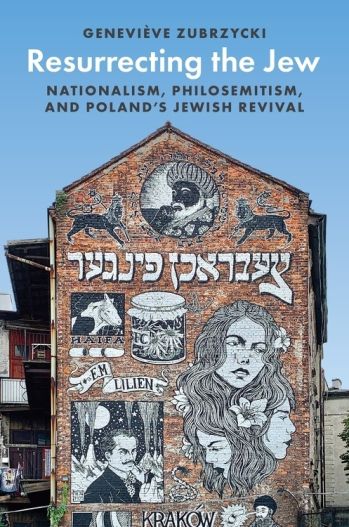
Resurrecting the Jew: Nationalism, Philosemitism, and Poland's Jewish Revival
November 15, 2022
1:00 pm
Uris Hall G08
Since the early 2000s, Poland has experienced a remarkable Jewish revival, largely driven by non-Jewish Poles with a passionate new interest in all things Jewish. Klezmer music, Jewish-style restaurants, kosher vodka, and festivals of Jewish culture have become popular, while new museums, memorials, Jewish studies programs, and Holocaust research centers reflect soul-searching about Polish-Jewish relations before, during, and after the Holocaust. In Resurrecting the Jew, Geneviève Zubrzycki examines this revival and asks what it means to try to bring Jewish culture back to life in a country where 3 million Jews were murdered and where only about 10,000 Jews now live.
Drawing on a decade of participant-observation in Jewish and Jewish-related organizations in Poland, a Birthright trip to Israel with young Polish Jews, and more than a hundred interviews with Jewish and non-Jewish Poles engaged in the Jewish revival, Resurrecting the Jew presents an in-depth look at Jewish life in Poland today. The book shows how the revival has been spurred by progressive Poles who want to break the association between Polishness and Catholicism, promote the idea of a multicultural Poland, and resist the Far Right government. The book also raises urgent questions, relevant far beyond Poland, about the limits of performative solidarity and empathetic forms of cultural appropriation.
Speaker
Geneviève Zubrzycki, Professor of Sociology at the University of Michigan
Register for the session here.
Additional Information
Program
Institute for European Studies
Italy’s Government Is in Turmoil. Here’s How It Got There – and What’s Next
Christopher Way, IES/PACS
"Mario Draghi was such a trusted pair of hands across Europe," says Christopher Way, associate professor of government. "He was so respected for his competence that it's a loss no matter who replaces him."
Additional Information
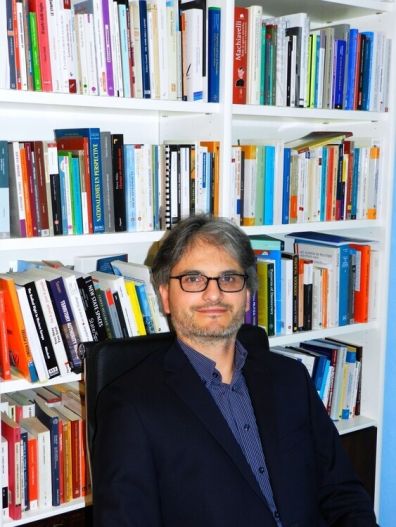
How Populism Deals with Complexity
September 6, 2022
4:30 pm
Uris Hall, G08
There is a strong tendency in social and political sciences to simplify the academic use of the concept of populism. This is what populists do when they dichotomise reality into friends and enemies. The goal of this talk is to highlight and discuss why scholars have to develop an adaptive and multifaceted perspective, and how changing realities across Europe and the United States, including the experience of Covid-19 pandemic, might contribute to strengthen this perspective.
Speaker
Oscar Mazzoleni, Professor of Political Science and Political Sociology, University of Lausanne
Register for the session here.
Presented by the Institute for European Studies
Additional Information
Program
Institute for European Studies
Einaudi Center for International Studies
Seeking Leverage Over Europe, Putin Says Russian Gas Flow Will Resume

Eswar Prasad, SAP
Prasad, an economist at Cornell said “Keeping a low flow through Nord Stream could strengthen Russia’s position and even weaken Europe’s resolve if the war drags on. Maintaining Europe’s energy dependency on Russia and stoking uncertainty about natural gas supplies, are among the reasons Mr. Putin would want to keep Nord Stream online.”
Additional Information
"Final Stage of Russian Decline"

Bykov Talks with New Yorker
Visiting critic Dmitry Bykov discusses Russia—and Russians—under Putinism on the New Yorker Radio Hour.
Additional Information
ISSI 2022
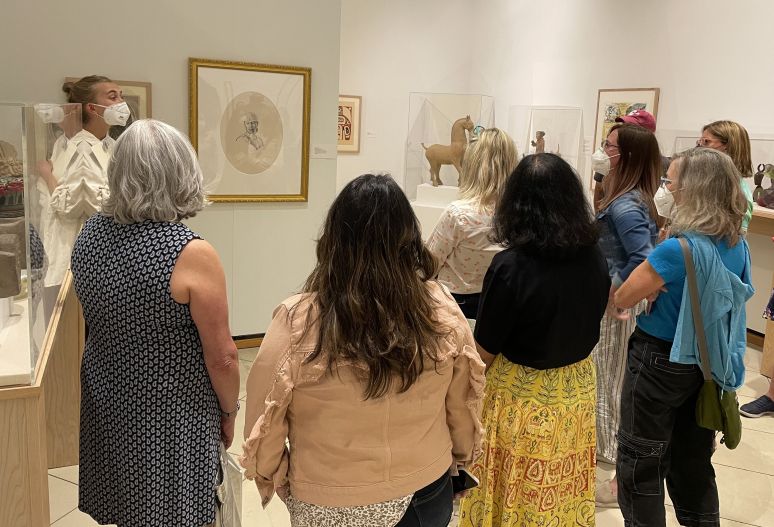
Institute for K–12 Teachers Highlights Global Inequalities
Einaudi's regional programs hosted more than 30 teachers from across central New York for professional development on the Cornell campus.
Additional Information
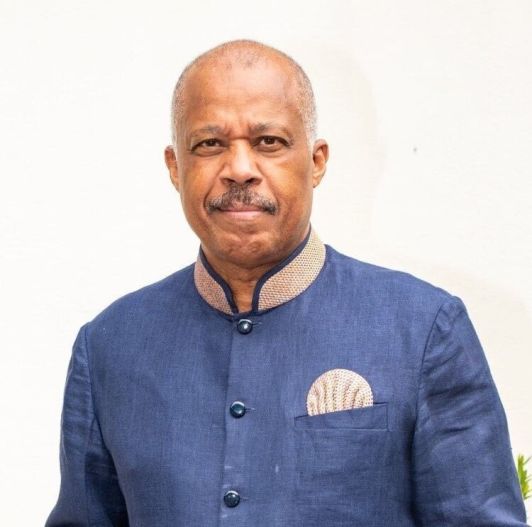
The Coming Enlightenment: The University Sector and Reparatory Justice for Slavery and Colonialism
September 16, 2022
4:30 pm
Rhodes-Rawlings
Postcolonial discourse has called into question the historic Western Enlightenment by demonstrating its links to violent colonialism, chattel slavery, Indigenous genocide, and persistent institutional and cultural racism.
Sir Hilary Beckles suggests that the growing global reparatory justice movement—particularly as it emanates from the higher education sector—may present the best potential for an authentic 21st-century Enlightenment. Universities are now deeply researching their role, functions, and legacies within the Atlantic slave complex and exploring where these discursive discoveries, as crimes against humanity, will lead—back into the future or forward against the past.
Join the lecture live in the Rhodes-Rawlings Auditorium in Klarman Hall! In-person attendees have the chance to enchange ideas with Beckles during a Q&A session following the lecture. Or join the lecture virtually by registering at eCornell.
About the Speaker
Sir Hilary Beckles, eighth vice chancellor of the University of the West Indies, is a distinguished academic, international thought leader, United Nations committee official, and global public activist in the field of social justice and minority empowerment.
He received his higher education in the United Kingdom and is professor of economic history. He has lectured extensively in Europe, the Americas, Africa, and Asia. He has published over 100 peer reviewed essays in scholarly journals and over 13 books on subjects ranging from Atlantic and Caribbean History, to gender relations in the Caribbean, sport development, and popular culture.
Beckles is president of Universities Caribbean, chair of the Caribbean Examinations Council, chair of the CARICOM Reparations Commission, and advisor on sustainable development to former United Nations secretary-general Ban Ki-moon. He was knighted by the government of Barbados. He has received numerous honorary doctorates from around the world and recently received the Martin Luther King Jr. Peace and Freedom Award.
Hosts and Sponsors
Beckles' lecture and campus visit are part of the Mario Einaudi Center for International Studies' Distinguished Speaker series and ongoing work on Inequalities, Identities, and Justice. The lecture is the closing event in the 60th anniversary Public Issues Forum series of the Einaudi Center's Latin American and Caribbean Studies Program.
The event is funded in part by the A.D. White Professor-At-Large Program, the Migrations initiative, and a LACS Undergraduate International Studies and Foreign Language (UISFL) grant from the U.S. Department of Education.
Additional Information
Program
Einaudi Center for International Studies
Latin American and Caribbean Studies
Institute for European Studies