
Institute for European Studies
Kaushik Basu
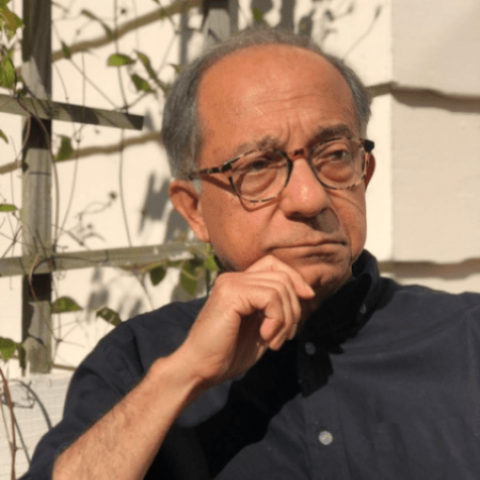
Carl Marks Professor of International Studies
Additional Information
Program
Role
- Faculty
- SAP Core Faculty
- SAP Advisory Council
- Einaudi Faculty Leadership
Contact
Email: kb40@cornell.edu
Christopher Way

Director, Institute for European Studies
Christopher Way is the director of the Institute for European Studies and an associate professor of government in the College of Arts and Sciences. He also serves as peace studies minor faculty for Einaudi's Reppy Institute for Peace and Conflict Studies.
Additional Information
Program
Role
- Faculty
- IES Core Faculty
- IES Director
- IES Steering Committee
- PACS Minor Field Instructor
- Einaudi Faculty Leadership
Contact
Email: christopher.way@cornell.edu
Phone: 607-255-3549
Matthew Evangelista
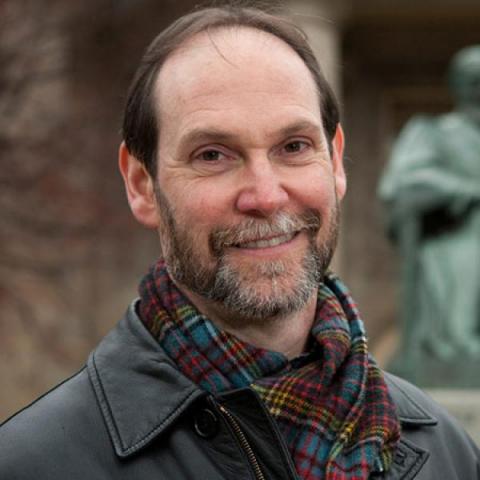
President White Professor of History and Political Science, Emeritus
Matthew Evangelista's current teaching and research interests focus on the relationship between gender, nationalism, and war; ethical and legal issues in international affairs (particularly just war theory and international humanitarian law); transnational relations; and separatist movements. He is the President White Professor of History and Political Science in the Department of Government, College of Arts and Sciences.
Additional Information
Program
Role
- Faculty
- IES Faculty Associate
- PACS Core Faculty
- PACS Steering Committee
- PACS Minor Field Instructor
Contact
Email: mae10@cornell.edu
Phone: 607-255-3549
Mabel Berezin
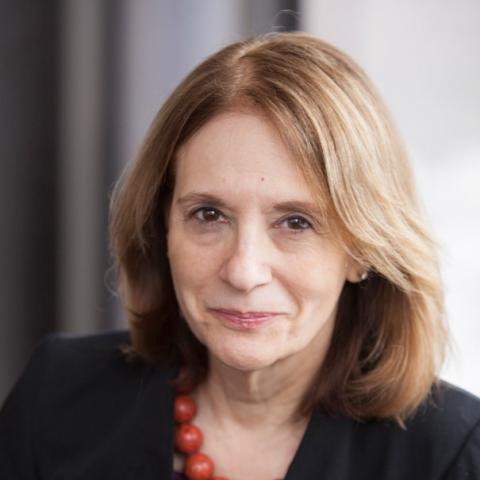
Distinguished Professor of Arts & Sciences in Sociology
Additional Information
Program
Role
- Faculty
- IES Core Faculty
- IES Steering Committee
- PACS Minor Field Instructor
Contact
Email: mabel.berezin@cornell.edu
Phone: 607-255-4042
Peter Katzenstein
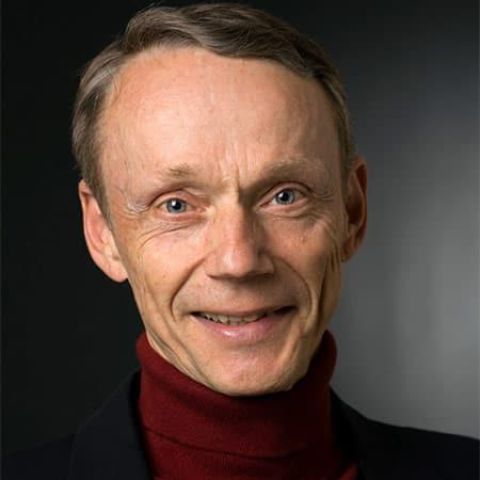
Walter S. Carpenter Jr. Professor of International Studies
Peter Katzenstein is the Einaudi Center's Walter S. Carpenter Jr. Professor of International Studies in the Department of Government, College of Arts and Sciences. His research and teaching lie at the intersection of the fields of international relations and comparative politics. He was awarded the Johan Skytte Prize in Political Science in 2020 for his pioneering research.
Additional Information
Program
Role
- Faculty
- EAP Core Faculty
- IES Faculty Associate
- PACS Steering Committee
- PACS Minor Field Instructor
- Einaudi Faculty Leadership
Contact
Email: pjk2@cornell.edu
Mostafa Minawi
Professor, History
Additional Information
Program
Role
- Faculty
- IES Faculty Associate
- SWANA Core Faculty
- SWANA Steering Committee
Contact
Email: mm2492@cornell.edu
Gail Holst-Warhaft

Adjunct Professor, Comparative Literature
Gail Holst-Warhaft is an adjunct professor in the Departments of Classics, Comparative Literature, and Near Eastern Studies. Her research interests include translation, modern Greek literature and music, Greek literature from antiquity to the present, water, and culture.
Additional Information
Fulbright U.S. Student Program

Details
The Fulbright U.S. Student Program sends U.S. citizens to more than 160 countries to study, research, and teach English abroad.
With a unique focus on mutual understanding between people of different backgrounds and cultures, the program offers the freedom to curate your experience as you engage with your host community.
The Einaudi Center provides counseling, essay feedback, and application support to help your Fulbright application succeed, even if you are preparing your application at a distance as a study abroad student or recent graduate. Our Fulbright advisor offers guidance throughout the year and hosts info sessions about Fulbright opportunities each semester.
Fulbright Facts
Cornell University is a Fulbright Top Producing Institution. One in four Cornell applicants wins an award. The national average is only one in six. This is how Cornell has sent over 600 students across the globe as part of the Fulbright U.S. Student Program since the 1940s.
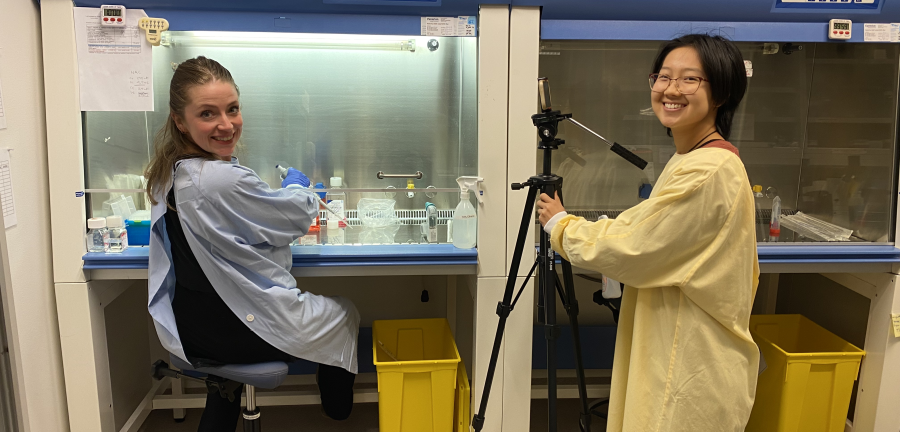
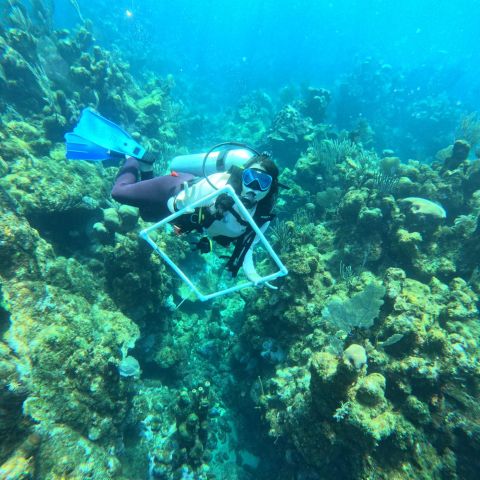
Fulbrighters from Cornell have traveled to more than one hundred countries, studying topics ranging from court efficiency in Zambia to gender-based inequalities in India. Many have taught English abroad and attended international graduate programs in other languages.
Application Opens
March 2027 (details to come)
Deadline
August 2027 (details to come)
Eligibility
United States citizens in any field of study are eligible. In addition, you must fulfill one of the following criteria:
- You will graduate with a bachelor’s degree from Cornell before September of the award year.
- You are currently a Cornell graduate student.
- You are a young professional who graduated from Cornell within the past five years.
Day in the Life: U.S. Student Program
How to Apply
Cornell applicants must apply through the Cornell Fulbright Program, managed by the Einaudi Center. Reach out to our Fulbright advisor to get started. We provide counseling, essay reviews, and application support to all applicants, including study abroad students and alumni, for every type of application.
Meet Cornell's Fulbrighters
Seventeen Cornellians accepted awards in 2026–27, including Cornell's first Fulbright Fogarty Fellowship in Public Health. They will conduct research, study, and teach English around the globe.
Additional Information
Funding Type
- Program
Role
- Student
Program
International Research Travel Grants

Details
Do you need to travel internationally for your graduate research or fieldwork?
The Einaudi Center sponsors international travel for individual Cornell graduate students. If you’re traveling between the United States and a host country for activities directly related to your dissertation or thesis research, Einaudi can help you get there.
Applications Open
Monday, November 19, 2026
Amount
Up to $3,000 to cover international airfare for activities directly related to your dissertation or thesis research.
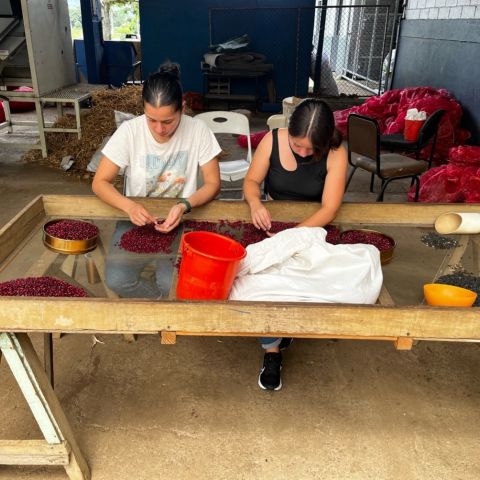
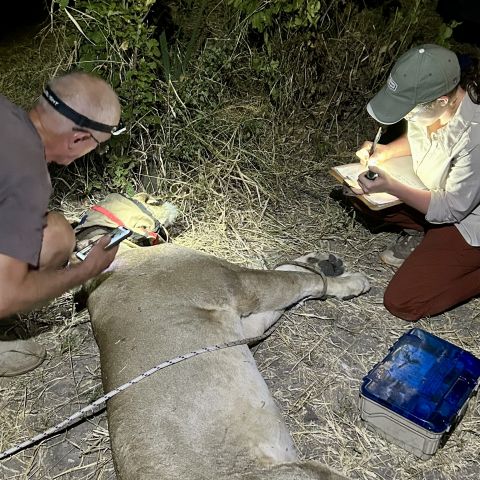
Einaudi Travel Grants Send Grad Students Abroad
Read about how Einaudi travel grants supported research travel for Seongmin Shin to Kenya and Yoselyn Hernández Chaves to Costa Rica. Last year 83 graduate students found support for their fieldwork at Einaudi!
Eligibility
All applicants must be enrolled in an approved course of study at Cornell University leading to a master's or PhD degree. Graduate students or students enrolled in Cornell’s professional schools are eligible, with the following exceptions:
- Students graduating in May 2027
- Students who have not used 2026 awards
You may only receive two Einaudi travel grants during your time at Cornell. Groups are not eligible to apply, as grants are awarded on an individual basis.
Travel must occur between May 1, 2027, and August 31, 2028.
Requirements
- Awards are based on the proposal submitted at the time of application. You may change your travel dates within the travel date parameters, but you cannot change your proposal.
- To receive the award and travel approval, you are required to participate in a short online international travel predeparture orientation.
- You must submit photos of your boarding passes as proof of travel within 30 days of the end of your funded travel. (We will not accept tickets or travel itineraries.)

Travel Requirements
- Travel must take place between May 1, 2027, and August 31, 2028, and cannot be funded retroactively. The minimum stay abroad is 14 days.
- Travel must take place three months prior to your graduation.
- Travel must be for international studies and directly related to your dissertation or thesis research.
- Travel must originate and end in the United States. You must depart and return to a major international airport.
- Cornell travelers are required to comply with the Fly America Act. Please choose American Airlines when possible.
- Awardees must register their Einaudi-supported travel in the Cornell Travel Registry no earlier than eight weeks and no later than four weeks prior to travel. You must follow all university travel policies and have ITART approval if you travel to an elevated risk destination.
International Travel Guidance
Travel to Elevated Risk Destinations
Travel to level 4 countries must be approved by the International Travel Advisory and Response Team (ITART). Graduate and professional students do not need to petition for travel to level 1, 2, or 3 level countries. Approval may be withdrawn if there is a change in the risk level of your destination or if you violate any contingencies of approval given. In such instances, you will be required to refund the award.
For International Students
Be aware that U.S. federal travel restrictions are evolving and could impact some international citizens' ability to reenter the country. We encourage all international students to check International Services' Current Travel Advisory frequently for new guidance. If you have problems or concerns about reentering the United States after your research, consult this webpage for urgent advice or reach out to an International Services advisor.
Questions?
Email the Einaudi Center at travelgrants@einaudi.cornell.edu.
Additional Information
Funding Type
- Travel Grant
Role
- Student