Latin American and Caribbean Studies

Einaudi Dissertation Proposal Development Program

The deadline for this opportunity has passed.
Application Deadline: March 2, 2025
Charlie Tebbutt holds up a recorder in the Colombian Amazon.

Details

Develop your dissertation on global issues with a toolkit of resources. Over the course of the year, you’ll participate in seminars, workshops, and mentoring sessions and receive up to $5,000 for summer research. 

DPD supports 12 PhD students annually. Applicants’ research projects must focus on global issues, but the proposed research setting may be international or domestic. 


Funding for Summer 2025

This DPD cycle will begin immediately, with seminars during the spring 2025 semester and funding for research in summer 2025. In addition to six weeks of summer research, the program includes these community-building and mentoring events:

  • Seminars: Up to three sessions on topics including proposal writing, research methods, and interdisciplinary international studies. 
  • Spring workshop: Three-day workshop in May to help you refine your proposal and plan your summer pre-dissertation research.
  • Fall workshop: Three-day workshop in September to support you as you finalize your dissertation proposal.

Applicants must commit to attending the entire spring and fall workshops and agree to conduct at least six weeks of summer research away from Cornell between the workshops.

Who leads Einaudi DPD? 

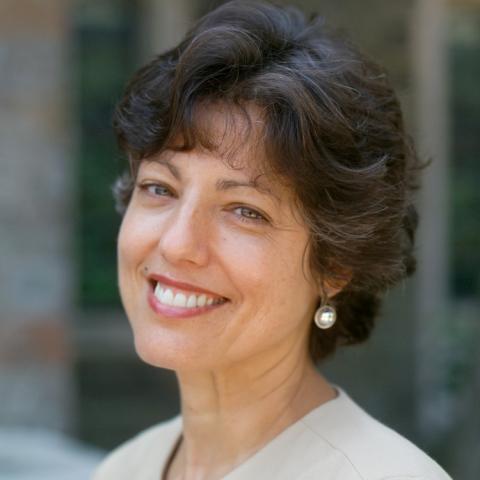
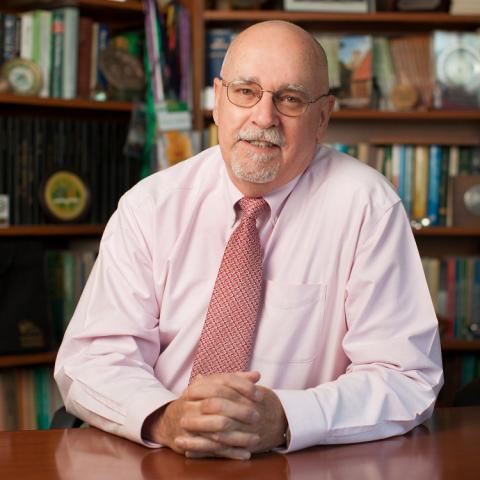
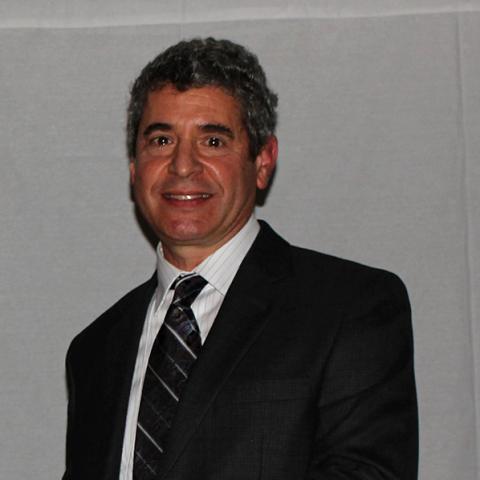
Sarah Besky is DPD's faculty lead. Ken Roberts and Marina Welker are the faculty facilitators. 


Amount

Up to $5,000 for summer research. The award can cover the following research expenses:

  • International travel (economy airfare, visa fees)
  • Local travel
  • Accommodation and living expenses
  • Research expenses (permits, translation costs, internet, archive access, etc.)

We encourage you to apply for other Cornell grants and external grants to complement your DPD funding. You must apply for the Graduate School's research travel grants; you are not eligible to apply for Einaudi's travel grants.

Please note that you may only bill for a research expense once. If an expense is already covered by your DPD award or Graduate School travel grant, you may not use other Cornell or external grants to pay the same expense.

Eligibility

  • Students who are currently enrolled full-time in PhD programs at Cornell University are eligible.
  • Both U.S. citizens and noncitizens are eligible.
  • Progress within graduate program:
    • Applicants must have completed at least two full years of graduate study (MA and/or PhD) by the end of the spring workshop. First-year graduate students who have completed master’s degrees and fourth-year students who have not yet undertaken dissertation research may be eligible.
    • Applicants must be on track to obtain approval of their dissertation proposals after the fall workshop but before the end of the upcoming academic year.
  • Students who have already submitted dissertation research proposals to their departments for approval or to funding agencies for dissertation research support are not eligible to apply.

Questions? 

Please email our academic programming staff if you have questions about the program.

Additional Information

Resources for Educators

We work with New York State educators to educate the next generation of global citizens. Get involved with our professional development offerings, teaching materials, cultural opportunities, and more for K–12 teachers and faculty at community colleges in our region. 

"Refracted Empire: The Atlantic Islands and the Early Spanish Caribbean" by David Wheat, LASP Seminar

April 19, 2021

12:00 pm

Traditional interpretations of Spanish imperial consolidation in the 16th-century Atlantic place heavy emphasis on official maritime structures regulated by authorities based in Seville. But despite their central position in Caribbean historiographies, the Indies fleets and slave trade asientos accommodated multiple agendas -- including some that worked against the priorities of the Spanish crown and House of Trade -- and appear far less monolithic if viewed within a broader context that includes regional traffic, voyages from the Canaries, and commonplace arribadas or "emergency landings." This presentation provides an overview of maritime traffic arriving in selected Caribbean ports, with several illustrative examples of individual travelers and itineraries drawn from notarial records in the Canary Islands. It argues for the utility of viewing early Iberian settlements in the Caribbean and off the coasts of western Africa not merely as way stations or stepping stones for Iberian "expansion," but as polyvalent hubs for migration and trade within, across, and beyond ostensible imperial boundaries.

David Wheat, associate professor of history at Michigan State University, received his PhD from Vanderbilt University in 2009. His book Atlantic Africa and the Spanish Caribbean, 1570-1640 (2016) was awarded the Omohundro Institute's Jamestown Prize, the Lapidus Center's Harriet Tubman Prize, and the American Historical Association's James A. Rawley Prize. His essays have appeared in Clio: Femmes, Genre, Histoire; the American Historical Review; the Journal of African History; Slavery & Abolition, the Journal of Early Modern History, and in several edited collections. He recently co-edited two volumes of essays: The Spanish Caribbean and the Atlantic World in the Long Sixteenth Century, co-edited with Ida Altman (2019), and From the Galleons to the Highlands: Slave Trade Routes in the Spanish Americas, co-edited with Alex Borucki and David Eltis (2020).

Additional Information

Program

Einaudi Center for International Studies

Latin American and Caribbean Studies

"Voluntary Audits: Experimental Evidence on Monitoring Front-Line Bureaucrats in Argentina," By Rebecca Weitz-Shapiro, LASP Weekly Seminar Series

April 12, 2021

12:00 pm

Is it possible to motivate front-line bureaucrats to exert effort in their work without relying on traditional punitive forms of oversight? We examine the motivation and performance of school principals in their administration of a free meal program targeted at school children in an Argentine province. We work with the provincial auditing body to implement an encouragement design in which some principals are offered the opportunity to volunteer for an audit. We expect that volunteering will increase intrinsic and extrinsic motivation as well as school-level outcomes. Preliminary results suggest that the intervention increased principals’ intrinsic motivation with respect to the meal program and increased the likelihood principals report that the opinion of the auditing office is important to them. We find no effect on extrinsic motivation or self-reported hours worked.

Rebecca Weitz-Shapiro is an Associate Professor of Political Science at Brown University. Her research explores sources of variation in the quality of representation, government accountability to citizens, and public opinion in lower and middle-income democracies. Her book, "Curbing Clientelism in Argentina: Politics, Poverty, and Social Policy" was published with Cambridge University Press (2014) and received the Donna Lee Van Cott Award from the Political Institutions Section of the Latin American Studies Association. She has published articles in the American Journal of Political Science, Journal of Politics, Comparative Politics, Comparative Political Studies, the Journal of Politics in Latin America, and elsewhere. Current projects include a field experiment on bureaucratic oversight in Argentina,
large surveys on citizen oversight of corruption, and a conceptual and empirical project on political knowledge and access to state services.

Additional Information

Program

Latin American and Caribbean Studies

Einaudi Center for International Studies

Info Session: Latin American Studies Minor and Internships

Einaudi Student Information Sessions poster

February 19, 2020

4:30 pm

Uris Hall, G-08

Learn about the Latin American Studies minor, an undergraduate minor across disciplines that allows you to explore the history, culture, government, politics, economy, and languages of Latin America and the Caribbean. Qualifying courses can be found in almost every college. Find out about internships and other funding opportunities related to Latin America and the Caribbean. Learn more about Einaudi Center student information sessions.

Additional Information

Program

Latin American and Caribbean Studies

Occupying Schools, Occupying Land: How the Landless Movement Transformed Brazilian Education, by Rebecca Tarlau, Penn State University, Feb 14th, 401 PSB, 4:30pm

Rebecca Tarlau

February 14, 2020

4:30 pm

Physical Sciences Building, 401

Rebecca Tarlau will speak about how the over the past thirty-five years the Brazilian Landless Workers Movement (MST), one of the largest social movements in Latin America, has become famous globally for its success in occupying land, winning land rights, and developing alternative economic enterprises for over a million landless workers. The movement has also linked education reform to its vision for agrarian reform by developing pedagogical practices for schools that foster activism, direct democracy, and collective forms of work. In her talk Occupying Schools, Occupying Land: How the Landless Workers Movement Transformed Brazilian Education, Rebecca Tarlau will explore how MST activists have pressured municipalities, states, and the federal government to implement their educational program in public schools and universities, affecting hundreds of thousands of students. Contrary to the belief that movements cannot engage the state without demobilizing, Tarlau will show how educational institutions can help movements recruit new activists, diversify their membership, increase technical knowledge, and garner political power. Drawing on twenty months of ethnographic field work, Tarlau will document how the MST operates in different regions working at times with or through the state, at other times outside it and despite it. She argues that activists are most effective using contentious co-governance, combining disruption and public protest with institutional pressure to defend and further their goals. Through an examination of the potentials, constraints, failures, and contradictions of the MST's educational struggle, her talk will offer insights into the ways education can promote social change, the interactions between social movements and states, and the barriers and possibilities for similar reforms in democratic contexts throughout the world. Rebecca Tarlau is an Assistant Professor of Education and Labor and Employment Relations at the Pennsylvania State University, affiliated with the Lifelong Learning and Adult Education Program, the Comparative and International Education program, and the Center for Global Workers’ Rights. She has a Ph.D. in Education from the University of California, Berkeley (2014) and was a Postdoctoral Scholar at Stanford University (2015-2017). Her ethnographic research agenda has three broad areas of focus: (1) Theories of the state and state-society relations; (2) Social movements, critical pedagogy, and learning; (3) Latin American education and development.

Additional Information

Program

Latin American and Caribbean Studies

"New Approaches to Non-Formal Environmental Sustainability Education in Petrópolis, Brazil" by Átila Calvente, Feb 10, 12:15pm, LASP Seminar Series

Farming landscape in Brazil

February 10, 2020

12:15 pm

Stimson Hall, G-01

Environmental education is essential in the diffusion of the ethics, values, and skills that are critical to sustainable transformations. This talk presents the experience of non-formal environmental education approaches held in schools in the Petrópolis region of Rio de Janeiro, Brazil between 1997–2016. The talk intends to firstly convey the commonly identified environmental sustainability challenges that the communities of the Petrópolis region are facing. Secondly, the talk aims to convey key insights on how non-formal environmental education practices can strengthen gardening skills, environmental ethics, and sustainable food practices. These approaches have the potential to enhance the capacity of students toward sustainable transformations through encouraging them to be engaged with local social-environmental challenges. Finally, it hopes to add new insights to the growing literature on, and practice of, non-formal environmental education, and it is hoped, to inspire new educational approaches among sustainability educators. Átila Calvente, PhD student at the Public Policy Program, UFRJ/Rio de Janiero. Átila has been working for over 20 years in Petrópolis with neighborhood schools in the favelas and the rural countryside, bringing farmers and disadvantaged children together to plant school vegetable gardens and learn about the origin of the foods they eat, and how it relates to their own lifestyles as they grow. In addition, he has experience among settlers in the Amazon, ranchers and indians on the Ilha do Bananal in Tocantins, as well as his own experience as an organic coffee and dairy farmer in the Atlantic Forest in the Serrana area of Rio.

Additional Information

Program

Latin American and Caribbean Studies

Latin American and Caribbean Studies

Cornell's focal point for research, teaching, and engagement on Latin America and the Caribbean, the Latin American and Caribbean Studies Program (LACS) celebrated our 60th anniversary in 2021 with a new name that recognizes our ongoing commitment to Caribbean people and cultures.

Subscribe to Latin American and Caribbean Studies