
Latin American and Caribbean Studies
Rebecca Nelson
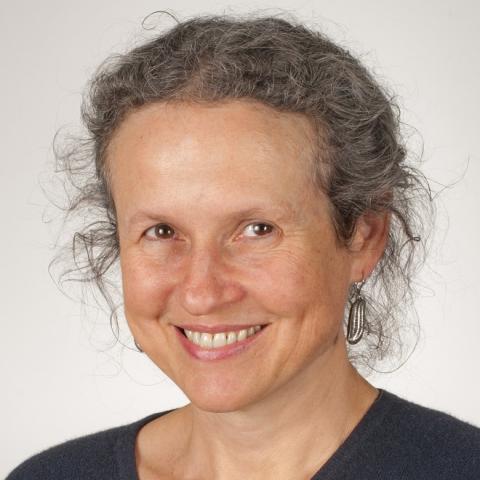
Professor, Integrative Plant Science
Additional Information
Steven Kyle
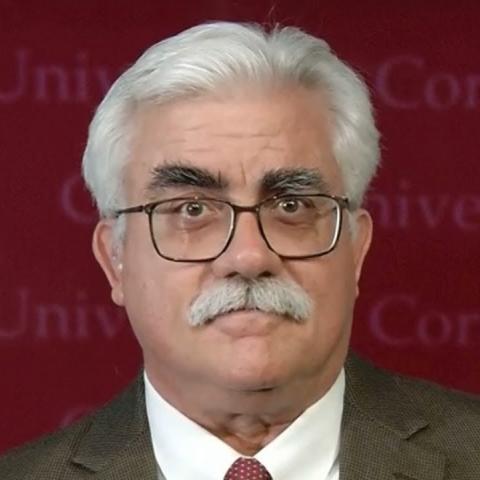
Associate Professor, Applied Economics and Management
Steven Kyle is an associate professor in the Charles H. Dyson School of Applied Economics and Management. He works in the areas of macroeconomic policy in the United States and in low-income countries. His recent work includes studies of the economies of Portuguese-speaking African countries, the outlook for the U.S. economy, and issues in the management of transition economies in Eastern Europe and Central Asia.
Additional Information
Lourdes Benería Award

Details
The Lourdes Benería Award for summer field research supports students studying gender and planning in Latin America or the Caribbean.
The award was established in 2018 with a generous gift from Lourdes Benería. LACS manages the awards, which fund up to $2,000 for in-country travel and field expenses directly related to dissertation or project paper research (not conference travel or international airfare).
If you need a grant for the cost of international airfare to get to the country of your study site from the U.S., please apply for an Einaudi Center Travel Grant.
Eligibility
Recipients must be enrolled (full-time or in absentia) in a graduate degree program and be registered at the time of the award. Students must be Cornellians doing research in Latin America or the Caribbean.
Notification of award selection will be sent in late March.
Additional Information
LACS Graduate Student Summer Research Grants

Details
LACS will offer up to three research grants to qualified graduate students who need to conduct field research over the summer of 2026.
Amount
Up to $1000 each.
Eligibility
Criteria for selection includes a substantive focus on Latin America or the Caribbean. Such grants are not intended to cover international travel costs (flights from the U.S. to the country of study). If you need a grant for the cost of international airfare to get to the country of your study site from the U.S., please apply for an Einaudi Center Travel Grant.
How to Apply
Click the apply button below to access the online funding application. Applicants are asked to provide:
- A proposal of the work to be undertaken, including a detailed budget.
- A tentative itinerary/schedule.
- A of list previous and current grant monies received.
- A faculty recommendation from within the applicant's area of study.
Notification of awardee selection will be sent by late March.
If your proposal includes travel to an elevated risk country, you will need to submit a request to ITART to travel. In the event that you receive Einaudi travel grant funds, the award will not be released until you complete the ITART application process. You are strongly encouraged to have a back-up plan for your project in the event that your ITART application is denied, or if the country to which you are traveling should become an elevated risk country subsequent to receiving your travel grant.
Questions
Contact the Program Manager (lacs@cornell.edu) if you have questions.
Additional Information
LACS Graduate Student Conference Grants
Details
LACS provides up to $500 grants to fund travel to graduate students to present at conferences during the period from September 1, 2026 through August 15, 2027. Rolling Application process until our limited funds is exhausted.
Students should be presenting or displaying a poster at a conference focused on Latin America and/or the Caribbean. An award may only be granted once per funding cycle year (October-September) and only after the student applies for funding from their department and/or the Graduate School.
You will be asked to provide an invitation letter to the conference later in the process and before a decision is made.
Amount
Up to $500.
Eligibility
Award may only be granted once per academic year and only after or at the same time the graduate student applies for funding from their department and/or Graduate School.
How to Apply
Click the apply button below to access the online funding application.
If your proposal includes travel to an elevated risk country, you will need to submit a request to ITART to travel. In the event that you receive Einaudi travel grant funds, the award will not be released until you complete the ITART application process. You are strongly encouraged to have a back-up plan for your project in the event that your ITART application is denied, or if the country to which you are traveling should become an elevated risk country subsequent to receiving your travel grant.
Questions
Contact the Program Manager (lacs@cornell.edu) if you have questions.
Additional Information
Viranjini Munasinghe

Associate Professor, Anthropology and Asian American Studies
Viranjini Munasinghe's research interests focus on nationalism, race and ethnicity, creolization and indigeneity, Asian American Studies, South Asian Diaspora, Labor and Political Economy of Plantation Societies, Historical Anthropology, Anthropological Theory, Comparison, Postcolonial Theory. Her geographic research area is Trinidad and the Asian Diaspora in the Americas.
Geographic Research Area: Trinidad and the Asian Diaspora in the Americas
Additional Information
Matthew Velasco
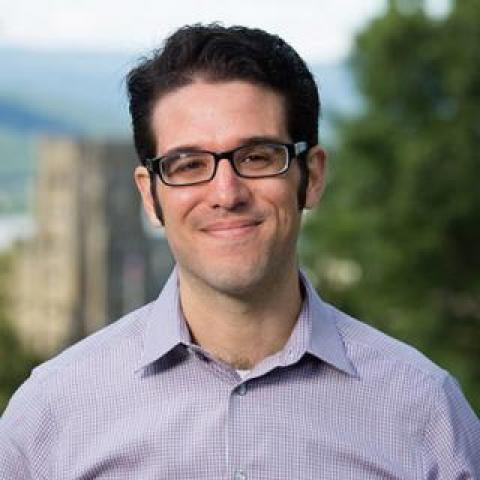
Associate Professor, Anthropology
Matthew Velasco is an anthropological bioarchaeologist who studies ancient populations of the Peruvian Andes through the analysis of their skeletal remains. His research explores the emergence of novel ethnic identities and cultural traditions during the era preceding and encompassing Inka imperial expansion in the 15th century. To explore how these dynamic social transformations impacted the lived experience of the body and its treatment at death, he analyzes and interpret indicators of social identity, biological relatedness, diet, and health status written on the human skeleton.
Additional Information
Irina Troconis

Assistant Professor, Romance Studies
Irina Troconis’s areas of specialization include: Memory Studies, Venezuelan Studies, Politics and Performance, Affect Theory, and Digital Humanities. Her book project, Spectral Remains: Memory, Affect, and the State in the Afterglow of Hugo Chávez’s Bolivarian Revolution, explores through the lens of spectrality the memory narratives and practices developed around the figure of Venezuelan president Hugo Chávez in the seven years following his death. She is also working on two new research projects. The first examines the performance work of Venezuelan artists in the diaspora.
Additional Information
Vilma Santiago-Irizarry

Associate Professor Emerita, Anthropology
Vilma Santiago-Irizarry’s research has focused on the unintended consequences, paradoxes, and contradictions generated in the articulation and deployment of ethnoracial identity constructs, particularly in the United States and in institutional settings, where they are applied toward the reproduction of structures of inequality. Her other research interests and areas of expertise include language, law, field methods, and institutional culture.
Additional Information
Amanda Rodewald

Garvin Professor of Ornithology
Amanda Rodewald’s research and interests focus on population and community responses to changes in land use, climate, invasive species, and disturbance regimes; socioecological dynamics and conservation in working landscapes; eco-evolutionary dynamics in human-dominated and urbanizing systems; sustainable management of temperate and tropical forests; conservation planning and prioritization, innovative finance and market-based instruments to support conservation and communities.