
Latin American and Caribbean Studies
Information Session: Global Internships

September 17, 2024
5:00 pm
Uris Hall, G08
Go global in summer 2025! Global Internships give you valuable international work experience in fields spanning global development, climate and sustainability, international relations, communication, business, governance, and more.
***
The Mario Einaudi Center for International Studies hosts info sessions for graduate and for undergraduate students to learn more about funding opportunities, international travel, research, and internships. View the full calendar of fall semester sessions.
Additional Information
Program
Einaudi Center for International Studies
Reppy Institute for Peace and Conflict Studies
East Asia Program
Southeast Asia Program
Latin American and Caribbean Studies
Institute for African Development
Institute for European Studies
South Asia Program
Migrations Program
Information Session: Undergraduate Global Scholars Program

September 4, 2024
5:00 pm
Uris Hall, G08
Undergraduate Global Scholars are student leaders in the campus community. This competitive fellowship program is open to students from all colleges and majors with a passion for big global questions and speaking across differences. The Global Scholars program provides a toolkit of resources for weighing challenging questions and builds your practical skills in public debates. For the 2024-2025 school year, Scholars will bring their skills as writers, scholars, activists and artists, poets, hands-on practitioners, and more to study and promote democracy building. By the end of the program, you'll be an active global citizen and champion for social impact.
Applications are due Friday, September 20.
Can’t attend? Contact programs@einaudi.cornell.edu.
***
The Mario Einaudi Center for International Studies hosts info sessions for graduate and for undergraduate students to learn more about funding opportunities, international travel, research, and internships. View the full calendar of fall semester sessions.
Additional Information
Program
Einaudi Center for International Studies
Reppy Institute for Peace and Conflict Studies
East Asia Program
Southeast Asia Program
Latin American and Caribbean Studies
Institute for African Development
Institute for European Studies
South Asia Program
Migrations Program
Food as You Know It Is About to Change

Chris Barrett, IAD/SEAP
Chris Barrett, professor of agricultural and development economics, and research by Ariel Ortiz-Bobea, associate professor in the Dyson School and Atkinson faculty fellow, are quoted.
Additional Information
Narco Activities in Central America Threaten Bird Species

Amanda Rodewald, LACS
Amanda Rodewald (LACS) describes how cocaine trafficking threatens two-thirds of the most important bird habitats in Central America. Her team's research appeared in the journal Nature Sustainability in June.
Amanda Rodewald, professor of natural resources and the environment, details how activities associated with cocaine trafficking threaten two-thirds of the most important landscapes in Central America for 196 forest bird species.
Additional Information
Spring Break Sustainability Education Policy Program in Ecuador Info Session
September 10, 2024
3:00 pm
Uris Hall, 153
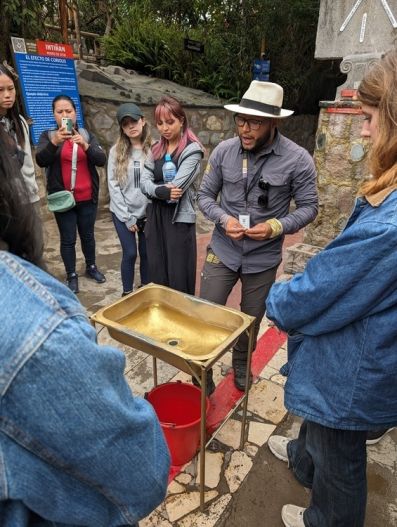
Come learn more about this spring opportunity with spring break travel, developed in partnership with Universidad San Francisco de Quito and as part of the Jeb E. Brooks School’s Global Policy Exchange Lab. This 3-credit collaborative online international learning (COIL) and community-based global learning (CBGL) course allows a unique bilateral exchange as highlighted in our overview of the Spring 2024 program. The program invites Cornell students to explore the complexities of education policy and practice in the United States and Ecuador with students and faculty from Universidad San Francisco de Quito as well as with teachers, administrators, and policy makers in both contexts.
Additional Information
Program
Latin American and Caribbean Studies
Indebted Life, Gothic Mothers: A New Puerto Rican Genealogy in the Short Stories of Yolanda Arroyo Pizarro
November 19, 2024
12:20 pm
Uris Hall, G08
Co-sponsored by Romance Studies
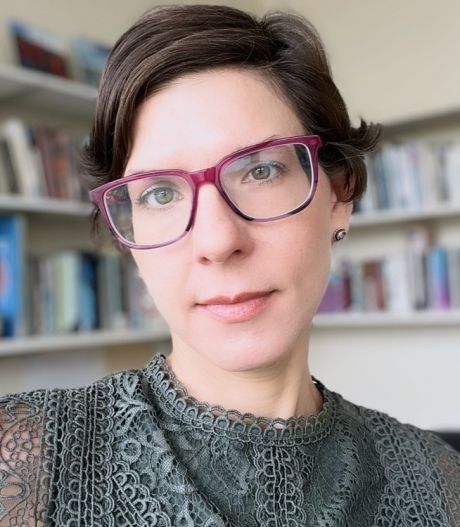
The archipelago of Puerto Rico is a colony in debt. Debt, according to Lucí Cavallero and Verónica Gago, goes hand in hand with the disciplining of bodies, especially female, queer, and dissident bodies. Therefore, colony and debt possess certain characteristics—confinement, violence and subjugation—that coincide with the definition of the Gothic mode in that both involve control, stalking and murder, like in horror and terror fiction. With this in mind, I propose a Gothic interpretation of three short stories by Afro Puerto Rican writer Yolanda Arroyo Pizarro, published between 2007 and 2015, in times of debt and austerity. They are stories about Black, Indigenous and/or poor women who are under attack, forced to serve as labor, spoils of war and scapegoats of all social ills. Furthermore, they are Gothic stories firstly because they are tales about violence against women–more specifically, mothers–and secondly because the protagonists themselves perpetrate violence against others, including infanticide and kidnapping. My analysis suggests that this series of Gothic tales establishes a new genealogy that dismantles the official discourse on Puerto Rican identity, which is rooted in the idea of the White, Hispanic, heteronormative family. This Gothic genealogy helps us elucidate the true colonial debt: the invisibilization of the bodies and the silencing of the voices of the most vulnerable throughout the history of the archipelago from its colonization in 1493 to the present day marked by debt and crisis.
Sandra M. Casanova-Vizcaíno is Associate Professor of Spanish at Binghamton University-State University of New York, where she teaches Latin American and Caribbean literature, film, and culture. Her research interests include contemporary Gothic and horror fiction, and representations of violence in Latin American and Caribbean literature and film. Her first book, El gótico transmigrado: narrativa puertorriqueña de horror, terror y misterio en el siglo XXI (Corregidor 2021), studies monstrosity, violence, and dystopia in 21st-century Puerto Rican fiction. She co-edited the volumes Latin American Gothic in Literature and Culture (Routledge 2018), and Aquelarre de cuentos: antología de terror insólito escrito por mujeres (Huso 2021), and she is the author of multiple articles and book chapters on contemporary Puerto Rican narrative.
Additional Information
Program
Einaudi Center for International Studies
Latin American and Caribbean Studies
Spring Break Program in Chile Info Session
October 1, 2024
3:00 pm
Uris Hall, G08
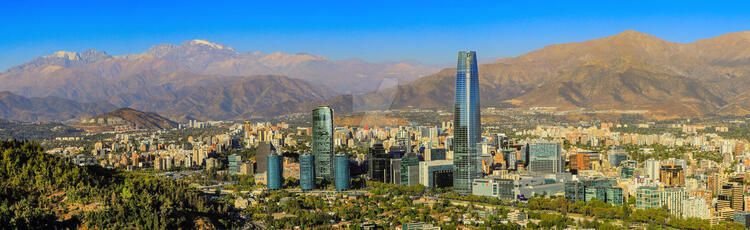
Learn more about the “thin country” with “crazy geography.” The England of South America. A South American exception. The Republic of Poetry. Birthplace of neoliberal shock therapy. The descriptions for and of Chile abound. This spring 2025 program simultaneously reveals from whence such descriptions arose as well as both the truths and the falsehoods they may contain. The course examines the history of Chile from roughly 1800 to the present, always with an appreciation for its place in a broader world and always also with an attention to its regional and national specificities. During spring break, student who apply through experience will also travel to Santiago and the UNESCO heritage site Valparaíso.
Additional Information
Program
Latin American and Caribbean Studies
Einaudi Center for International Studies
Spring Break Program in Chile Info Session
September 12, 2024
3:00 pm
Uris Hall, G08
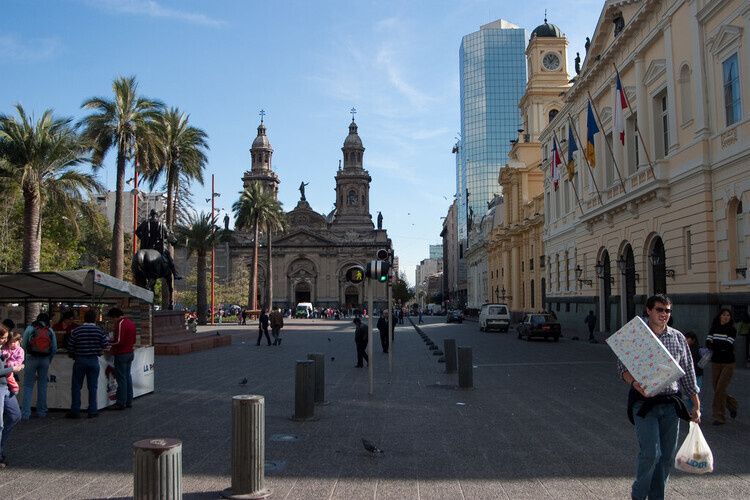
Learn more about the “thin country” with “crazy geography.” The England of South America. A South American exception. The Republic of Poetry. Birthplace of neoliberal shock therapy. The descriptions for and of Chile abound. This spring 2025 program simultaneously reveals from whence such descriptions arose as well as both the truths and the falsehoods they may contain. The course examines the history of Chile from roughly 1800 to the present, always with an appreciation for its place in a broader world and always also with an attention to its regional and national specificities. During spring break, student who apply through experience will also travel to Santiago and the UNESCO heritage site Valparaíso.
Additional Information
Program
Latin American and Caribbean Studies
Einaudi Center for International Studies
Spring Break Sustainability Education Policy Program in Ecuador Info Session

September 25, 2024
12:30 pm
Come learn more about this spring opportunity with spring break travel, developed in partnership with Universidad San Francisco de Quito and as part of the Jeb E. Brooks School’s Global Policy Exchange Lab. This 3-credit collaborative online international learning (COIL) and community-based global learning (CBGL) course allows a unique bilateral exchange as highlighted in our overview of the Spring 2024 program. The program invites Cornell students to explore the complexities of education policy and practice in the United States and Ecuador with students and faculty from Universidad San Francisco de Quito as well as with teachers, administrators, and policy makers in both contexts.
Additional Information
Program
Latin American and Caribbean Studies
Democracy and Polarization: Latin America After the Left Turn
September 24, 2024
12:20 pm
Uris Hall, G08
Cosponsor: Department of Global Labor and Work
Latin America’s “left turn” at the beginning of the twenty-first century was unprecedented in its scope and duration, producing 32 presidential victories by left-of-center parties or leaders in 11 different countries between 1998 and 2015. Despite notable achievements in reducing poverty and extreme inequalities, leftist parties found it difficult to “deepen” democracy by empowering popular majorities, and they suffered a series of agonizing political defeats between 2015 and 2019 that allowed conservative forces to reclaim their customary hold on state power. This project traces the different origins and trajectories in power of “populist” and “social democratic” currents within the Latin American left. Through a comparative analysis of several leftist cases, it also examines how their alternative conceptions of democracy carried the seeds of their own demise, setting the stage for new forms of political polarization in the region.
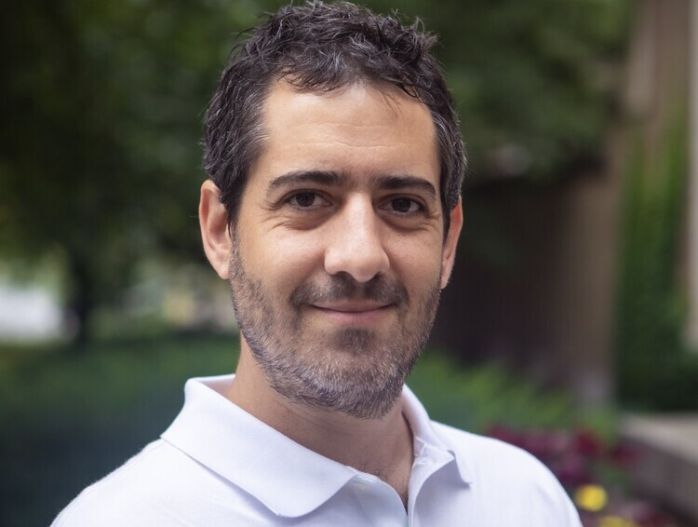
Santiago Anria is Assistant Professor in the Department of Global Labor and Work at Cornell University’s School of Industrial and Labor Relations. He is the author of When Movements Become Parties: The Bolivian MAS in Comparative Perspective.
Additional Information
Program
Einaudi Center for International Studies
Latin American and Caribbean Studies