
Latin American and Caribbean Studies
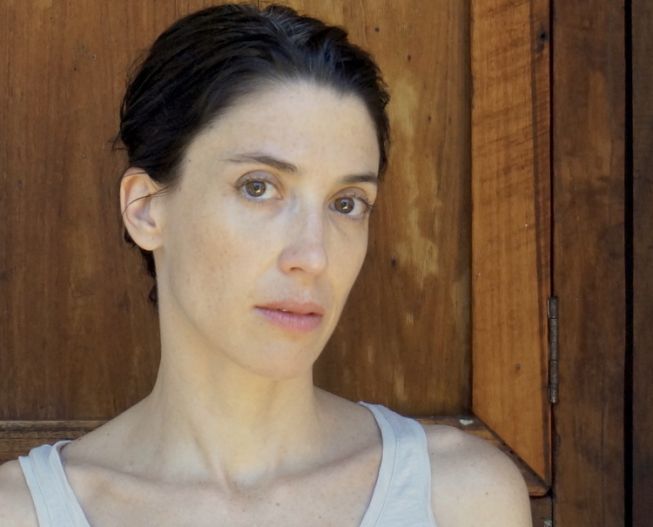
Readings from: Azares del cuerpo (2017) and Solo un poco aquí (2023)
April 11, 2023
12:25 pm
Uris Hall, G08
LACS Weekly Seminar
Readings from: Azares del cuerpo (2017) and Solo un poco aquí (2023) And a conversation with author María Ospina. Colombian writer and critic María Ospina will share excerpts from her two works of fiction, Azares del cuerpo (2017) and Solo un poco aquí (2023), followed by a Q & A.
About the Author
María Ospina is an Associate Professor of Latin American culture at the Department of Romance Languages and the Latin American Studies Program at Wesleyan University.
Publications
She is the author of the book El rompecabezas de la memoria: Literatura, cine y testimonio de fin de siglo en Colombia and has written numerous articles on nature, violence, and culture in contemporary Colombia. Her first book of fiction, the short story collection Azares del cuerpo (2017), has been published in Colombia, Chile, Spain, and Italy and was recently translated into English (Variations on the Body, Coffee House Press, 2021). Her novel Solo un poco aquí will be published by Random House Mondadori in April 2023.
Additional Information
Program
Einaudi Center for International Studies
Latin American and Caribbean Studies
Ink under the Fingernails: Printing Politics in Nineteenth-Century Mexico
March 27, 2023
12:25 pm
Uris Hall, 153
LACS Weekly Seminar
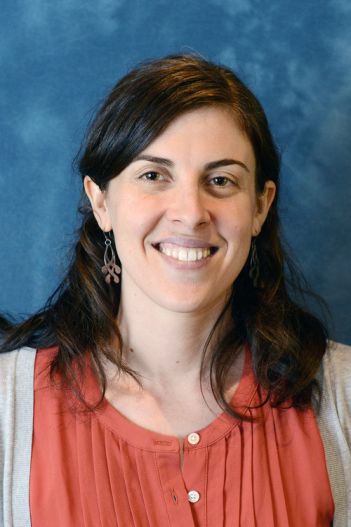
This talk explores the practical negotiations, discursive contests, and social aspirations surrounding print over a century of political transformation, from the late colonial era to the Mexican Revolution. Centering on the diverse communities that worked behind the scenes at urban presses, the talk considers how printer interactions with state and religious authorities shaped broader debates about press freedom and authorship, identifying printing shops as unexplored spaces of democratic practice where the boundaries between manual and intellectual labor blurred.
About the Speaker
Corinna Zeltsman is an assistant professor of history at Princeton University. She is the author of Ink under the Fingernails: Printing Politics in Nineteenth-Century Mexico (the University of California Press, 2021), which received the Howard F. Cline Book Prize in Mexican History from the Latin American Studies Association. Trained as a letterpress printer, she is a senior fellow in the Andrew W. Mellon Society of Fellows in Critical Bibliography at the Rare Book School.
Additional Information
Program
Einaudi Center for International Studies
Latin American and Caribbean Studies
Landscape Urbanism: A Framework for equitable Adaptation?

March 22, 2023
5:00 pm
Warren Hall, 175
LACS Weekly Seminar
The environmental crisis accentuates inequality. In Latin America and the Caribbean, the most vulnerable populations often reside in informal, precarious, or popular settlements, which are more exposed to climate events and generally have less access to infrastructure and ecosystem services. In recent years, designers and urbanists have offered important insights into rethinking informal settlements and developing strategies to improve their inhabitants' quality of life, safety, and opportunities. Today, it is essential to incorporate climate criteria into urban interventions effectively. The presentation will focus on the potential of landscape design and public space as media to restore and improve, adapt and connect, and mitigate and anticipate the transformation of the most vulnerable settlements in the Americas.
About the Speaker
Jeannette Sordi is an architect and urban planner based in New York City. She currently teaches at the New York Institute of Technology and collaborates with the Inter-American Development Bank in Latin America and the Caribbean. Until 2018 she was an Associate Professor of Landscape and Urbanism at Adolfo Ibañez University in Santiago de Chile. She holds a Ph.D. in urban planning and design from the University of Genoa (2014) and was a Ph.D. Visiting Student at the Harvard Graduate School of Design (2011- 2012). Her Ph.D. focused on the genealogy of landscape urbanism and was published as Beyond Urbanism (List, 2014; Sacabana, 2017, Spanish edition). She co-founded Landscape as Urbanism in the Americas in 2015 and was one of the curators of the Chilean XX Biennial of Architecture and Urbanism in Valparaiso in 2017.
Publications
Her main publications include the books Andrea Branzi. From Radical Design to Post-Environmentalism (ARQ, 2015), The Camp and the City. Territories of Extraction (List, 2017), Part-time Cities (ARQ, 2019), Ness.doc.2 Landscape as Urbanism in the Americas (Lots, 2020, co-edited with F. Rodriguez and P. Peralta) and Ecological Design. Strategies for the Vulnerable City (IaDB, 2021, 2022, with F. Vera).
*********
Presented by the Latin American and Caribbean Studies program and cosponsored by the Department of Landscape Architecture.
Additional Information
Program
Einaudi Center for International Studies
Latin American and Caribbean Studies
Film Screening on Venezuelan Refugees in Colombia: Nos Vemos Pronto
March 16, 2023
5:00 pm
Uris Hall, G08
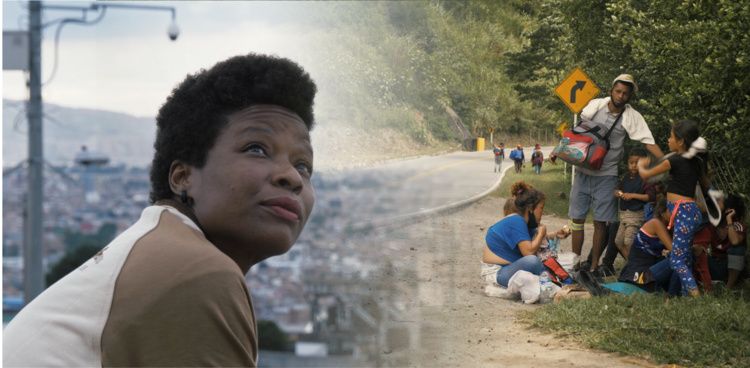
Risking their lives along a network of dangerous Colombian highways to confronting the wounds of leaving home through poetry, Nos Vemos Pronto documents first-hand the treacherous and diverse experiences of Venezuelan refugees in Colombia. Filmed in various regions throughout Colombia, from the Venezuelan border to the capital city of Bogotá, Nos Vemos Pronto chronicles the stages of current Venezuelan migration through direct accounts from refugees. Narrated by the poetry of Johanna, a Venezuelan immigrant who left seeking better opportunities, we get a glimpse into the tribulations one faces leaving their home country as an immigrant and/or refugee.
Nos Vemos Pronto is impossible to watch without grappling with our own humanity and realizing the dire conditions of the present Venezuelan diaspora. Nonetheless, Nos Vemos Pronto also provides a message of hope, offers untold perspectives, and reveals nuanced and universal dimensions of immigration.
About the Director
Andrew Kirschenbaum is a director, writer, and passionate traveler who follows his curiosity to various corners of the world, exploring meaningful connections with people and places. In the process, he aims to uncover stories and moving visuals that reveal more about our human experience and offer a voice to the voiceless. Kirschenbaum grew up outside of New Haven, Connecticut, and has worked, volunteered, traveled, and studied across the globe in Morocco, Colombia, Mexico, Niger, Ethiopia, Serbia, Ukraine, Brazil, and more. Kirschenbaum has a degree in International Relations from Roger Williams University and recently relocated to New York City to dive deeper into documentary and narrative film after spending roughly a year and a half in Latin America. Kirschenbaum takes great pride in language learning in his free time and currently speaks Spanish, French, Portuguese, and Arabic at varying levels.
**********
Cosponsored by the Department of Roman Studies
Additional Information
Program
Einaudi Center for International Studies
Latin American and Caribbean Studies
Study Abroad Fair

February 7, 2023
2:30 pm
Willard Straight Hall, Memorial Room
Open up a whole new world by studying abroad!
Cornellians who have studied abroad are sharing their experiences at the Office of Global Learning's study abroad fair. You'll learn about where in the world you can study, what programs work for you and your major, and how study abroad can enhance your college experience.
Join us for international treats! No registration required.
Additional Information
Program
Einaudi Center for International Studies
Reppy Institute for Peace and Conflict Studies
East Asia Program
Southeast Asia Program
Latin American and Caribbean Studies
Institute for African Development
Institute for European Studies
South Asia Program
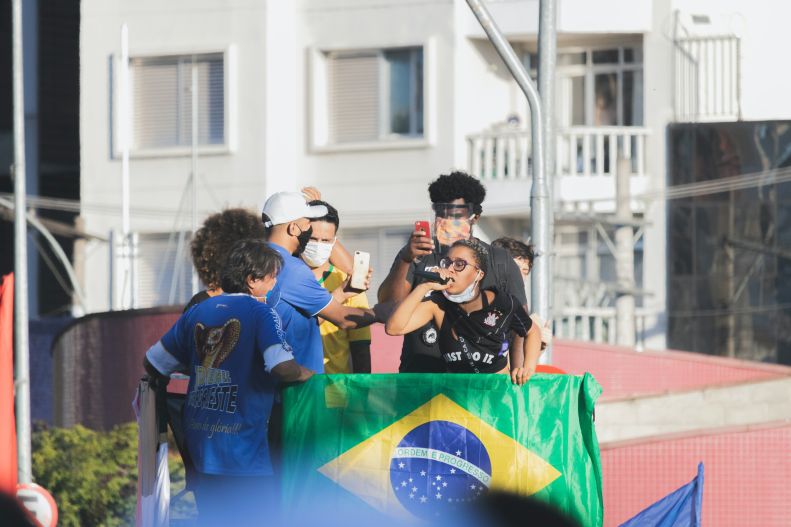
Supporters of Defeated Far-right President Storm Government Buildings in Brazil
Gustavo Flores-Macias, LACS
Gustavo Flores-Macias, professor of government and public policy, joins to discuss the latest developments of protestors supporting former President of Brazil Jair Bolsonaro calling for the removal of Lula da Silva, the current president.
Additional Information
Language Resource Center Speaker Series - Larisa Kasumagic- Kafedzic
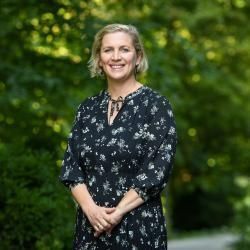
February 15, 2023
5:00 pm
Stimson Hall, G25
"Language and Peace: Joining Peace Pedagogies and Peace Linguistics in Language Education"
Larisa Kasumagic- Kafedzic
Fulbright Visiting Scholar Fellow, Cornell University
Associate Professor, University of Sarajevo
Efforts toward peacebuilding in language education around the world have been gradual, diverse, and continuously growing despite a lack of systematic and comprehensive attempts to position the discipline of language pedagogy within the scope of peace education. This talk will explore the notions of peace linguistics within the field of (applied) linguistics and peace pedagogy within the general field of comparative education, their evolution, history, development, and diversification in connection to the fields of language teaching, language and culture pedagogy, and teacher education, where specific initiatives, frameworks, and practices for teaching about and for peace through languages will be illustrated. A particular emphasis will be placed on how and why of peace language teaching by revising some of the key contributions underpinning peace pedagogy that can be integrated into language education: critical pedagogy, intercultural pedagogy, inclusive pedagogy, reflective and democratic pedagogy, social justice pedagogy, nonviolence pedagogy, healing and reconciliation pedagogy, arts-based pedagogy, feminist/engaged pedagogy, participatory pedagogy, decolonial pedagogy, pedagogy of reconciliation and remembrance. A number of specific examples of peacebuilding strategies, activities, and didactic tools and materials from language classrooms, intercultural learning projects, and teacher education program from Bosnia and Herzegovina’s formal education setting will be presented. The talk will also discuss the interdisciplinary nature of several other projects implemented in the European context (ECML projects, Council of Europe), which focus on intercultural learning, critical cultural awareness, and diversity in language education, by creating linkages between language, culture, pedagogy, and relevant content on the one hand, and by integrating action research in language education as a methodological framework for critical reflection on the other.
Bio: Larisa Kasumagić- Kafedžić, a 2003-04 Cornell University Hubert Humphrey Fellow Alumni, is currently a Fulbright Visiting Scholar Fellow at Cornell University. She is a visiting associate professor and through her research project “Teachers as Agents of Change: Education for Peace and Social Responsibility” she will collaborate closely with schools, teachers, and teacher educators in Ithaca and the region, while also providing various lectures and seminars on her expertise, experience, and research to Cornell’s community of students and faculty. She holds an MPS in International Development and Education from Cornell University and a Ph.D. in English Language Pedagogy and Intercultural Education from Sarajevo University. Larisa Kasumagić- Kafedžić teaches at the University of Sarajevo’s Department of English Language and Literature in the Faculty of Philosophy. Her research interests are in the fields of intercultural education, peace pedagogy, language education, teacher training, reflective pedagogies, and action research in teacher development. She is also the founder and a president of the Peace Education Hub, which was established at the University of Sarajevo in early 2020.
This event will be held in person in G25 Stimson and will also be streamed live over Zoom. Join us at the LRC or on Zoom.
The event is free and open to the public. Campus visitors and members of the public must adhere to Cornell's public health requirements for events.
Additional Information
Program
Einaudi Center for International Studies
Latin American and Caribbean Studies
Info Session: Language Opportunities and Funding

February 8, 2023
4:30 pm
Mario Einaudi Center for International Studies , G-08 Uris Hall
Get involved with the Mario Einaudi Center for International Studies and the Language Resource Center to enhance your language skills!
Through resources on campus, students of all levels can improve global language skills, apply for funding to practice language abroad, and more.
Opportunities include:
Foreign Language and Area Studies (FLAS) FellowshipRare and Distinctive (RAD) Language FellowshipForeign Language Introduction Program (FLIP)Conversation HoursLearn more about student information sessions from the Einaudi Center on minors, funding opportunities, Fulbright, summer language programs, and much more.
Additional Information
Program
Einaudi Center for International Studies
Reppy Institute for Peace and Conflict Studies
East Asia Program
Southeast Asia Program
Latin American and Caribbean Studies
Institute for African Development
Institute for European Studies
South Asia Program
6 Reasons Why Our Planet Might Not Be Doomed After All

Amanda Rodewald, LACS/Migrations
“However, when we look at what needs to be done for birds, it’s the same things we need to be doing for human health and well-being,” says Amanda Rodewald, professor in the Lab of Ornithology and of natural resources.
Additional Information
Info Session: Fulbright U.S. Student Program for Undergraduates

March 29, 2023
4:45 pm
Over 500 Cornellians have crossed the globe with the Fulbright U.S. Student Program since the 1940s. You could be the next!
The program, administered by the Mario Einaudi Center for International Studies, supports college graduates conducting research or teaching English in more than 150 countries. The Einaudi Center's Fulbright advisor helps you get started early to submit a successful application.
Learn more about student information sessions from the Einaudi Center on minors, funding opportunities, Fulbright, summer language programs, and much more.
Additional Information
Program
Einaudi Center for International Studies
Reppy Institute for Peace and Conflict Studies
East Asia Program
Southeast Asia Program
Latin American and Caribbean Studies
Institute for African Development
Institute for European Studies
South Asia Program