
Latin American and Caribbean Studies
Info Session: Einaudi Research Travel Grants
November 9, 2022
4:45 pm
The Einaudi Center's Research Travel Grants for Graduate Students provide international travel support for Cornell graduate students conducting short-term research or fieldwork outside the United States.
If you’re traveling between the United States and a host country for activities directly related to your dissertation or thesis research, Einaudi can help you get there. Join this Einaudi Center Student Info Session to find out more.
Additional Information
Program
Einaudi Center for International Studies
Reppy Institute for Peace and Conflict Studies
East Asia Program
Southeast Asia Program
Latin American and Caribbean Studies
Institute for African Development
Institute for European Studies
South Asia Program
Info Session: Foreign Language and Area Studies Fellowships and Rare and Distinctive Language Fellowships
November 2, 2022
4:45 pm
Uris Hall, G-08
If you love languages, our funding opportunities are for you! Learn one of more than 50 languages offered at Cornell with a Foreign Language and Area Studies Fellowship or Rare and Distinctive Language Fellowship. Opportunities are open to both undergraduate and graduate students.
FLAS fellowships support students studying modern South Asian and Southeast Asian languages and related area studies. Funding is offered in collaboration with the Einaudi Center’s South Asia and Southeast Asia Programs.
RAD fellowships support students studying modern languages that are less frequently taught in the United States. Funding is offered by the Einaudi Center for intensive summer language study.
Join this hybrid Einaudi Center Student Info Session in person in Uris Hall G-08 or virtually (link below).
Additional Information
Program
Einaudi Center for International Studies
Reppy Institute for Peace and Conflict Studies
East Asia Program
Southeast Asia Program
Latin American and Caribbean Studies
Institute for African Development
Institute for European Studies
South Asia Program
Info Session: Fulbright Opportunities for Graduate Students

October 19, 2022
4:45 pm
The Fulbright U.S. Student Program provides full funding for graduate and professional students conducting research or teaching in any field in more than 150 countries. (Open to U.S. citizens only.)
The Fulbright-Hays Doctoral Dissertation Research Abroad program supports doctoral students conducting research in modern languages or area studies for six to 12 months. (Open to U.S. citizens and permanent residents of the United States. Travel to Western European countries is not eligible.)
The Einaudi Center administers the Fulbright program at Cornell. As the home of Cornell’s Fulbright program, we offer all the resources that students need to apply for prestigious Fulbright international study and research funding. Learn more about Fulbright at Cornell.
Join this Einaudi Center Student Info Session to find out if Fulbright is right for you!
***
Contact: fulbright@einaudi.cornell.edu
Additional Information
Program
Einaudi Center for International Studies
Reppy Institute for Peace and Conflict Studies
East Asia Program
Southeast Asia Program
Latin American and Caribbean Studies
Institute for African Development
Institute for European Studies
South Asia Program
Info Session: Einaudi Dissertation Proposal Development Program

October 13, 2022
4:45 pm
Develop your dissertation on global issues with a toolkit of resources!
The Einaudi Dissertation Proposal Development Program (DPD) supports 12 PhD students annually. Applicants’ research projects must focus on global issues, but the proposed research setting may be international or domestic.
Over the course of the year, you’ll participate in seminars, workshops, and mentoring sessions and receive up to $5,000 for summer research. Join this Einaudi Center Student Info Session to find out how to apply!
***
Contact: programs@einaudi.cornell.edu.
Additional Information
Program
Einaudi Center for International Studies
Reppy Institute for Peace and Conflict Studies
East Asia Program
Southeast Asia Program
Latin American and Caribbean Studies
Institute for African Development
Institute for European Studies
South Asia Program
Info Session: Migration Studies Minor

September 7, 2022
4:45 pm
Do you want to understand how human migration shapes our world on the move? In the Einaudi Center’s migration studies minor, you explore the factors that influence migrants’ decisions to migrate and drive their departure, arrival, and integration into new societies.
The minor is open to all Cornell undergraduates and includes courses from across the university.
Join this Einaudi Center Student Info Session to find out more!
***
Contact: migration-minor@einaudi.cornell.edu
Additional Information
Program
Einaudi Center for International Studies
Reppy Institute for Peace and Conflict Studies
East Asia Program
Southeast Asia Program
Latin American and Caribbean Studies
Institute for African Development
Institute for European Studies
South Asia Program
Info Session: Graduate Latin American and Caribbean Studies Summer Research Grant and Minor
October 12, 2022
4:45 pm
The Latin American and Caribbean Studies Program (LACS) summer research grant provides funding for in-country research costs for graduate pre-dissertation work in Latin America or the Caribbean. LACS will offer up to three research grants to qualified graduate students who need to conduct field research next summer. Grant amounts may vary from $500 to $1,500.
The graduate minor in Latin American studies allows you to acquire in-depth knowledge of Latin America and the Caribbean, which will enhance your expertise for future research and professional advancement. The main requirement is to have a Latin American studies field faculty member as a member of your committee.
Join this Einaudi Center Student Info Session to find out if LACS funding and the graduate minor are right for you!
***
Contact: lacs@cornell.edu
Additional Information
Program
Einaudi Center for International Studies
Latin American and Caribbean Studies
Info Session: Africa Undergraduate Research Internships
September 21, 2022
4:45 pm
Uris Hall, G-08
The Institute for African Development (IAD) offers a summer Africa internship program that lets you undertake challenging practical fieldwork in Ghana or Zambia. If you're a sophomore or junior, join this Einaudi Center Student Info Session to find out how you can apply in the coming year.
Interns must attend two seminars in the IAD Special Topic Seminar Series (CRP 4770) and a pre-departure meeting.
***
Contact: iad@cornell.edu
Additional Information
Program
Einaudi Center for International Studies
Reppy Institute for Peace and Conflict Studies
Latin American and Caribbean Studies
Institute for African Development
Info Session: International Relations Minor

September 20, 2022
4:45 pm
Uris Hall, G-08
Is the Einaudi Center's international relations minor for you? Join this Einaudi Center Student Info Session to find out.
In the international relations minor, you study the politics, economics, history, languages, and cultures of the world and gain a fresh perspective on your major field of study. Graduates go on to successful careers in fields like international law, economics, agriculture, trade, finance, journalism, education, and government service.
***
Contact: irm@einaudi.cornell.edu
Additional Information
Program
Einaudi Center for International Studies
Reppy Institute for Peace and Conflict Studies
East Asia Program
Southeast Asia Program
Latin American and Caribbean Studies
Institute for African Development
Institute for European Studies
South Asia Program
Info Session: Latin American and Caribbean Studies Opportunities for Undergraduates

September 14, 2022
4:45 pm
Uris Hall, G-08
The Latin American and Caribbean Studies Program (LACS) offers an interdisciplinary minor, summer internships, and other funding opportunities. Join this Einaudi Center Student Info Session to find out what LACS has in store for you!
The Latin American studies minor is an undergraduate minor across disciplines that allow you to explore the history, culture, government, politics, economy and languages of Latin America and the Caribbean. Qualifying courses can be found in almost every college.
Our summer internships sent several students to Ecuador in 2022!
***
Contact: lacs@cornell.edu
Additional Information
Program
Einaudi Center for International Studies
Latin American and Caribbean Studies
East Asia Program
Southeast Asia Program
Institute for African Development
Dissidence: Exiled Writers on Resistance and Risk
September 23, 2022
12:00 pm
Goldwin Smith Hall, G64
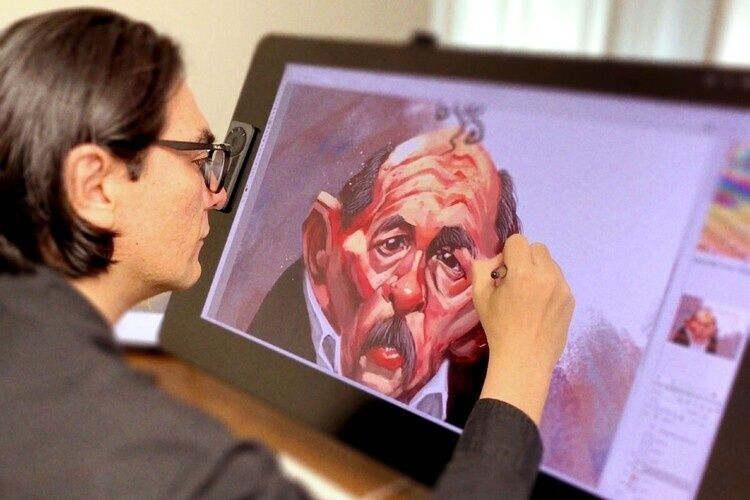
Poet Dmitry Bykov was nearly killed in a poisoning, then found himself banned from teaching at Russian universities. Essayist Pwaangulongii Dauod received death threats for writing about queer culture in his native Nigeria. Cartoonist Pedro X. Molina watched as Nicaraguan state forces jailed his colleagues and occupied the offices of the newspaper where he published his work. Novelist Anouar Rahmani was threatened with imprisonment for writing about human and environmental rights in Algeria.
All four were forced to flee their homelands, and all four were able to resume their creative work in “cities of asylum” in the United States.
“DISSIDENCE: Exiled Writers on Resistance and Risk” is supported by a grant from Cornell University’s Migrations Global Grand Challenge and the Mellon Foundation’s Just Futures Initiative. The event is also supported by CIVIC. The Migrations Initiative, part of Global Cornell, studies the movement of all living things through an interdisciplinary, multispecies lens, with a special focus on themes of racism, dispossession, and migration.
About the writers
Dmitry Bykov (Ithaca City of Asylum) is one of Russia’s best-known public intellectuals. He spent five days in a coma after falling ill during a speaking tour in 2019. An independent investigation blamed Russian security forces for poisoning him with the nerve agent Novichok. In addition to prohibiting him from teaching at the university level, the government has also barred him from appearing on state radio or TV. Bykov is currently a visiting critic at Cornell University and a fellow of the Open Society University Network.
Pwaangulongii Dauod (City of Asylum Detroit) is a novelist, essayist, and memoirist from Nigeria. His 2016 essay in Granta, “Africa’s Future Has No Space for Stupid Black Men,” sparked a national conversation about queer issues in Nigeria and provoked threats to his life. Woke Africa Magazine named him one of the “Best African Writers of the New Generation.” He is currently an Artist Protection Fund Fellow in residence at Wayne State University.
Pedro X. Molina (Ithaca City of Asylum) is a political cartoonist who fled Nicaragua during a crackdown on dissent in 2018. He was an International Writer in Residence at Ithaca College and was an Artist Protection Fund Fellow in residence at Cornell University. Among his many honors is a 2021 Gabo Award, a 2019 Maria Moors Cabot Award from Columbia Journalism School, and the 2018 Courage in Editorial Cartooning Award from Cartoonists Rights Network International.
Anouar Rahmani (City of Asylum Pittsburgh) is a novelist, journalist, and human rights defender from Algeria. He has faced legal harassment for his advocacy for individual freedom, environmental rights, and the rights of minorities, women, and LGBTQ+ people. In 2021, he was shortlisted for the Index on Censorship’s Freedom of Expression Awards. He is currently an Artist Protection Fund Fellow in residence at Carnegie Mellon University.
Each writer will present an 8-10 minute reading followed by a moderated Q&A session.
Additional Information
Program
Einaudi Center for International Studies
Latin American and Caribbean Studies
Institute for European Studies