
Latin American and Caribbean Studies
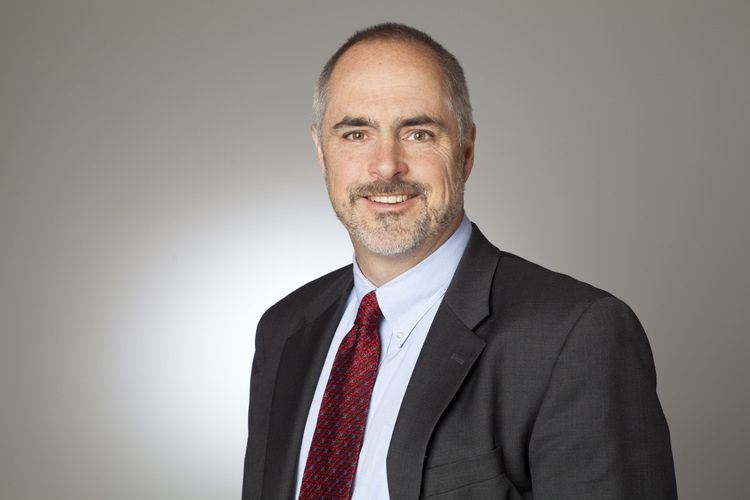
Berger International Speaker Series with Brian Concannon - Finding Accountability in the Mirror: Helping Vulnerable Populations Enforce Their Human Rights Against Powerful Countries and Institutions
October 12, 2021
12:15 pm
This event will occur via Zoom. Please register for the event at the following link: https://cornell.zoom.us/webinar/register/WN_hIX1iOuGSlODljETDSThLQ
Additional Information
Program
Latin American and Caribbean Studies
Faculty: Apply Now

Seed Grant Applications Due Oct. 29
Einaudi's seed grants support faculty-led international research, activities, and events. Find out more.
Additional Information
Underground Railroad Project
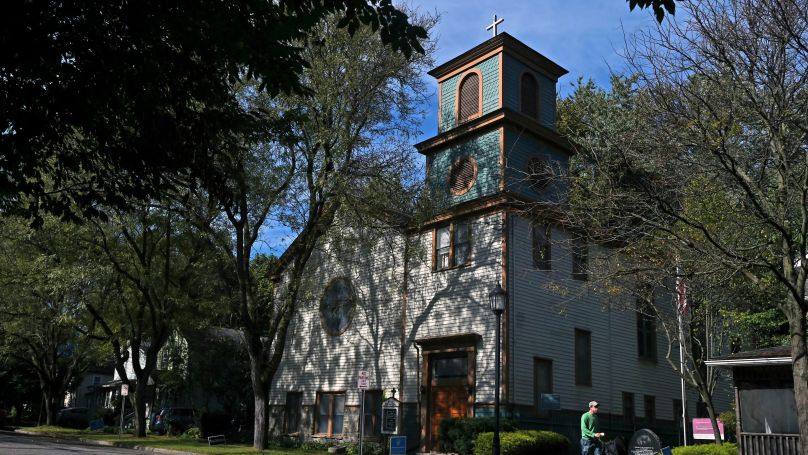
Aching Leads Dig at Historic Ithaca Church
LACS faculty Gerard Aching is working with St. James A.M.E. Zion Church members and a Cornell team to uncover local history of Black diaspora.
Additional Information
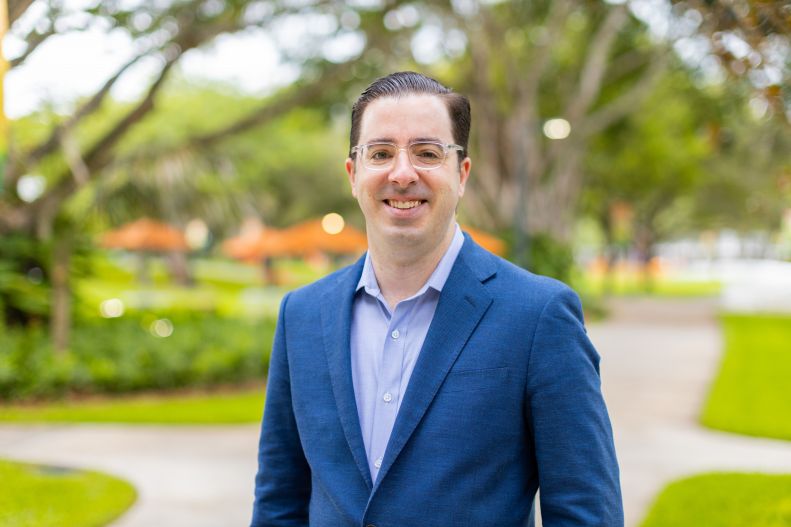
Cuban Memory Wars: Retrospective Politics in Revolution and Exile, by Michael J. Bustamante, U Miami, Mon 9-20, 1PM
Hybrid Event; G01 Stimson Hall or Register for Zoom
For many Cubans, Fidel Castro’s Revolution represented deliverance from a legacy of inequality and national disappointment. For others—especially those exiled in the United States—Cuba’s turn to socialism made the prerevolutionary period look like paradise lost. Michael J. Bustamante unsettles this familiar schism by excavating Cubans’ contested memories of the Revolution’s roots and results over its first twenty years. Cubans’ battles over the past, he argues, not only defied simple political divisions; they also helped shape the course of Cuban history itself. Join us in G01 Stimson Hall to receive Michael virtually from Miami or connect with us on Zoom.
Zoom registration link: https://cornell.zoom.us/webinar/register/WN_6bV77YtzSTacd_9hRBG6YQ
Additional Information
LACS Film Series presents "IXCANUL (volcano)," 6-8pm, G08 Uris Hall
September 23, 2021
6:00 pm
Uris Hall, G08
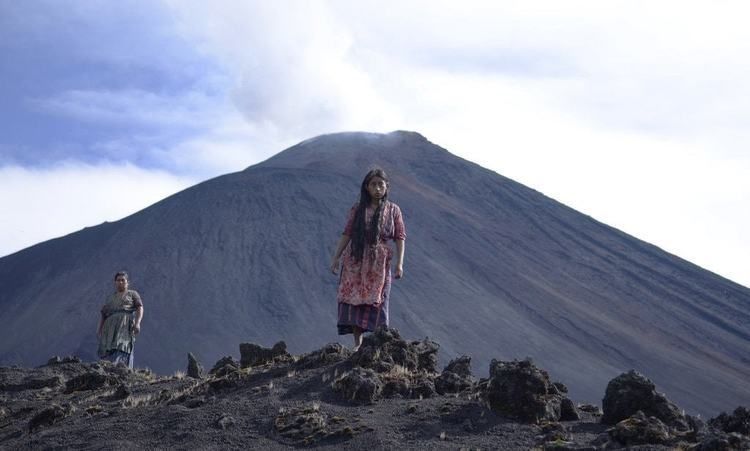
IXCANUL (“volcano” in the Kaqchikel language, English Subtitles)
Time: 6-8 PM | Place: G08 Uris Hall
This year’s LACS Film Series will screen movies from all over the region, highlighting the program’s recent focus on the Caribbean. During the Fall semester we’ll watch and discuss movies from North America (Mexico), Central America (Guatemala), and the Caribbean (Haiti & Dominican Republic). In the Spring semester, the series will “go South” with films from South American countries, and once again from the Caribbean.
Feel free to join any of the screening sessions + discussions without previous RSVP. Upcoming dates are October 21 and November 18 (always at 6pm). Further details will be shared before each session.
Looking forward to seeing you all!
The LACS Film Committee
Ixcanul Description: Maria, a 17 year old Mayan woman, lives on the slopes of an active volcano in Guatemala. An arranged marriage awaits her. Although Maria dreams of seeing 'the city', her status as an indigenous woman does not allow her to go out into that 'modern world'. Later, during a pregnancy complication, this modern world will save her life, but at what price. The brilliant debut by Guatemalan filmmaker Jayro Bustamante is a mesmerizing fusion of fact and fable, a dreamlike depiction of the daily lives of Kaqchikel speaking Mayans on a coffee plantation at the base of an active volcano. Immersing us in its characters' customs and beliefs, IXCANUL chronicles with unblinking realism, a disappearing tradition and a disappearing people.
Additional Information
Program
Einaudi Center for International Studies
Latin American and Caribbean Studies
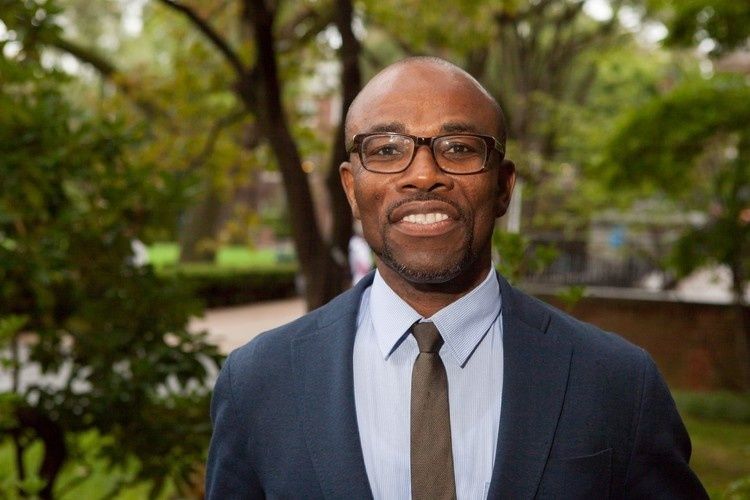
"The Economic Motivations Behind U.S. Interventions & Foreign Policy in Haiti," by Jean Eddy Saint Paul, Virtual LACS Public Issues Forum
November 29, 2021
4:30 pm
Many scholars and practitioners do not necessarily know that the United States occupied Haiti for nineteen years, between 1915 and 1934. It is also not common knowledge that the monies taken from the National Bank of Haiti helped to boost the U.S. economy in the context of the great depression. With the recent assassination of Haitian President Jovenel Moïse followed by the powerful earthquake of August 14, 2021, Haiti has yet again been in the spotlight of mainstream media, and is recurrently labelled as the “poorest country of the Western Hemisphere,” a label that not only ignores the root causes of Haiti’s contemporary issues, but also completely ignores the country’s rich history and resources. Contrary to the general scholarship that has reaffirmed neocolonial tropes about Haiti, Professor Saint Paul will unpack the myth that Haiti is the poorest country, and will explain how U.S. economic interests have driven U.S. political interventions in Haiti, from 1915 to now. The overall goal of the lecture is to raise awareness about the fact that the Caribbean country has been impoverished by powerful transnational social forces, highly influenced by the United States of America. The discussion will also explore the question of whether or not the United States has a moral responsibility in Haiti’s current state of affairs.
Virtual Event via Zoom, please register through the following link: https://cornell.zoom.us/webinar/register/WN_Py9gTMsFSta3oHkkmEQqyQ
Additional Information
Program
Einaudi Center for International Studies
Latin American and Caribbean Studies
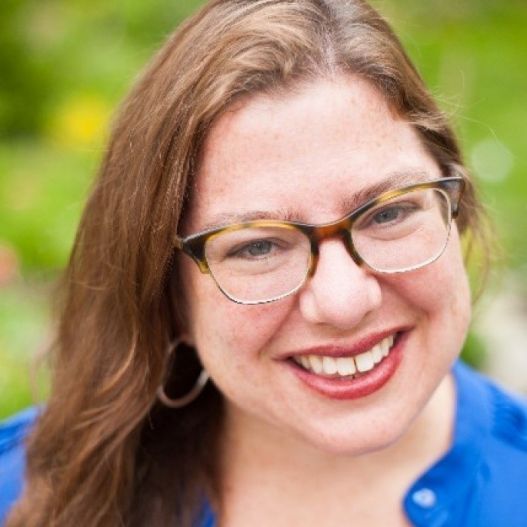
"Bootstrap Justice: The Search for Mexico's Disappeared," by Janice Gallagher, LACS Weekly Seminar Series
November 22, 2021
1:00 pm
G-01 Stimson Hall
What does it take to challenge entrenched judicial dysfunction? In this talk, Janice Gallagher previews the central argument from her forthcoming book, "Bootstrap Justice: The Search for Mexico's Disappeared." She shows how the sustained mobilization of families of the disappeared widens cracks in impunity produced by shifting state-criminal alliances, and highlights the key role of state allies. Speaker is in-person.
Cornell Community may attend in-person at 1pm G01 Stimson Hall
Event is free and open to the public via Zoom--Please register through the following link:
https://cornell.zoom.us/webinar/register/WN_5VxY9YHDS5yCp1N-FwG2Lw
Additional Information
Program
Einaudi Center for International Studies
Latin American and Caribbean Studies
"Children of Collapse: El Niño and the Making of Andean Livelihoods," by Javier Puente, LACS Weekly Seminar Series

October 4, 2021
1:00 pm
G-01 Stimson Hall
Often seen solely as a calamity, El Niño Southern Oscillation has impacted the Peruvian Andes for hundreds of years and has (re)shaped the means of agrarian life for Indigenous and campesino peoples. Based on archival and ethnographic work, this presentation discusses how El Niño and its “disasters” — floods, droughts, and mudslides, and others — are also responsible for spurring adaptation, resilience, and different forms of socioenvironmental organization.
Hybrid (speaker in-person for the Cornell Community)
Free and open to the public by Zoom:
https://cornell.zoom.us/webinar/register/WN_iX3_SIpWQqWj4ltARiPQYg
Additional Information
Program
Einaudi Center for International Studies
Latin American and Caribbean Studies
Migration in the Media

September 22, 2021
12:00 pm
In this moment of hyper-politicized border and migration issues, questions of representation are crucial. This roundtable of scholars, journalists, and practitioners will address the needs and challenges of producing stories about complex border issues along with the potential for different stories to effect real change. Our panelists are actively documenting, producing, circulating, and reflecting on migration stories through a range of media and will share from their own work, focusing especially on the contentious borderspaces of the southern U.S. and southern Europe. This discussion is organized by the Migrations initiative and co-sponsored by the East Asia Program, the Institute for European Studies, the Department of Sociology, Latin American and Caribbean Studies, and the School of Public Policy.
WHAT YOU'LL LEARN
Key questions that journalists, academics, and practitioners consider in producing and responding to stories and coverage of migration issuesHow different media shape what stories get told and who they reachHow the politicization of migration affects what stories do and do not get toldThe possibilities that different media and storytelling practices offer for challenging dominant narratives or providing more complex accountsThe role that images play in communicating migration and border issues to the public
Additional Information
Program
East Asia Program
Latin American and Caribbean Studies
Institute for African Development
Institute for European Studies
“Book presentation: O Kit de Sobrevivência do Descobridor Português no Mundo Anticolonial,” (2020) by Patrícia Lino, LACS Seminar Series
October 21, 2021
12:00 pm
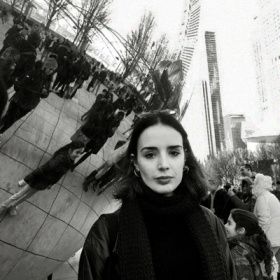
Author Patrícia Lino will be presenting and discussing her recent book, O Kit de Sobrevivência do Descobridor Português no Mundo Anticolonial (2020).
Patrícia Lino (1990) is a poet, an essayist, and an Assistant Professor at UCLA, where she teaches Luso-Brazilian literatures and cinema. Lino is the author of O Kit de Sobrevivência do Descobridor Português no Mundo Anticolonial (2020), Não é isto um livro (2020), and Manoel de Barros e A Poesia Cínica (2019). She recently directed DAEDALUS 22/1 (BRA 2021), Anticorpo. A Parody of the Laughable Empire (US-POR 2019) and Vibrant Hands (US-POR 2019). She is also the author of the mixed poetry album I Who Cannot Sing (2020). Lino presented, published, and exhibited essays, poems, and illustrations in more than seven countries. Her current research focuses on contemporary poetry, visual and audiovisual culture, parody and anticolonialism, and Luso-Brazilian film. She works as a researcher member at the UCLA Latin American Institute and as a collaborator at Instituto de Literatura Comparada Margarida Losa. Lino is also the co-editor of escamandro, a Brazilian magazine dedicated to poetry and criticism.
Virtual Event Zoom link:
https://cornell.zoom.us/webinar/register/WN_31pGp-mdRGmtvhPvHMrTAw
Additional Information
Program
Einaudi Center for International Studies
Latin American and Caribbean Studies