
Latin American and Caribbean Studies
Bienvenidos BBQ

September 3, 2021
6:00 pm
Anna Comstock Hall (Latino Living Center)
Come meet students, faculty, and staff and learn about the organizations that are part of the Latinx community at Cornell.
OPEN TO THE CORNELL COMMUNITY!
Register via Campus groups: https://cglink.me/2ee/r1182710
Hosted by the Latino Living Center, Latina/o Studies Program, Latinx Student Success Office.
Additional Information
Program
Latin American and Caribbean Studies
Info Session: Einaudi Dissertation Proposal Development Program
October 14, 2021
4:45 pm
This session will provide PhD students with information on the Einaudi Dissertation Proposal Development Program. The program offers seminars, workshops, and faculty mentoring to PhD students in the social sciences and humanities who are developing research projects abroad or domestic research projects on topics that connect to global issues. Students receive up to $5,000 for summer research. Workshop and seminar costs are also covered.
Contact: programming@einaudi.cornell.edu
Additional Information
Program
Einaudi Center for International Studies
Reppy Institute for Peace and Conflict Studies
East Asia Program
Southeast Asia Program
Latin American and Caribbean Studies
Institute for African Development
Institute for European Studies
South Asia Program
Info Session: Fulbright Opportunities for Graduate Students
September 29, 2021
4:45 pm
The Fulbright U.S. Student Program provides full funding for graduate and professional students conducting research or teaching in any field in more than 150 countries. Open to U.S. citizens only.
The Fulbright-Hays Doctoral Dissertation Research Abroad program supports doctoral students conducting research in modern languages or area studies for six to 12 months. Open to U.S. citizens and permanent residents of the United States. Travel to Western European countries is not eligible.
Contact: fulbright@einaudi.cornell.edu
Additional Information
Program
Einaudi Center for International Studies
Reppy Institute for Peace and Conflict Studies
East Asia Program
Southeast Asia Program
Latin American and Caribbean Studies
Institute for African Development
Institute for European Studies
South Asia Program
Info Session: International Relations Minor
September 22, 2021
4:45 pm
Is the Einaudi Center's International Relations minor for you? Here's a chance to find out. Graduates go on to successful careers in fields like international law, economics, agriculture, trade, finance, journalism, education, and government service.
Contact: irm@einaudi.cornell.edu
Additional Information
Program
Einaudi Center for International Studies
Reppy Institute for Peace and Conflict Studies
East Asia Program
Southeast Asia Program
Latin American and Caribbean Studies
Institute for African Development
Institute for European Studies
South Asia Program
Info Session: Latin American and Caribbean Studies Opportunities for Undergraduates
September 15, 2021
4:45 pm
Join us to learn about our interdisciplinary minor, summer 2022 internships, and other funding opportunities.
The Latin American Studies minor is an undergraduate minor across disciplines that will allow students to explore the history, culture, government, politics, economy and languages of Latin America and the Caribbean. Qualifying courses can be found in almost every college.
Contact: lacs@cornell.edu
Additional Information
Program
Einaudi Center for International Studies
Latin American and Caribbean Studies
Info Session: Migration Studies Minor
September 8, 2021
4:45 pm
The migration studies minor is a university-wide, interdisciplinary undergraduate minor that prepares students to understand the historical and contemporary contexts and factors that drive international migration and shape migrant experiences around the globe. This minor draws on the rich course offerings found across the humanities and social sciences at Cornell, and is designed to draw students outside of their major fields and to extend their knowledge beyond a single country.
Contact: migration-minor@einaudi.cornell.edu,
Additional Information
Program
Einaudi Center for International Studies
Reppy Institute for Peace and Conflict Studies
East Asia Program
Southeast Asia Program
Latin American and Caribbean Studies
Institute for African Development
Institute for European Studies
South Asia Program
Info Session: European Studies Minor and Undergraduate Funding Opportunities
September 7, 2021
4:45 pm
Through an interdisciplinary curriculum that you can mold to your interests, the European Studies (ES) Minor provides the opportunity to explore Europe’s past, present, and future. You will cultivate a knowledge of European languages, culture, history, politics, and international relations. The minor offers the chance to take courses across colleges on subjects that shape your understanding of a globalizing world, while also providing you with an area of expertise. You will gain critical thinking skills, language abilities, and helpful frameworks for assessing today’s most pressing issues in Europe and around the world.
Several funding opportunities are available for you to pursue undergraduate research projects focused on Europe. Join the information session to learn about application requirements, deadlines, and how to construct a strong proposal.
Contact: ies@cornell.edu
Additional Information
Program
Reppy Institute for Peace and Conflict Studies
Einaudi Center for International Studies
East Asia Program
Southeast Asia Program
Latin American and Caribbean Studies
Institute for African Development
Institute for European Studies
Second EMI Pitch Competition
November 5, 2021
8:00 am
Cornell Tech
The Emerging Markets Institute (EMI) was launched in 2010 to broaden global leadership horizons in business research and talent development. Every year, the EMI holds an Annual Conference to bring together business and opinion leaders, academics, and students to discuss emerging markets.
For the second year, the Conference is also hosting a pitch competition. The objective of the pitch competition is to give international recognition to startups with presence in emerging markets. The final round of the competition is a part of the EMI Annual Conference.
Learn more about the pitch competition and register for the conference at the EMI Annual Conference website.
Additional Information
Program
Einaudi Center for International Studies
Latin American and Caribbean Studies
Fifth EMI Case Competition
November 5, 2021
8:00 am
Cornell Tech
The Emerging Markets Institute (EMI) was launched in 2010 to broaden global leadership horizons in business research and talent development. Every year, the EMI holds an Annual Conference to bring together business and opinion leaders, academics, and students to discuss emerging markets.
Along with the conference, the EMI holds an annual case competition. The competition focuses on identifying and answering questions that real businesses and management face in relation with emerging markets. The growing role of Emerging Multinationals in the business world continues to evolve, and this case competition seeks to challenge us to think about how to navigate in a changing context.
This year's case competition will be held at the 2021 Annual Conference, which you can learn more about and register for on the conference website.
Additional Information
Program
Einaudi Center for International Studies
Latin American and Caribbean Studies
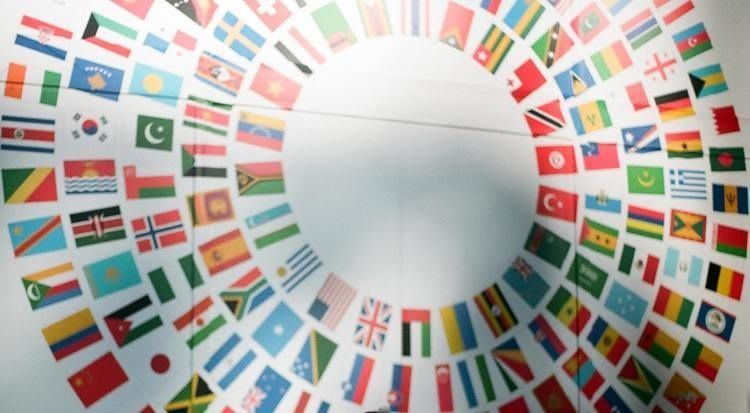
International Fair 2021
September 1, 2021
11:30 am
Uris Hall, Terrace
The annual International Fair showcases Cornell's global opportunities for undergraduate and graduate students. Explore the fair and find out about international majors and minors, language study, fellowships, internships, study abroad, exchanges, service learning, and more.
Due to capacity limitations at the venue, we invite you to register now to reserve priority access to this event. Walk-ins are also welcome, but there may be a wait if we reach capacity. Please wear a face mask during the event.
The International Fair is sponsored by the Mario Einaudi Center for International Studies, the Office of Global Learning (both part of Global Cornell), and Cornell's Language Resource Center.
Additional Information
Program
Einaudi Center for International Studies
Reppy Institute for Peace and Conflict Studies
East Asia Program
Southeast Asia Program
Latin American and Caribbean Studies
Institute for African Development
Institute for European Studies
South Asia Program