
Migrations Program
Explaining Refugee Employment Declines: Structural Shortcomings in Federal Resettlement Support

By Our Faculty
In the United States, the integration experiences of immigrants depend partly on whether they are recognized as refugees or economic migrants. Unlike economic migrants, refugees receive federal resources to help find employment, raising important questions about the role of such government support in migrants’ labor market integration.
Article
Additional Information
Multi-stakeholder Perspectives on Digital Tools for U.S. Asylum Applicants Seeking Healthcare and Legal Information

By Our Faculty
There is a concerning lack of clear and accurate information around accessing public benefits for asylum applicants in the United States (U.S.), which has been shown to negatively affect their healthcare engagement. Digital tools such as websites and mobile applications can be a potentially promising way to disseminate public benefits information to asylum applicants. The goal of this study is to understand the current informational needs of asylum applicants in the U.S. seeking legal information and resources regarding their individual rights to public health benefits and services.
Article
Additional Information
Program
Type
- Article
Publication Details
Publication Year: 2022
Journal: Association for Computing Machinery
The World We Became: Map Quest 2350, A Speculative Atlas Beyond Climate Crisis
By Our Faculty
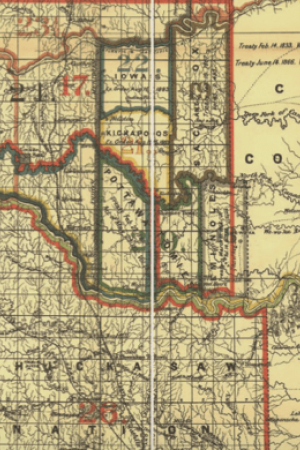
Tackling how racial justice and climate crisis are entangled, this essay introduces a speculative cartography experiment entitled The World We Became: Map Quest 2350. A collaboration between a collective of artists, poets, academics, curators, architects, and activists, this digital humanities project maps global ecological crises and shared Black, Asian, Pacific, Middle Eastern, Latin American, Caribbean, and Indigenous futures.
Article
Additional Information
Program
Type
- Article
Publication Details
Publication Year: 2022
Journal: Brill
Publication Number: 2352-3085
Shannon Gleeson

Edmund Ezra Day Professor and Chair
Shannon Gleeson is the Edmund Ezra Day Professor at the Cornell University School of Industrial and Labor Relations, and holds a joint appointment with the Brooks School of Public Policy.
Additional Information
How to Model the Weather-migration Link: A Machine-learning Approach to Variable Selection in the Mexico-U.S. Context

By Our Faculty
A growing body of research investigates how changes in weather shape individual choices about migration, yet highly variable results continue to challenge our understanding of the weather-migration nexus. We use a data-driven approach to identify which weather variables best predicted migration decisions of 54,986 individuals originating in Mexico between 1989 and 2016.
Article
Additional Information
Program
Type
- Article
Publication Details
Publication Year: 2022
Journal: Journal of Ethnic and Migration Studies
Fuzzy Borders: Media, Migration Brokerage, and State Bureaucracy

By Our Faculty
In the western Indian city of Jodhpur, computer typists provide migration brokerage services to Pakistani Hindu refugee-migrants and Indian immigration officers. Such encounters and their interpretations contrast with the Indian state's emphasis on governmental proximity and immediate state-subject relations. Though computer typists—who I am calling brokers—are essential mediators, their acts of mediation are underrecognized.
Article
Additional Information
Program
Type
- Article
Publication Details
Publication Year: 2023
Journal: American Ethnologist Journal of the American Ethnology Society
Emergency in Transit: Witnessing Migration in the Colonial Present
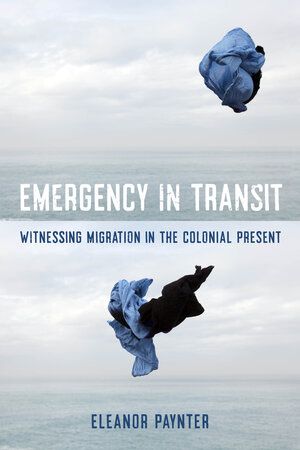
Emergency in Transit responds to the crisis framings that dominate migration debates in the global north. This capacious, interdisciplinary study reformulates Europe's so-called "migrant crisis" from a sudden disaster to a site of contested witnessing, where competing narratives threaten, uphold, or reimagine migrant rights.
Book
38.52
Additional Information
Intersection of Narco Trafficking, Enforcement and Bird Conservation in the Americas

By Our Faculty
Complex social challenges such as narco trafficking can have unexpected consequences for biodiversity conservation. Here we show how international counter-drug strategies may increase the risk of narco trafficking, which is associated with deforestation, in two-thirds of the important landscapes for forest birds in Central America.
Article
Additional Information
Program
Type
- Article
Publication Details
Publication Year: 2024
Journal: Natural Sustainability
Publication Number: ISSN 2398-9629
Advancing Immigrant Rights in Houston

By Our Faculty
In Advancing Immigrant Rights in Houston, Els de Graauw and Shannon Gleeson recount how local and multi-level contexts shape the creation, contestation, and implementation of immigrant rights policies and practices in the city. They examine the development of a city immigrant affairs office, interactions between local law enforcement and federal immigration enforcement officials, local public-private partnerships around federal immigration benefits, and collaborations between labor, immigrant rights, faith, and business leaders to combat wage theft.
Book
14.95
Additional Information
Program
Type
- Book
Publication Details
Publication Year: 2024
Journal: Temple University Press
ISBN: 9781439924402
Esam Boraey
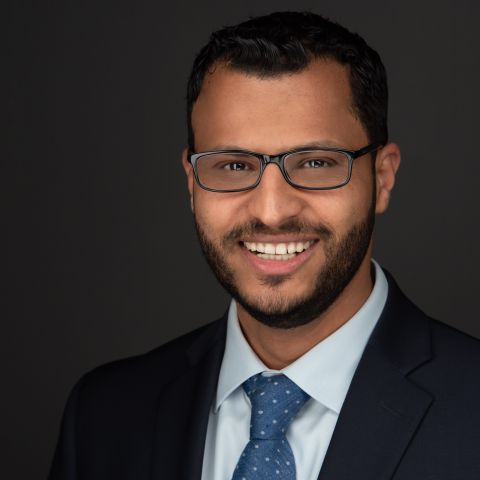
Reppy Fellow 2025-26, Migrations Graduate Fellow
Esam Boraey is a PhD student in government, specializing in comparative politics and political economy with a regional focus on the Middle East. His research explores the intersection of authoritarianism, social movements, and economic development, particularly how state structures and societal norms shape political and economic outcomes in the region.
Additional Information
Program
Role
- Student
- PACS Current Graduate Fellow
- Graduate Fellow
- Graduate Student
Contact
Email: emb435@cornell.edu