
Migrations Program
The Last Heroes: Foot Soldiers of Indian Freedom - Who, Really, Were India’s Anti-colonial Raj Fighters

September 23, 2024
12:15 pm
Uris Hall, G08
Talk by P. Sainath (Founding Editor, People’s Archive of Rural India)
The 2022 celebrations around the 75th year of India’s Independence seemed devoid of any recall of who and what it was the Indian people fought against to win Freedom and Independence. Official websites dedicated to the subject tell young readers nothing about it. Nor was there any debate on who won India its Independence. A bunch of returning Oxbridge elites? Or, as Gandhi observed, ‘the people themselves’? India’s official website commemorating 75 years of Independence (Azadi ki Amrut Mahotsav) has many thousands of entries on what the government considers vital around that period. It has no single story on, by, or about, nor even a single photo or video of a living freedom fighter – and there are still some, as my book The Last Heroes (Penguin November 2022) would show you. No less importantly, the official site has nothing on the British Raj and its impact on Indians. Two vital questions, then, remain unanswered: what did British colonialism actually do to Indians? And secondly – the question my recent book deals with – who, really, were our freedom fighters? The book records the life stories of 15 very ordinary Indians – representative of tens of millions of others – and how they took on the British Raj. Farmers, labourers, cooks, couriers, homemakers, artisans, students, and others played astonishingly courageous roles without personal gain. They came from a diverse social spectrum: Dalits, Adivasis, Hindus, Muslims, Sikhs, OBCs, Brahmins, atheists… What motivated these freedom fighters? Why do they tell us that freedom and independence are two different things?
Magsaysay Prize -winner P. Sainath is an Indian journalist focusing on social and economic inequality, deprivation, and poverty, particularly in rural India. Despite receiving over 60 national and global awards for journalism, Sainath has also declined several – including the Padma Bhushan, as he believes “journalists should never accept prizes and rewards from the governments they cover and critique.” Sainath was McGraw Professor of Writing at Princeton University in the Fall of 2012 and has been conferred doctorates by three other Universities. In India, he has taught journalism for 37 years. His first book, Everybody Loves A Good Drought, was declared a Penguin Classic in 2013 and is in its 61st printing. His latest book, The Last Heroes: Foot Soldiers of Indian Freedom, is already in its 5th edition. A journalist since 1980, Sainath became a full-time rural reporter in 1993 and has since then spent, on average, around 270 days a year in India’s poorest regions, writing from there for India’s largest newspapers, including The Times of India and for The Hindu (of which he was Rural Editor for a decade). More recently, his path-breaking reporting placed India’s ongoing agrarian crisis and farmers’ suicides – over 400,000 in two decades since 1995 – on the national agenda. In 2014, Sainath launched the People’s Archive of Rural India (PARI), a unique online project on rural India, with its 833 million people speaking 780 living languages and a bewildering array of stories, occupations, arts, music, culture, and a lot more. In less than ten years, PARI has won 70 journalism awards, including every single major prize in that field in India.
Additional Information
Program
Einaudi Center for International Studies
South Asia Program
Migrations Program
Stephen Yale-Loehr Wins Award for Impact on the Field of Immigration Law

The American Immigration Lawyers Association (AILA) recognizes Stephen Yale-Loehr with the Robert Juceam Founders Award, which is given from time to time to the person or entity having the most substantial impact on the field of immigration law or policy.
Additional Information
Kenyan Fishers Face Increased Drowning Risk from Climate Change
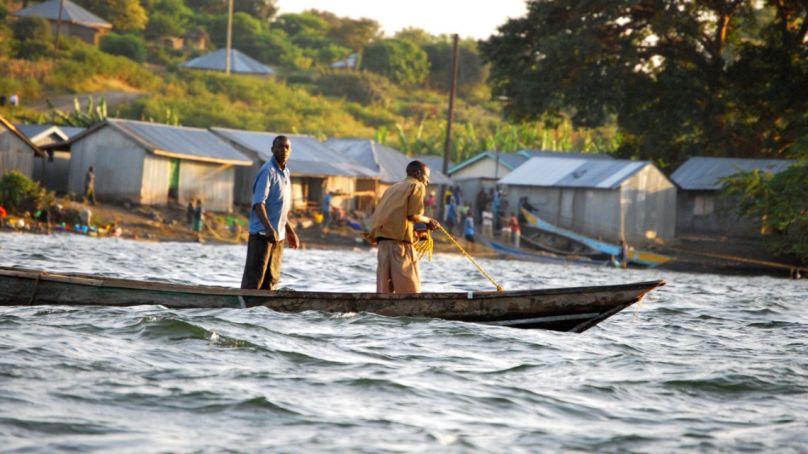
Katie Fiorella, SEAP
Fatal drownings are a big risk for small-scale fishers on Africa’s largest lake, with many of those deaths attributed to bad weather – conditions that are likely to worsen with climate change, according to a new study. “Drowning deaths are really a neglected risk factor,” said Kathryn Fiorella, assistant professor in the Department of Public and Ecosystem Health in the College of Veterinary Medicine and a co-corresponding author of the study.
Additional Information
Eliana Amoh ’26: Understanding Ghanaian Youth Migration Dynamics
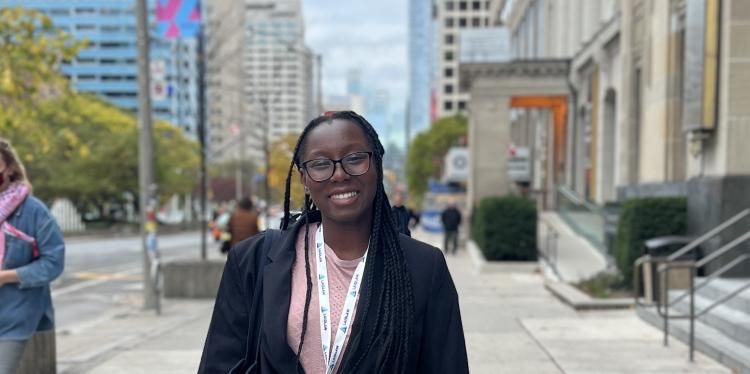
Eliana Amoh, Laidlaw Scholar
Meet Eliana Amoh ’26, an undergraduate student in Global Development whose research explores youth development, educational equity, and economic migration.
Additional Information
Americans Are Critical of Today's Immigrants

María Cristina García, LACS
María Cristina García, professor of history, notes that Americans had the same complaints about immigrants 50 years ago.
Additional Information
Cornell Helps Displaced Scholars Rebuild Careers
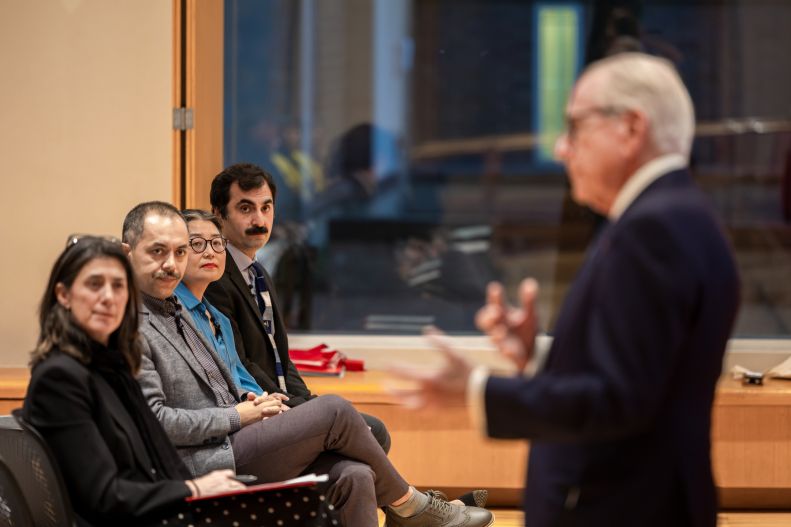
Series Honors Einaudi's Past Visiting Scholars
Read about Turkish sociologist Azat Gündoğan (IES), Nicaraguan cartoonist Pedro X. Molina (LACS), and Afghan artist Elja Sharifi (Johnson Museum).
Additional Information
$1.5 Million Grant to Path2Papers DACA Project

Led by Past GPV Fellow and Einaudi's Migrations Fellow
Law faculty Jaclyn Kelley-Widmer and Steve Yale-Loehr are launching a nonprofit venture to help DACA recipients get legal permanent residency.
Additional Information
Wa Communities in the China-Myanmar Borderlands

By Magnus Fiskesjö
The Wa is an ethnicity in the borderlands of China and Myanmar (Burma). In the 1950s and 1960s, their ancient land was divided for the first time by these two modern states. Before this watershed moment in Wa history, the Wa were famous as independent, practically invincible warrior-farmers, much feared in their region despite having no kings and no regular army. These Wa farmer-warriors were deeply engaged in their regional economy through trade in mining products, as well as in opium, and, as a result, the British colonial officers who tried but failed to incorporate them into their empire could not but marvel at the wealth of the Wa. Since the division, the formerly independent Wa communities have been transformed on both sides of the border: on the Chinese side, into drastically impoverished regular peasants under Chinese rule; and, on Burmese territory, since 1989, into peasants under a new type of Wa elite in the Wa state—a semi-state governed by the United Wa State Army (UWSA). Both in China and in Myanmar, the Wa are officially listed as an indigenous ethnic minority. In China, there is local autonomy in name only. In Myanmar, the UWSA is an ethnonationalistic Wa elite with an army of considerable power and occupies a fraught position in the geopolitics of the fragmented state of Myanmar, which the UWSA recognizes even as it seeks even greater autonomy. Both contemporary Wa societies are dramatically different from the past, although many cultural traditions continue.
Additional Information
Self-Portraits Give Voice to Vulnerable Cambodian Fishing Communities

Kathryn Fiorella, SEAP
A study that used photos taken by participants to spark conversation reveals firsthand accounts of how climate change, land use and dams on the Mekong River are threatening the future of the communities dependent on those ecosystems.
Additional Information
In India, Computer Typists Embody "Fuzzy" Nature of State Borders

Natasha Raheja, SAP
Cornell anthropologist Natasha Raheja publishes a new ethnographic study she conducted at the border of Jodhpur, India, about Pakistani Hindus and their interactions with computer typists who provide essential services to prospective migrants into India.