
Reppy Institute for Peace and Conflict Studies
Information Session: Global Internships

October 29, 2024
5:00 pm
Uris Hall, G08
Go global in summer 2025! Global Internships give you valuable international work experience in fields spanning global development, climate and sustainability, international relations, communication, business, governance, and more.
***
The Mario Einaudi Center for International Studies hosts info sessions for graduate and for undergraduate students to learn more about funding opportunities, international travel, research, and internships. View the full calendar of fall semester sessions.
Additional Information
Program
Einaudi Center for International Studies
Reppy Institute for Peace and Conflict Studies
East Asia Program
Southeast Asia Program
Latin American and Caribbean Studies
Institute for African Development
Institute for European Studies
South Asia Program
Migrations Program
Information Session: Global Internships
October 10, 2024
5:00 pm
Uris Hall, G08
Go global in summer 2025! Global Internships give you valuable international work experience in fields spanning global development, climate and sustainability, international relations, communication, business, governance, and more.
***
The Mario Einaudi Center for International Studies hosts info sessions for graduate and for undergraduate students to learn more about funding opportunities, international travel, research, and internships. View the full calendar of fall semester sessions.
Additional Information
Program
Einaudi Center for International Studies
Reppy Institute for Peace and Conflict Studies
East Asia Program
Southeast Asia Program
Latin American and Caribbean Studies
Institute for African Development
Institute for European Studies
South Asia Program
Migrations Program
Information Session: Global Internships
September 30, 2024
1:00 pm
Go global in summer 2025! Global Internships give you valuable international work experience in fields spanning global development, climate and sustainability, international relations, communication, business, governance, and more.
Register for this virtual session.
***
The Mario Einaudi Center for International Studies hosts info sessions for graduate and for undergraduate students to learn more about funding opportunities, international travel, research, and internships. View the full calendar of fall semester sessions.
Additional Information
Program
Einaudi Center for International Studies
Reppy Institute for Peace and Conflict Studies
East Asia Program
Southeast Asia Program
Latin American and Caribbean Studies
Institute for African Development
Institute for European Studies
South Asia Program
Migrations Program
Information Session: Latin American Studies Minor

October 9, 2024
5:00 pm
Uris Hall, G08
The undergraduate minor in Latin American Studies spans across disciplines and allows you to explore the history, culture, government, politics, economy and languages of Latin America and the Caribbean. Qualifying courses can be found in many of the colleges.
Can’t attend? Contact lacs@cornell.edu.
***
The Mario Einaudi Center for International Studies hosts info sessions for graduate and for undergraduate students to learn more about funding opportunities, international travel, research, and internships. View the full calendar of fall semester sessions.
Additional Information
Program
Einaudi Center for International Studies
Latin American and Caribbean Studies
Reppy Institute for Peace and Conflict Studies
East Asia Program
Southeast Asia Program
Institute for African Development
Institute for European Studies
Migrations Program
Information Session: Laidlaw Research and Leadership Program

October 2, 2024
5:00 pm
The Laidlaw Undergraduate Leadership and Research Program promotes ethical leadership and international research around the world—starting with the passionate leaders and learners found on campuses like Cornell. Open to first- and second-year students, the two-year Laidlaw program provides generous support to carry out internationally focused research, develop leadership skills, engage with community projects overseas, and become part of a global network of like-minded scholars from more than a dozen universities. We’ll also share tips for approaching potential faculty research mentors and writing a successful application.
Register for the virtual session.
Can’t attend? Contact laidlaw.scholars@cornell.edu.
***
The Mario Einaudi Center for International Studies hosts info sessions for graduate and for undergraduate students to learn more about funding opportunities, international travel, research, and internships. View the full calendar of fall semester sessions.
Additional Information
Program
Einaudi Center for International Studies
Reppy Institute for Peace and Conflict Studies
East Asia Program
Southeast Asia Program
Latin American and Caribbean Studies
Institute for African Development
Institute for European Studies
South Asia Program
Migrations Program
Information Session: Laidlaw Research and Leadership Program

October 1, 2024
5:00 pm
Uris Hall, G08
The Laidlaw Undergraduate Leadership and Research Program promotes ethical leadership and international research around the world—starting with the passionate leaders and learners found on campuses like Cornell. Open to first- and second-year students, the two-year Laidlaw program provides generous support to carry out internationally focused research, develop leadership skills, engage with community projects overseas, and become part of a global network of like-minded scholars from more than a dozen universities. We’ll also share tips for approaching potential faculty research mentors and writing a successful application.
Can’t attend? Contact laidlaw.scholars@cornell.edu.
***
The Mario Einaudi Center for International Studies hosts info sessions for graduate and for undergraduate students to learn more about funding opportunities, international travel, research, and internships. View the full calendar of fall semester sessions.
Additional Information
Program
Einaudi Center for International Studies
Reppy Institute for Peace and Conflict Studies
East Asia Program
Southeast Asia Program
Latin American and Caribbean Studies
Institute for African Development
Institute for European Studies
South Asia Program
Migrations Program
Information Session: Global Internships

September 17, 2024
5:00 pm
Uris Hall, G08
Go global in summer 2025! Global Internships give you valuable international work experience in fields spanning global development, climate and sustainability, international relations, communication, business, governance, and more.
***
The Mario Einaudi Center for International Studies hosts info sessions for graduate and for undergraduate students to learn more about funding opportunities, international travel, research, and internships. View the full calendar of fall semester sessions.
Additional Information
Program
Einaudi Center for International Studies
Reppy Institute for Peace and Conflict Studies
East Asia Program
Southeast Asia Program
Latin American and Caribbean Studies
Institute for African Development
Institute for European Studies
South Asia Program
Migrations Program
Information Session: Undergraduate Global Scholars Program

September 4, 2024
5:00 pm
Uris Hall, G08
Undergraduate Global Scholars are student leaders in the campus community. This competitive fellowship program is open to students from all colleges and majors with a passion for big global questions and speaking across differences. The Global Scholars program provides a toolkit of resources for weighing challenging questions and builds your practical skills in public debates. For the 2024-2025 school year, Scholars will bring their skills as writers, scholars, activists and artists, poets, hands-on practitioners, and more to study and promote democracy building. By the end of the program, you'll be an active global citizen and champion for social impact.
Applications are due Friday, September 20.
Can’t attend? Contact programs@einaudi.cornell.edu.
***
The Mario Einaudi Center for International Studies hosts info sessions for graduate and for undergraduate students to learn more about funding opportunities, international travel, research, and internships. View the full calendar of fall semester sessions.
Additional Information
Program
Einaudi Center for International Studies
Reppy Institute for Peace and Conflict Studies
East Asia Program
Southeast Asia Program
Latin American and Caribbean Studies
Institute for African Development
Institute for European Studies
South Asia Program
Migrations Program
Despite Musk’s Trump Endorsement, X Remains a Go-to Platform for Democrats

Sarah Kreps, PACS
Sarah Kreps, professor of government and tech policy, explains that although other platforms have emerged, X remains a place where people go to make fast and consequential impact.
Additional Information
The Assurance Dilemma in International Coercion
September 26, 2024
12:00 pm
Uris Hall, G08
Why do some coercive demands succeed while others fail?
A dominant paradigm in the study of international relations explains coercive outcomes by pointing to the credibility and severity of threats. This lecture advances another paradigm called the Assurance Dilemma. Even highly credible and severe threats can fail when assurance is not credible. Coercers must assure their target that their threats are conditional on the target’s behavior. Yet, the actions that coercers take to bolster the credibility of their threats can undermine the credibility of their assurances not to punish the target. Cases of coercive bargaining over the nuclear programs of South Africa, Iraq, Libya, and Iran demonstrate the logic and effectiveness of strategies of assurance.
About the Speaker
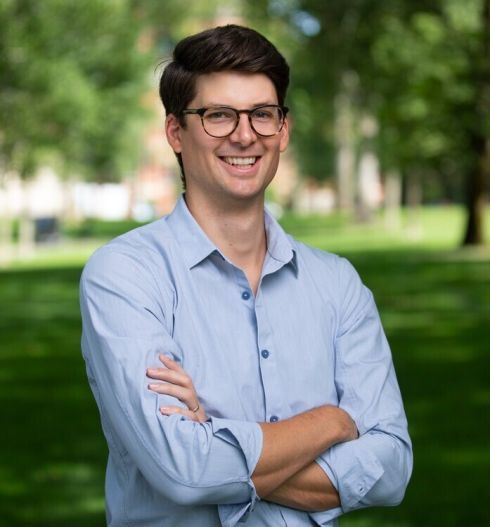
Reid Pauly is an Assistant Professor of Political Science at Brown University and the Dean’s Assistant Professor of Nuclear Security and Policy at the Watson Institute for International and Public Affairs. He studies nuclear proliferation and nuclear strategy, coercion, and secrecy in international politics. His scholarship has been published in International Security, International Studies Quarterly, the European Journal of International Relations, and Foreign Affairs. Pauly earned his Ph.D. from MIT and has held fellowships at the Belfer Center (Harvard Kennedy School) and the Center for International Security and Cooperation (Stanford University). He is also a fellow with the Schmidt Futures International Strategy Forum.
Host
Reppy Institute for Peace and Conflicts Studies
Additional Information
Program
Einaudi Center for International Studies
Reppy Institute for Peace and Conflict Studies