
Reppy Institute for Peace and Conflict Studies
Fighting Uyghur Forced Labor: Government, Researchers, Industry, and Civil Society

September 30, 2024
5:00 pm
Goldwin Smith Hall, 64
Speaker: Laura T. Murphy, Policy Advisor, Department of Homeland Security and Professor of Human Rights, Sheffield Hallam University
Laura Murphy will discuss the Uyghur Forced Labor Prevention Act, the landmark forced labor legislation that prohibits goods made in the Uyghur Region of China from import into the United States, including the effects of the law after two years of implementation. She will discuss the methods researchers use to uncover forced labor in China and the critical importance of that work to government efforts to prevent forced labor-made goods from entering the US. She will also discuss the government’s collaborations with industry and civil society to effect meaningful change for workers and protect the rights of people globally.
Bio: Laura T. Murphy, Ph.D. is Policy Advisor to Under Secretary Robert Silvers in the Department of Homeland Security’s Office of Policy. Her role in the Office of Policy is to advise on forced labor, in particular on the implementation and enforcement of the Uyghur Forced Labor Prevention Act. She is Professor of Human Rights and Contemporary Slavery at Sheffield Hallam University in the U.K. Her recent academic work focused on researching forced labor in the Uyghur Region of China and identifying risk of forced-labor-made goods in international supply chains. She has worked internationally on forms of forced labor and human trafficking, including in West Africa, India, the United States, and Canada. She is author of numerous academic books and articles on the issue of forced labor globally.
Introduced by faculty host, Magnus Fiskesjö (Anthropology).
Cosponsored by the Department of Asian Studies, Contemporary Muslim Societies Program, Critical Ottoman and Post-Ottoman Studies Program, the Department of Global Labor and Work (ILR), and the Global Labor Institute, Government, as well as the Reppy Institute for Peace and Conflict Studies.
Additional Information
Program
Einaudi Center for International Studies
East Asia Program
Reppy Institute for Peace and Conflict Studies
Southeast Asia Program
Mass Detention and Forced Assimilation of Uyghur Children in China

Magnus Fiskesjö, EAP/PACS/SEAP
"One of history’s largest operations to confiscate children to force-assimilate them is currently under way in China’s colonized territories," writes Magnus Fiskesjö in a CETNI report published July 19.
"One of history’s largest operations to confiscate children to force-assimilate them is currently under way in China’s colonized territories," write Magnus Fiskesjö and Rukiye Turdush. "Organized by the Chinese government, this massive campaign forms part of a set of measures targeting twelve to fifteen million ethnic Uyghurs, Kazakhs, and other Turkic ethnicities who live in East Turkistan."
Fiskesjö and Turdush's report on the events in China's territories is written in conjunction with the symposium on "Uyghur Children in China’s Genocide," held at Cornell University in October 2023.
Additional Information
Topic
- World in Focus
Program
Netanyahu vs. The Generals
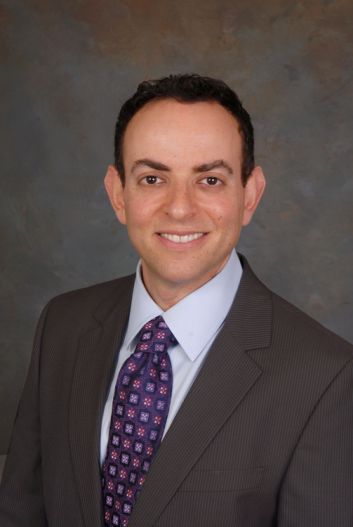
September 12, 2024
12:00 pm
Uris Hall, G08
The Civil-Military Rift in Contemporary Israel
The era of Benjamin Netanyahu, Israel’s longest-serving prime minister, has been characterized by unprecedented civil-military tensions. Netanyahu’s carefully cultivated self-image as Israel’s “Mr. Security” has long been rejected by the Israeli national security community, which has opposed both his leadership and his policies, particularly with respect to the Palestinians. In recent years, populist-nationalist politicians allied with Netanyahu have stepped up their attacks on the heads of the Israeli army, the Mossad intelligence agency, and the Shin Bet domestic security service in what has become part of a broader pattern of assaults on state institutions. This development has major implications for Israel’s future as a democracy, its relations with the Palestinians, and its relationship with the United States, Israel’s most important ally.
About the Speaker
Dr. Guy Ziv is an associate professor in the Department of Foreign Policy and Global Security at American University’s School of International Service (SIS). He also serves as the associate director of AU’s Meltzer Schwartzberg Center for Israel Studies. He teaches courses on U.S. foreign policy, international negotiations, U.S.-Israel relations, and Israeli-Palestinian peacemaking. Professor Ziv is the recipient of the SIS Outstanding Teaching Award in 2014, the William Cromwell Award for Outstanding Teaching in 2019, and the SIS Outstanding Scholarship Award in 2024.
His latest book is titled Netanyahu vs The Generals: The Battle for Israel’s Future, published by Cambridge University Press (2024). His first book, Why Hawks Become Doves: Shimon Peres and Foreign Policy Change in Israel, was published by SUNY Press in 2014.
Dr. Ziv has a background in policy, having worked on Capitol Hill and for not-for-profit organizations that promote Israeli-Palestinian peacemaking. His articles have been published in peer-reviewed academic journals, as well as leading newspapers and news sites, including CNN.com, Haaretz, The Jerusalem Post, The New York Daily News, The Philadelphia Inquirer, and USA Today. He also appears regularly as a commentator in major media outlets including BBC, Bloomberg TV, CNN, MSNBC, NPR, Sky News, and Voice of America.
Host
Reppy Institute for Peace and Conflict Studies
Co-Sponser
Jewish Studies Program
Additional Information
Program
Einaudi Center for International Studies
Reppy Institute for Peace and Conflict Studies
Aidan E. Kelly
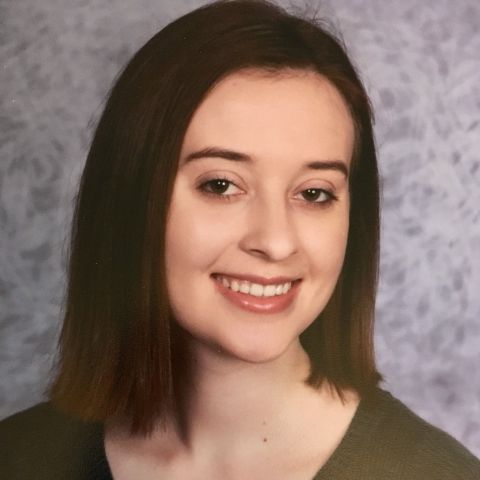
Administrative Assistant
Aidan Kelly is the administrative assistant for the Reppy Institute for Peace and Conflict Studies and the Institute for European Studies. She holds a Bachelor of Arts in English literature and rhetoric from Binghamton University. She first came to Cornell in May 2018 as a program assistant in the College of Arts & Sciences.
Additional Information
Elon Musk Enters Uncharted Territory With Trump Endorsement
Sarah Kreps, PACS
When it comes to Musk and X, “it’s pretty clear what his political views are, and now people can make a choice with more transparency and information on where they want to spend their time online,” said Sarah Kreps, professor of government and public policy.
Additional Information
Colonizing Kashmir

October 10, 2024
12:00 pm
Uris Hall, G08
State-Building Under Indian Occupation
In this talk, Dr. Hafsa Kanjwal discusses her book Colonizing Kashmir: State-Building Under Indian Occupation. The book interrogates how Kashmir was made “integral” to India through a study of the decade long rule (1953-1963) of Bakshi Ghulam Mohammad, the second Prime Minister of the State of Jammu and Kashmir. Drawing upon a wide array of bureaucratic documents, propaganda materials, memoirs, literary sources, and oral interviews in English, Urdu, and Kashmiri, Kanjwal examines the intentions, tensions, and unintended consequences of Bakshi’s state-building policies in the context of India’s colonial occupation.
She reveals how the Kashmir government tailored its policies to integrate Kashmir’s Muslims while also showing how these policies were marked by inter-religious tension, corruption, and political repression. Challenging the binaries of colonial and postcolonial, Kanjwal historicizes India’s occupation of Kashmir through processes of emotional integration, development, normalization, and empowerment to highlight the new hierarchies of power and domination that emerged in the aftermath of decolonization. In doing so, she urges us to question triumphalist narratives of India’s state-formation, as well as the sovereignty claims of the modern nation-state.
About the Speaker
Hafsa Kanjwal is an associate professor of South Asian History in the Department of History at Lafayette College in Easton, Pennsylvania, where she teaches courses on the history of the modern world, South Asian history, and Islam in the Modern World. As a historian of modern Kashmir, she is the author of Colonizing Kashmir: State-building Under Indian Occupation (Stanford University Press, 2023), which examines how the Indian and Kashmir governments utilized state-building to entrench India’s colonial occupation of Kashmir in the aftermath of Partition. Hafsa has written and spoken on her research for a variety of news outlets including The Washington Post, Al Jazeera English, and the BBC.
Host
Judith Reppy Institute for Peace and Conflict Studies
Co-Host
South Asia Program
Additional Information
Program
Einaudi Center for International Studies
Reppy Institute for Peace and Conflict Studies
South Asia Program
Russian Missile Hits Children’s Hospital

Matthew Evangelista, PACS
Voice of America's International Edition podcast talks with Matthew Evangelista (PACS) about how Russia's recent deliberate attacks on civilians violate the Geneva Convention.
Deliberate attacks on civilians violate the Geneva Convention. We talked to Matthew Evangelista, a professor of history and political science emeritus at Cornell University. A Russian court sentenced a playwright and a theater director each to six years in prison on Monday for "justifying terrorism," concluding a trial that rights campaigners had said demonstrated Russia's intolerance of artistic freedom.
Additional Information
Esam Boraey
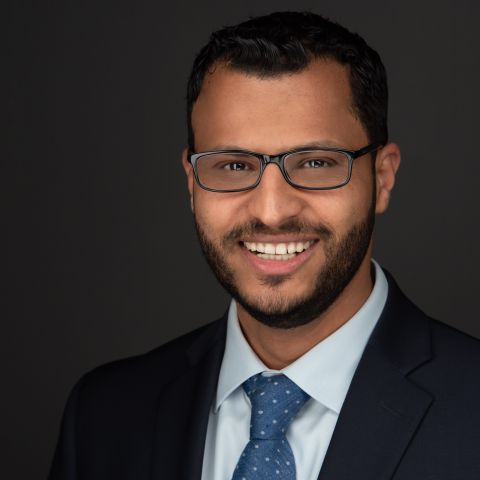
Reppy Fellow 2025-26, Migrations Graduate Fellow
Esam Boraey is a PhD student in government, specializing in comparative politics and political economy with a regional focus on the Middle East. His research explores the intersection of authoritarianism, social movements, and economic development, particularly how state structures and societal norms shape political and economic outcomes in the region.
Additional Information
Program
Role
- Student
- PACS Current Graduate Fellow
- Graduate Fellow
- Graduate Student
Contact
Email: emb435@cornell.edu
Salvador Ernesto Pineda
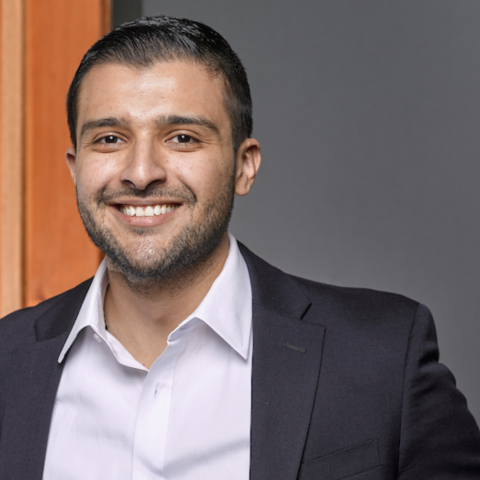
Reppy Fellow 2024-25
Salvador Ernesto Pineda is a second-year MBA student at Cornell University and holds an MA In Latin American Studies from Georgetown University.
Additional Information
Program
Role
- Student
- PACS Current Graduate Fellow
- Graduate Student
Contact
Email: sep249@cornell.edu
Mursal Rahim

Reppy Fellow 2024-25
Mursal Rahim is a MPA student in the Jeb E. Brooks School of Public Policy, concentrating on human rights and social justice. Holding a Bachelor of Law from Afghanistan, she has extensive experience in legal, educational, and refugee community support roles.
Additional Information
Program
Role
- Student
- PACS Current Graduate Fellow
- Graduate Student
Contact
Email: mr2359@cornell.edu