
Reppy Institute for Peace and Conflict Studies
How a Young Generation in Bangladesh Forced out the Leader Who Ruled for Much of Their Lives
![Bangladeshi youth participate in a townterview with U.S. Secretary of State Hillary Rodham Clinton in Dhaka, Bangladesh, on May 6, 2012. [State Department photo/ Public Domain]](/sites/default/files/styles/extra_large/public/2024-08/7006773452_69d612b7cd_c.jpg?itok=wGKIY4yI)
Sabrina Karim, PACS
Sabrina Karim, associate professor of government, comments on the resignation of Bangladesh's former prime minister.
Additional Information
Information Session: Graduate Opportunities

November 4, 2024
5:00 pm
The Mario Einaudi Center for International Studies funds international graduate student research!
Research travel grants provide international travel support for graduate and professional students to conduct short-term research or fieldwork outside the United States.
Global PhD Research Awards fund fieldwork for 9 to 12 months of dissertation research.
Register for the virtual session.
Can’t attend? Contact einaudi_center@einaudi.cornell.edu.
***
The Mario Einaudi Center for International Studies hosts info sessions for graduate and for undergraduate students to learn more about funding opportunities, international travel, research, and internships. View the full calendar of fall semester sessions.
Additional Information
Program
Einaudi Center for International Studies
Reppy Institute for Peace and Conflict Studies
East Asia Program
Southeast Asia Program
Latin American and Caribbean Studies
Institute for African Development
Institute for European Studies
South Asia Program
Migrations Program
Is International Law Relevant to Today’s Wars?
August 29, 2024
12:15 pm
Myron Taylor Hall, 184
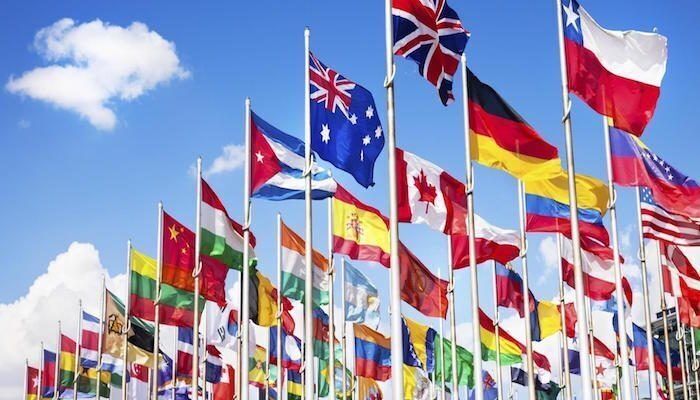
At its founding in 1945, the United Nations aimed to “maintain international peace and security” and to encourage “respect for human rights and for fundamental freedoms for all without distinction as to race, sex, language, or religion.” The international institutions envisioned in this charter face severe challenges today. Political leaders alternately challenge the legitimacy of the United Nations or manipulate it to their own purposes. International institutions have not stopped state-sponsored violence against civilians in Gaza, Ukraine, Sudan, Myanmar, and many other regions of the world. And yet the institutions associated with international law often seem to be the only alternative to military escalation.
This panel will provide a historical perspective on international law and discuss the role that international institutions can play in reducing the likelihood and consequences of war in the shifting geopolitical environment of the 21st century.
Light lunch will be served at 11:45 am.
Moderator
Jens Ohlin is the Allan R. Tessler Dean of the Cornell Law School. His scholarly work stands at the intersection of four related fields: criminal law, criminal procedure, public international law, and the laws of war. Trained as both a lawyer and a philosopher, his research has tackled questions as diverse as criminal conspiracy and the punishment of collective criminal action, the philosophical foundations of international law, and the role of new technologies in warfare, including cyberwar, remotely piloted drones, and autonomous weapons. Ohlin’s latest research project involves foreign election interference and the use of disinformation as a mode of statecraft by foreign actors.
About the Panelists
Kathryn Sikkink is the Ryan Family Professor of Human Rights Policy at the Harvard Kennedy School. She works on international norms and institutions, transnational advocacy networks, the impact of human rights law and policies, transitional justice, and the laws of war. Her publications include International, Norms, Moral Psychology, and Neuroscience (with Richard Price); The Hidden Face of Rights: Toward a Politics of Responsibilies; Evidence for Hope: Making Human Rights Work in the 21st Century; The Justice Cascade: How Human Rights Prosecutions are Changing World Politics (awarded the Robert F. Kennedy Center Book Award and the WOLA/Duke University Award); Mixed Signals: U.S. Human Rights Policy and Latin America; Activists Beyond Borders: Advocacy Networks in International Politics (co-authored with Margaret Keck and awarded the Grawemeyer Award for Ideas for Improving World Order and the ISA Chadwick Alger Award for Best Book in the area of International Organizations); and The Persistent Power of Human Rights: From Commitment to Compliance (co-edited with Thomas Risse and Stephen Ropp).
Siba N’Zatioula Grovogui is originally from Guinea, where he attended Law School before serving as law clerk, judge, and legal counsel for the National Commission on Trade, Agreements, and Protocols. He is the author of Sovereigns, Quasi-Sovereigns, and Africans: Race and Self-determination in International Law (University of Minnesota Press, 1996) and Beyond Eurocentrism and Anarchy: Memories of International Institutions and Order (Palgrave, April 2006). Grovogui has recently completed and submitted a book manuscript titled The Gaze of Copernicus: Postcolonialism, Serendipity, and International Relations (University of Manchester Press). He frequently intervenes on international events including most recently in Foreign Policy Magazine on Western intervention in Libya and the German Die Zeit on the War in Ukraine. He was recently elected President of the International Studies Association for 2025-26.
Isabel V. Hull is John Stambaugh Professor of History Emerita at Cornell University. Her research has ranged broadly in German history from the early modern to the modern period, and from governance, the history of sexuality, military culture, to international law. A Scrap of Paper: Breaking and Making International Law in the First World War (Ithaca, NY: Cornell University Press, 2014) won the American Society of International Law book prize in 2016. A member of the American Academy of Arts and Sciences, Hull was awarded the Max Weber Stiftung-Historisches Kolleg Prize for lifetime achievement in German history and studies in 2013. She is currently writing a book on the international law governing when states could legitimately go to war (jus ad bellum) in Europe just before 1914.
David Cortright is professor emeritus of the practice at the Keough School of Global Affairs at the University of Notre Dame. Previously, Cortright was the director of policy studies at the Keough School’s Kroc Institute for International Peace Studies and director of the institute’s Peace Accords Matrix project, the largest existing collection of implementation data on intrastate peace agreements. Cortright has written widely about nonviolent social change, nuclear disarmament, and the use of multilateral sanctions and incentives as tools of international peacemaking. He has provided research services to the foreign ministries of Canada, Denmark, Germany, Japan, the Netherlands, Sweden, and Switzerland, and has served as a consultant or advisor to agencies of the United Nations, the Carnegie Commission on Preventing Deadly Conflict, the International Peace Academy, and the John D. and Catherine T. MacArthur Foundation.
Host
Reppy Institute for Peace and Conflict Studies
Co-host
Cornell Law School
Co-sponsor
Department of Government
Africana Studies & Research Center
Institute for European Studies
Additional Information
Program
Einaudi Center for International Studies
Reppy Institute for Peace and Conflict Studies
Institute for European Studies
Bangladesh PM Sheikh Hasina flees, Army Says Interim Government to be Formed
![Deputy Secretary of State Stephen E. Biegun meets with Bangladeshi Prime Minister Sheikh Hasina in Dhaka, Bangladesh, on October 15, 2020. [Photo courtesy of the Bangladesh's Prime Minister's Office]](/sites/default/files/styles/extra_large/public/2024-08/50491254697_fca0a46075_c.jpg?itok=t64rcQU8)
Sabrina Karim, PACS
Sabrina Karim, associate professor of government, says “There is perhaps some optimism for a democratic transition even if the military is involved in the process.”
Additional Information
Danielle Obisie-Orlu

Reppy Fellow 2024-25
Danielle Obisie-Orlu is a Ph.D. student in the Department of Government, specializing in international relations with an interdisciplinary minor in international law, migration, and sustainable development. She researches how states’ popularly recognized memories of trauma can shape their international personas and the expectations about their responses to the challenges, rule of law, and novel opportunities in the international arena.
Additional Information
Thinking about the Russia-Ukraine War
September 19, 2024
12:00 pm
Uris Hall, G08
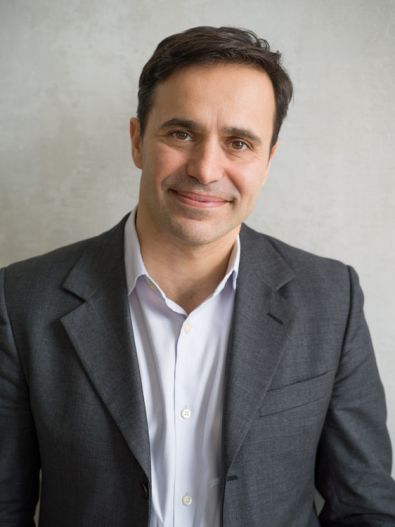
This talk will describe the articles Gessen has written since the start of the war and try to summarize some of what he's learned. The articles cover the effects of the war in Western Ukraine; the political science debates over "war termination"; the political science and historical debates over regime change; the fierce debates over whether negotiations with the Kremlin are possible; the arguments over military analysis and its failures or successes in thinking about this war; and debates about public opinion in Russia during the war. Gessen will also describe his work on "Russia hands"--the people who study Russia for a living, inside or in proximity to the U.S. Government--and what their relative contributions are to U.S. policy. The hope is to generate discussion and further thinking on war and peace in Russia and Ukraine.
About the Speaker
Keith Gessen was born in Moscow, in the U.S.S.R., and grew up in Massachusetts. He has been writing about Russia for the last twenty-five years. He is a founding editor of the literary magazine n+1, the translator of Kirill Medvedev, and the author of the novel A Terrible Country. He now serves as George T. Delacorte Assistant Professor of Magazine Journalism at the Columbia Graduate School of Journalism and is a contributing writer at The New Yorker.
Host
Reppy Institute For Peace and Conflict Studies
Co-Sponsors
Department of Comparative Literature
Institute for European Studies
Additional Information
Program
Einaudi Center for International Studies
Reppy Institute for Peace and Conflict Studies
Institute for European Studies
Information Session: Global Internships

December 13, 2024
12:00 pm
Uris Hall, G08
Go global in summer 2025! Global Internships give you valuable international work experience in fields spanning global development, climate and sustainability, international relations, communication, business, governance, and more.
***
The Mario Einaudi Center for International Studies hosts info sessions for graduate and for undergraduate students to learn more about funding opportunities, international travel, research, and internships. View the full calendar of fall semester sessions.
Additional Information
Program
Einaudi Center for International Studies
Reppy Institute for Peace and Conflict Studies
East Asia Program
Southeast Asia Program
Latin American and Caribbean Studies
Institute for African Development
Institute for European Studies
South Asia Program
Migrations Program
Information Session: Global Internships
November 27, 2024
1:00 pm
Go global in summer 2025! Global Internships give you valuable international work experience in fields spanning global development, climate and sustainability, international relations, communication, business, governance, and more.
Register for this virtual session.
***
The Mario Einaudi Center for International Studies hosts info sessions for graduate and for undergraduate students to learn more about funding opportunities, international travel, research, and internships. View the full calendar of fall semester sessions.
Additional Information
Program
Einaudi Center for International Studies
Reppy Institute for Peace and Conflict Studies
East Asia Program
Southeast Asia Program
Latin American and Caribbean Studies
Institute for African Development
Institute for European Studies
South Asia Program
Migrations Program
Information Session: International Relations & Migration Studies Minors

October 30, 2024
4:30 pm
Uris Hall, G08
The Migration Studies Minor is a university-wide, interdisciplinary undergraduate minor that prepares students to understand the historical and contemporary contexts and factors that drive international migration and shape migrant experiences around the globe. This minor draws on the rich course offerings found across the humanities and social sciences at Cornell and is designed to draw students outside of their major fields and to extend their knowledge beyond a single country.
Is the Einaudi Center's International Relations minor for you? Here's a chance to find out. In the international relations minor, you study the politics, economics, history, languages, and cultures of the world and gain a fresh perspective on your major field of study. Graduates go on to successful careers in fields like international law, economics, agriculture, trade, finance, journalism, education, government service, and more.
Can’t attend? Contact migration-minor@einaudi.cornell.edu (Migrations) or irm@einaudi.cornell.edu (International Relations).
***
The Mario Einaudi Center for International Studies hosts info sessions for graduate and for undergraduate students to learn more about funding opportunities, international travel, research, and internships. View the full calendar of fall semester sessions.
Additional Information
Program
Einaudi Center for International Studies
Reppy Institute for Peace and Conflict Studies
East Asia Program
Southeast Asia Program
Latin American and Caribbean Studies
Institute for African Development
Institute for European Studies
South Asia Program
Migrations Program
CANCELLED: Information Session: Global Internships
November 13, 2024
1:00 pm
Go global in summer 2025! Global Internships give you valuable international work experience in fields spanning global development, climate and sustainability, international relations, communication, business, governance, and more.
This session has been cancelled. For more sessions on Global Internships, view the full calendar of info sessions.
***
The Mario Einaudi Center for International Studies hosts info sessions for graduate and for undergraduate students to learn more about funding opportunities, international travel, research, and internships. View the full calendar of fall semester sessions.
Additional Information
Program
Einaudi Center for International Studies
Reppy Institute for Peace and Conflict Studies
East Asia Program
Southeast Asia Program
Latin American and Caribbean Studies
Institute for African Development
Institute for European Studies
South Asia Program
Migrations Program