
Reppy Institute for Peace and Conflict Studies
Op-ed: Peace Agenda to End Military Madness
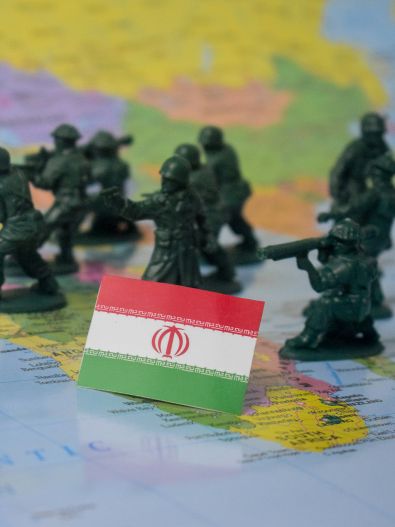
David Cortright, PACS
PACS visiting scholar David Cortright argues that, to create a safer world, Americans need to mobilize to end the war in Iran, prevent nuclear proliferation, halt the arms race, and slash military budgets.
Additional Information
Bartels Lecture: Samantha Power
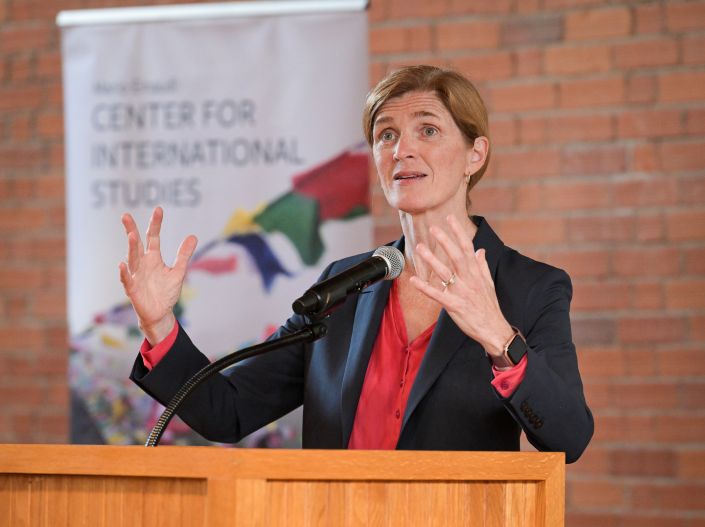
Former USAID Director Calls for Rebuilding Foreign Aid
Samantha Power challenged students to “build what comes next” during the Bartels World Affairs Lecture on April 16.
Additional Information
Information Session: Careers for International Relations Minors
April 29, 2026
11:00 am
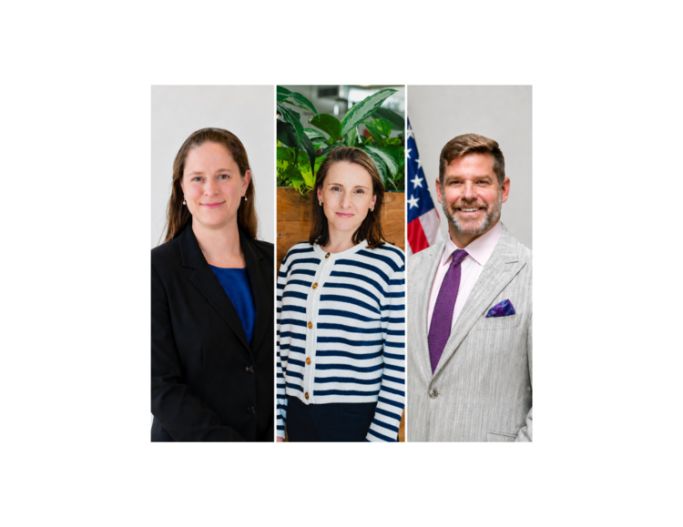
Join the International Relations Minor for a virtual career information session featuring Cornell alumni working in diplomacy, education, and law. Panelists will reflect on their career paths, share advice on internships, graduate school, and professional transitions, and answer student questions about careers connected to international relations.
Register here.
***
Speakers
Eric Andersen is the Political-Economic Counselor at the U.S. Embassy in Maputo, Mozambique. Having joined the U.S. State Department in 2009, he previously served as Political Counselor (Acting) in Islamabad, Pakistan. His other assignments have included Cairo, Kyiv, and Khartoum, as well as in Washington, D.C. as Special Assistant to the Under Secretary of State for Political Affairs. Prior to entering the Foreign Service, he spent four years on Capitol Hill as a Professional Staff Member for the Senate Committee on Homeland Security and Governmental Affairs. In his first stint with the U.S. Government, he flew the SH-60B “Seahawk” helicopter as an aviator in the U.S. Navy. He holds an M.A. in Security Policy from the George Washington University, and a A.B. in English Literature from Cornell University (Class of 1996).
Angie Yucht Swenson, M.S.Ed., Ed.M., is the founder and principal tutor of AYS Tutoring and Consulting, a practice she launched after more than a decade working in both private and public schools across New York City. She specializes in supporting elementary through high school students with learning challenges and has worked with families from diverse international backgrounds, including Russia, Israel, and France. Angie graduated from Cornell University in 2010, majoring in Human Development and minoring in International Relations, followed by a master’s in General and Special Education from Hunter College, and a master’s in School Leadership from Bank Street College of Education. She resides in NYC with her husband, two daughters, and a goldendoodle.
Emma Marshak is a commercial litigator in Washington, DC who specializes in judgment enforcement. She has enforced domestic and international judgments, including awards from investor-state arbitration, in federal and state courts across the United States.
***
This session is presented by the Einaudi Center for International Studies. The International Relations minor is open to all Cornell undergraduate students interested in learning about the politics, economics, history, languages, and cultures of the world.
Additional Information
Program
Einaudi Center for International Studies
Reppy Institute for Peace and Conflict Studies
East Asia Program
Southeast Asia Program
Latin American and Caribbean Studies
Institute for African Development
Institute for European Studies
South Asia Program
Migrations Program
Southwest Asia and North Africa Program
U.S.-China Relations in Perspective
April 24, 2026
1:35 pm
Physical Sciences Building, 120
The College of Arts & Sciences will celebrate the 20-year anniversary of the Cornell Levinson Program in China and Asia-Pacific Studies – and a new faculty director for the program — at an April 24 symposium on the Ithaca campus.
The event, set for 1:35-6:30 p.m. in Room 120 of the Physical Sciences Building, will feature a faculty panel focused on U.S.-China Relations; a conversation between Zachary Montague ‘13, a reporter for The New York Times, and Peter John Loewen, Harold Tanner Dean of Arts & Sciences; and a career panel with CAPS alumni. All of the events are free and open to the public.
The day’s schedule includes:
1:35 p.m.: Welcome and introductions by Loewen and Michael J. Zak ’75, member, Center for a New American Security and board of directors & partner emeritus, Charles River Ventures2 p.m.: Faculty panel featuring Patrizia McBride (moderator), Senior Associate Dean for Social Sciences and Interdisciplinary Programs and Frank H.T. Rhodes Professor of Humane Letters, Department of German Studies (A&S); Peter Katzenstein, the Walter S. Carpenter, Jr. Professor of International Studies, Department of Government (A&S); Diana Fu, the new Levinson Program director; Xu Xin, interim director for the Levinson Program and adjunct associate professor, Department of Government; and Jason Oaks M.A. ‘13, who leads the China team at the U.S. State Department's Bureau of Intelligence and Research.3:15 p.m.: “Higher Ed and International Partnerships,” a conversation between Loewen and Montague, who formerly covered the education department and education policy and now covers federal courts and the balance of power in the federal government4:15 p.m.: Allen Carlson, associate professor of government and former Levinson Program director, in conversation with Levinson program alums Randy Wan ’12, Strauss Cooperstein ’22, Shauna DeLorenzo ’19, Angela Pan’ 23 and Isaac Herzog ’23
The Brittany and Adam J. Levinson Program in China and Asia-Pacific Studies offers students the opportunity to study contemporary China through a set of courses on China's language, history, politics, economy, society and foreign relations. Students also take part in experiences both on-and-off campus, including three years in Ithaca, one optional semester in Washington D.C. and one required semester in Beijing.
Additional Information
Program
Einaudi Center for International Studies
Reppy Institute for Peace and Conflict Studies
East Asia Program
The TRUTH Behind the Iran Nuclear Agreement

David Cortright, PACS
The Michael Smerconish radio show interviewed David Cortright on the Iran Nuclear Agreement.
Additional Information
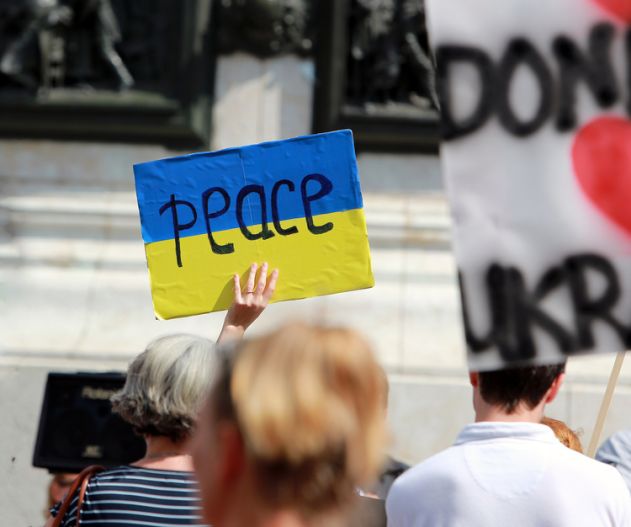
Research for Impact: Academic Expertise and the War in Ukraine
May 2, 2026
9:00 am
Uris Hall, G08
Participants
Aaron Erlich is an Associate Professor in the Department of Political Science at McGill University, where he is a member of the Centre for the Study of Democratic Citizenship and an Associate Member of the Centre on Population Dynamics. He is also a faculty research affiliate with NYU's Center for Social Media, AI, and Politics. Much of Aaron’s research addresses information's role in developing democratic societies. His work also advances quantitative methods to measure the effect of information.
Regina Faranda is a former Deputy Assistant Secretary of the U.S. State Department’s Bureau of Intelligence & Research. A career member of the Senior Executive Service, Faranda previously served as Director of INR’s Office of Opinion Research, Chief of the Europe and Eurasia Division, and social research analyst for Russia and Ukraine. Throughout her tenure in government, Faranda was dedicated to informing U.S. policy through quantitative social research and to giving people around the world a seat at the U.S. policy table.
Jordan Gans-Morse is an Associate Professor in the Department of Political Science at Northwestern University. His research focuses on corruption, the rule of law, property rights, and political and economic transitions. He is the author of Property Rights in Post-Soviet Russia: Violence, Corruption, and Demand for Law (Cambridge). His articles have appeared in the American Journal of Political Science, the American Political Science Review, and World Development, and he has published commentaries in the Chicago Tribune, The Hill, The Moscow Times, US News & World Report, and The Washington Post.
Kimberly O'Haver is a program manager at the Open Society Foundation, where she coordinates of a group of international drug policy experts working toward progressive drug policy reform for Ukraine's EU Accession process. Her work on drug policy focuses on veterans and affected civilian populations experiencing severe, war-induced trauma and regularly engages veterans and veterans’ groups to understand substance use trends both post-deployment and on the frontlines.
Bryn Rosenfeld is an Associate Professor of Government at Cornell University and a co-Principal Investigator of the Russian Election Study. Her research interests focus on public opinion and voter behavior in nondemocratic systems, development and democratization, protest, post-communist politics, and survey methodology. Her research has been supported by the NSF and the National Council for Eurasian and East European Research, among other sources. She is a former editor of The Washington Post Monkey Cage Blog.
Charles Whitehead is the Myron C. Taylor Alumni Professor of Business Law at Cornell Law School and the Founding Director of the Law, Technology and Entrepreneurship Program at Cornell Tech. He specializes in the law relating to corporations and other business associations, securities regulation, mergers and acquisitions, and financial regulation. His current scholarship focuses on securities and financial regulation and corporate governance.
Workshop Schedule
9:00am. Coffee
9:15am. Opening Remarks
Bryn Rosenfeld (Cornell)
9:30am-11:15am. Panel: Research for Impact
Cristina Florea (Cornell), Moderator
Presentations:
Charles Whitehead (Cornell Law), “Corporate Governance Reform in Ukraine: Between State Design and Market Discipline”
Aaron Erlich (McGill), “The Past, Present, and Future of Public Opinion Survey Research in Ukraine: From Pen and Paper to Agentic AI (2015-2026)”
Jordan Gans-Morse (Northwestern), “Countering Authoritarian Censorship via Grassroots Communication Campaigns: Evidence from an Experimental Mega-Study in Wartime Russia”
Bryn Rosenfeld (Cornell), “Russian Public Opinion Spanning the Full-Scale Invasion of Ukraine: Evidence for Policy and Public Diplomacy”
11:30am-12:30pm. Catered Lunch
1:00pm-2:45pm. Roundtable. Connecting Research to Policy Advocacy and Activism: Challenges and Opportunities
Sophie Pinkham (Cornell), Moderator
Participants:
Regina Faranda (former Deputy Assistant Secretary, U.S. State Department, INR)
Kimberly O’Haver (Open Society Foundation)
Aaron Erlich (McGill)
Jordan Gans-Morse (Northwestern)
Bryn Rosenfeld (Cornell)
Additional Information
Program
Einaudi Center for International Studies
Reppy Institute for Peace and Conflict Studies
Institute for European Studies
Apply to be an Evangelista Graduate Fellow by May 11
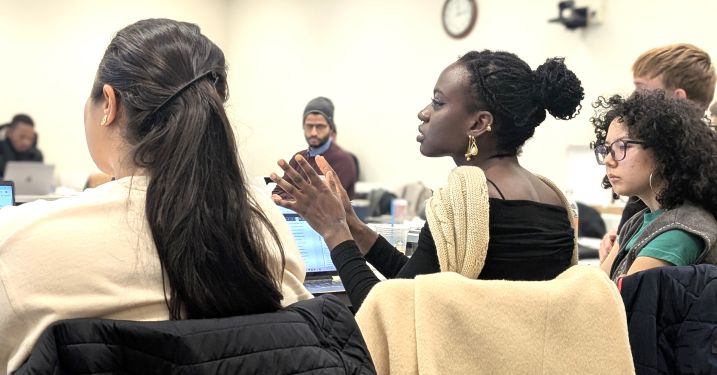
Each year, the Reppy Institute for Peace and Conflict Studies provides a select cohort of fellows with unique opportunities for professional networking and development in the field of peace and conflict studies.
America Is Used to Hiding Its Wars. Trump Is Doing the Opposite

Sarah Kreps, PACS
Sarah Kreps, a Cornell University professor, comments on how innovations in military financing have distanced the American public from the costs and awareness of war.
Additional Information
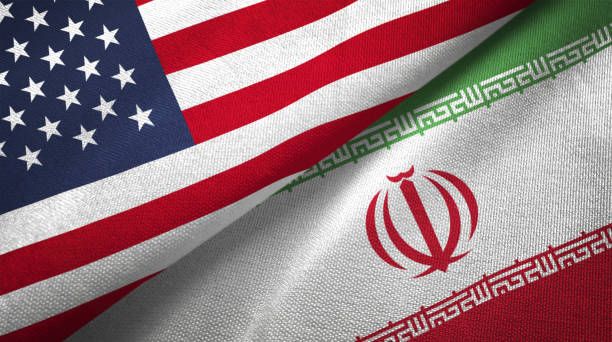
Trump’s War on Iran is the Obliteration of Diplomacy
David Cortright, PACS
In this policy essay, PACS visiting scholar David Cortright argues that diplomacy was working to keep Iran from developing a nuclear weapon, but Trump's war makes future diplomacy harder.
Additional Information
China's Strategic Intervention in Post-Coup Myanmar
April 28, 2026
12:00 pm
Rockefeller Hall, 374, Asian Studies Lounge
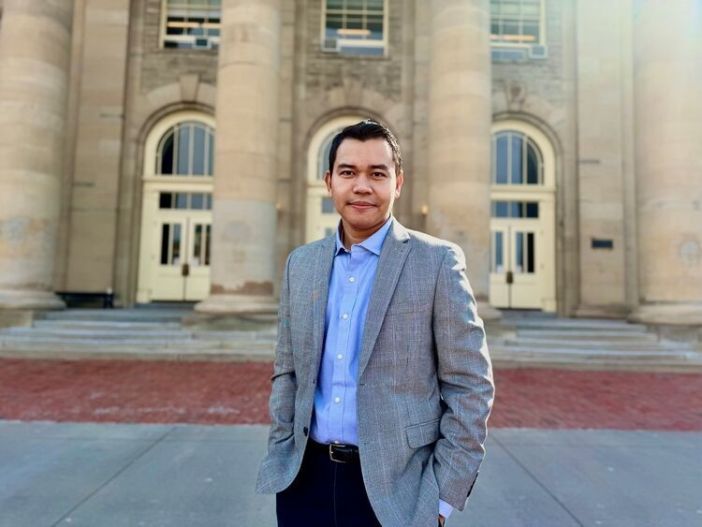
Join us for a talk by Southeast Asia Program Visiting Scholar, Aung Thura Ko Ko.
This talk will take place at Rockefeller Hall 374, Asian Studies Lounge. Lunch will be served.
For questions, contact seap@cornell.edu.
Abstract: Since the February 2021 military coup in Myanmar, the country has plunged into a deep political, economic, humanitarian, and security crisis. China’s engagement with post-coup Myanmar is multifaceted. While officially adhering to a policy of non-interference, Beijing has pursued a pragmatic approach to safeguard its interests, including investments under the Belt and Road Initiative (BRI), border security and access to the Indian Ocean. China has been maintaining ties with both the junta and select ethnic armed groups to ensure leverage across all fronts. Myanmar’s strategic value to China is further heightened by its role as a critical supplier of raw minerals including rare-earth and tin ore, both essential to high-technology and defense manufacturing. China’s cooperation with the military regime has deepened through new mechanisms, including the establishment of a joint security company to protect Chinese investments, as well as the deployment of a ceasefire monitoring team and border operations. At the same time, the China-Myanmar border has emerged as a major hub for cyber scam centers, many operated by transnational criminal networks and protected by regime-aligned border guard forces. China’s strategic intervention in post-coup Myanmar presents a complex mix of geopolitical ambition, economic necessity, and security entanglement. This makes Myanmar a critical case for understanding how Beijing engages with fragile states to advance its regional influence in the Indo-Pacific.
About the Speaker: Aung Thura Ko Ko is a visiting scholar at the Southeast Asia Program (SEAP) for the spring semester. He was previously a research fellow at the Pacific Forum, a U.S. policy think tank based in Honolulu, Hawaiʻi, and an affiliate scholar at the East-West Center from 2024 to 2026. Aung previously worked at the University of Oxford’s Global Security Programme, and his research focuses on wartime and postwar governance, China–Myanmar relations, and Indo-Pacific regional security issues. He has over 15 years of professional experience, including six years with USAID, and has worked with a range of international and local organizations across policy, governance, humanitarian & development assistance, and peacebuilding in Myanmar. Aung has been actively engaged in international advocacy efforts supporting Myanmar’s democracy movement since the 2021 military coup.
Additional Information
Program
Einaudi Center for International Studies
Reppy Institute for Peace and Conflict Studies
East Asia Program
Southeast Asia Program