
Reppy Institute for Peace and Conflict Studies
Ziyi Wang
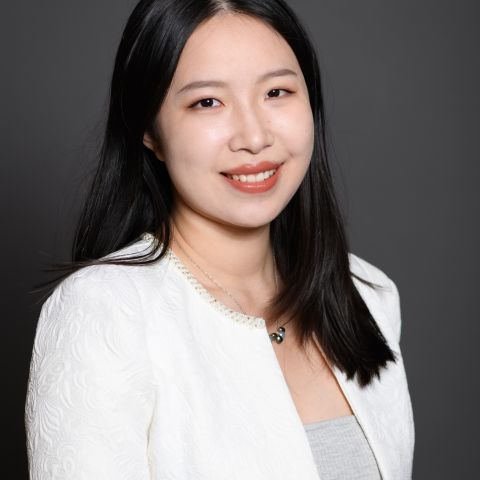
Evangelista Fellow 2026-27
Ziyi Wang is an Economics PhD and JD candidate at Cornell University. She holds a Bachelor of Science in Foreign Service from Georgetown University’s School of Foreign Service in Washington, D.C. Her research interests include Economic Development, Industrial Organization, Innovation, Platform Economics, and Empirical Legal Studies. She is a Research Associate at the UN75 Global Governance Forum. She is from Beijing, China.
Additional Information
Silicon Valley Money Drives AI's Growing Role in 2026 US Elections

Sarah Kreps, PACS
“If you think about AI, everything feels like it’s out of peoples’ control, it’s in the hands of these tech titans,” said Sarah Kreps, a professor focused on tech and politics at Cornell University. “That’s creating backlash.”
Additional Information
Why an Iran Deal Needs Economic Statecraft

David Cortright, PACS
According to PACS visiting scholar David Cortright, sanctions removal and coercion alone are not likely to induce Iran to abandon or curtail its nuclear program.
Additional Information
Eric Lechpammer
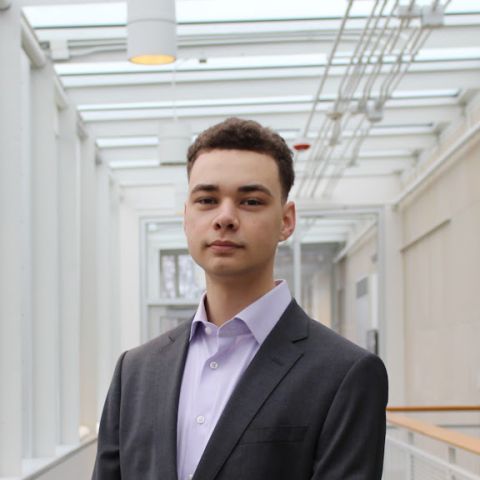
Student Administrative Assistant
Additional Information
Peter Katzenstein Book Award 2026 Winner
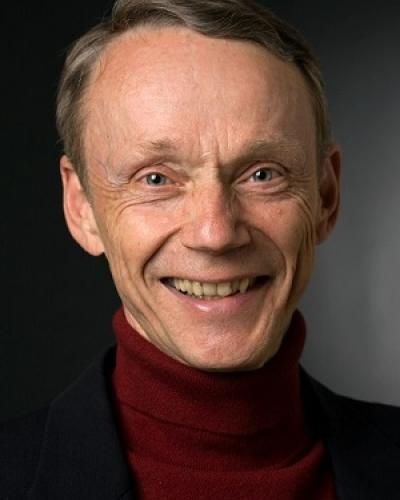
The Katzenstein Prize, in honor of Peter J. Katzenstein, the Walter S. Carpenter, Jr. Professor of International Studies at Cornell University, recognizes an outstanding first book in International Relations, Comparative Politics, or Political Economy.
Additional Information
All the President's Men? Inside Trump's Hot Guy Fascination

Sabrina Karim, PACS
Sabrina Karim, a Cornell University political science professor, provides analysis on Trump's celebration of masculine ideals.
Additional Information
Cornellians Accept Fulbright U.S. Awards
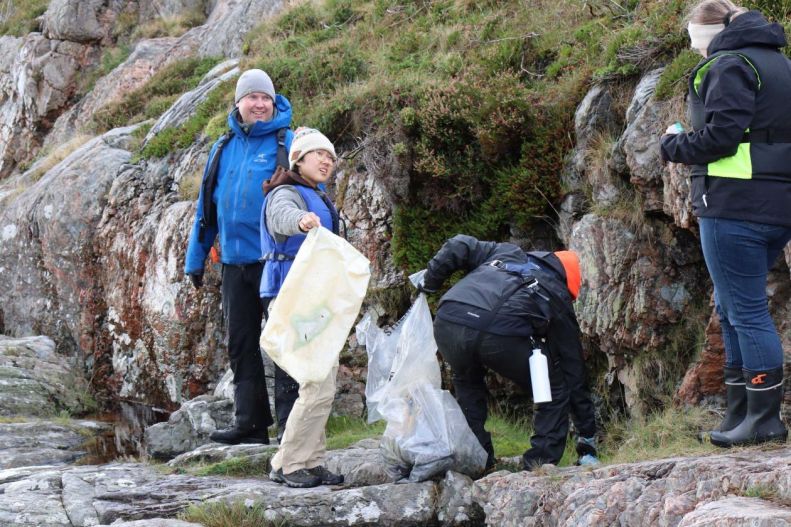
18 Awardees to Research, Study, Teach
A new group of Cornellians has accepted Fulbright U.S. Student Program awards. Einaudi supported them through the application process.
Each year, Fulbrighters conduct research, study and teach English in countries around the globe. Cornell University is a Fulbright Top Producing Institution and has sent over 600 students across the globe as part of the Fulbright U.S. Student Program since the 1940s.
The Fulbright program is the U.S. government's flagship international educational exchange program. The Mario Einaudi Center for International Studies administers the Fulbright program at Cornell, providing all the resources students and alumni need to apply for Fulbright funding for international experiences.
Meet the Fulbrighters

Mia Battistella ’26
Argentina
English Teaching Assistant
“While in Argentina I want to engage with community members by organizing dance classes that feature both traditionally American and Argentine styles, bringing people together through shared creativity and building opportunities for intercultural exchange.”
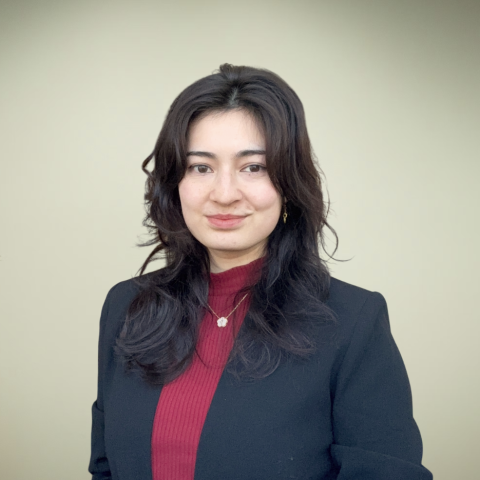
Matthew Cabiles ’24
Latvia
English Teaching Assistant
“My future in international law starts with a foundation in teaching, and this grant is the first step in my path toward serving at the intersection of the U.S. and global communities.”
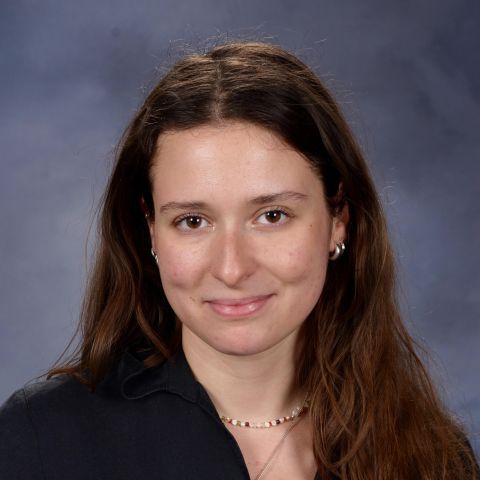
Alanna Cooney ’26
Taiwan
English Teaching Assistant
“My goal is to continue deepening my engagement with the world and contribute to fostering stable U.S.-Asia relations. Upon my return, I want to help others see the value of international exchange and encourage more people to explore opportunities abroad in Asia.”
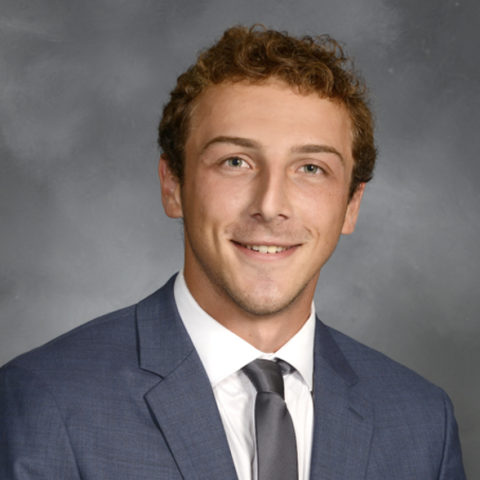
Nina Davis ’26
Portugal
English Teaching Assistant
“Through investigation I hope to use the cultural and ambassadorial skills from the Fulbright program to enhance my writing and interviewing processes. In my writing and academic career, I will likewise incorporate my experience in Portugal as a student-teacher with an emphasis on the importance of cultural exchange.”
Bryce Demopoulos ’23, MD ’28
Uganda, Fulbright Fogarty Fellowship in Public Health
Research: Expanding Orthopedic Trauma Surveillance in Uganda: Care-Seeking Paths and Injury Patterns
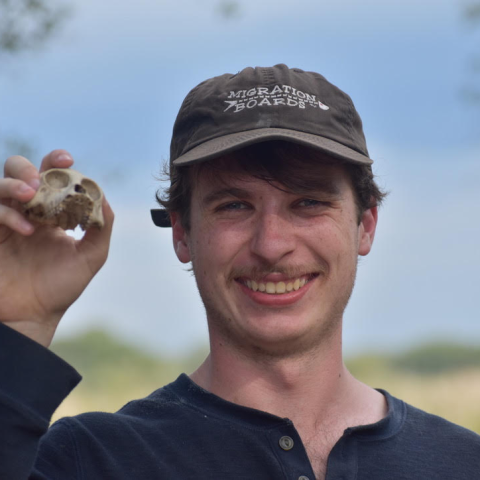
William “Gus” Dupin ’26
Indonesia
Research: Developing Acoustic Approaches for Non-invasive Health Monitoring of Wild Orangutans
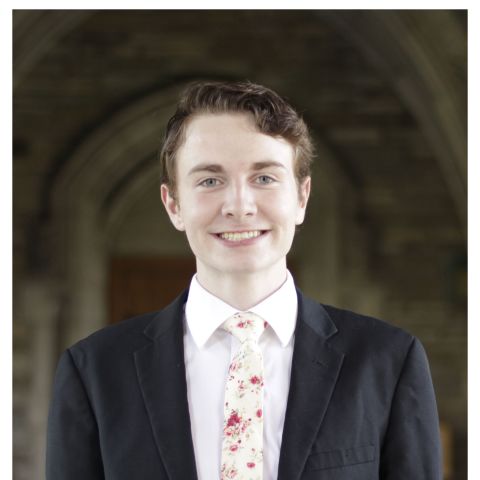
Hyrum Edwards ’25
Turkey
Master of International Relations: Religion and Secularism in Turkey
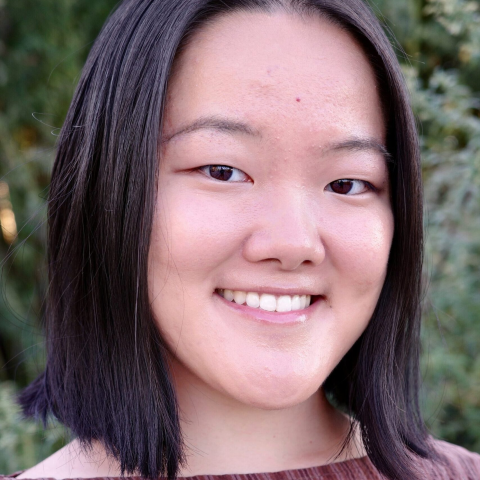
Annie Fu ’20
Study in Taiwan
Masters in Creative Industries Design
"As an educator at universities and arts organizations in New York, I will integrate the case studies from my Fulbright research into my journalism design curricula and my practice as a teaching artist."
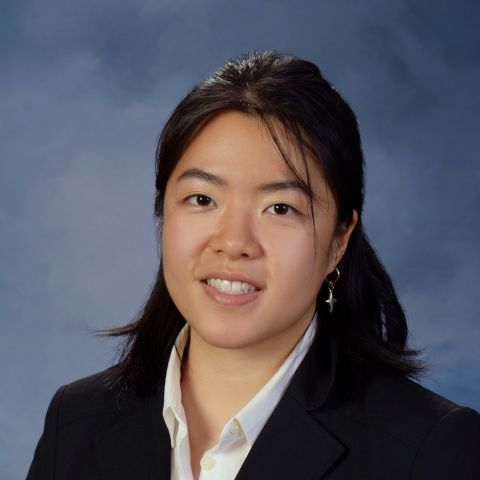
Amanda Huang ’26
Germany
Research: Multimodal Optical Imaging for Intraoperative Tumor Diagnosis and Ablation
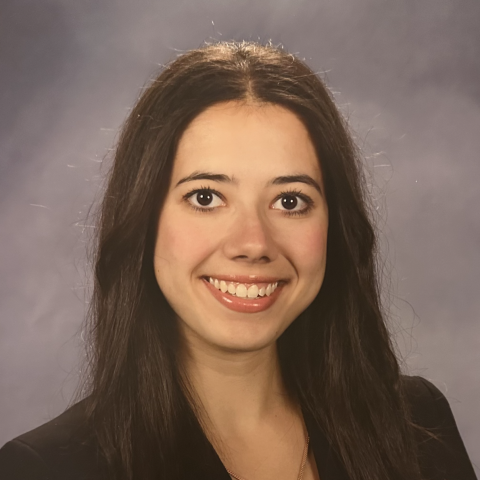
Madeleine Kapsalis ’26
Greece
English Teaching Assistant
“Teaching students abroad will help me strengthen my ability to communicate across cultural differences, which will eventually carry over to my skills in legal practice. Just as there is established trust and vulnerability between the lawyer and the client, this is the kind of relationship built on mutual respect and understanding that I hope to share with each of my students in Greece.”
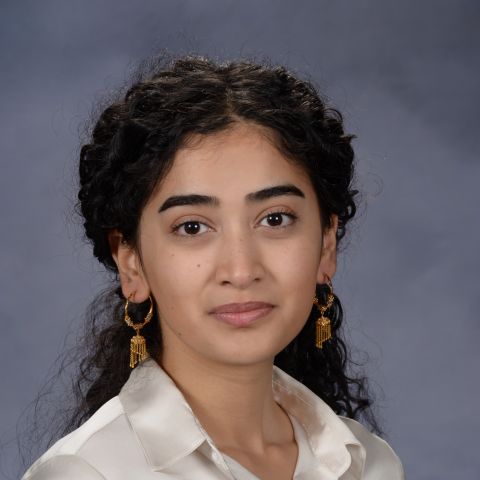
Arushi Kende ’26
India
Research: The Cultivation of Altruistic Cultures: Seva as a Model for Regenerative Altruism
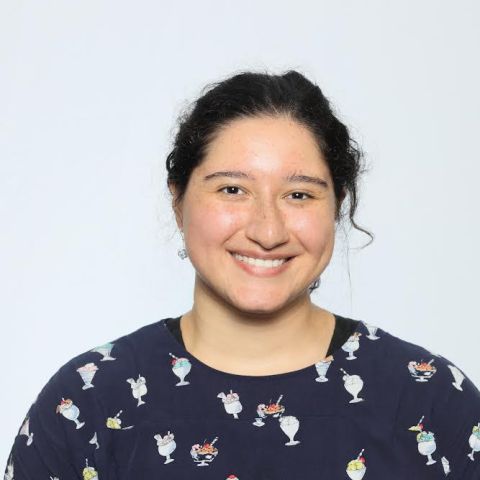
Sarah Langleben ’24
Taiwan
English Teaching Assistant
“Fulbright will enable me to better prepare for founding a company that uses data science to make skincare more accessible. [After the program], I’ll work as an esthetician, and I can speak to clients, peers, and estheticians-in-training about my experience, and the value of cultural exchange in our field.”
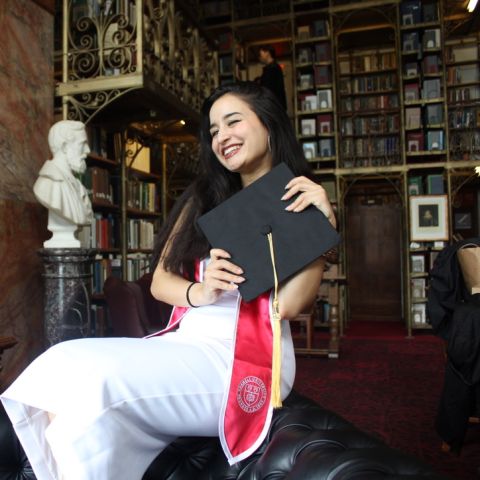
Serena Moscarella ’25
Peru
English Teaching Assistant
“After completing my Fulbright grant, I plan to continue working in education across Latin America and the United States. I hope to design and lead programs that are participatory, locally driven, and that meaningfully impact students’ everyday lives.”
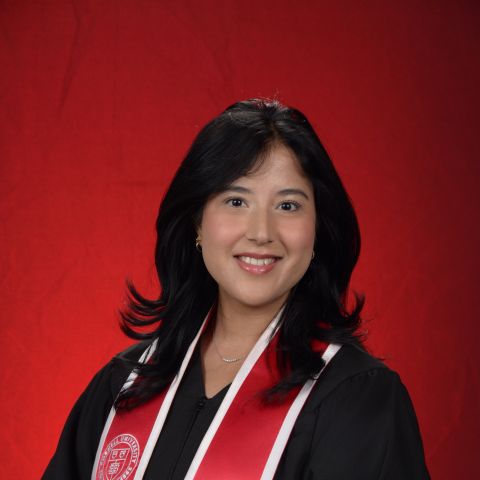
Reshma Niraula ’26
Nepal
Research: Does Bilingualism Delay Dementia? A Neurocognitive Study of Geriatric Patients in Nepal

Jake Rosen ’25
Spain
English Teaching Assistant
“I see much to be learned about U.S. social issues through Spain’s past and present dynamics, from censorship to migration. Nine immersive months will multiply the Spanish perspectives already at my core, for dissemination across all facets of my life."
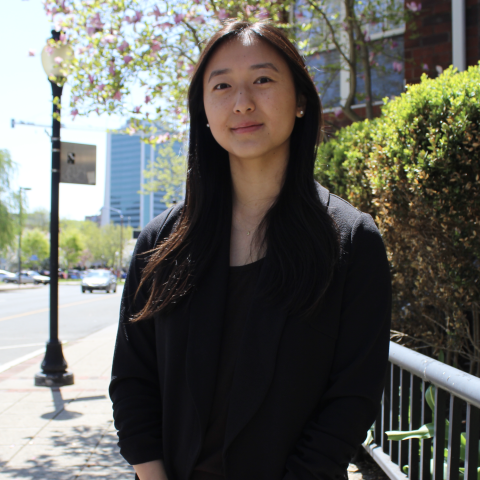
Stephanie Tan ’23
Taiwan
English Teaching Assistant
“After my grant, I will pursue a PhD in counseling or school psychology to further study how best to teach and support kids. Long-term, I hope to work in a school or private practice to help children manage their mental well-being.”

William Taylor ’26
Mongolia
English Teaching Assistant
“After completing my Fulbright grant, I will pursue a career in teaching high school history by studying for a master’s degree in classics. My teaching assistantship in Mongolia will help me supplement my western-centric educational background and develop a more well-rounded understanding of history and intercontinental relationships.”
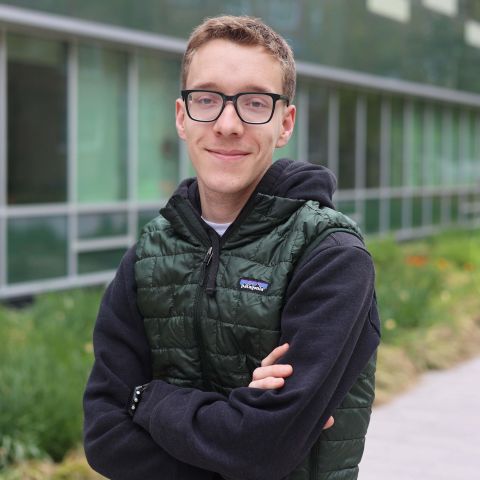
Jack Turner ’26
Japan
Research: The Shinkansen Effect: Rail Access and Rural Population Stability in Aging Japan
Additional Information
“Something Going Wrong With the Bomb”: Rethinking Nuclear Weapons and Global Security

September 17, 2026
10:00 am
Biotechnology Building, G10
Join us for a screening of the documentary Bombshell (2026) on Wednesday, September 16, at 6:00 p.m.
In the acclaimed 1964 film Dr. Strangelove, an American president calls a drunken Soviet Premier with bad news: “…Dimitri, you know how we've always talked about the possibility of something going wrong with the Bomb...” The “something” is a deranged commander who has launched a nuclear attack on the Soviet Union, which leads to nuclear apocalypse. While a global apocalypse has yet to materialize, the history of nuclear weapons is full of other things going wrong. Indigenous lands have been destroyed, hundreds of thousands (if not millions) of people have died of cancer, and trillions of dollars have been spent on weapons that one U.S. Defense Secretary ultimately concluded were “useless.”
Today the majority of the world’s nations have joined the Treaty for the Prohibition on Nuclear Weapons (TPNW), and surveys suggest strong public support for the TPNW, even in nations that possess nuclear weapons. However, the nine nations in the world that have nuclear weapons are continuing a costly and dangerous nuclear arms race which endangers all life on earth. In this full-day symposium, distinguished experts from diverse disciplines—including physics, political science, history, feminist studies, and peace and conflict studies—will discuss contemporary dangers of nuclear weapons, how we got here, and how we can work for a more secure and peaceful future.
This symposium is cosponsored by the Judith Reppy Institute for Peace and Conflict Studies and the Department of Government at Cornell University, on the occasion of Professor Matthew Evangelista’s retirement from Cornell. Professor Evangelista’s scholarship makes groundbreaking contributions to our understanding of the nuclear arms race and means of ending it, and we are pleased to honor his distinguished career in peace and conflict studies.
Panels:
10:00 AM to 11:30 AM: Nuclear Arms Races and How to Stop Them
Ray Acheson (Princeton), David Cortright (Cornell), Lisbeth Gronlund (MIT)
11:30 AM to 12:00 PM: Lunch Break
12:00 PM to 1:15 PM: Keynote: Benoît Pelopidas, Sciences Po, Paris
1:15 PM to 1:30 PM: Coffee Break
1:30 PM to 2:45 PM: New Perspectives on Nuclear Disarmament and Arms Control
"Banning or Facilitating the Test? Reconsidering the 1963 Partial Test Ban Treaty"
Ruoyu Li (Colgate)
“Atmospheric Absorption: Nuclear Weapons and the Science of Climate Doomsday in the 1970s”
Benjamin Wilson (Harvard)
2:45 PM to 3:45 PM: Coffee Break
Guest appearance by Frank von Hippel and David Holloway via Zoom
3:45 PM to 5:15 PM: Panel: Nuclear War and Climate Catastrophe
Neta Crawford (St. Andrews), Zia Mian (Princeton), and Benoît Pelopidas (Sciences Po)
Host
Reppy Institute for Peace and Conflict Studies, part of the Einaudi Center for International Studies
Co-sponsor
Department of Government
Additional Information
Program
Einaudi Center for International Studies
Reppy Institute for Peace and Conflict Studies
Translation and Language Justice in and Beyond Europe

September 14, 2026
5:00 pm
Uris Hall, G08
My talk on "Translation and Language Justice in and Beyond Europe” will focus on “language justice,” (a term that does not as-yet refer to a clear field or critical problematic), as a rubric for a vision of language politics straddling law, official global language policy, and language rights under conditions of imperialism and cultural conquest. Drawing on Benjamin Constant’s anti-Napoleonic broadside The Spirit of Conquest and Usurpation in Their Relation to European Civilization,” (1814), which diagnosed the psychic violence of linguistic occupation, I will adapt and extend his association of cultural usurpation to contemporary cultural contexts in and beyond Europe. Constant associated usurpation with an existentially grave condition in which each act of articulation becomes a form of self-harming; attacking the site where individual consciousness, auto-identification and affective social ties constitute a fusional core of self and collective identity. The talk will consider the impact of an abrogated “right to language” on political life, from the targeting of languages spoken by immigrants, minorities and noncitizens to the hastening of language extinction as a global phenomenon particularly threatening to the survival of Indigenous languages. I also take up the matter of how generative AI, bolstering the kind of nationalist monolinguism that leads to “English only” language policies as well as the practice of instrumentalized linguistic streamlining conducive machine translation, is emerging as a new political force of linguistic usurpation and conquest.
About the speaker
Emily Apter is Julius Silver Professor of French and Comparative Literature at New York University. She earned her BA from Harvard University and PhD from Princeton University. In 2012, she was appointed Remarque-Ecole Normale Supérieure Visiting Professor; she has also taught at the University of California, Los Angeles; UC Davis; Cornell University; and Williams College. Apter was president of the American Comparative Literature Association in 2017-18. She is editor of the book series Translation/Transnation from Princeton University Press, and serves on the editorial boards of Publications of the Modern Languages Association of America, Comparative Literature, October, Diacritics, Sites, and Signs. A 2003 Guggenheim Fellow, Apter was awarded a two-year Mellon Grant (with Jacques Lezra) in 2011-12, for a seminar on “The Problem of Translation.” In fall 2014, she was a Humanities Council Fellow at Princeton University.
Apter’s books include Unexceptional Politics: On Obstruction, Impasse, and the Impolitic (Verso, 2018), Against World Literature: On The Politics of Untranslatability (Verso, 2013), and The Translation Zone: A New Comparative Literature (Princeton, 2006). She has also published extensively in Third Text, e-flux, October, boundary 2, New Literary History, Littérature, Artforum, Critical Inquiry, Translation Studies, Cabinet, The Global South, Grey Room, Boston Review, differences, and Public Culture, among others.
Additional Information
Program
Einaudi Center for International Studies
Institute for European Studies
Reppy Institute for Peace and Conflict Studies
OpenAI CEO Sam Altman Has the Most to Lose in Court Clash with Elon Musk

Sarah Kreps, PACS
Sarah Kreps, director of Cornell University's Tech Policy Institute, comments on the trial's negative impact on perceptions of the AI industry.