
Reppy Institute for Peace and Conflict Studies
Host Nation film screening

April 19, 2023
7:00 pm
Cornell Cinema, 104 Willard Straight Hall, Ithaca NY, 14853
Host Nation by Ko-woon Lee (2016, 116 minutes)
“Do you want to work in Korea?” Thus begins twenty-six-year-old Filipina woman Maria’s two-year journey into the sex industry in South Korea, which mainly caters to American soldiers stationed there.
Host Nation chronicles Maria’s hopes, dreams, and crucial reality for two years to lay bare the legalized system of sex trafficking between South Korea and the Philippines. Maria had long dreamed about escaping from her slum neighborhood in Davao, Philippines, and getting a job abroad and when she was introduced to a talent manager, Madam Yolie, it seemed her dream was about to come true.
Yolie, who operates a training center and a temporary boarding house in Manila for women, has witnessed the ups and downs of the sex industries of neighboring Asian countries and sees the openings in the industry as job opportunities for poor Filipino women.
The documentary follows Maria’s pathway into the South Korean sex industry via the E-6 visa, the so-called “entertainers’ visa,” slowly revealing the vast network of cross-border profit makers who enable sex trafficking, including a talent scout, a manager in Manila, a Korean broker, a Korean club owner and even Korean government agencies.
Part of the series Power of Seeing 보는 이의 권력 hosted by the East Asia Program at the Mario Einaudi Center for International Studies.
Film website: www.koreanfilm.or.kr/eng/films/index/filmsView.jsp?movieCd=20164198
In Korean, Tagalog and English with English subtitles.
Generously cosponsored by the Reppy Institute for Peace and Conflict Studies and the Cornell Society for the Humanities.
Additional Information
Program
Einaudi Center for International Studies
Reppy Institute for Peace and Conflict Studies
East Asia Program
Southeast Asia Program
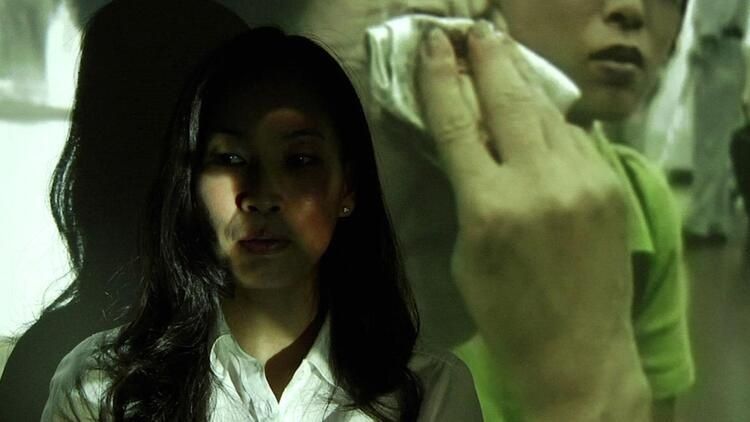
The Woman, the Orphan, and the Tiger film screening
April 12, 2023
7:00 pm
Cornell Cinema
The Woman, the Orphan, and the Tiger by Jane Jin Kaisen & Guston Sondin-Kung (2010, 72 min)
Following a group of international adoptees and other women of the Korean diaspora in their 20s and 30s, the film uncovers how the return of the repressed confronts and destabilizes narratives that have been constructed to silence histories of pain and violence inflicted onto the bodies and lives of women and children.
Film website: janejinkaisen.com/the-woman-the-orphan-and-the-tiger
In English, Korean and Danish with English subtitles
Part of the series Power of Seeing 보는 이의 권력 hosted by the East Asia Program at the Mario Einaudi Center for International Studies.
Generously co-sponsored by the Reppy Institute for Peace and Conflict Studies and the Cornell Society for the Humanities.
Additional Information
Program
Einaudi Center for International Studies
Reppy Institute for Peace and Conflict Studies
East Asia Program
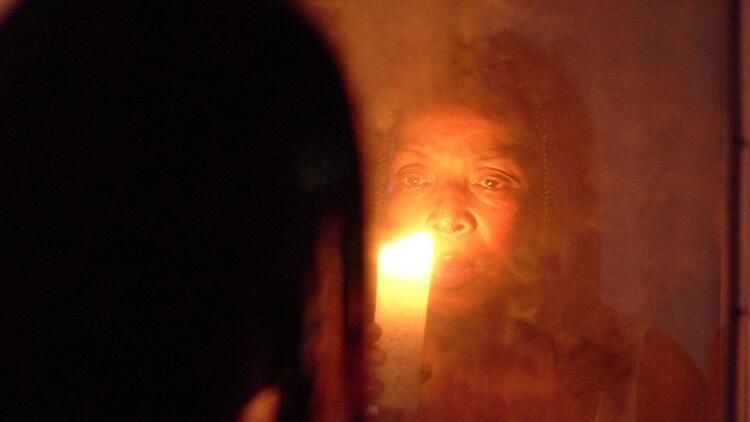
Film Screening: Tour of Duty
March 15, 2023
7:00 pm
Cornell Cinema
Tour of Duty by Kim Dong-ryung and Park Kyoung-tae (2 hours 30 min. 2012)
There remains only silence in a US military camp town in the northern part of Gyeonggi province which will be pulled down any time soon.
In the town, three women are still living with pains engraved in their bodies. Aunt Bobby who used to make burgers in Seonyu-ri for 30 years; Ms. Insoon Park who used to collect scraps and draw paintings on them in the abandoned narrow alleys of Bbat-bul, Uijeongbu; and Ms. Sungja Ahn who is half-Korean and half-African American. Following the pieces of their memories, the film travels into the forgotten town to reveal the truth left behind.
This documentary by Kim Dong-ryung and Park Kyoung-tae chronicles the lives of three women impacted by the US military presence in South Korea. The Seonyu-ri red light district located at the Paju U.S. military camp town became a well-known site after the Korean War. Now awaiting its fate to be demolished, this film sets out on a trip through time and space in this place where certain memories and people have long departed and others still linger.
In Korean with English subtitles.
Film website: www.dmzdocs.com/eng/addon/00000002/history_film_view.asp?m_idx=101967&Q…
Part of the series Power of Seeing 보는 이의 권력 hosted by the East Asia Program at the Mario Einaudi Center for International Studies.
We thank the generous co-sponsorship of the following:
The Reppy Institute for Peace and Conflict Studies
The Cornell Society for the Humanities
Additional Information
Program
Einaudi Center for International Studies
East Asia Program
Reppy Institute for Peace and Conflict Studies
Turkey and Syria Earthquake

Campus Rallies to Support Survivors
Cornellians came together to support earthquake survivors and students and faculty from the region. More events are scheduled in coming days.
Additional Information
Lessons from the Meme War in Ukraine
Sarah Kreps, PACS/IES
This piece about contemporary propaganda presents reserach co-authored by Sarah Kreps, professor of government and public policy, Paul Lushenko, Cornell PhD candidate in government; and Keith Carter, lieutenant colonel in the U.S. Army and director of the defense and strategic studies program at the United States Military Academy.
Additional Information
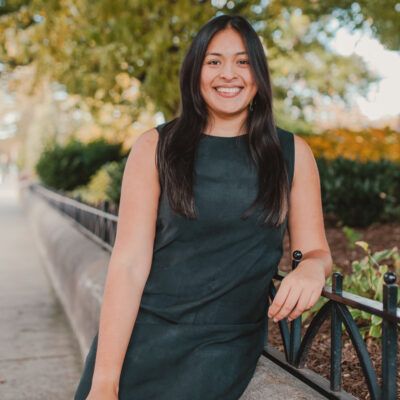
Einaudi Graduate Fellow Studies Women’s Political Participation
Angie Torres-Beltran
Einaudi graduate fellow Angie Torres-Beltran studies how women’s political participation is influenced by gender-based violence and interactions with state institutions under the guidance of Sabrina Karim and Gustavo Flores-Macías.
Additional Information
A Step on a Longer Journey

Afghan Scholar Sharif Hozoori
Hozoori is an IIE Scholar Rescue Fund fellow and visiting scholar in the South Asia Program. Read about his journey to Cornell and work on campus.
Additional Information
Nancy Okail: Progress and Prospects for Democratization in North Africa

March 9, 2023
5:00 pm
Biotechnology Building, G10
World in Focus: Einaudi Center Democracy Roundtable
Nancy Okail of the Washington-based Center for International Policy joins Einaudi Center director Rachel Beatty Riedl for this important conversation on democracy, security, and human rights in the North Africa region. Hosted by the Mario Einaudi Center for International Studies, the event is part of Einaudi's work on democratic threats and resilience.
Register in advance to reserve a seat!
***
Speakers
Nancy Okail is president and CEO of the Center for International Policy in Washington, DC. She is a leading scholar, policy analyst, and advocate with more than 20 years of experience working on issues of human rights, democracy, and security in the Middle East and North Africa region. Okail holds a PhD from the University of Sussex. Her policy analysis and political commentary appear in top media outlets including the Washington Post, New York Times, and Foreign Affairs.
Rachel Beatty Riedl has served as the Einaudi Center's director since 2019. She is the Einaudi Center's John S. Knight Professor of International Studies and professor in the Department of Government and Cornell Jeb E. Brooks School of Public Policy. Her research interests include institutional development in new democracies, local governance and decentralization, and authoritarian regime legacies in Africa.
***
About Democratic Threats and Resilience
Democratic threats and resilience is one of the Einaudi Center's global research priorities. Researchers across the Einaudi Center are monitoring evolving democratic norms and threats to democracy in the United States and around the world. This work is vital today, as our ability to address a range of global challenges—from pandemics and climate change to human rights—often hinges on the strength of representative institutions that provide voice and access to diverse societal interests and actors.
Additional Information
Program
Einaudi Center for International Studies
Institute for African Development
Reppy Institute for Peace and Conflict Studies
Carlos Alvarado Quesada: Fighting for Democracy and the Planet: Costa Rica's Case
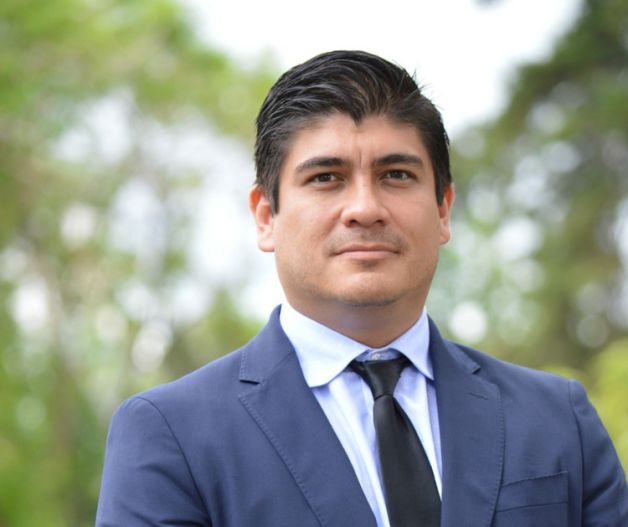
March 22, 2023
6:00 pm
Alice Statler Auditorium
Bartels World Affairs Lecture In this year's Bartels lecture from the Mario Einaudi Center for International Studies, former president of Costa Rica Carlos Alvarado Quesada shares how conservation and sustainability are crucial for preserving democracy around the world. Costa Rica is one of the most biodiverse spots on the planet, with more than one-quarter of the nation's land protected in parks and preserves. As Costa Rica's leader from 2018 to 2022, Alvarado proposed a challenge for his country and the world: to make Costa Rica a decarbonized nation by 2050. During his visit to Cornell, Alvarado explores some of the questions that guided his administration: What roles do democracy and governance play in shaping environmental policies at the local, national, and global levels? And how can we meet the basic needs of the world’s ever-growing human population—equitably and democratically—without sacrificing the health of the planet and its other inhabitants? A reception with refreshments will follow the lecture. Lecture: 6:00–7:30 p.m. | Alice Statler AuditoriumReception: 7:30–8:30 p.m. | Park AtriumFree ticket required for in-person attendance. Reserve your ticket for the lecture and/or reception today! Join the lecture virtually by registering at eCornell. *** How did President Alvarado's policies protect Costa Rica's environment? Read a Bartels explainer by the Lab of O's Viviana Ruiz-Gutierrez. *** About Carlos Alvarado Quesada Carlos Alvarado Quesada was Costa Rica's 48th president, serving from 2018 until 2022. He was Costa Rica's youngest president in a century, taking office at age 38. Representing the Citizens' Action Party (PAC), Alvarado previously served as minister of labor and social security. Alvarado received the 2022 Planetary Leadership Award from the National Geographic Society for his commitment and action to protect the ocean. He accepted on behalf of his country the 2019 Champion of the Earth Award, the United Nations' highest environmental honor. A writer and political scientist, Alvarado is currently Professor of Practice of Diplomacy at Tufts University's Fletcher School in Massachusetts. *** About the Bartels World Affairs Lecture The Bartels World Affairs Lecture is a signature event of the Mario Einaudi Center for International Studies. Part of Einaudi's work on democratic threats and resilience, this year's lecture is cosponsored by Einaudi's Latin American and Caribbean Studies Program. The Einaudi Center’s flagship event brings distinguished international figures to campus each academic year to speak on global topics and meet with Cornell faculty and students, particularly undergraduates. The lecture and related events are made possible by the generosity of Henry E. Bartels ’48 and Nancy Horton Bartels ’48.
Additional Information
Program
Einaudi Center for International Studies
East Asia Program
Institute for African Development
Institute for European Studies
Latin American and Caribbean Studies
Reppy Institute for Peace and Conflict Studies
South Asia Program
Southeast Asia Program
Allied Air Attacks and Civilian Harm in Italy, 1940-1945: Bombing Among Friends

By Our Faculty
Book
Additional Information
Program
Type
- Book
Publication Details
Publication Year: 2023
ISBN: 9781032325965