
Reppy Institute for Peace and Conflict Studies
Berger International Speaker Series with Tawab Danish – Circling Back to Zero after 20 years of Achievements: How the Legal System of Afghanistan has Been Affected More than Any Other Institution under the Taliban Regime

October 25, 2022
12:15 pm
Myron Taylor Hall, Cornell Law School, 277
Please join us for a lunchtime seminar given by our guest Tawab Danish, a Visiting Scholar here at Cornell Law School.
SEMINAR: Circling Back to Zero after 20 years of Achievements: How the Legal System of Afghanistan has Been Affected More than Any Other Institution under the Taliban Regime
DATE: Tuesday, October 25th, 2022
TIME: 12:15 p.m. to 1:15 p.m. ET
LOCATION: Room 277 – Myron Taylor Hall, Cornell Law School
***Lunch will be provided during the event, so don’t forget to RSVP!
RSVP here
Please fill out the following short form: https://cornell.ca1.qualtrics.com/jfe/form/SV_5A8vFJEaEmFjiQu
The Seminar – Circling Back to Zero after 20 years of Achievements: How the Legal System of Afghanistan has Been Affected More than Any Other Institution under the Taliban Regime
After 2001, the international community, the United States of America, and the leader of Afghanistan spent billions of dollars and put much effort into rebuilding the legal system in Afghanistan. However, since the Taliban received power on August 15, 2021, the legal system has gone backwards to where it was 20 years ago. The Taliban abolished the Constitution ratified in 2004, and dissolved the National Assembly and some independent legal institutions such as the Afghanistan Independent Bar Association and Afghanistan Independent Human Right Commission. Simultaneously, the criminal code, civil code, criminal procedure, human rights law, and women and children's rights are unclear. The Taliban leads the country most dominantly by decrees of the Ministry for the Propagation of Virtue and the Prevention of Vice. Their administration believes that the 2004 Constitution does not hold up to sharia law, although the First, Second, and Third Articles of the Constitution were mainly about Islamic values and accepted Islam as the official state religion.
Continuation of the current situation in Afghanistan will have extreme effects on the whole legal system and will lead the country to absolute tyranny. So, the international community – especially the United Nations, United States of America, and regional and Islamic countries – should take proper measures to pressurize the Taliban to keep alive and promote the legal system.
About our Distinguished Guest: Tawab Danish
Tawab Danish, a visiting scholar at the Cornell School of Law, was born in the Bagram district of Parwan, Afghanistan in 1985. He graduated from the Law & Political Science School of Albironi University in Kapisa, Afghanistan in 2006 and holds an LLM degree from the University of Washington School of Law.
Tawab Danish was appointed as a lecturer at Parwan University in 2013 and taught Constitutional Law, Public International Law, Human Rights, and International Organizations. He also has worked as a senior advisor of the Speaker of the House of the National Assembly of Afghanistan from 2019 to 2021.
Mr. Danish founded a private school in 2013, which is one of the most well-known schools in Parwan Province. More than 700 students are enrolled in his school, 28% of which are girls.
Can’t make it to our event in-person? You can attend virtually!
We are also livestreaming the event, so you can sign up to attend the Zoom Webinar at this link: https://cornell.zoom.us/webinar/register/WN_hazaK_ekTnCSPKB2lVO8mQ
Please feel free to distribute the link to anyone you feel would be interested in the seminar. All are welcome!
Additional Information
Program
Einaudi Center for International Studies
South Asia Program
Reppy Institute for Peace and Conflict Studies
Agnieszka Nimark, Visiting Scholar at PACS, writes about the nuclear non-proliferation regime at 50: Midlife crisis and its consequences
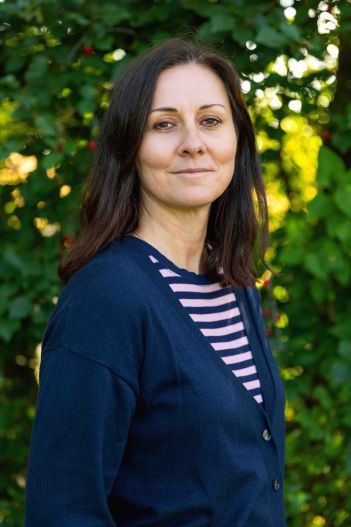
The chapter has been published in the edited volume, The Crisis of Multilateral Legal Order: Causes, Dynamics and Implications.
Additional Information
Career Info Session: U.S. Department of State and Public Service Careers

September 27, 2022
5:00 pm
Are you interested in a possible career in public service, and maybe specifically with the U.S. Department of State? Ever wondered what it's like to work in various capacities at State -- ranging from a Foreign Service Officer to policy analyst and intelligence officer -- or how to go about preparing yourself to be a successful applicant for jobs at State?
Please join the Einaudi Center for a virtual discussion about career paths and opportunities at the State Department and in public service, featuring three Cornell alumni who will share their insights:
Benjamin Brake, Director, Office of Cyber Affairs and Emerging Technology, Bureau of Intelligence and Research, U.S. Department of StateJason Oaks, Deputy National Intelligence Officer for East Asia, U.S. Department of StateEric Anderson, Foreign Service Office, Political Counselor in Islamabad, Pakistan, U.S. Department of StateThis career info session is presented by the Einaudi Center's International Studies Minor, and its outgoing director (Christopher Way) and incoming director (Oumar Ba). The International Relations Minor is open to all Cornell undergraduate students interested in learning about the politics, economics, history, languages, and cultures of the world.
Contact: irm@einaudi.cornell.edu
Additional Information
Program
Einaudi Center for International Studies
Reppy Institute for Peace and Conflict Studies
East Asia Program
Southeast Asia Program
Latin American and Caribbean Studies
Institute for African Development
Institute for European Studies
South Asia Program
FLIP Volunteer Orientation & Organizational Meeting

September 23, 2022
11:30 am
Uris Hall, G08
Volunteer with the Foreign Language Introduction Program! FLIP has introduced thousands of children in Upstate New York to world languages and cultures. Volunteers from Cornell and surrounding communities who speak foreign languages provide fun ways for K–12 students to learn about and engage with our increasingly interconnected world.
FLIP's first organizational meeting and volunteer orientation of the semester will take place on September 23rd, 11:30am to 1:00pm, at Uris Hall G08. Lunch and beverages will be served! We welcome everyone who considers joining FLIP or has any questions about FLIP to attend this organizational event – a great opportunity to meet with our team members, previous volunteers, and get to know more about our program.
Please let us know about if you would like to attend, and any dietary restrictions! If you have friends who are interested in FLIP, please feel free to forward this email to them as well. We are looking forward to seeing you all next Friday!
Additional Information
Program
Einaudi Center for International Studies
Reppy Institute for Peace and Conflict Studies
East Asia Program
Southeast Asia Program
Latin American and Caribbean Studies
Institute for African Development
Institute for European Studies
South Asia Program
Officer’s Guilty Plea in Breonna Taylor Case Raises Questions about Possible Cooperation with Feds
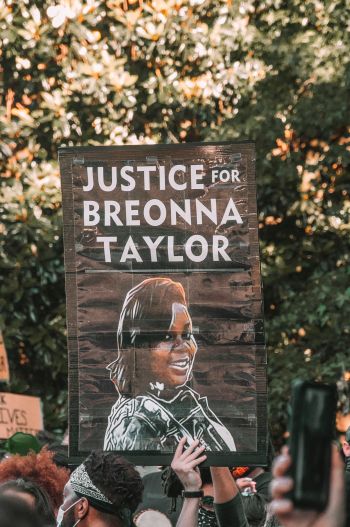
Joseph Magulies, PACS
“The mere fact that the feds got involved as a separate prosecution is unusual. Most cases of police shootings, even with multiple co-defendants, do not lead to federal charges,” says Joe Margulies, professor of law.
Additional Information
Cornell Global Hubs
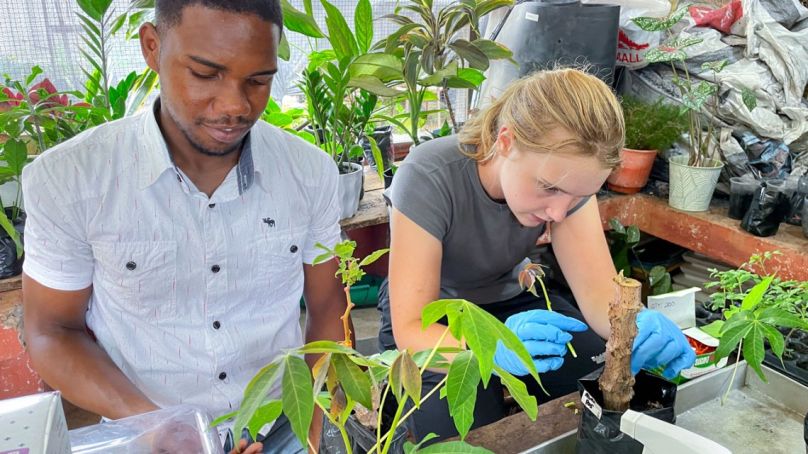
20 partner universities in 11 locations
New initiative expands opportunities, provides infrastructure, and greases the wheels for faculty, alumni, and students across the university.
Additional Information
Christine Leuenberger
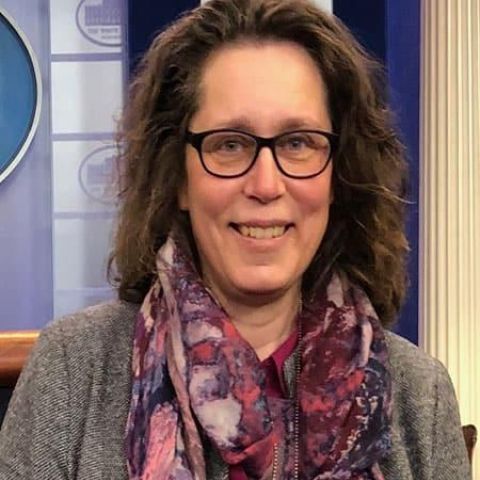
PACS Minor Field Instructor
Additional Information
Eun A Jo, Reppy Graduate Fellow, writes about Memory, Institutions, and the Domestic Politics of South Korean–Japanese Relations in the International Organization

Recipient of the Jesse F. and Dora H. Bluestone Peace Studies Fellowship, Eun A discusses how collective memory shapes politics in the domestic and international spheres.
Additional Information
Dr. Kurt Gottfried, Co-Founder of the Union of Concerned Scientists, passes away
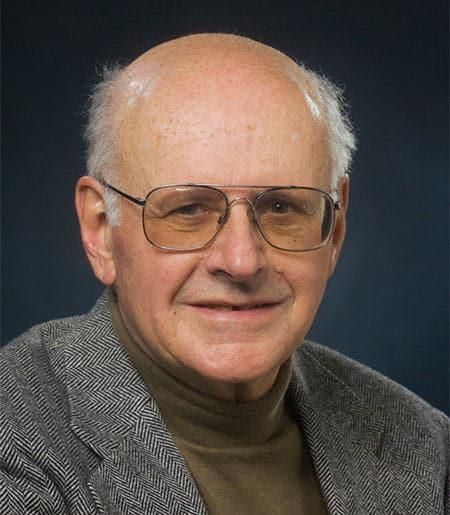
He was an advocate of nuclear arms control, human rights, and scientific integrity.
Additional Information
Estonia and Latvia Leave China's 16+1 Trade Group for Central and Eastern European Nations

Sarah Kreps, PACS/IES
“The two countries are trying to signal very clearly that they’re in the pro-democracy camp, and they don’t want to be aligned with countries that are seen as acting in opposition to democracy,” says Sarah Kreps, professor of government and law.