
Reppy Institute for Peace and Conflict Studies
Demilitarizing the Environment: Indigenous Knowledge, Colonialism, and Fire in Northern California

Bruno Seraphin, PACS Graduate Fellow
Bruno Seraphin conducted dissertation field research during fall 2021 with financial support from the Reppy Institute for Peace and Conflict Studies through the Marion and Frank Long Fellowship. Seraphin is a PhD Candidate in Sociocultural Anthropology with a Graduate Minor in American Indian and Indigenous Studies.
Seraphin’s research focuses on the ways that Indigenous Karuk prescribed fire practitioners are working to transform the paradigm of militarized fire suppression within California. He has been living and conducting fieldwork in Karuk country since August 2020. The dissertation’s working title is, “Fires Beyond Crisis: Karuk Sovereignty, Demilitarizing the Environment, and Unsettled Colonialism in Northern California.”

This fall, Bruno conducted more than a dozen long-form semi-structured interviews with Karuk fire practitioners, Karuk Tribal employees, fire professionals employed by non-governmental organizations (NGOs), United States Forest Service (USFS) employees, and other local community members from the mid-Klamath region whose lives are affected by wildfires and prescribed burning. He learned about the opportunities and challenges that emerge within collaborative partnerships between land management agencies, and varying understandings of the nature of the wildfire crisis. He also studied historical and ongoing systems of settler colonialism and Indigenous dispossession in the region, and individuals’ diverse hopes and concerns with regards to the future of fire in Karuk country.
"Fall 2021 was a generative and exciting time in my PhD trajectory," reports Seraphin.
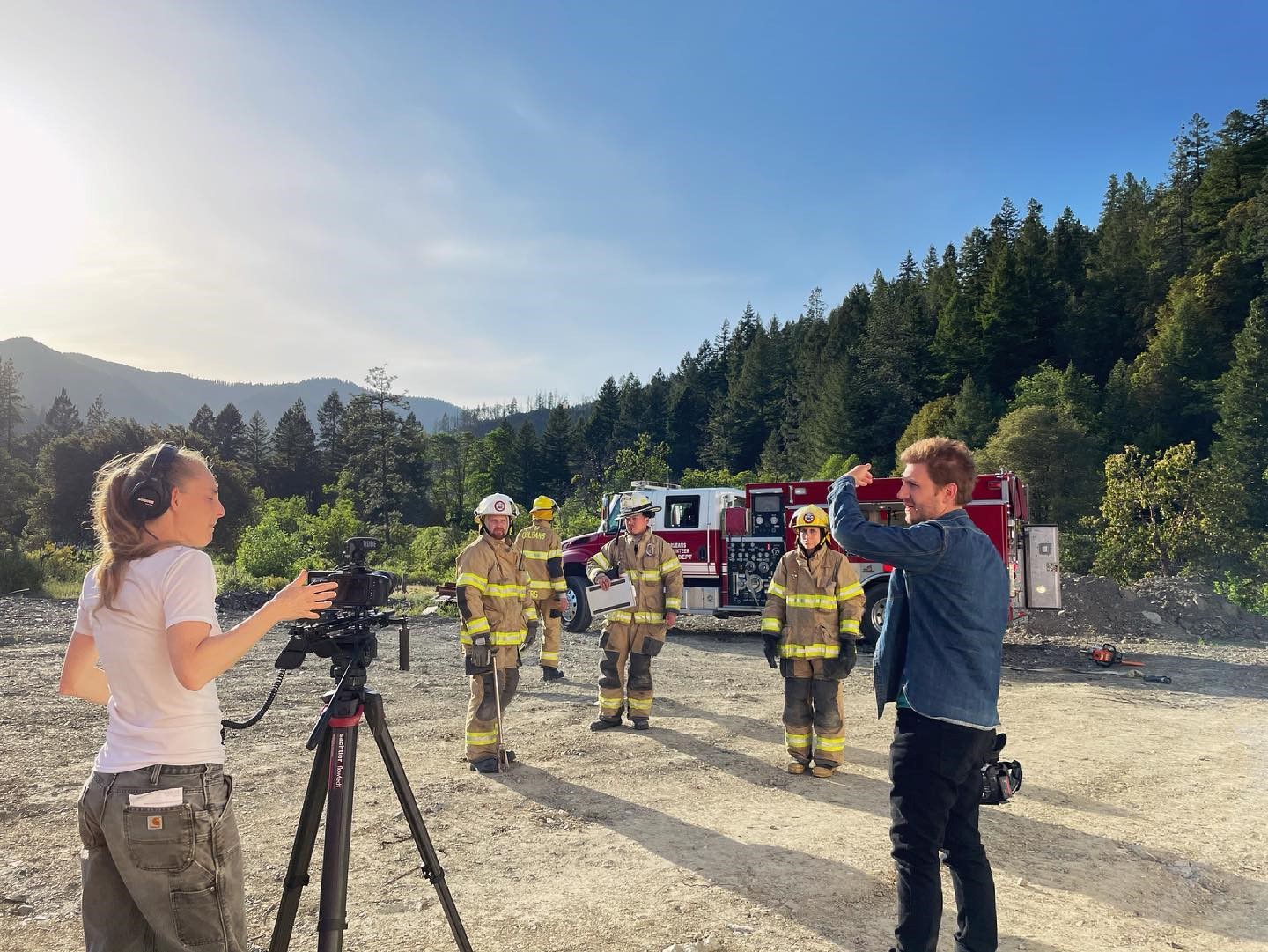
Seraphin also conducted participant observation, working directly with local experts to explore first-hand the different sides of fire. He helped out with prescribed burns; shadowed Karuk Tribal representatives as they advocated for Karuk sovereignty and cultural values within the wildland fire bureaucracy; worked with community members as they prepared their properties for incoming wildfire, and more.
Seraphin also worked on prescribed fire as a videographer, photographer, and media consultant. He helped colleagues at the Karuk Department of Natural Resources (DNR) document the seven-week-long Klamath Prescribed Fire Training Exchange Program (TREX). He co-produced educational videos on topics relating to Karuk fire knowledge, for example “Learning Fire: In the Klamath Mountains 2021,” a fun project made primarily with and for local youth. He also developed the video “Talking Roads: Transportation and Climate Adaptation in Karuk Country,” as part of a collaboration between the Karuk DNR and the California Department of Transportation (video will be available publicly in February 2022).
During fall 2021, Seraphin also made time to write. He revised and resubmitted an article manuscript to the journal American Ethnologist, drawing on research from his MA thesis as well as this current project.[1] Additionally, based on his research on the political far right’s environmental rhetoric, he worked on two public-facing collaborative projects: first, a forthcoming zine titled “Against the Eco-fascist Creep,” and second, a short piece titled, “De-Escalating Water Crisis” for a collection of water policy reports. This collection is now published online and can be read in its entirety. Working with several other early-career scholars of settler colonialism and fire in the U.S. west, Seraphin is coauthoring a review article for Environment and Society’s special issue on “Fire and Flood,” to be published in 2023. Finally, Seraphin submitted three fellowship applications to secure funding for the upcoming months of dissertation writing. One was awarded, and the other two are still under review.
Seraphin reports, “fall 2021 was a generative and exciting time in my PhD trajectory.” He expects to complete fieldwork in May 2022 and defend the completed dissertation in May 2024. “Throughout all,” says Seraphin, “I am grateful for the friendship, patience, and support of the Karuk colleagues and neighbors with whom I work and live.”
[1] Manuscript title: “Unsettling Ontology: Narrations of the Human in the Wildtending Movement”
Additional Information
A Survivor's Voice: Update on the Atrocities Against the Uyghurs in China

March 7, 2022
4:45 pm
What are the prospects for halting China’s mass atrocities in the Uyghur region, which are now entering their fifth year since the start in 2017? An update and discussion. Our special guest is Tursunay Ziyawudun, a survivor of the Chinese concentration camps in the region known in Chinese as Xinjiang. Translation will be provided by Rizwangul NurMuhammad, MPA student at Cornell and also affected by the atrocities. Faculty hosts and facilitators Magnus Fiskesjö, Anthropology and Allen Carlson, Government.
Co-sponsored by the China and Asia-Pacific Studies Program (CAPS), Critical Ottoman and Post-Ottoman Studies, Comparative Muslim Societies, Anthropology, and the Reppy Institute for Peace and Conflict Studies (PACS).
Additional Information
Program
East Asia Program
Einaudi Center for International Studies
Reppy Institute for Peace and Conflict Studies
The Most Serious Crimes of Concern to The International Community as a Whole?
March 3, 2022
11:25 am
Uris Hall, G08
This is a hybrid event. Registration information is below.
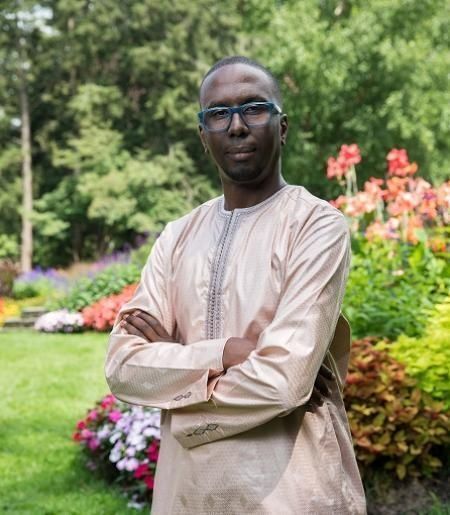
Oumar Ba discusses the International Criminal Court (ICC) and its relationship with African states at this week's seminar with the Reppy Institute. RSVP to attend and learn more below.
About the speaker
Oumar Ba is an Assistant Professor in the Department of Government at Cornell University. His primary areas of research focus on law, violence, race, humanity, and world order(s) in global politics. He is the author of States of Justice: The Politics of the International Criminal Court (Cambridge, 2020). He is currently working on two major projects - Crimes, Against Humanity: Governing Global Justice, and (Re)Centering Decolonization as Ontology and Sifting through the Archives of Liberation.
About the talk
The scholarship on the relationship between African states and the International Criminal Court (ICC) tends to point to various contentions stemming from the quasi-exclusive focus of the Court on the continent and its citizens, and the disputes regarding head-of-state immunity. It is also often pointed out that African states were early and eager supporters of the international criminal justice regime. Yet, the current international legal order is starkly different from the one that African states had envisioned. By revisiting the archives of two pivotal moments in the establishment of the current international legal order – the work of the International Legal Commission (ILC) in drafting the Code of Crimes Against The Peace and Security of Mankind and negotiations that led to draft statute of the ICC, we find that Africa had proposed a different version of the international legal order. This article contends that for African states, their vision for an international legal order was linked to their history of colonial subjugation, colonial wars, wars of liberation, and conflicts after the independences. Therefore, the Draft Code and establishment of the ICC were meant to provide an avenue for redress, amidst a deep mistrust between Africa and “international law”.
This seminar is part of the spring seminar series with the Reppy Institute for Peace and Conflict Studies (PACS).
Register here
In accordance with university event guidance, all campus visitors who are 12 years old or older must also present a photo ID, as well as proof of vaccination for COVID-19 or results of a recent negative COVID-19 test. If you are not currently participating in the Cornell campus vaccination/testing program, please bring proof of vaccination or the results of a recent negative test.
Additional Information
Program
Einaudi Center for International Studies
Reppy Institute for Peace and Conflict Studies
Institute for African Development
War and Statehood at the Eastern Periphery of Europe: Bukovina in World War I

February 24, 2022
11:25 am
Uris Hall, G08
Cristina Florea is an Assistant Professor of History at Cornell University. She is interested in the interactions between German and Russian power (their competition for territory and influence) across this space, as well as the consequences these interactions have had for the people living in between. Her research focuses on the importance of imperial legacies in modern European history, and the centrality of imperial competition to East European politics and societies.
This conversation is part of the spring seminar series with the Reppy Institute for Peace and Conflict Studies (PACS).
Register here
In accordance with university event guidance, all campus visitors who are 12 years old or older must also present a photo ID, as well as proof of vaccination for COVID-19 or results of a recent negative COVID-19 test. If you are not currently participating in the Cornell campus vaccination/testing program, please bring proof of vaccination or the results of a recent negative test.
Additional Information
Program
Einaudi Center for International Studies
Reppy Institute for Peace and Conflict Studies
Institute for European Studies
Patricia Young

Senior Program Manager
Patricia Young is the Senior Program Manager for the Institute for European Studies and the Reppy Institute for Peace and Conflict Studies. She has a doctorate in Political Science from Rutgers University and a master's in Economics from the University of Victoria, Canada. She wrote her dissertation on market and democratic reforms in Eastern Europe and the process of European Union enlargement. She came to Cornell in 2019 as a lecturer in Sociology and Government, teaching on the Transformation of Socialist Societies. Patricia has previously lectured at Stanford since 2010.
Additional Information
The Politics of Maps: Cartographic Constructions of Israel/Palestine
February 10, 2022
11:25 am
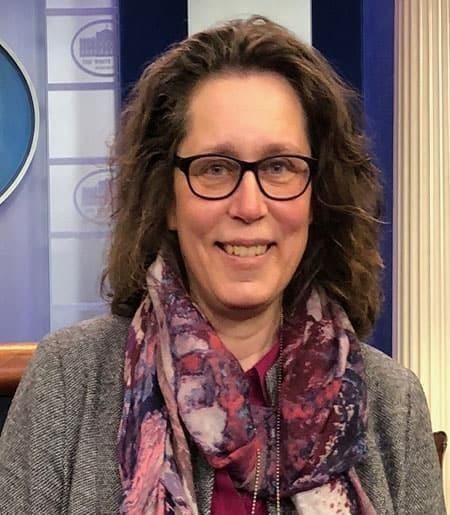
Dr. Christine Leuenberger will discuss her book, The Politics of Maps: Cartographic Constructions of Israel/Palestine, published by the Oxford University Press. This book explores map war in Israel/Palestine - how the geographical sciences become entangled with politics, territorial claim making, and nation-state building in Israel/Palestine. The book also investigates how society and politics shape map-making and how various actors, institutions, and governments rely on the powerful visual rhetoric of maps in order to engage in geopolitics. To learn more, read this article in the Cornell Chronicle.
About the speaker
Dr. Christine Leuenberger is a Senior Lecturer in the Department of Science & Technology Studies. Her research focuses on qualitative methods, sociology of medicine, classical and contemporary sociological theory, sociology of knowledge, interactional sociology, sociology of culture, transformation studies of Eastern Europe, Middle Eastern Studies, Peace Studies, and the sociology and history of the human and behavioral sciences. She is also engaged in peace and educational initiatives in conflict regions in the Middle East and Sub-Saharan Africa.
This conversation is part of the spring seminar series with the Reppy Institute for Peace and Conflict Studies (PACS).
Additional Information
Program
Einaudi Center for International Studies
Reppy Institute for Peace and Conflict Studies
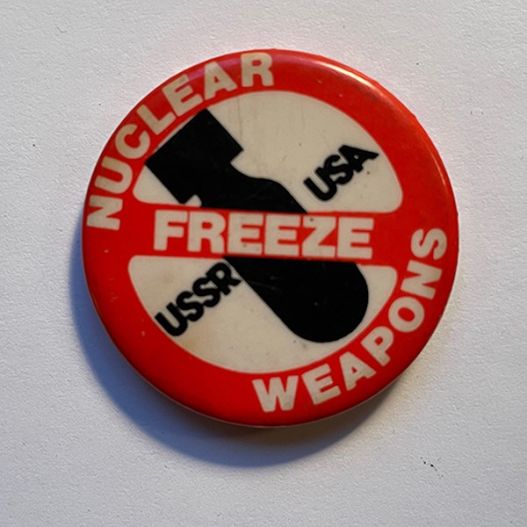
Nuclear Freeze documents digitized
Matt Evangelista, Agnes Nimark, Judith Reppy (PACS)
Cornell University Library launches online collection of anti-nuke pioneer, Randall Forsberg.
Additional Information
U.S. Could Utilize Rule to Stop High-Tech Exports to Russia

Eswar Prasad, SAP
“The U.S. is hoping Russia has learned the lesson through the Huawei example,” says Eswar Prasad, professor of economics and international trade policy.
Additional Information
Topic
- Development, Law, and Economics
Program
The Economic Weapon: The Interwar Rise of Sanctions
February 3, 2022
11:25 am
Prof. Nicholas Mulder provides a history of the interwar origins of economic sanctions, showing how they reconfigured international affairs by enabling distant coercion against civilian societies in peacetime. Based on wartime blockade practices, the instrument of sanctions offered a novel way to prevent war.
This presentation is based on his first book, The Economic Weapon: The Rise of Sanctions as a Tool of Modern War, recently published in January 2022 by Yale University Press.
About the speaker
Nicholas Mulder is an Assistant Professor of History at Cornell University. He works on European and international history from 1870 to the present. His research focuses on political, economic, and intellectual history, with particular attention to the era of the world wars between 1914 and 1945.
This seminar is part of the spring seminar series with the Reppy Institute for Peace and Conflict Studies (PACS).
Additional Information
Program
Einaudi Center for International Studies
Reppy Institute for Peace and Conflict Studies
Call for Proposals: Interdisciplinary Approaches to Peace and Conflict Studies
PACS Graduate Student Conference
Proposals due February 20, 2022
We encourage you to submit an abstract if your work seeks to answer questions pertaining to global peace and conflict using innovative methods, novel theoretical applications, and creative interdisciplinary approaches.
About the Conference
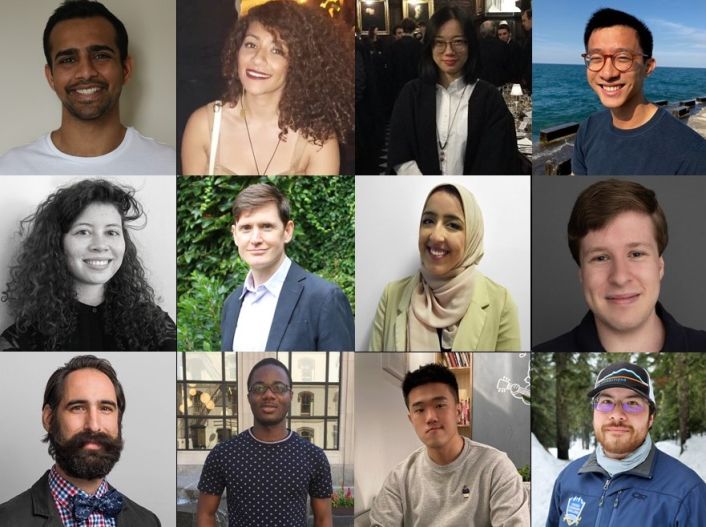
Cornell University’s 2021-2022 Judith Reppy Institute for Peace and Conflict Studies Graduate Fellows are pleased to announce the fifth annual Reppy Institute graduate student conference, to be held on Saturday, April 23, 2022. We hope to elicit submissions from graduate students whose work seeks to answer questions pertaining to global peace and conflict using innovative methods, novel theoretical applications, and creative interdisciplinary approaches.
This conference invites submission of abstracts from graduate students from fields including, but not limited to, government, sociology, history, science and technology studies, anthropology, philosophy, law, and communications. Topics should be related to the Reppy Institute’s interest in the problems of war and peace, arms control and disarmament, and instances of collective violence.
Questions that we expect to be useful for developing abstracts for this conference include, but are not limited to:
- How do law, technology, peace, and conflict intersect, both conceptually and in historical or contemporary contexts?
- How have national/international legal structures been used to mediate conflicts and define peace?
- How have technologies been deployed in peace/conflict scenarios?
- How do specific technological artifacts or systems embody the politics of peace or conflict?
Submit your application via the conference website.
The deadline for submissions is February 20, 2022. Submissions should include a 300- to 500-word abstract explaining the topic, theoretical framework, methodology, implications of the scholarship, and a brief statement highlighting the interdisciplinary nature of the work. Scholars whose submissions are accepted will be notified by March 1, 2022. Participants will be offered a modest stipend of up to $500 to defray their expenses for travel, room, and board.
Questions? Contact the conference organizers.