
Reppy Institute for Peace and Conflict Studies
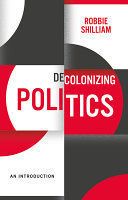
Decolonizing Politics: An Introduction
April 22, 2021
11:25 am
Robbie Shilliam, Professor of Political Science at Johns Hopkins University, discusses the new book "Decolonizing Politics: An Introduction," to be released by Wiley in April 2021. This seminar will focus on the chapter on International Relations.
The author will join for a conversation about their work. No formal presentation will be given; please read in advance. A link to the reading will be sent with the registration confirmation.
Part of the Reppy Institute for Peace and Conflict Studies (PACS) seminar series.
About the author
Robbie Shilliam researches the political and intellectual complicities of colonialism and race in the global order. He is co-editor of the Rowman & Littlefield book series, Kilombo: International Relations and Colonial Question. Robbie was a co-founder of the Colonial/Postcolonial/Decolonial working group of the British International Studies Association and is a long-standing active member of the Global Development section of the International Studies Association.
Over the past six years, Robbie has co-curated with community intellectuals and elders a series of exhibitions–in Ethiopia, Jamaica and the UK–which have brought to light the histories and significance of the Rastafari movement for contemporary politics. Based on original, primary research in British imperial and postcolonial history, this work now enjoys an online presence as a teaching aid: www.rastafari-in-motion.org. Robbie also works with Iniversal Development of Rastafari (IDOR) to retrieve histories of the Rastafari presence in Baltimore and Washington DC.
Currently, Robbie is working on three strands of inquiry: firstly, a re-reading of classical political economy through its intimate relationship to Atlantic slavery, with a bearing towards contemporary controversies regarding "social conservatism"; secondly, a retrieval of Ethiopianism as a critical orientation towards global order, especially in terms of its cultivation of a tradition of anti-colonial anti-fascism from the 1930s onwards; and thirdly, South-South anti-colonial connections, especially between peoples of the African Diaspora and indigenous movements.
Robbie is committed to building capacity in Political Science and International Relations for postcolonial teaching and learning. To that effect, he is presently writing a book for undergraduates which reveals the colonial and postcolonial roots of the academic study of politics as well as providing alternative routes of investigation and understanding. Decolonizing Politics will be published by Wiley in 2021.
Additional Information
Program
Einaudi Center for International Studies
Reppy Institute for Peace and Conflict Studies
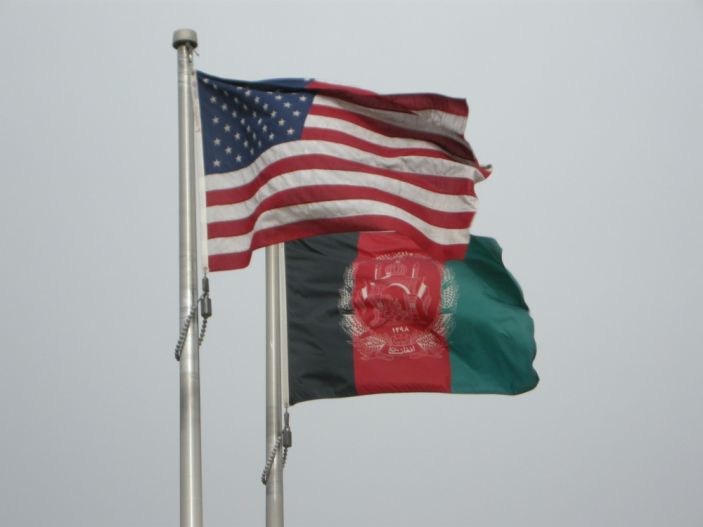
In or Out of Afghanistan Is Not a Political Choice
Sarah Kreps, PACS
Americans won’t pull the trigger on the country’s longest war, argue Sarah Kreps and Douglas Kriner, professors of government, in Foreign Affairs.
Additional Information
Artist Soni Kum to Share North Korean Defectors' Stories

Register Now to Attend April 2
Kum joins the East Asia Program on April 2 at 10:00 to discuss her latest installation work, Morning Dew: The Stigma of Being “Brainwashed.”
Additional Information
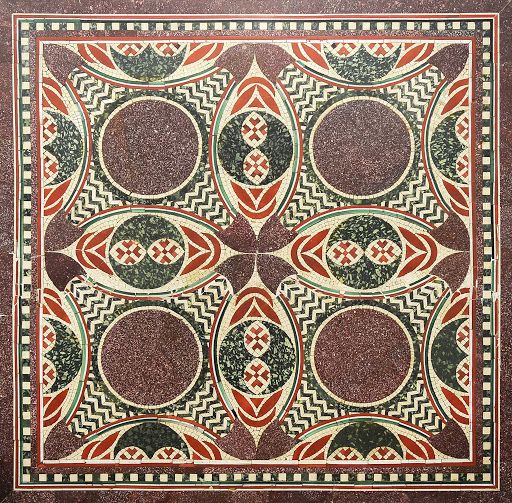
Long-lost Mosaic From a 'Floating Palace' of Caligula Returns Home
Barry Strauss, PACS
Barry Strauss, professor of history and classics, says, “There’s a lot of fake news about Caligula… But we can’t trust the myths.”
Additional Information
Thomas Nolan '20: Einaudi Student Path (video)
Thomas Nolan is a recent Cornell graduate who studied government and near eastern studies. He is currently working on a master's degree at Oxford University. His time at Cornell was shaped by the Einaudi Center's Reppy Institute for Peace and Conflict Studies.
Additional Information
President Speaks Out on Atlanta Shootings

Condemns Anti-Asian Racism and Violence
Einaudi stands with our Asian and Asian American colleagues and students. Read the statement to find out how to report campus incidents of bias.
Additional Information
Autocratic Stability in the Shadow of Foreign Threats

April 8, 2021
11:25 am
Join for a discussion of "Autocratic Stability in the Shadow of Foreign Threats," in the American Political Science Review and published online by Cambridge University Press, (July 2020).
Co-authored by: Livio Di Lonardo, Bocconi University; Jessica Sun, University of Michigan Department of Political Science; and Scott Tyson, University of Rochester.
The authors will join for a conversation about their work. No formal presentation will be given; please read in advance. A link to the reading will be sent with the registration confirmation.
Part of the Reppy Institute for Peace and Conflict Studies (PACS) seminar series.
Additional Information
Program
Einaudi Center for International Studies
Reppy Institute for Peace and Conflict Studies
Seducing Territory: Sex Acts and State Borders

April 1, 2021
11:25 am
Laura Sjoberg, Professor of Political Science at the University of Florida, discusses her working paper “Seducing Territory: Sex Acts and State Borders."
The author will join for a conversation about their work. No formal presentation will be given; please read in advance. A link to the reading will be sent with the registration confirmation.
Part of the Reppy Institute for Peace and Conflict Studies (PACS) seminar series.
About the author
Laura Sjoberg is is Professor of Political Science. Her research interests are in the area of gender-based and feminist approaches to the study of international relations generally, and international security specifically. Her research has addressed gender and just war theory, women’s violence in global politics, feminist interpretations of the theory and practice of security policy, queer theorizing in global politics, methodology, and the sociology of political science and International Relations.
Education: BA, University of Chicago; Ph.D., University of Southern California School of International Relations; J.D. Boston College Law School
Learn more at her personal website
Additional Information
Program
Einaudi Center for International Studies
Reppy Institute for Peace and Conflict Studies
Gender and the Security Sector Lab Seminar Series: Asma Khalifa
April 5, 2021
12:00 pm
Asma Khalifa presents a paper titled "Impact of Civil War on Gender Relations".
Additional Information
Program
Reppy Institute for Peace and Conflict Studies
Gender and the Security Sector Seminar Series: The Woman Stats Database
April 12, 2021
12:00 pm
Valerie Hudson presents a tutorial on using the Woman Stats Database. Please note that this event runs until 1:30pm.
Additional Information
Program
Reppy Institute for Peace and Conflict Studies