
Reppy Institute for Peace and Conflict Studies
Announcing the winners of the Reppy Institute’s graduate fellowship competition
The Judith Reppy Institute for Peace and Conflict Studies is pleased to announce the recipients of three graduate fellowships for the 2021-22 academic year: Eun A Jo (government), Sarah Meiners (history), and Bruno Seraphin (anthropology). These fellowships are made possible by the generous support of the Marion and Frank Long family, the Jesse F. and Dora H. Bluestone family, and an anonymous donor.
The fellowship selection process was highly competitive, with many worthy applications. We congratulate Jo, Meiners, and Seraphin for outstanding proposals. To learn more about the awardees and their inspiring work, read on.
Eun A Jo
Recipient of the Jesse F. and Dora H. Bluestone Peace Studies Fellowship

Eun A Jo is a PhD student in the department of government, specializing in international relations, comparative politics, and peace studies. She is interested in national narratives, memory, and the domestic politics of international relations, with a focus on East Asia. Eun A describes her research initiative below.
Follow Eun A on twitter @eunajo_.
Research Project
"Making of an Enemy: Narratives, Traumas, and the Politics of Enmity”
I study the narrative origins of enemies. Through a comparative study of national narratives in two postcolonial democracies, South Korea and Taiwan, I examine how enemy narratives rise and fall. In doing so, I hope to provide novel insights about how states’ narrative projects during moments of profound transition—such as decolonization and democratization—can shape politics of international reconciliation. The Jesse F. and Dora H. Bluestone Peace Studies Fellowship will allow me to begin fieldwork and conduct archival research in South Korea and Taiwan in Spring 2021.
Sarah R. Meiners
Recipient of the Marion and Frank Long Fellowship
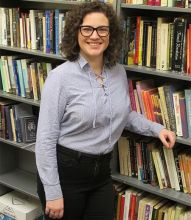
Sarah R. Meiners, originally from Wisconsin, attended the University of Wisconsin-Madison before arriving at Cornell where she is currently a PhD student in the department of history. She is predominately a historian of the twentieth century United States, and her research interests include immigration and refugee policy, childhood and youth, and empire, interventionism, and foreign relations.
Follow Sarah on twitter @srmeiners and learn more about her research below.
Research Project
“Whose Children? The Making of the United States’ Cold War Child Refugee Policy"
My dissertation historically analyzes the United States’ child refugee policy from approximately 1945 to 1995 by examining various child refugee populations from Europe, Asia, and the Caribbean. I question how policymakers and advocates defined and constructed policy around the “child refugee,” and I am particularly interested in understanding how foreign policy, notions of racialized, politicized childhood, and humanitarianism determined the recognition of children as refugees. I will use the Marion and Frank Long Fellowship to conduct archival research at a variety of sites--including presidential libraries, the Center for Migration Studies archives, and university collections--and to collect oral histories. I hope this project will broaden our understanding of the historical origins of the U.S.’ current child refugee policy, including parent-child separations and incarceration, and provide knowledge useful for fundamentally altering how we conceive of and treat all migrants.
Bruno Seraphin
Recipient of the Marion and Frank Long Fellowship
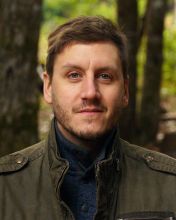
Bruno Seraphin is a PhD candidate in sociocultural anthropology and a graduate minor in American Indian and Indigenous studies at Cornell University. His research areas include environmental anthropology, anti-colonial American studies, and film studies. A settler scholar originally from Wampanoag land in eastern Massachusetts, Bruno is an award-winning filmmaker with a BFA in film and television from NYU and an MA in folklore from University of Oregon. He was a Reppy Fellow from 2018-20.
Follow Bruno on twitter @BrunoMarzipan.
Research Project
“Indigenous Karuk and Settler Colonial Fire Politics and Practices in Northern California”
My dissertation research partners with the Indigenous Karuk Tribe to examine fire exclusion policies in the US West as a form of colonial governance animated by military logics and highlights the perspectives of Indigenous fire practitioners. Living on Karuk territory in northwestern California full time since August 2020, I am learning how the ongoing resurgence of Karuk cultural burning can be an alternative to the ascendant and self-defeating paradigm of fire exclusion, a tool for stewarding regional ecosystems, and a way to enhance Karuk community wellbeing. Through participant observation, semi-structured interviews, and collaborative video projects, I work with Karuk cultural fire experts, US Forest Service staff, local NGOs, and others to learn about the obstacles and opportunities that arise as diverse community members come together to strategize more just and regenerative fire futures for the region. The Marion and Frank Long Fellowship will allow me to carry the project through the complete 2021 fire season, during which I will be on the ground with prescribed fire crews and Indigenous communities working to dismantle colonial systems and advance climate justice.
To learn more about the Reppy Institute’s graduate fellowship program, click here.
Additional Information
Evangelista Graduate Fellows Program
Details
Each year, the Reppy Institute for Peace and Conflict Studies provides a select cohort of fellows with unique opportunities for professional networking and development in the field of peace and conflict studies.
Evangelista Fellows participate in the Institute’s weekly public seminars and enjoy additional opportunities such as meeting with distinguished scholars in small groups and hosting the visit of scholars of their choosing. The Institute provides financial and administrative resources for these collective activities as well as a small ($400) research stipend for each Fellow. Current and former fellows also receive priority when applying for additional funding opportunities, such as the Institute’s Graduate Fellowship.
Each cohort of Evangelista Fellows is interdisciplinary, with interests spanning various issues, such as nuclear arms control and disarmament, climate change and conflict, governance of emerging technologies, human rights, race, and gender. Fellows are appointed for one year and may be renewed for subsequent years.
Eligibility
Masters, doctoral, and law students, including students beginning in fall 2026.
Amount
$400 research stipend.
Additional Information
Human Rights Radio Show focuses on Myanmar and Xinjiang

Interview with Magnus Fiskesjö
Updates on the human rights situation in Myanmar and in China's Xinjiang/East Turkistan, with Prof. Magnus Fiskesjö.
This interview appears on the "Human Rights and Social Justice" radio show, hosted by Ute Ritz-Deutch, on WRFI.org, & on FM 88.1 in Ithaca. Recorded April 23, 2021. Available to listen on Soundcloud.
Magnus Fiskesjö is an anthropology professor at Cornell University and faculty affiliate with the Southeast Asia Program and the Reppy Institute for Peace and Conflict Studies.
Fiskesjö gives an update on the situation in Myanmar (Burma), where the military took over the country in February, by imprisoning its elected leaders. Protests around the country continue even though the military has been killing protestors.
The professor also reviews the latest from China regarding the genocide of the Uyghurs, which the communist party denies. However, many of its practices, such as forced assimilation, sterilizations, and forced abortions of minorities are part of the definition of genocide as articulated in the UN Genocide Convention. Recently, the European Union and the United States have enacted sanctions against Chinese individuals involved in executing policies against ethnic minorities, and China in turn has sanctioned researchers and journalists from Europe. China is also targeting corporations who publicly committed to not use materials and products from the Xinjiang Uyghur Autonomous Region. In the U.S., the "Uyghur Forced Labor Prevention Act" has been introduced in Congress. For more information about the Uyghurs visit uhrp.org/.
Additional Information
Rejecting the Notion of Race

Global Public Voices Fellows in Medium
Karim-Aly Kassam and Frederick R. McDonald: Indigenous concept of personhood offers powerful pathways for action.
Additional Information
Amartya Sen: Attacks on Democracy (Bartels World Affairs Lecture)
May 5, 2021
4:30 pm
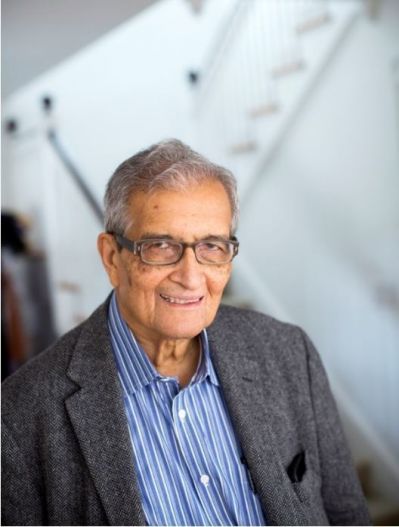
Nobel prize–winning economist Amartya Sen joins Cornell’s Kaushik Basu for the 2021 Bartels World Affairs Lecture, hosted by the Mario Einaudi Center for International Studies.
At the turn of the millennium, many would have said that understanding the need for democracy was the most important change in the world over the preceding century. Yet in the past 20 years, democracy has been treated with contempt and hostility in many parts of the world—including countries in the West (such as Hungary, Poland, and others), but also elsewhere.
It is important to ask why this is happening and how we should deal with it, Sen advises.
“Some countries seem to be undergoing a big transition in this respect, and my own country, India, may be a significant example—despite its being often described as the largest democracy in the world, which in some sense it still is,” Sen said. “As someone who is dismayed by recent developments, I would like to discuss the nature of the problems we may be facing and what can be done about them.”
Sen’s talk, “Attacks on Democracy,” will kick off a discussion with Cornell faculty and students moderated by Basu. Three faculty commentators and audience members, including several students, will join Sen for conversation and Q&A on democratic challenges—and ways forward. The event is part of the Einaudi Center’s democratic resilience global research theme.
Amartya Sen is Thomas W. Lamont University Professor and professor of economics and philosophy at Harvard University. He has served as president of the Econometric Society, American Economic Association, Indian Economic Association, and International Economic Association. Translated into more than 40 languages, Sen’s books include Collective Choice and Social Welfare (1970, 2017), Development as Freedom (1999), Identity and Violence (2006), and The Idea of Justice (2009). Sen’s awards include the Bharat Ratna (India); Commandeur de la Legion d'Honneur (France); National Humanities Medal, George Marshall Award, and Eisenhower Medal (USA); Bodley Medal and Edinburgh Medal (UK); Ordem do Merito Cientifico (Brazil); Aztec Eagle (Mexico); and the Nobel Prize in Economics.
Moderator:
Kaushik Basu is the Carl Marks Professor of International Studies, professor of economics in the College of Arts and Sciences, and former senior vice president and chief economist of the World Bank.
Faculty Commentators:
Robert Hockett, Edward Cornell Professor of Law, Cornell University
Marco Battaglini, Edward H. Meyer Professor of Economics, Cornell University
Rachana Kamtekar, Professor of Philosophy, Cornell University
The Bartels World Affairs Lecture was established in 1984 to foster a broadened worldview among Cornell students, especially undergraduates. The lecture and related events are made possible by the generosity of Henry E. Bartels ’48 and Nancy Horton Bartels ’48.
***
Our hearts are with Cornellians currently in India and South Asia, or with family or friends in the region, during the COVID-19 tragedy. Consider supporting this aid effort led by South Asian students, including Cornellians.
Additional Information
Program
Einaudi Center for International Studies
Southeast Asia Program
Reppy Institute for Peace and Conflict Studies
East Asia Program
Latin American and Caribbean Studies
Institute for African Development
Institute for European Studies
South Asia Program
April 15: Authoritarian Trends
Roundtable on Democratic Backsliding in Southeast Asia
April 15 (8:00 p.m. ET): Experts on the politics of Myanmar, Indonesia, Thailand, and the Philippines discuss rising authoritarianism. Register now!
Additional Information
Reconsidering Arms Control Orthodoxy
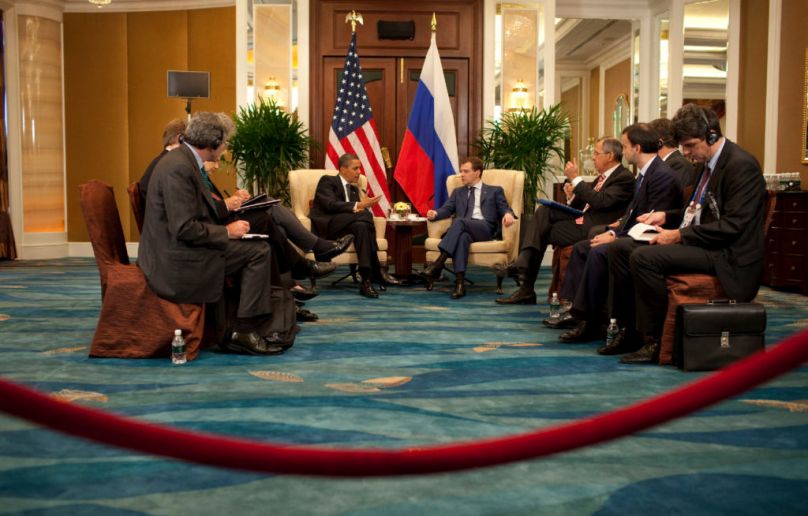
Naomi Egel, PhD candidate in government, co-authors a commentary that challenges the current discussion on the future of arms control.
Additional Information
Digital Enclosure and Unfreedom in Northwest China

May 6, 2021
11:25 am
Darren Byler, University of Washington, discusses the working paper "Digital Enclosure and Unfreedom in Northwest China."
The author will join for a conversation about their work. No formal presentation will be given; please read in advance. A link to the reading will be sent with the registration confirmation.
Part of the Reppy Institute for Peace and Conflict Studies (PACS) seminar series.
Co-sponsored by the Departments of Anthropology and Science & Technology Studies (STS).
About the author
Darren Byler is a postdoctoral researcher in the ChinaMade project at the University of Colorado, Boulder. He received his PhD from the Department of Anthropology at the University of Washington in 2018. His research focuses on Uyghur dispossession, infrastructural power and "terror capitalism" in the city of Ürümchi, the capital of Chinese Central Asia (Xinjiang). He has published research articles in the Asia-Pacific Journal, Contemporary Islam, Central Asian Survey, the Journal of Chinese Contemporary Art and contributed essays to volumes on ethnography of Islam in China, transnational Chinese cinema and travel and representation. He has provided expert testimony on Uyghur human rights issues before the Canadian House of Commons and writes a regular column on these issues for SupChina. In addition, he has published Uyghur-English literary translations (with Mutellip Enwer) in Guernica and Paper Republic. He also writes and curates the digital humanities art and politics repository The Art of Life in Chinese Central Asia, which is hosted at livingotherwise.com.
About the working paper
The author explains: "In my work I use the conceptual framing of a digital enclosure to consider the way Uyghur and Kazakh societies in Northwest China have been enveloped by a surveillance system over the past decade. I show how novel enclosures are produced and, in turn, construct new frontiers in capital accumulation and state power. The Turkic Muslim digital enclosure system gives technology companies and state authorities abilities to watch and control the movements and behavior of Muslims in increasingly intimate ways, turning them into an unfree proletariat--a docile yet productive permanent underclass."
Artwork by the artist Badiucao. Used with permission.
Additional Information
Program
Einaudi Center for International Studies
Reppy Institute for Peace and Conflict Studies
East Asia Program
Race and Racism Across Borders
April 12, 2021
11:00 am
Keynote Speaker: Nanjala Nyabola
Cornell Students: Critical Reflections
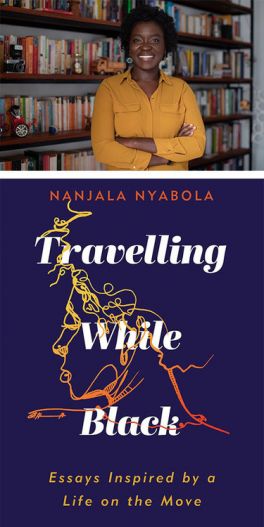
Nanjala Nyabola, author of Travelling While Black-Essays Inspired by a Life on the Move, will be in conversation with professors Rachel Beatty Riedl, Kim Yi Dionne, and postdoc Eleanor Paynter.
Nanjala Nyabola is a writer, political analyst, and activist based in Nairobi, Kenya. Nyabola writes extensively about African society and politics, technology, international law, and feminism for academic and non-academic publications. Her first book, Digital Democracy, Analogue Politics: How the Internet Era is Transforming Politics in Kenya (Zed Books, 2018), was described as "a must-read for all researchers and journalists writing about Kenya today." Nyabola's ground-breaking work opens up new ways of understanding the current global online era, reframing digital democracy from the African perspective.
Nyabola’s latest book, the critically acclaimed Travelling While Black; Essays Inspired by a Life on the Move, (available electronically from the Cornell Library) is a stark reminder that the world needs to be seen through the lens of others. Her work has featured in publications including African Arguments, Al Jazeera, Financial Times, Foreign Affairs, Foreign Policy (magazine), The Guardian, New African, The New Humanitarian, The New Inquiry, New Internationalist, and World Policy Journal.
Nyabola holds a BA in African studies and political science from the University of Birmingham, an MSc in forced migration and an MSc in African studies from the University of Oxford, which she attended as a Rhodes Scholar, and a JD from Harvard Law School.
Following the dialogue, students will present select prose, poems, and visual art published as part of Global Cornell's Race and Racism Across Borders, a call that asked students and alumni to reflect on the new knowledge gained about racial dynamics when they crossed a literal or figurative border.
Register Now
Additional Information
Program
Einaudi Center for International Studies
Reppy Institute for Peace and Conflict Studies
East Asia Program
Southeast Asia Program
Latin American and Caribbean Studies
Institute for African Development
Institute for European Studies
South Asia Program
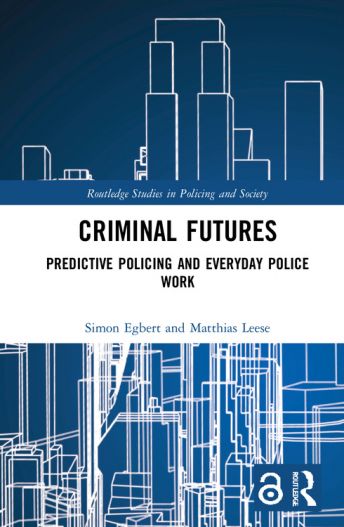
Predictive Policing and Everyday Police Work
April 29, 2021
11:25 am
Simon Egbert and Matthias Leese discuss their book Criminal Futures: Predictive Policing and Everyday Police Work, out via Routledge in 2020.
The authors will join for a conversation about their work. No formal presentation will be given; please read in advance. A link to the reading will be sent with the registration confirmation and the book is also available open access.
Part of the Reppy Institute for Peace and Conflict Studies (PACS) seminar series.
Co-sponsored by the Department of Science & Technology Studies (STS).
Additional Information
Program
Einaudi Center for International Studies
Reppy Institute for Peace and Conflict Studies