
Reppy Institute for Peace and Conflict Studies
International Research Travel Grants

Details
Do you need to travel internationally for your graduate research or fieldwork?
The Einaudi Center sponsors international travel for individual Cornell graduate students. If you’re traveling between the United States and a host country for activities directly related to your dissertation or thesis research, Einaudi can help you get there.
Amount
Up to $3,000 to cover round-trip international airfare for activities directly related to your dissertation or thesis research. The award covers economy airfare only. No other travel expenses will be considered for funding. Einaudi travel grants do not fund travel to international conferences, symposiums, or language learning of any kind.
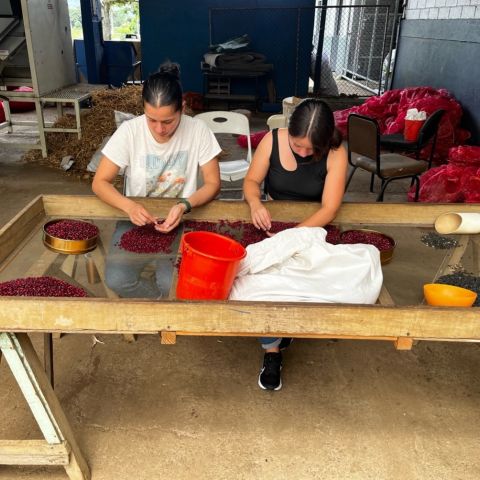
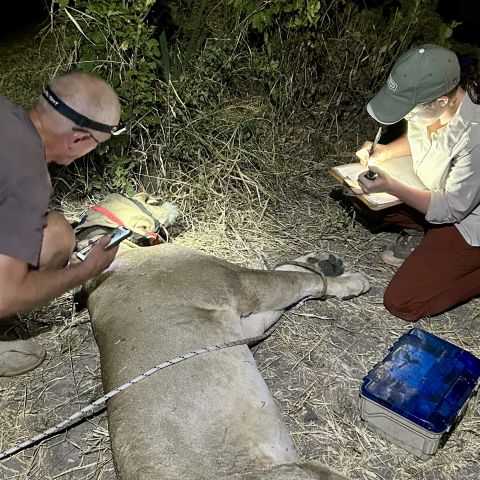
Einaudi Travel Grants Send Grad Students Abroad
Read about how Einaudi travel grants supported research travel for Seongmin Shin to Kenya and Yoselyn Hernández Chaves to Costa Rica. Last year 83 graduate students found support for their fieldwork at Einaudi!
Eligibility
All applicants must be enrolled in an approved course of study at Cornell University leading to a master's or PhD degree. Graduate students or students enrolled in Cornell’s professional schools are eligible, with the following exceptions:
- Students graduating in May 2027
- Students who have not used 2026 awards
You may only receive two Einaudi travel grants during your time at Cornell. Groups are not eligible to apply, as grants are awarded on an individual basis.
Travel must occur between May 1, 2027, and August 31, 2028.
Requirements
- Awards are based on the proposal submitted at the time of application. You may change your travel dates within the travel date parameters, but you cannot change your proposal.
- To receive the award and travel approval, you are required to participate in a short online international travel predeparture orientation.
- You must submit photos of your boarding passes as proof of travel within 30 days of the end of your funded travel. (We will not accept tickets or travel itineraries.)

Travel Requirements
- Travel must take place between May 1, 2027, and August 31, 2028, and cannot be funded retroactively. The minimum stay abroad is 14 days.
- Travel must take place three months prior to your graduation.
- Travel must be for international studies and directly related to your dissertation or thesis research.
- Travel must originate and end in the United States. You must depart and return to a major international airport.
- Cornell travelers are required to comply with the Fly America Act. Please choose American Airlines when possible.
- Awardees must register their Einaudi-supported travel in the Cornell Travel Registry no earlier than eight weeks and no later than four weeks prior to travel. You must follow all university travel policies and have ITART approval if you travel to a level 4 elevated risk destination.
International Travel Guidance
Travel to Elevated Risk Destinations
Travel to level 4 countries must be approved by the International Travel Advisory and Response Team (ITART). Graduate and professional students do not need to petition for travel to level 1, 2, or 3 level countries. Approval may be withdrawn if there is a change in the risk level of your destination or if you violate any contingencies of approval. In such instances, you will be required to refund the award.
For International Students
We encourage all international students to check International Services' Current Travel Advisory for new guidance. If you have problems or concerns about reentering the United States after your research, consult this webpage for urgent advice or reach out to an immigration advisor.
Questions?
Email the Einaudi Center at travelgrants@einaudi.cornell.edu.
How to Apply
Applications are open now! Apply by February 19 using the link below. Decisions will be announced in early April.
Additional Information
Funding Type
- Travel Grant
Role
- Student
Program
Einaudi Dissertation Proposal Development Program

Details
Develop your dissertation on global issues with a toolkit of resources. You’ll participate in seminars, workshops, and mentoring sessions over the course of the year and receive up to $2,000 for your summer research travel.
This year's DPD will support a cohort of 24 PhD students. Applicants’ research projects must focus on global issues, but the proposed research setting may be international or domestic.
2027 Program and Mentors
If selected for DPD, you'll receive funding for air travel to and from your summer 2027 research site. To help you prepare for summer research, DPD begins in the spring semester. The program includes these community-building and mentoring events:
- Spring seminars: Up to three sessions on topics including proposal writing, research methods, and interdisciplinary international studies.
- Spring workshop: Three-day workshop in May to help you refine your proposal and plan your summer pre-dissertation research.
- Fall workshop: Three-day workshop in September to support you as you finalize your dissertation proposal.
Applicants must commit to attending all seminar and workshop sessions. DPD participants are required to conduct at least six weeks of summer research away from Cornell between the workshops.
DPD Faculty Facilitators
- Virginia Doellgast, Estabrook Professor of Employment Relations and Dispute Resolution (ILR)
- Mara Du, Associate Professor of History (A&S)
- Ziad Fahmy, Professor of Near Eastern Studies (A&S)
- John Zinda, Associate Professor of Global Development (CALS)
Amount
Up to $2,000 to cover round-trip airfare to your summer research site. The DPD award covers economy airfare only. No other travel expenses will be considered for funding. Accepted fellows will receive funding for summer research travel (up to $2000 for international travel and up to $800 for domestic travel). Details will be discussed after admission to the DPD program.
DPD recipients are not eligible to apply for Einaudi's travel grants. We encourage you to apply for other Cornell and external grants to supplement your DPD funding, but you may not use other grants to pay for the same travel expenses covered by your DPD award.
Eligibility
- Students who are currently enrolled full-time in PhD programs at Cornell University are eligible.
- Both U.S. citizens and noncitizens are eligible.
- Progress within graduate program:
- Applicants must have completed at least two full years of graduate study (MA and/or PhD) by the end of the spring workshop in May. First-year graduate students who have completed master’s degrees and fourth-year students who have not yet undertaken dissertation research may be eligible.
- Applicants must be on track to obtain approval of their dissertation proposals after the fall workshop but before the end of the upcoming academic year.
- Students who have already submitted dissertation research proposals to their departments for approval or to funding agencies for dissertation research support are not eligible to apply.
Questions?
Please email our academic programming staff if you have questions about DPD.
How to Apply
Apply by November 30 using the button below. Decisions will be announced in January.
Additional Information
Funding Type
- Fellowship
Role
- Student
Program
Language Resource Center Speaker Series - Aleidine Moeller
March 2, 2020
3:30 pm
Stimson Hall, G25
"Pathways to Language and Intercultural Proficiency"
Aleidine Moeller
Edith S. Greer Distinguished Professor of Language Education, University of Nebraska-Lincoln
This talk builds upon the major theoretical frameworks for promoting language and intercultural proficiency within the world language classroom. Problem-/task-based approaches that place the learners in the role of cultural anthropologist as they use the target language to discover and explore practices, products, and perspectives of the target culture will be demonstrated.
Bio: Dr. Moeller is the Edith S. Greer Distinguished Professor of Language Education at the University of Nebraska-Lincoln (UNL). She has worked in public schools, taught in the College of Arts and Sciences, and at present is in the Department of Teaching, Learning and Teacher Education where she works with undergraduates and graduate students in language teaching and learning. She has held leadership positions in numerous professional language organizations (ACTFL, AATG, NFMLTA, AP College Board/ETS), has served as editor of major journals, and has led professional development workshops, seminars, and institutes across the globe. Ali was the recipient of the ACTFL Florence Steiner Award for Leadership in Foreign Language Education Postsecondary (2006) and ACTFL/NYSFLA Anthony Papalia Award for Excellence in Teacher Education (2000). She has published widely in professional journals including Modern Language Journal, Foreign Language Annals, CALICO, and Unterrichtspraxis. She has worked with international universities in the field of language assessment, research methodology, and language teaching and learning. More recently, Ali was named a Yunshan scholar in China, published a book on language assessment and mixed methods research with Cambridge Press, and has worked with the NCSSFL/ACTFL Intercultural Communicative Competency Task Force in developing the ICC Can Do Statements. She has directed and led STARTALK institutes for teachers of critical languages and Chinese language immersion programs for high school students in an effort to diversify language opportunities for K-20 learners. Her greatest joys include working with pre-service and practicing language teachers who daily impact the lives of those students who cross the threshold of their classrooms, and serving as a mentor for her graduate students as they pursue inquiry and research to improve language teaching and learning.
Join us live on Zoom: https://cornell.zoom.us/j/721802314
Additional Information
Program
Reppy Institute for Peace and Conflict Studies
Forged by War: The Great War of Global Economic Governance

February 27, 2020
12:15 pm
Uris Hall, G-08
Additional Information
Program
Reppy Institute for Peace and Conflict Studies
Does Membership Matter? Female Recruits and Public Perceptions of Violent Non-State Actors

February 6, 2020
12:15 pm
Uris Hall, G-08
Additional Information
Program
Reppy Institute for Peace and Conflict Studies
Reppy Institute for Peace and Conflict Studies
The Judith Reppy Institute for Peace and Conflict Studies (PACS) is an interdisciplinary program devoted to research and teaching on the problems of war and peace, arms control and disarmament, and more generally, instances of collective violence. Our focal areas include climate change and conflict, nuclear security, governance of emerging technologies, and human rights, race, and gender.