
South Asia Program
Information Session: Fulbright Opportunities for Graduate Students

February 5, 2024
4:45 pm
The Fulbright U.S. Student Program provides full funding for graduate and professional students conducting research in any field or teaching in more than 150 countries. Open to U.S. citizens only.
The Fulbright-Hays Doctoral Dissertation Research Abroad Program supports doctoral students conducting research in modern languages or area studies for six to 12 months. Open to U.S. citizens and permanent residents of the United States. Travel to Western European countries is not eligible.
Register for the information session. Can’t attend? Contact fulbright@einaudi.cornell.edu.
***
The Mario Einaudi Center for International Studies hosts info sessions for graduate and for undergraduate students. To learn more about funding opportunities, international travel, research, and internships, view the full calendar for spring semester sessions.
Additional Information
Program
Einaudi Center for International Studies
Reppy Institute for Peace and Conflict Studies
East Asia Program
Southeast Asia Program
Latin American and Caribbean Studies
Institute for African Development
Institute for European Studies
South Asia Program
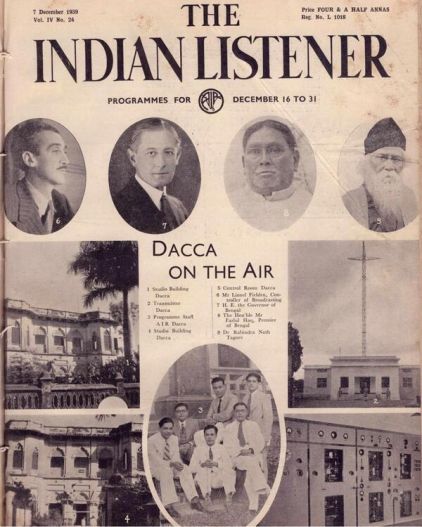
CANCELED: Wireless Broadcasting in Eastern Bengal: Sound, Nation, Modernity, 1939-1979
February 19, 2024
12:15 pm
Uris Hall, G08
Talk by Mahruba Mowtushi (English and Humanities, BRAC University, Bangladesh)
'Wireless Broadcasting in Eastern Bengal: Sound, Nation, Modernity 1939-1979’ tells the story of forty years of expanding wireless soundscape in the eastern regions of Bengal. The wireless has been instrumental in Bengal in exploring modernist ideas about nation and identity. The wireless’ remarkable reach across the airspace of Bengal was responsible for creating an ‘imagined community’ among Bengalis, especially during and after the partitions of 1947 and 1971. This project, the first of its kind in examining radio culture in eastern Bengal, brings together original archival research on wireless to bear on the expanding scholarly interest in the history of broadcasting, its connection to nationalist imaginaries, and the semiotics of sound. The project is being reworked into a book that is divided into six chapters that are somewhat chronologically arranged: each chapter surveys a particular facet of radio culture in East Bengal involving a myriad moving and moveable elements — of people, equipment, ideas, practices, and sound — that created a new kind of awareness to mediated sound and the art of listening among Bengalis.
Mahruba Mowtushi completed her BA (2007-10) and MA (2010-11) in English literature from Queen Mary, University of London, and PhD in comparative literature from King’s College, University of London (2017). She writes for the Journal of Commonwealth Literature (JCL), Research in African Literature (RAL), and South Asian Review (SAR). In recent years, Mowthushi has published articles and book chapters on Bengali cinema, street art in Dhaka, South Asian Muslim food culture, and ‘transnational’ African writers of Bengali descent. She works in English and Bengali, and her research and writing interests cut across South Asian and African literature and cultural history. Her first monograph, Africa in the Bengali Literary Imagination: From Calcutta to Kampala, 1928-1973, is coming out in 2024 from Routledge. Dr. Mowtushi is currently working on two book-length projects on wireless broadcasting in Bengal and the rise of modern nation-states in South Asia.
Additional Information
Program
Einaudi Center for International Studies
South Asia Program
Semester & Academic Year programs at Ashoka University
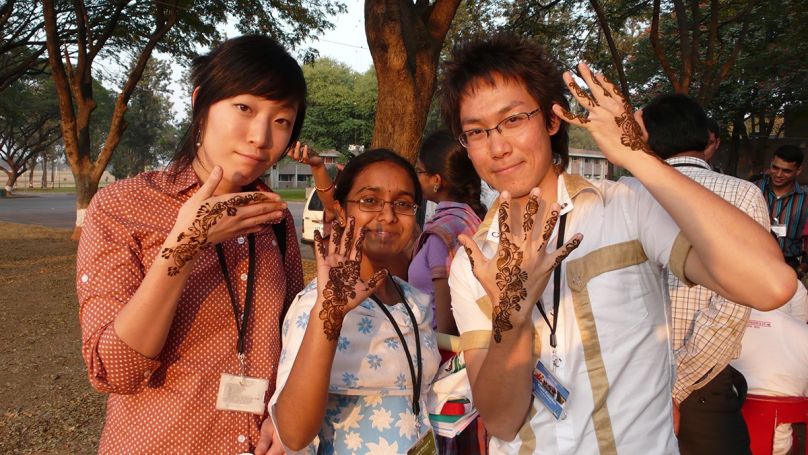
Ashoka University is a leading liberal arts university in Sonipat, India, serving 4,500 domestic and international students. As a Cornell Global Hubs partner, Ashoka fosters high-impact opportunities and international exchange for Cornell students.
Ashoka University seeks to provide a multidisciplinary and interdisciplinary education to students, to help them think critically about issues from multiple perspectives in order to become leaders with a commitment to public service. More information about the centers and institutes hosted by Ashoka University are on the Ashoka University website.
A residential university, Ashoka boasts an active student life on a modern campus.
Additional Information
14th Annual Tagore Lecture: Sex, Sedition & Storytelling
April 12, 2024
4:30 pm
Kahin Center
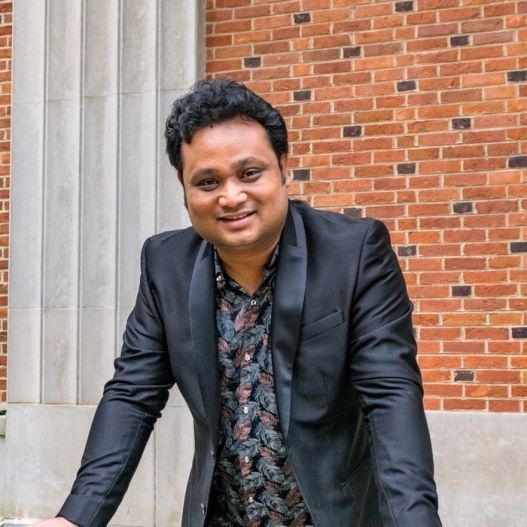
Lecture by Aruni Kashyap (English and Creative Writing, University of Georgia)
Aruni Kashyap’s career as a writer, editor, translator, and academic has articulated the tension between the state and the individual, the public and the private, the fragility of democracy, and how storytelling is a politically charged engagement with society. Stories are at the heart of human rights work. By reading reports, fiction, poems, and essays about others, we are moved to take democratic action. This talk will discuss Kashyap’s journey as a writer from Assam and share how growing up under the duress of state violence has shaped the literature of his home state. By drawing on the works of internationally renowned and critically acclaimed writers such as Indira Goswami and much lesser-known writers, assassinated writers, and incarcerated writers, Kashyap will discuss how insurgency and state violence have shaped not only Assamese literature but also South Asian Literature and is re-shaping global perceptions about Indian Literature.
Aruni Kashyap is the author of His Father’s Disease: Stories and the novel The House With a Thousand Stories. Along with editing a collection of stories called How to Tell the Story of an Insurgency, he has also translated two novels from Assamese to English, published by Zubaan Books and Penguin Random House. Recipient of a National Endowment for the Arts Fellowship, the Faculty Research Grants in the Humanities and Arts Program, Arts Lab Faculty Fellowship, and the Charles Wallace India Trust Scholarship for Creative Writing to the University of Edinburgh, his poetry collection, There is No Good Time for Bad News was nominated for the 58th Georgia Author of the Year Awards 2022, a finalist for the Marsh Hawk Press Poetry Prize and Four Way Books Levis Award in Poetry. His short stories, poems, and essays have appeared in Catapult, Bitch Media, The Boston Review, Electric Literature, The Oxford Anthology of Writings from Northeast, The Kenyon Review, The New York Times, The Guardian UK, and others.
The Rabindranath Tagore Lecture Series in Modern Indian Literature is made possible by a gift from the late Cornell Professor Emeritus Narahari Umanath Prabhu and his wife, Sumi Prabhu. Inspired by Rabindranath Tagore’s expansive imagination, unbounded by geopolitical boundaries, the series has regularly featured prominent writers from across South Asia and its diasporas.
Cosponsored by the Departments of Comparative Literature and Literatures in English.
Additional Information
Program
Einaudi Center for International Studies
South Asia Program
Who Has the Right to Free Speech? Immigration, Civil Liberty, and Freedom of Expression

March 5, 2024
3:00 pm
Biotechnology Building, G10
Free expression is a human right and cornerstone of a democratic society.
The U.S. Constitution enshrines the right to free expression, but not all those who reside within the country’s borders have equal protection. Some migrants to the U.S. are leaving situations where their rights were threatened, and they embrace the principle of free expression. Those same migrants may find their rights circumscribed when they arrive in the United States.
What can be done to counter threats to free expression for immigrants? How can we protect civil liberties and the law while also protecting human rights and building a diverse, inclusive, and safe society? When is it appropriate to deny visa applications because of a person’s political views?
Our panel of experts will explore these questions in a discussion moderated by Stephen Yale-Loehr (Cornell Law School). This event is hosted by Global Cornell and its Migrations initiative. Learn more about how Global Cornell supports global freedom of expression and Scholars Under Threat.
Panelists
Cecillia Wang, Deputy Legal Director, American Civil Liberties Union (ACLU) Austin Kocher, Research Assistant Professor, Syracuse UniversityBeth Lyon, Associate Dean for Experiential Education, Clinical Professor of Law, and Clinical Program Director, Cornell Law School Gautam Hans, Associate Clinical Professor of Law, Cornell Law School
Additional Information
Program
East Asia Program
Southeast Asia Program
Latin American and Caribbean Studies
South Asia Program
Einaudi Center for International Studies
Reppy Institute for Peace and Conflict Studies
Institute for African Development
Institute for European Studies
ASL Lecture Series: Gideon Firl
March 12, 2024
4:30 pm
Morrill Hall, 106
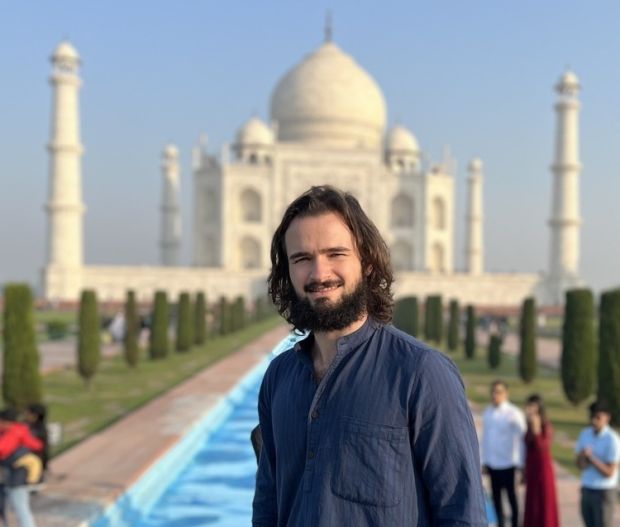
The Department of Linguistics proudly presents Gideon Firl, Fulbright Scholar at the US-India Educational Foundation. Gideon will present on "Deaf Perspective: Exploring the Essence of Indian Sign Language".
Gideon set out to explore the questions: Is sign language helpful to Deaf people's life quality in India? What is the essence of Indian sign language? He discovered that having sign language is key to Deaf success in their ability to contribute to the neighboring world. This presentation will be a narrative of Gideon's time in India. Key points in this presentation are: Deaf identity, artistic expression, and resigned discrimination. In the end, he learned that there are so much more to do in India in relation to advocating for Deaf rights, but his main focus is on theater arts and preserving Deaf stories.
Gideon comes from a multigenerational deaf family that uses ASL. He is a Gallaudet alumnus, with a bachelor's degree in Biology. Gideon and his wife has returned from their 9 months stay in India for Gideon's Fulbright study on the essence of Indian sign language. Before his Fulbright study, he worked as a translator, actor, writer, videographer, editor, and director for several organizations such as Pioneer Bible Translators, Deaf Documentary Center, and Deaf Health Equity. He also just completed a project with Deaf Missions, producing a groundbreaking film on Jesus. He currently resides in Albany, NY with his wife and dog.
ASL/English interpretation will be provided.
Additional Information
Program
South Asia Program
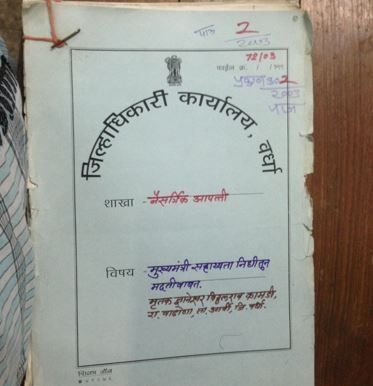
The suspicious suicide: Toxicity, masculinity, and the political economy of GM cotton in central India
April 29, 2024
12:15 pm
Uris Hall, G08
Talk by Aarti Sethi (Anthropology, University of California Berkeley)
Since 1997, over 250,000 farmers have taken their own lives in central India, an agrarian region where farmers have grown cotton for centuries. Today, farmers are mono-cropping genetically modified hybrid cotton seeds, which have trebled the input costs of cotton cultivation. Pushed into downward debt spirals to moneylenders and banks and unable to recoup costs, over a quarter million farmers have taken their own lives. This talk examines a paradoxical set of conversations around suicide deaths in the village. Whereas media, scholarly, and civil society discourses narrate the deaths of farmers as a debt-induced tragedy, amongst themselves, farmers describe suicide as an individual failing, usually on account of alcohol addiction and domestic strife. In this talk, I describe a structure of feeling I term ‘empathy without sympathy’ in which people may place themselves in the position of those who have died but have no sympathy for them. This disavowal arises from the individuation of risk as a structural precondition of farming. Since everyone is trapped in transgenic cotton cultivation, the inclination to isolate death in individual failure, rather than structural compulsion, is an attempt by the living to recover space for sovereign action, as they, too, must farm within this mode of debt-driven cultivation. Empathy without sympathy has rendered the speech of men ‘socially empty’. Even when someone says that they will commit suicide, no one believes them. I argue that toxicity is productive. By consuming pesticides, the body performs the communicative function to supplement for the failure of masculine speech.
Aarti Sethi is an assistant professor at the Department of Anthropology at UC Berkeley. She is a socio-cultural anthropologist with primary interests in agrarian anthropology, political economy, and the study of South Asia. Her research interests broadly focus on the transformation of rural life-worlds and agrarian capitalism. She is currently working on two projects. The first is a book that examines cash-crop agricultural economies to understand how monetary debt undertaken for transgenic cotton cultivation transforms intimate, social, and productive relations in rural society. She is particularly concerned with understanding the specificity of neoliberal agrarian change as a process in which peasant producers worldwide have become the subaltern franchisees of international bio-capital. Her second project, Republic of Readers, explores the relationship between reading literacy and libraries as sites of postcolonial democracy and citizenship. Alongside her research in agrarian anthropology, she is interested in the social life of technology, the politics of knowledge and literacy, the anthropology of religion, the history of anthropological thought, multi-species ethnography, and bringing archives and ethnography together. She has published in urban ethnography, cinematic, media, and visual cultures. Sethi holds degrees in political science and cinema and cultural studies from Delhi University and Jawaharlal Nehru University, New Delhi, and received her Ph.D. in anthropology from Columbia University. Before joining UC Berkeley, she held postdoctoral fellowships at Brown and Harvard University. Sethi’s work has appeared in South Asia: Journal of South Asian Studies, The Journal of Peasant Studies, American Ethnologist, and Hau: Journal of Ethnographic Theory, among other venues.
Additional Information
Program
Einaudi Center for International Studies
South Asia Program
Summer Program in India Info Session
November 14, 2024
5:30 pm
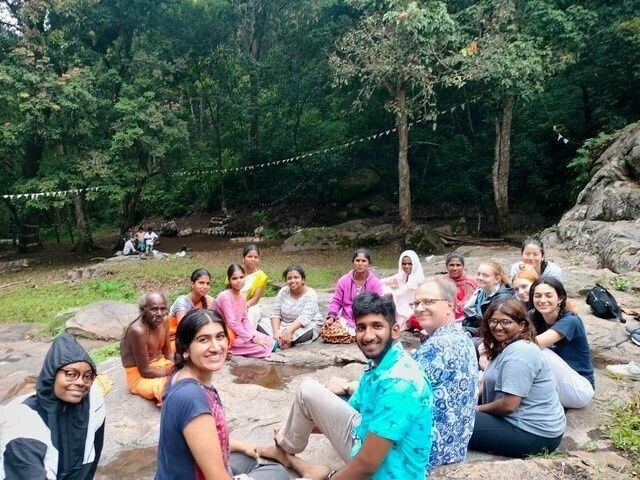
Are you interested in the intersection of mental health and culture, global health, and community engagement? Do you want to gain field research skills and learn about indigenous communities in South India’s beautiful and fragile Nilgiris Biosphere Reserve? If so, the Cornell-Keystone Nilgiris Field Learning Program might be for you!
Additional Information
Program
Einaudi Center for International Studies
South Asia Program
Caste and Honor in North-West Pakistan
February 5, 2024
12:15 pm
Uris Hall, G08
Talk by Hadia Akhtar Khan (Global Labor & Work, ILR School, Cornell University)
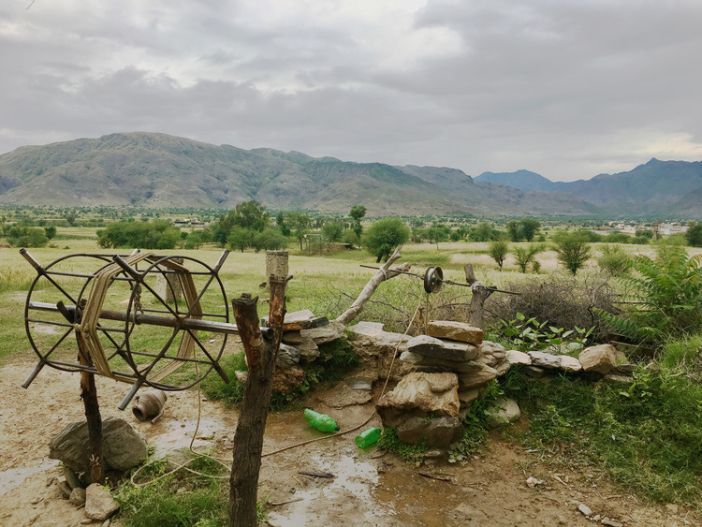
Anthropologists of Pukhtuns have written extensively about the Pukhtuns as an acephalous segmentary lineage group, whose honor “code” or Pukhtunwali differentiates them from neighboring ethnicities. In particular, they glorify Pukhtuns for their egalitarian ethic, which abhors hierarchies within and between tribes and between men. Colonial authorities held a similar view of Pukhtuns as a proud people reluctant to subordinate themselves to the state. This view has continued to inform how imperialist forces and their local allies, like the Pakistani army, understood and navigated the complex map of power relations in Afghanistan and Pakistan during the War on Terror. In contrast to these views, this talk historicizes the code of Pukhtunwali as a product of an alliance between colonial settlement officers and male elites from dominant lineages in the late 19th century. I argue that anthropologists have exaggerated the egalitarian ethic by downplaying the centrality of caste hierarchies, which makes the “egalitarian” ethic between upper-caste Pukhtun men possible.
Hadia Akhtar Khan is a socio-cultural anthropologist. Khan's research is on how migration is changing family, class, caste, and gender relations in rural Khyber Pakhtunkhwa, Pakistan. Her research interests include political economy, gender and sexuality, and the anthropology of kinship, with a focus on South Asia. Her research has been funded by the Wenner-Gren Foundation, Social Sciences and Humanities Research Council, Jackman Humanities Institute, and the Centre for Ethnography (UTSC). She is also an editor for Jamhoor.org.
Additional Information
Program
Einaudi Center for International Studies
South Asia Program
Evicting the Living God: Trans-imperial Islam and the Soviet Union on the Eve of Partition

April 10, 2024
4:30 pm
Uris Hall, G08
Talk by Till Mostowlansky (Research Professor in Anthropology, Geneva Graduate Institute, Switzerland)
The establishment of Soviet rule in the southern parts of Central Asia bordering the British Empire has largely been researched through the lens of geopolitical competition. Virtually nothing is known about how the region’s Muslim populations experienced this period of revolution and war leading up to the 1947 partition of India. Using Persian, Russian and Urdu sources, this talk explores the Muslim networks that linked Central Asia with South Asia at the time. It further discusses how the study of these trans-imperial connections contributes to a nuanced understanding of attempts at re-engagement, as well as persistent disconnection, in the present.
Additional Information
Program
Einaudi Center for International Studies
South Asia Program