South Asia Program
A Night of Knowing Nothing
October 12, 2022
7:15 pm
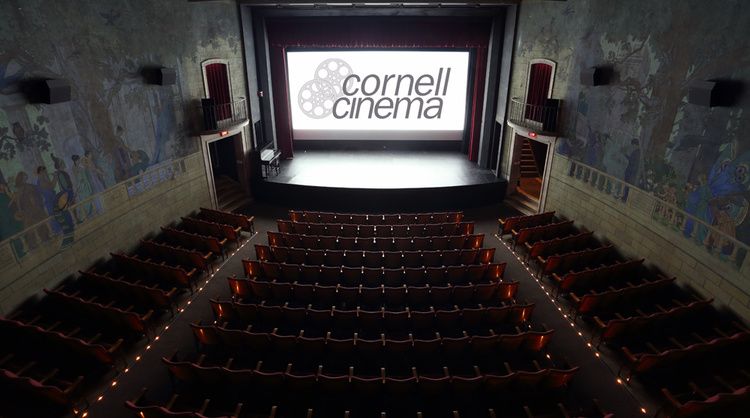
Willard Straight Theatre
2021 > India, France > Directed by Payal Kapadia
With Bhumisuta Das
Through a series of fictional letters between two anonymous lovers, a whirlwind of fantasy, reality, dream, memory and feeling emerges, as Indian students take to the streets to protest the right-wing government and widespread injustice. A Night of Knowing Nothing is both a love letter to cinema, and an alarming wake-up call, all at once. Subtitled. More at www.cinemaguild.com/theatrical/anightofknowingnothing.html
1 hr 37 min
Additional Information
Program
Einaudi Center for International Studies
South Asia Program
Berger International Speaker Series with Tawab Danish – Circling Back to Zero after 20 years of Achievements: How the Legal System of Afghanistan has Been Affected More than Any Other Institution under the Taliban Regime

October 25, 2022
12:15 pm
Myron Taylor Hall, Cornell Law School, 277
Please join us for a lunchtime seminar given by our guest Tawab Danish, a Visiting Scholar here at Cornell Law School.
SEMINAR: Circling Back to Zero after 20 years of Achievements: How the Legal System of Afghanistan has Been Affected More than Any Other Institution under the Taliban Regime
DATE: Tuesday, October 25th, 2022
TIME: 12:15 p.m. to 1:15 p.m. ET
LOCATION: Room 277 – Myron Taylor Hall, Cornell Law School
***Lunch will be provided during the event, so don’t forget to RSVP!
RSVP here
Please fill out the following short form: https://cornell.ca1.qualtrics.com/jfe/form/SV_5A8vFJEaEmFjiQu
The Seminar – Circling Back to Zero after 20 years of Achievements: How the Legal System of Afghanistan has Been Affected More than Any Other Institution under the Taliban Regime
After 2001, the international community, the United States of America, and the leader of Afghanistan spent billions of dollars and put much effort into rebuilding the legal system in Afghanistan. However, since the Taliban received power on August 15, 2021, the legal system has gone backwards to where it was 20 years ago. The Taliban abolished the Constitution ratified in 2004, and dissolved the National Assembly and some independent legal institutions such as the Afghanistan Independent Bar Association and Afghanistan Independent Human Right Commission. Simultaneously, the criminal code, civil code, criminal procedure, human rights law, and women and children's rights are unclear. The Taliban leads the country most dominantly by decrees of the Ministry for the Propagation of Virtue and the Prevention of Vice. Their administration believes that the 2004 Constitution does not hold up to sharia law, although the First, Second, and Third Articles of the Constitution were mainly about Islamic values and accepted Islam as the official state religion.
Continuation of the current situation in Afghanistan will have extreme effects on the whole legal system and will lead the country to absolute tyranny. So, the international community – especially the United Nations, United States of America, and regional and Islamic countries – should take proper measures to pressurize the Taliban to keep alive and promote the legal system.
About our Distinguished Guest: Tawab Danish
Tawab Danish, a visiting scholar at the Cornell School of Law, was born in the Bagram district of Parwan, Afghanistan in 1985. He graduated from the Law & Political Science School of Albironi University in Kapisa, Afghanistan in 2006 and holds an LLM degree from the University of Washington School of Law.
Tawab Danish was appointed as a lecturer at Parwan University in 2013 and taught Constitutional Law, Public International Law, Human Rights, and International Organizations. He also has worked as a senior advisor of the Speaker of the House of the National Assembly of Afghanistan from 2019 to 2021.
Mr. Danish founded a private school in 2013, which is one of the most well-known schools in Parwan Province. More than 700 students are enrolled in his school, 28% of which are girls.
Can’t make it to our event in-person? You can attend virtually!
We are also livestreaming the event, so you can sign up to attend the Zoom Webinar at this link: https://cornell.zoom.us/webinar/register/WN_hazaK_ekTnCSPKB2lVO8mQ
Please feel free to distribute the link to anyone you feel would be interested in the seminar. All are welcome!
Additional Information
Program
Einaudi Center for International Studies
South Asia Program
Reppy Institute for Peace and Conflict Studies
Career Info Session: U.S. Department of State and Public Service Careers

September 27, 2022
5:00 pm
Are you interested in a possible career in public service, and maybe specifically with the U.S. Department of State? Ever wondered what it's like to work in various capacities at State -- ranging from a Foreign Service Officer to policy analyst and intelligence officer -- or how to go about preparing yourself to be a successful applicant for jobs at State?
Please join the Einaudi Center for a virtual discussion about career paths and opportunities at the State Department and in public service, featuring three Cornell alumni who will share their insights:
Benjamin Brake, Director, Office of Cyber Affairs and Emerging Technology, Bureau of Intelligence and Research, U.S. Department of StateJason Oaks, Deputy National Intelligence Officer for East Asia, U.S. Department of StateEric Anderson, Foreign Service Office, Political Counselor in Islamabad, Pakistan, U.S. Department of StateThis career info session is presented by the Einaudi Center's International Studies Minor, and its outgoing director (Christopher Way) and incoming director (Oumar Ba). The International Relations Minor is open to all Cornell undergraduate students interested in learning about the politics, economics, history, languages, and cultures of the world.
Contact: irm@einaudi.cornell.edu
Additional Information
Program
Einaudi Center for International Studies
Reppy Institute for Peace and Conflict Studies
East Asia Program
Southeast Asia Program
Latin American and Caribbean Studies
Institute for African Development
Institute for European Studies
South Asia Program
Treasury Recommends Exploring Creation of a Digital Dollar
Eswar Prasad, SAP
Eswar Prasad, a trade professor at Cornell who studies the digitization of currencies, said Treasury’s report “takes a positive view about how a digital dollar might play a useful role in increasing payment options for individuals and businesses” while acknowledging the risks of its development.
Additional Information
Humans, Nonhumans, and Other Humans: The Animal Turn in South Asian History

October 17, 2022
3:30 pm
401 Physical
The imagination of the nonhuman in South Asian history was often through processes of dehumanization. References to Indian dogs in terms of caste and untouchability, the use of various animals as beasts of burden, the comparisons of aboriginal tribes with primates, and the enactment of animal cruelty acts, were all achieved through the multifarious processes of the dehumanization of castes, tribes, and the rural and urban poor. In the nineteenth century, this nonhuman adaptation of the human featured in the colonial deployment of anthropology, zoology, social stratification, empathy, and labor. While the nonhuman category has emerged as a critique of anthropocentrism in historical research, particularly within imperial history, this presentation problematizes this assumption by suggesting that historically, thinking with animals was a tool of deploying human labor and social hierarchies and their concomitant dehumanization.
Additional Information
Program
Einaudi Center for International Studies
South Asia Program
Children and Youths’ Migration in a Global Landscape Talk

October 5, 2022
10:30 am
Contributing authors of Children and Youths’ Migration in a Global Landscape (Emerald, 2022) are joining the Migrations initiative to speak about their work and writing.
The edited volume asks how transnational mobility shapes the lives of young people and in each chapter, scholars present the stories of children from areas such as Myanmar, India, Hungary, the U.S., and Central America. Individually, these case studies address issues related to educational attainment, family reunification, social mobility, and identity. Collectively, these studies push us to question our assumptions about what it means to be a transnationally mobile child or youth.
The discussion will be moderated by Migrations postdoc Angel Escamilla García and one of the book’s editors, Adrienne Lee Atterberry.
Additional Information
Program
Einaudi Center for International Studies
Southeast Asia Program
Latin American and Caribbean Studies
Institute for European Studies
South Asia Program
FLIP Volunteer Orientation & Organizational Meeting

September 23, 2022
11:30 am
Uris Hall, G08
Volunteer with the Foreign Language Introduction Program! FLIP has introduced thousands of children in Upstate New York to world languages and cultures. Volunteers from Cornell and surrounding communities who speak foreign languages provide fun ways for K–12 students to learn about and engage with our increasingly interconnected world.
FLIP's first organizational meeting and volunteer orientation of the semester will take place on September 23rd, 11:30am to 1:00pm, at Uris Hall G08. Lunch and beverages will be served! We welcome everyone who considers joining FLIP or has any questions about FLIP to attend this organizational event – a great opportunity to meet with our team members, previous volunteers, and get to know more about our program.
Please let us know about if you would like to attend, and any dietary restrictions! If you have friends who are interested in FLIP, please feel free to forward this email to them as well. We are looking forward to seeing you all next Friday!
Additional Information
Program
Einaudi Center for International Studies
Reppy Institute for Peace and Conflict Studies
East Asia Program
Southeast Asia Program
Latin American and Caribbean Studies
Institute for African Development
Institute for European Studies
South Asia Program
Russia Gives China’s Yuan a Boost as Firms Cope with Sanctions

Eswar Prasad, SAP
Although the greenback’s dominance remains assured, the yuan will get a boost from countries looking to skirt the dollar, said Eswar Prasad, senior professor of trade policy.
Additional Information
Al-An deSouza: Migrations Visiting Artist Talk

October 13, 2022
5:15 pm
Johnson Museum of Art, Wing lecture room
Al-An deSouza will present the third Migrations Visiting Artist Talk, “The Culture of Location,” in conjunction with their current exhibition at the Johnson Museum, Al-An deSouza: Elegies for Futures Past. The talk will be preceded by a curator-led walk-through of the exhibition at 4PM, open to all.
DeSouza will discuss the genre of landscape in relation to migration, settlement, and climate change. The title of their talk is a play on The Location of Culture by Homi Bhabha, now a classic of postcolonial theory. DeSouza’s transmedia practice explores the legacies of colonialism through strategies of humor, fabulation, and (mis)translation.
A conceptual photographer, performance artist, and writer, deSouza was born to South Asian parents in Nairobi, Kenya, and raised in England before settling in the United States. They are a professor in the Department of Art Practice at University of California, Berkeley, and hold an MFA from University of California, Los Angeles and a BFA from Bath Academy of Art, England. DeSouza is represented by Talwar Gallery, New York and New Delhi.
This is the third in a series of artist talks with the campus-wide Migrations Global Grand Challenge, part of Global Cornell, with support from the Mellon Foundation’s Just Futures Initiative.
Masks are suggested and social distancing will be encouraged in the Museum's wing lecture room. This event will also be available as a webinar. Please click this link to join (Passcode: 1234).
Additional Information
Program
Einaudi Center for International Studies
South Asia Program
Stoikov Lecture on Asian Art: Navina Haidar

September 29, 2022
5:15 pm
Johnson Museum of Art, Wing lecture room
Navina Najat Haidar is the Nasser Sabah al-Ahmad al-Sabah Curator in Charge of the Department of Islamic Art at the Metropolitan Museum of Art, which is currently marking ten years of its permanent galleries. This talk will be a visual introduction to the spaces, objects, and ideas that constitute the galleries, as well as new directions ahead.
Haidar organized the exhibitions Workshop and Legacy: Stanley William Hayter, Krishna Reddy, Zarina Hashmi (2016); Sultans of Deccan India, 1500–1700: Opulence and Fantasy (2015); and Treasures from India: Gems and Jewels in the Al-Thani Collection (2014) at the Met. She was involved in the planning of their permanent galleries for Islamic art, which opened in 2011, and is currently working on a series of new installations to mark their anniversary. Her future projects include an exhibition on the age of the Mughal emperor Jahangir, and a forthcoming book on the pierced window screen (jali) in Islamic architecture.
Masks are suggested and social distancing will be encouraged in the Museum's wing lecture room. This event will also be available as a webinar. Please click this link to join (Passcode: 1234).
The annual Stoikov Lecture on Asian Art at the Johnson Museum is funded by a generous gift from Judith Stoikov, Class of 1963, and is cosponsored this year by the Department of the History of Art and the Cornell South Asia Program.
Additional Information
Program
South Asia Program