
Southeast Asia Program
Student Multidisciplinary Applied Research Teams (SMART)
September 14, 2020
4:00 pm
Students will get an overview of the SMART service learning program and her details about applications.
Additional Information
Program
Southeast Asia Program
LRC Happy Hour

November 17, 2020
12:00 pm
Join us on Zoom throughout the fall for LRC Happy Hour. Every third Tuesday of the month. We'd love to hear how it’s going! All of it.
Bring your (language instruction) stories whether they be good, bad, amazing, or unusual. It takes all kinds of stories to make a Happy Hour great!Bring your own coffee, tea, or mystery beverage.While we can't serve lunch, the LRC will provide fun, jokes, and laughs free of charge.Also, we just want to see your smiling faces, because we miss you.
More details and link posted on our website: https://lrc.cornell.edu/online-hybrid#live-help-sessions
Additional Information
Program
Southeast Asia Program
Latin American and Caribbean Studies
South Asia Program
The Indomitable Florence Finch: A Conversation with Robert Mrazek

September 10, 2020
7:00 pm
Join the Institute of Politics and Global Affairs as we welcome Former Congressman Robert Mrazek, to discuss "The Indomitable Florence Finch" moderated by Rep. Steve Israel and Chris Riback.
The Indomitable Florence Finch: The Untold Story of a War Widow Turned Resistance Fighter and Savior of American POWs
When Florence Finch died at the age of 101, few of her Ithaca, NY neighbors knew that this unassuming Filipina native was a Presidential Medal of Freedom recipient, whose courage and sacrifice were unsurpassed in the Pacific War against Japan. Long accustomed to keeping her secrets close in service of the Allies, she waited fifty years to reveal the story of those dramatic and harrowing days to her own children.
Florence was an unlikely warrior. She relied on her own intelligence and fortitude to survive on her own from the age of seven, facing bigotry as a mixed-race mestiza with the dual heritage of her American serviceman father and Filipina mother.
As the war drew ever closer to the Philippines, Florence fell in love with a dashing American naval intelligence agent, Charles “Bing” Smith. In the wake of Bing’s sudden death in battle, Florence transformed from a mild-mannered young wife into a fervent resistance fighter. She conceived a bold plan to divert tons of precious fuel from the Japanese army, which was then sold on the black market to provide desperately needed medicine and food for hundreds of American POWs. In constant peril of arrest and execution, Florence fought to save others, even as the Japanese police closed in.
With a wealth of original sources including taped interviews, personal journals, and unpublished memoirs, The Indomitable Florence Finch unfolds against the Bataan Death March, the fall of Corregidor, and the daily struggle to survive a brutal occupying force. Award-winning military historian and former Congressman Robert J. Mrazek brings to light this long-hidden American patriot. The Indomitable Florence Finch is the story of the transcendent bravery of a woman who belongs in America’s pantheon of war heroes.
Bob Mrazek graduated from Cornell University, served in the U.S. Navy, and served five terms in the U.S. Congress. Mrazek authored the Amerasian Homecoming Act, which brought nineteen thousand children of Americans who served in Vietnam to the USA. He also authored the National Film Preservation Act, which established the National Film Registry in the Library of Congress to protect films of cultural importance.
Since leaving Congress, Mrazek has authored ten books, earning the American Library Association's top honor for military fiction, the Michael Shaara award for Civil War fiction, and Best Book (American History) from the Washington Post. He also wrote and co-directed the 2016 feature film The Congressman. He lives in upstate New York and Maine.
The Institute of Politics and Global Affairs is a non-partisan institute dedicated to elevating public discourse and stimulating civic engagement.
Dial-In Information
Register Here to recieve the webinar link
The Indomitable Florence Finch is available for purchase here.
Additional Information
Program
Southeast Asia Program
Chinese Migrations to Monsoon Asia: The Long Historical View

September 9, 2020
5:20 pm
Chinese migrants and travelers have been traveling to the countries of the Southern Oceans (the "Nanyang", in Chinese) for at least two millennia, and probably longer. We have only scattered records of their passing for the first thousand years of these voyages, but then the documents start to get better, and we can outline the passage of enormous numbers of people, migrating to new lives in the "South Seas". This talk will trace those histories, looking at the warp and weft of Chinese migrations over two thousand years.
Presenter: Eric Tagliacozzo, John Stambaugh Professor of History at Cornell University
Register: https://cornell.zoom.us/webinar/register/WN_P0QsYVT3RS2-4xxeNH9txA
Part of the series "Migrations: A Global, Interdisciplinary, Multi-Species Examination"
Additional Information
Program
Einaudi Center for International Studies
East Asia Program
Southeast Asia Program
South Asia Program
Beauty Regimens: Disciplining Filipina Labor Under U.S. Empire
October 29, 2020
12:40 pm
Part of the Ronald and Janette Gatty series
Genevieve Clutario, Andrew W. Mellon Assistant Professor of American Studies, Department of American Studies, Wellesley College
Co-sponsored by Comparative Literature and American Studies
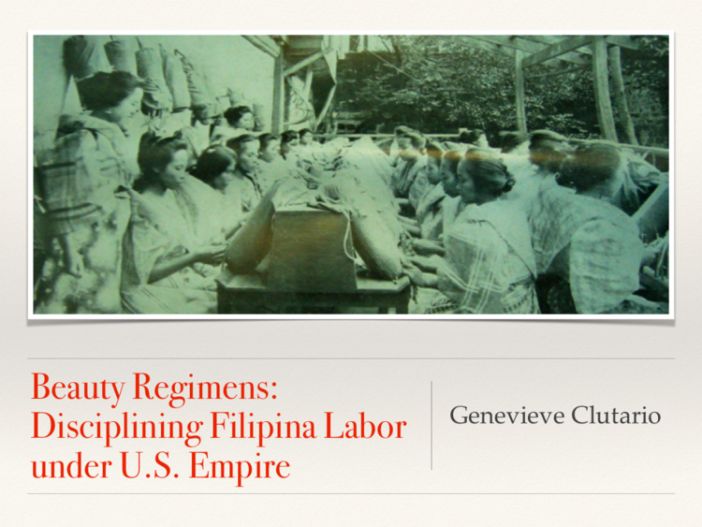
This talk investigates the formation of a transpacific industry of Philippine embroidery during the early twentieth century and focuses on four locations of modern imperial beauty regime: the American department store; home workshops in the Philippines; colonial industrial schools; and Bilibid Prison. During the 1910s, American consumers increasingly demanded "Philippine Lingerie" sold in catalogues and urban department stores throughout the continental United States. Exporting Filipina-made fine needle work relied on the adoption and adaptation of racial and gendered ideologies as well as already long-established labor practices in the archipelago. Such market forces were also inextricably tied to the making of a colonial state. From the 1910s to the 1930s, industrial schools and prisons, both of which fell under the jurisdiction of the director of education, instituted strict regimens touted as educational and reformatory modes of uplifting Filipino women and girls. An examination of this alliance between private industry and reformatory public institutions sheds light on the contradictions of their promises of uplift while relying on exploitative labor, as well as on the racial and gendered logics of beauty production and consumption in the making of liberal empire.
Additional Information
Program
Einaudi Center for International Studies
Southeast Asia Program
Indonesia's Im/moral Turn: Drivers and Consequences, Especially in a Covid-19 World

October 23, 2020
8:00 pm
Part of the Ronald and Janette Gatty series
Sharyn Davies, Associate Professor, Director of the Herb Feith Indonesian Engagement Centre, Monash University
Indonesia is experiencing an im/moral turn. We see this in the push to make all sexual activity outside heteronormative marriage illegal. If that bill is passed, it would be a radical move for a country that’s never criminalised homosexuality, and that has for the most part considered private consenting adult sexual activities a matter for individuals not the state. Other examples of the im/moral turn include the 2016 ‘LGBT crises’ and the 2020 proposed Family Resilience bill. Such more are stark clues revealing the direction Indonesia is taking when it comes to punitive sexual surveillance. The antecedents of these moves—which we might collectively call Indonesia’s im/moral turn—are much deeper and can be traced to the early years of democratic reform.
This talk will explore the drivers and consequences of Indonesia’s im/moral turn, with reflection on the impact of Covid-19. In particular I will focus on the impact of Covid-19 and the increasing punitive surveillance of sexuality on the provision of healthcare.
Additional Information
Program
Einaudi Center for International Studies
Southeast Asia Program
Ghostly Meanings, Spectral Affects: Market Transformations and Possibilities in the Thai Spirit World

October 15, 2020
12:40 pm
Part of the Ronald and Janette Gatty series
Megan Sinnott, Associate Professor of Women's, Gender, and Sexuality Studies, Georgia State University
Co-sponsored by the Department of Anthropology and Feminist, Gender, and Sexuality Studies.
In contemporary Thailand, new and transformed spiritual and religious practices are thriving within a capitalist market structure. The human body plays a central role within these spiritual practices, as both an object of devotion (such as the sacralization of human remains) and as the site of communication with the spirit world through mediumship and possession. This talk focuses on the possibilities provided by the market for shifting sensibilities around the body, and material objects as body-substitutes, such as the popularity of “angel-dolls” in the practice of child-spirit beliefs. Capitalism is often perceived as an obliterating, colonizing force; when its traces are found in religious and spiritual practices it is easy to come to the conclusion that these practices are somehow lessened, or cheapened, by their commodification. I want to resist this temptation, and ask instead, what are the cultural meanings associated with transformed spiritual practices and the material objects integral to these practices? If these commodified objects, such as amulets and other material objects of devotion, are also objects of desire – compelling forms that inspire delight and interest – how can we understand them as both “authentic” sacred objects and products of the capitalist marketplace?
Additional Information
Program
Einaudi Center for International Studies
Southeast Asia Program
A History of Manners and Civility in Thailand: The Civilizing Process in a Southeast Asian Society
October 9, 2020
8:00 pm
Part of the Ronald and Janette Gatty series
Patrick Jory, Senior Lecturer in Southeast Asian History, School of Historical and Philosophical Inquiry, University of Queensland
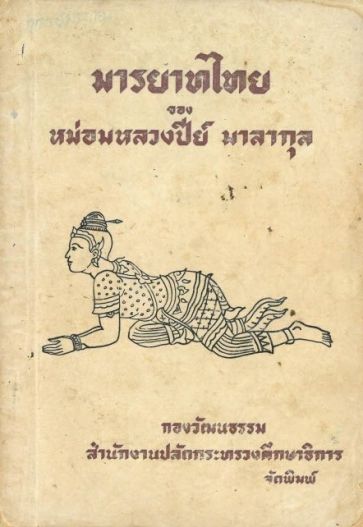
Apart from some brief references to China and East Asia, Norbert Elias’s The Civilizing Process focussed on the history of manners in Western Europe, in particular the cases of France, Germany, and England. While manners and civility tend to be held in high regard in Southeast Asia (Reid 2015, 422) there have been few scholarly attempts to understand how such rules of behaviour have evolved over time. The ahistorical treatment of manners has led to a tendency to essentialise them as one aspect of ‘cultural identity’. It rarely considers how the history of manners in Southeast Asia bears similarities with that in other countries around the world. In this paper, based on a forthcoming book, I will attempt to show how Elias’s influential civilizing process paradigm can throw light on the history of manners in Thailand, an old and once powerful kingdom, with a warrior tradition, a highly-developed courtly society, and a long history as a commercially dynamic state. The paper draws on research into a corpus of Thai literature on conduct and behaviour produced over the last two centuries. It will present a periodization schema that accounts for the historical development of manners and civility in Thailand.
Additional Information
Program
Einaudi Center for International Studies
Southeast Asia Program
Binding Contestation: How Party-Military Relations Influenced Democratization in Indonesia and Paraguay

October 1, 2020
12:40 pm
Part of the Ronald and Janette Gatty series
Darin Sanders Self, PhD Candidate, Department of Government, Cornell University
From taking direct control of politics, to setting conditions on democratization, or to yielding entirely to civilians, there is substantial variation in how militaries behave during regime transitions. I argue that the extent to which a military sets parameters on electoral and political institutions during a regime transition, what I call bounded democratization, is a function of a military’s confidence that parties will protect the military’s corporate interests following a regime transition. A military’s confidence in political parties is influenced by the degree of trust between parties and the military, the institutionalization of the incumbent party, as well as the electoral and political strength of the incumbent party. When these factors are high, the military’s confidence increases and it becomes more willing to yield to civilian parties. I show that these are causal mechanisms using a comparative historical analysis of Indonesia and Paraguay and, with quantitative analysis using an original dataset, that they are generalizable.
Additional Information
Program
Einaudi Center for International Studies
Southeast Asia Program
Latin American and Caribbean Studies
Frontier Construction and Place-Making in Cambodia Post-Conflict Resource Landscapes
September 25, 2020
8:00 pm
Part of the Ronald and Janette Gatty series
Sopheak Chann, Lecturer, Department of Natural Resource Management and Development, Royal University of Phnom Penh
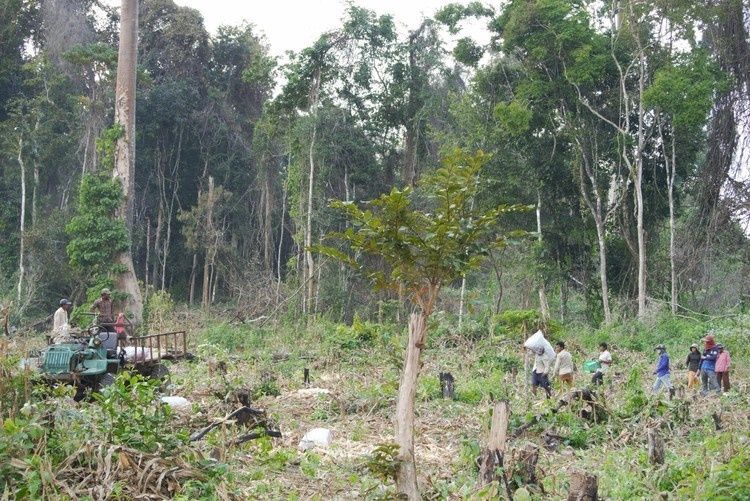
This paper explores place-making in post-conflict resource landscapes by elaborating on the concept of frontier-construction. Much of resource frontier literature examines conflicts over access to land and resources, but few studies look at how places emerge through the process of frontier making. This article provides an in-depth analysis of place-making in Northwest Cardamom region, a former battlefield and ex-Khmer Rouge stronghold, where the current socio-spatial relationships are formed by competing access to land and resources. I argue that the formation of place in post-war resource landscapes is the creation of frontiers where the relationship between local people and landscapes is formed through the reinforcing imagination of resource landscapes as wastelands. Everyday socio-spatial relationships in resource frontiers are established through three tensions: (1) socio-ecological intensity, (2) social confrontation, and (3) local vs state contestation over territoriality.
Additional Information
Program
Einaudi Center for International Studies
Southeast Asia Program