
Southeast Asia Program
Win Kyaw

Graduate Student
Degree Pursued: PhD
Committee Chair/Advisor: Anne Blackburn
Primary Language: Chinese, French, Thai
Research Countries: Myanmar
Research Interests: Buddhism in Sri Lanka and Southeast Asia, Konbaung Empire, Pali/Sanskrit Cosmopolis
Additional Information
Farzin Lotfi-Jam

Assistant Professor, Architecture
Farzin Lotfi-Jam is an architect whose work explores the politics of technology and cities. He is an assistant professor in architecture at Cornell University where he directs the Realtime Urbanism Lab. The lab uses and invents new spatial media and technologies to visualize and simulate how algorithms, models, and notions of ''real time'' govern urban life. He is also director of Farzin Farzin, an interdisciplinary design studio working across architecture, urbanism, computation, and media.
Additional Information
Information Session: Laidlaw Research and Leadership Program

December 4, 2024
5:00 pm
Uris Hall, G08
The Laidlaw Undergraduate Leadership and Research Program promotes ethical leadership and international research around the world—starting with the passionate leaders and learners found on campuses like Cornell. Open to first- and second-year students, the two-year Laidlaw program provides generous support to carry out internationally focused research, develop leadership skills, engage with community projects overseas, and become part of a global network of like-minded scholars from more than a dozen universities. We’ll also share tips for approaching potential faculty research mentors and writing a successful application.
Can’t attend? Contact laidlaw.scholars@cornell.edu.
***
The Mario Einaudi Center for International Studies hosts info sessions for graduate and for undergraduate students to learn more about funding opportunities, international travel, research, and internships. View the full calendar of fall semester sessions.
Additional Information
Program
Einaudi Center for International Studies
Reppy Institute for Peace and Conflict Studies
East Asia Program
Southeast Asia Program
Latin American and Caribbean Studies
Institute for African Development
Institute for European Studies
South Asia Program
Migrations Program
Trump Presidency Could Damage Economy if He Weakens Democracy

Tom Pepinsky, SEAP
“People interested in making a large investment will be less likely to do it unless they can curry favor with the president himself. There will be some who stand to benefit but the average American will lose,” says Tom Pepinsky, professor of government.
Additional Information
Fish Biodiversity Benefits Household Nutrition

Kathryn Fiorella in World in Focus
Migrations Program director Kathryn Fiorella coauthored an article, “Commercially Traded Fish Portfolios Mask Household Utilization of Biodiversity in Wild Food Systems,” in the peer-reviewed journal PNAS.
“Natural resource–dependent households rely on surrounding biodiversity for their food and income. Explicating the ways households use biodiversity is critical to appreciating the true value of diverse ecosystems.”
Households living near rice field fisheries in Cambodia eat a much wider cross-section of their fish catch (43% of local species) than they take to market to sell (only 9%).
“Poorer households also consumed more species, underscoring how wild food systems may most benefit the vulnerable,” the article concludes. The results highlight the food security consequences of biodiversity loss—for families, communities, and global food systems.
The team's research integrated surveys of households and ecological sites collected over three years in the freshwater Tonlé Sap lake system in Cambodia. Cornell Chronicle coverage noted that the study—part of Cornell's 2030 Project—is one of the first to examine how diet and biodiversity interact in a wild food system.
Culinary habits are part of the reason why larger fish are more often sold, Fiorella said. “We tend to eat them as fillets, which tend to have a slightly lower nutrient content than some of the small fish where people are eating the head and the bones,” she said. To boost their household income, people sell the popular but less nutritious fish, and eat the more nutritious fish at home.
Kathryn Fiorella is director of Einaudi's Migrations Program and an associate professor of public and ecosystem health in the College of Veterinary Medicine.
Featured in World in Focus Briefs
Additional Information
Indonesia in 10 Films
Indonesia in 10 Films is the newest podcast from the Southeast Asia Program at Cornell University. Join Michael Kirkpatrick Miller and Neen Yada Tangcharoenmonkong as they delve into 10 essential Indonesian films. Each episode discusses one movie shot in, on, or about Indonesia and features a conversation with an expert on Indonesian film.
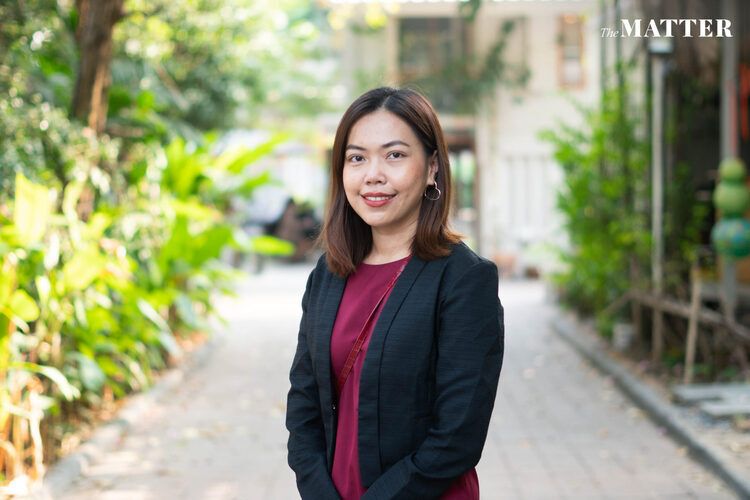
Justice on the Brink: Thailand’s Struggle for Human Rights and Democracy
November 13, 2024
12:10 pm
Cornell Law School, 186
About our Speaker:
Sirikan “June” Charoensiri is the Executive Advisor at TLHR, which she co-founded after the 2014 military coup in Thailand. In 2024, she founded Engage Thailand to further democracy and human rights advocacy internationally. June has a legal background from Thammasat University and the University of Essex. She has faced threats for her advocacy work but continues to fight for justice. June has received several awards, including the Lawyers for Lawyers Award in 2017 and the U.S. State Department's 2018 International Women of Courage Award.
Additional Information
Program
Einaudi Center for International Studies
Southeast Asia Program
Global Cornell Experience Showcase

November 19, 2024
4:00 pm
Physical Sciences Building, Baker Portico & Atrium
Over 70 undergraduate students will present their international summer experiences in a poster session. Their work includes conducting research, working in Global Internships, and putting leadership into action as Laidlaw scholars.
The poster session will be in the Baker Portico & Atrium of the Physical Sciences Building. Light refreshments will be served.
Applications for Global Internships are open now. Applications for the Laidlaw Scholars Program will open on November 15.
Global Internships give undergraduate students valuable international experience in fields spanning global development, climate and sustainability, international relations, communication, business, governance, and more. They are managed by the Mario Einaudi Center for International Studies and Office of Global Learning, both part of Global Cornell.
The Laidlaw Undergraduate Leadership and Research Scholarship Program provides generous funding to first- and second-year undergraduates over two years as they pursue internationally focused research, engage in leadership training and a leadership-in-action experience, and join a global network of like-minded peers. The program is managed by the Einaudi Center.
Additional Information
Program
Einaudi Center for International Studies
Reppy Institute for Peace and Conflict Studies
East Asia Program
Southeast Asia Program
Latin American and Caribbean Studies
Institute for African Development
Institute for European Studies
South Asia Program
Migrations Program
How to Conduct Research in Malaysia & Singapore

November 14, 2024
7:00 pm
Are you a graduate student about to embark on research in Malaysia and/or Singapore for the first time? Join GETSEA for a roundtable and Q&A session with Dr. Meredith Weiss (Albany), Justin Weinstock (UC Berkeley) and Zheng Wang (Albany) to get a sense of what conducting research in these two countries entails.
This webinar is part of the GETSEA ‘How to Conduct Research in Southeast Asia’ Series, and is co-sponsored by the Malaysia-Singapore-Brunei Study Group.
Additional Information
Program
Einaudi Center for International Studies
Southeast Asia Program
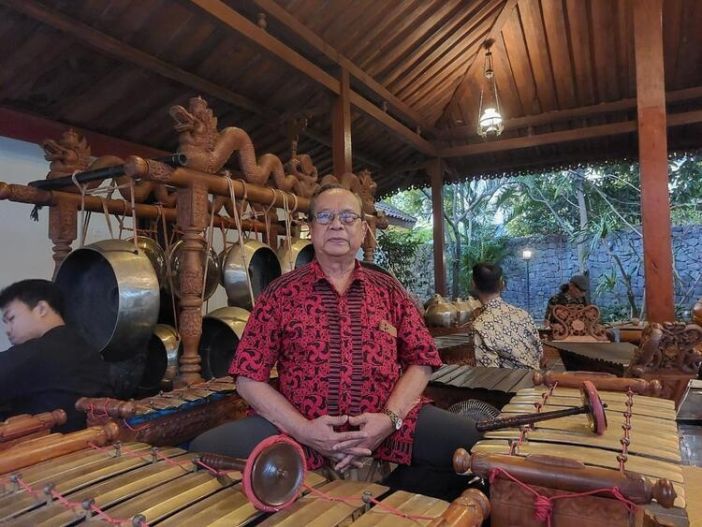
Klenengan: A Gamelan Gathering
November 17, 2024
11:00 am
Klarman Hall Atrium
Featured guests Wakidi Dwidjomartono and Heni Savitri join the Cornell Gamelan Ensemble and leading members of the larger American gamelan community for a klenengan, a long and relatively informal gathering that best accommodates the temporal expansiveness of Javanese gamelan music. Audience members are free to come and go, to enjoy snacks, and even to chat quietly with one another. The relaxed atmosphere fosters a mood in which focused concentration is tempered by an equal sense of calm and comfort. Starting no later than 11am and ending no earlier than 4pm, with a hands-on workshop during a lunch break at 1pm.
Additional Information
Program
Einaudi Center for International Studies
Southeast Asia Program