
Southeast Asia Program
Colin Peterson

Program Manager
Colin Peterson is the program manager for the Southeast Asia Program. He oversees administrative operations and is responsible for the overall implementation and coordination of the program’s financial, administrative, academic, and human resource activities.
Additional Information
Fall 2024 SEAP Bulletin now available

In print at our offices, or on eCommons
View the digital version on eCommons below, or stop by our offices at Uris Hall or the Kahin Center for physical copies.
Additional Information
Thai Conversation Hour

December 2, 2024
6:00 pm
Join us on Zoom to practice your Thai skills and meet new people. Conversation Hours provide an opportunity to use the target language in an informal, low-pressure atmosphere. Have fun practicing a language you are learning! Gain confidence through experience! Just using your new language skills helps you learn more than you might think. Conversation Hours are open to any learner, including the public.
Join Thai Conversation Hour on Zoom!
Additional Information
Program
Southeast Asia Program
Study Abroad in Thailand Information Session
September 17, 2024
4:45 pm
276 Caldwell Hall
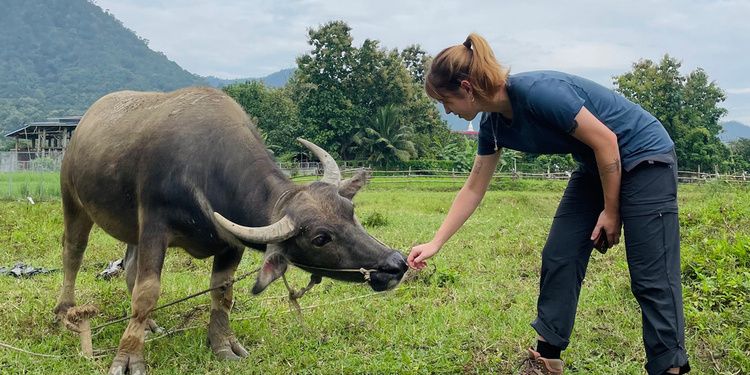
Meet with representative from the International Sustainable Development Institute (ISDSI) that provides field-based environmental study abroad program for undergraduates. Study sustainable agriculture in the lowlands, forest ecology in the uplands, and coastal ecology in the south. Great for many CALS majors. Students from other colleges may apply, not approved for A&S.
Additional Information
Program
Southeast Asia Program
Information Session: Fulbright Opportunities for Undergraduate Students

November 11, 2024
4:45 pm
The Fulbright U.S. Student Program supports U.S. citizens to study, conduct research in any field, or teach English in more than 150 countries. Students who wish to begin the program immediately after graduation are encouraged to start the process in their junior year. Recent graduates are welcome to apply through Cornell.
The Fulbright program at Cornell is administered by the Mario Einaudi Center for International studies. Applicants are supported through all stages of the application and are encouraged to start early by contacting fulbright@einaudi.cornell.edu.
Register for the virtual session.
Can’t attend? Contact fulbright@einaudi.cornell.edu.
Additional Information
Program
Einaudi Center for International Studies
Reppy Institute for Peace and Conflict Studies
East Asia Program
Southeast Asia Program
Latin American and Caribbean Studies
Institute for African Development
Institute for European Studies
South Asia Program
Migrations Program
Information Session: Fulbright Opportunities for Graduate Students

November 6, 2024
4:45 pm
The Fulbright U.S. Student Program provides full funding for graduate and professional students conducting research in any field or teaching in more than 150 countries. Open to U.S. citizens only. The Fulbright-Hays Doctoral Dissertation Research Abroad program supports doctoral students conducting research in modern languages or area studies for six to 12 months.
Open to U.S. citizens and permanent residents of the United States. Travel to Western European countries is not eligible.
Register for the virtual session.
Can’t attend? Contact fulbright@einaudi.cornell.edu.
Additional Information
Program
Einaudi Center for International Studies
Reppy Institute for Peace and Conflict Studies
East Asia Program
Southeast Asia Program
Latin American and Caribbean Studies
Institute for African Development
Institute for European Studies
South Asia Program
Migrations Program
Global Hubs Grant Launches AI Collaboration

Call for Proposals Open Now
Isabel Perera (IES) and international partners are investigating AI's impact on workplaces. Apply now for the next round of Hubs seed grants.
Additional Information
Language Resource Center Speaker Series - Oya Topçuoğlu Judd - Collaborative Curriculum Design in LCTLs
September 19, 2024
5:00 pm
Goldwin Smith Hall, G64
"Collaborative Curriculum Design in LCTLs: Student-Centered Multimodal Approaches Using Authentic Media"
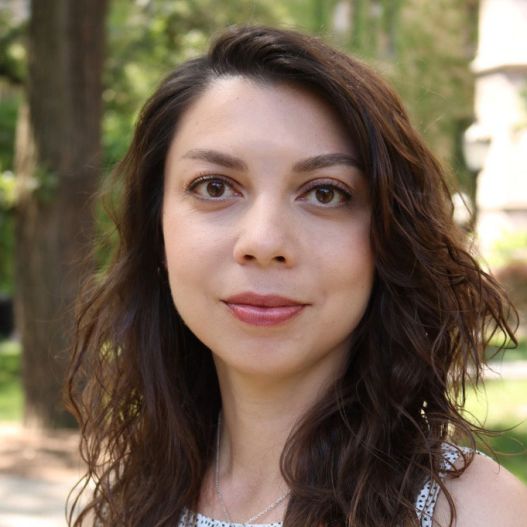
Oya Topçuoğlu Judd
Associate Professor of Instruction in Turkish, Northwestern University
As LCTL instructors, we frequently face the challenge of sourcing high-quality, engaging teaching materials that transcend the limitations of traditional textbooks and rely on technology-mediated, multimodal language learning practices and methodology. This is one aspect of language instruction in LCTLs, and especially in single-instructor LCTL programs, where collaboration can be vital. Working together with colleagues, leveraging shared resources, and pooling expertise can significantly enhance the quality and impact of language instruction, both for students and instructors.
At Northwestern University’s Turkish Language Program, we have addressed this issue by collaborating across languages and institutions to develop innovative courses that integrate authentic media and cultural content to enhance language learning and cultural competence in our students. In this talk, I will discuss these collaborative efforts and present two courses that resulted from these collaborations: our first-year course Elementary Turkish through TV Shows and Istanbul: Gateway Between the East and the West, the capstone course of our two-year program.
Our elementary-level course utilizes Turkish TV shows as a core component of the curriculum to promote active engagement and cultural competence. Turkish TV shows, which reach 750 million people across 152 countries, offer enormous potential as authentic teaching materials, providing real-world language exposure and connecting students with engaging, culturally relevant content. In this talk, I will discuss the process of selecting and incorporating TV shows into our existing curriculum, the technological challenges we faced, and share examples of our teaching materials. My goal is to provide concrete tools and strategies for collaborative curriculum design within and across languages, and share materials that can be easily adapted to different skill levels and contexts.
Our capstone course, Istanbul: Gateway Between the East and West, is designed as a content-based, proficiency-oriented course aimed at Intermediate Mid-level learners. This thematic course offers a deep, multifaceted exploration of Istanbul, covering a wide array of topics, from the history and monuments of the city to its representation in modern literature and the challenges of everyday life. By focusing on these diverse subjects, the course encourages students to engage with broader cultural, political, and social issues within the context of the city. I will outline our efforts to create this innovative course content through reverse design, source authentic materials, design proficiency-oriented tasks, and adopt online and interactive tools to enhance student participation and learning.
Bio: Oya Topçuoğlu Judd is an Associate Professor of Instruction in the Middle East and North African Languages Program at Northwestern University. Dr. Topçuoğlu Judd teaches on a range of subjects, including modern Turkish language and culture, and the history and archaeology of the Middle East. She holds a Ph.D. in the Art and Archaeology of the Ancient Near East from the Department of Near Eastern Languages and Civilizations at the University of Chicago, and a B.A. in Ottoman History from Boğaziçi University in Istanbul. Dr. Topçuoğlu Judd is an archaeologist by training, who specializes in the art, archaeology, and history of ancient Iraq, Syria, and Turkey. Her research addresses issues of social identity and cultural exchange, and the effects of political change and ideology on the material record of the ancient Middle East. In addition to her work on iconography and symbolism, Dr. Topçuoğlu Judd studies the looting and illegal trafficking of antiquities from Iraq and Syria, the political uses of the ancient past, and its role in the formation of national identities in the modern Middle East. She is particularly interested in the history of archaeology and museums, and cultural heritage preservation in her native Turkey.
This event will be held in person in the Kaufmann Auditorium (G64 Goldwin Smith) and will also be streamed live over Zoom (registration required).
Co-sponsored by the Southeast Asia Program and the Southeast Asian Language Council (SEALC) conference.
The event is free and open to the public.
Additional Information
Program
Einaudi Center for International Studies
Southeast Asia Program
How Food Prices Have Changed Over the Past Four Years
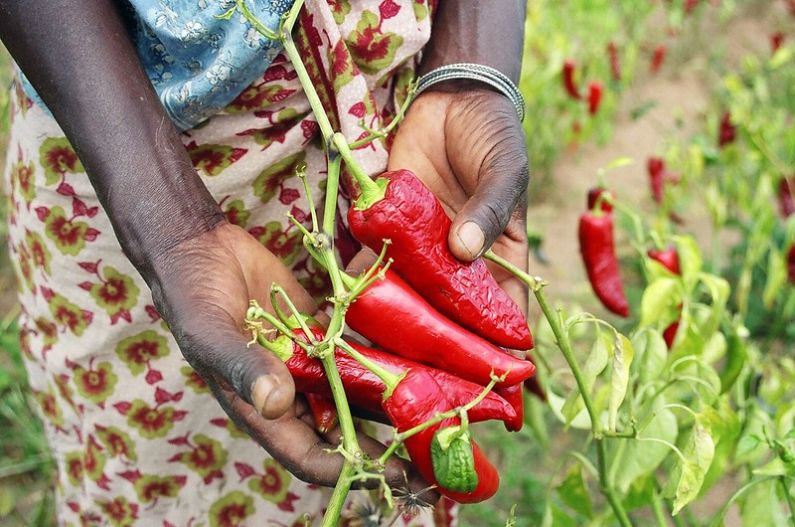
Chris Barrett, IAD/SEAP
Christopher Barrett, professor of agricultural and development economics, says “Housing costs in particular are up sharply since the start of the pandemic. That crimps people’s ability to buy the food they need.”
Additional Information
Global Experts Convene at Johnson Museum of Art to Discuss Indonesia’s Political Future
Ithaca, NY
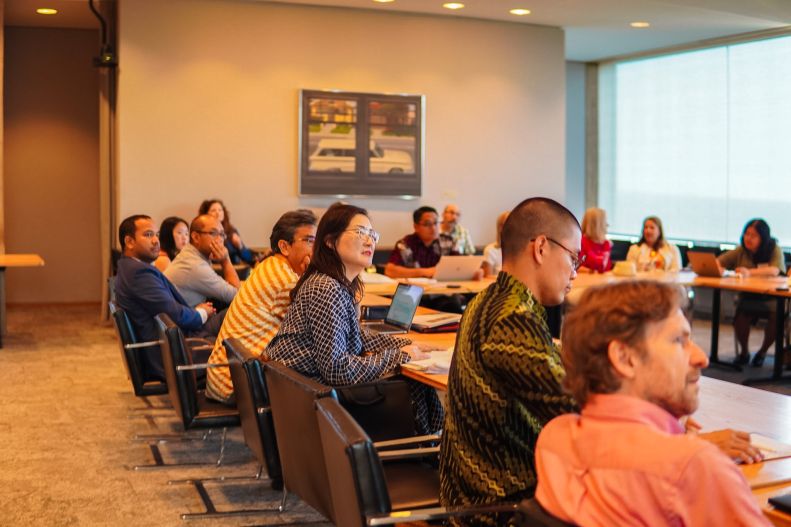
The Southeast Asia Program recently hosted a workshop at the Johnson Museum of Art titled “The State of Indonesian Democracy” on August 1 and 2, 2024. This gathering brought together sixteen leading specialists in Indonesian politics to dissect the ramifications of February’s presidential and parliamentary elections for Indonesian democracy, and to assess the future trajectory of Indonesian politics under its next president, Prabowo Subianto.
Tom Pepinsky, Walter F. LaFeber Professor of Government in the College of Arts & Sciences and Director of the Southeast Asia Program, said of the workshop: “The major accomplishment of our workshop was to gather together scholars from around the world to discuss the state of Indonesian democracy in the wake of the 2024 presidential and legislative elections. The participants exchanged views about potential sources of democratic weakness under the outgoing administration of Joko Widodo, and the future of Indonesian democracy under its new president, Prabowo Subianto. As part of these discussions, paper authors received close and careful feedback from expert discussants, which will allow them to revise their drafts for future publication. The open discussions fostered a critical but collaborative atmosphere in which early career researchers and established Indonesia experts were able to refine their arguments and analyses in light of the most up-to-date developments.”
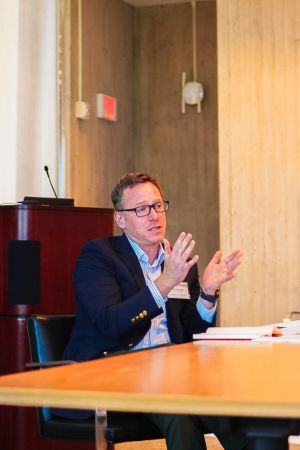
The first panel featured presentations from Marcus Mietzner of Australian National University (participating virtually) and Djayadi Hanan of Universitas Islam Internasional Indonesia, with Diego Fossati from City University of Hong Kong serving as the discussant. This session examined the decline of Indonesian democracy under former President Joko Widodo, including a detailed look at his majoritarian tendencies and structural changes to the presidency.
After a coffee break, the second panel featured Burhanuddin Muhtadi from Indikator and the Syarif Hidayatullah State Islamic University and Yoes Kenawas from Atma Jaya Catholic University, with Meredith Weiss from University at Albany-SUNY as the discussant. This panel focused on the question of whether Indonesia’s democratic regime has declined into competitive authoritarianism, and how dynastic politics has eroded democratic competition at the local and national levels.
Following a lunch and tour of the Fall Creek gorge, the third panel included Amalinda Savirani from Universitas Gadjah Mada and Meredith Weiss, alongside Merlyna Lim from Carleton University, with Margaret Scott from New York University and the New York Southeast Asia Network as the discussant. This session examined democratic regression at the subnational level, and the impact of social media on the 2024 election.
The afternoon sessions concluded with a panel featuring Rocky Intan from University at Albany-SUNY and Tom Pepinsky, moderated by Andreas Ufen from the German Institute of Global and Area Studies. The panel provided insights into how Indonesian political coalitions respond to existing social cleavages, and how increasing economic ties with China constrain Indonesian foreign policy.
The second day of the workshop began with a panel featuring Jessica Soedirgo from the University of Amsterdam and Nathanael Gratias Sumaktoyo from the National University of Singapore, alongside Eunsook Jung from the University of Wisconsin-Madison, with Jeremy Menchik from Boston University as the discussant. The panel provided insights into potential shifts in the nature of Muslim groups and of Indonesian civil society, and how both interact with the larger political system.
After a coffee break, Panel 6 saw Jessica Soedirgo presenting further insights on the ethnic and religious dimensions of Indonesian politics, with comments from Tom Pepinsky. This was followed by a concluding session led by Tom Pepinsky, who discussed next steps for revising the papers for publication, with emphasis on open-access options that ensure that the contributions are all widely available to scholars around the world.
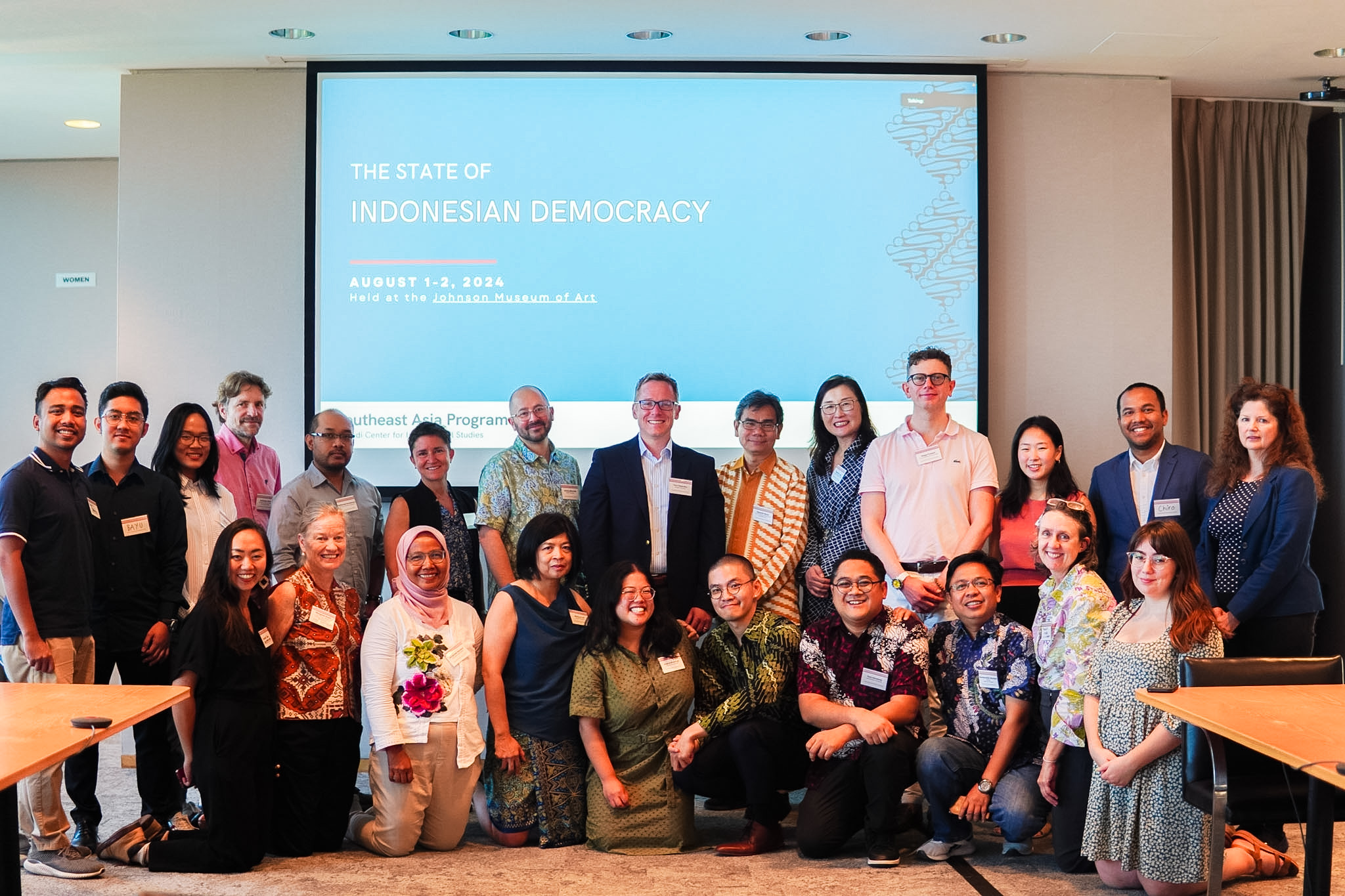
In the afternoon, attendees had the opportunity to participate in a guided walk-through of the Johnson Museum's exhibits with Chief Curator Ellen Avril, offering a cultural complement to the workshop’s discussions.
The workshop offered a balanced and informed view of Indonesia’s evolving political landscape, contributing to ongoing discussions about the country’s democratic development and its role in the region.
This workshop was generously supported by a donation from Patrick Walujo ’97, and organized through a collaborative effort by Cornell’s Southeast Asia Program, the Modern Indonesian Project, and the Einaudi Center for International Studies, with additional support from the Departments of Government and Asian Studies in the College of Arts & Sciences, and the Brooks School of Public Policy.