
Southeast Asia Program
Cycles of History: Review of "To Govern the Globe: World Orders and Catastrophic Change"

Magnus Fiskesjö, EAP/PACS/SEAP
"The famous Southeast Asia historian Alfred McCoy has published an important new book, To Govern the Globe: World Orders and Catastrophic Change on world history, and where it is heading with China as an aspiring new world empire." - Magnus Fiskesjö
Additional Information
Xinlei Sha
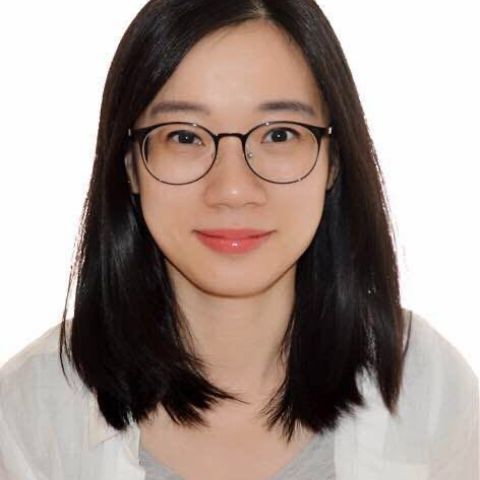
Graduate Student
Degree Pursued: PhD
Anticipated Degree Year: 2026
Committee Chair/Advisor: Juno Salazar Parreñas
Discipline: Anthropology
Primary Language: Vietnamese
Research Countries: Vietnam
Additional Information
How to Assemble an AAS Panel
May 31, 2024
8:00 pm
A workshop by GETSEA.
Have you always wanted to present a paper at the Association for Asian Studies annual meeting? But you can’t find a panel that fits your work, and you don’t know how to gather other scholars to create a panel of your own?
Join GETSEA for an informal discussion with Tom Pepinsky (Cornell), Trude Jacobsen Gidaszewski (NIU), and Chris Hulshof (Wisconsin-Madison) about the process of assembling a panel to submit to AAS.
After the discussion, we will move into breakout rooms for possible panel matchmaking. So, please come with a short description of the topic you are interested in presenting at AAS (a general idea is fine as well. It doesn’t need to be a finished proposal).
Additional Information
Program
Einaudi Center for International Studies
Southeast Asia Program
May 2024 Einaudi Center News
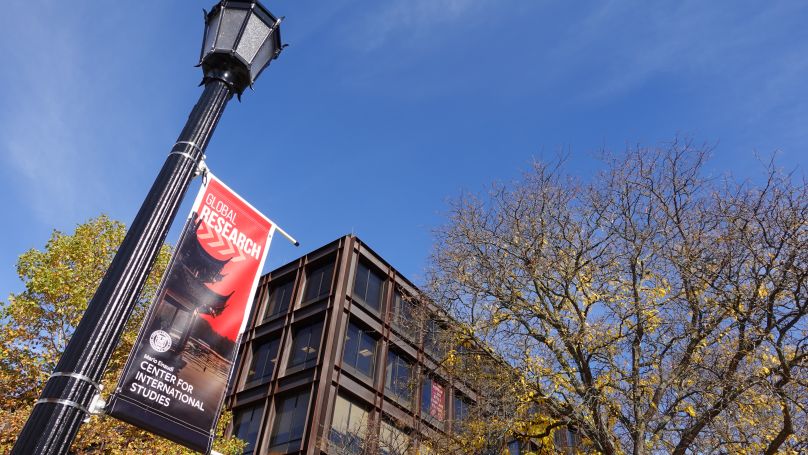
Faculty and Student Kudos and a Farewell
Learn about Einaudi's faculty seed grant awards, CRADLE's new Law and Economics Papers, and over 100 students conducting international research this summer with Einaudi support.
Additional Information
Scientists Decode Orangutan Communication Using Machine Learning

Wendy Erb
Wendy Erb has spent countless hours studying orangutans in Borneo's tropical peatland forests in order to learn how male Bornean orangutans (Pongo pygmaeus wurmbii) communicate. While doing so, she discovered one undeniable advantage of understanding orangutan language: When the males decide to show off their strength by uprooting nearby trees, nearby scientists need to be careful to not get smooshed.
Additional Information
Wa History: Agency and Victimization

Magnus Fiskesjö, PACS/EAP/SEAP
Magnus Fiskesjö has published a chapter on the Wa ethnic group in a new volume, Chasing Traces: History and Ethnography in the Uplands of Socialist Asia, edited by Pierre Petit and Jean Michaud.
Additional Information
Topic
- World in Focus
Program
Book Celebrates Cornell's Global Past and Future

Beyond Borders: Exploring the History of Cornell's Global Dimensions features chapters on the Einaudi Center and several regional and thematic programs.
Additional Information
SEALC-GETSEA Language Tuition Support (AY 2024-2025)

Deadline: July 12, 2023
With support from the Henry Luce Foundation, The Southeast East Asian Language Council (SEALC) and The Graduate Education and Training in Southeast Asian Studies (GETSEA) consortia award financial assistance to students who incur tuition fees when studying a Southeast Asian language via synchronous distance learning during the academic year at an institution other than their home institution. This award is intended to facilitate cross-institutional collaboration and increase access to Southeast Asian language instruction.
Eligibility requires that the course is credit-bearing at a North American institution and that the applicant is a full-time student at a North American institution. Priority will be given to graduate students, but all are encouraged to apply. SEALC and GETSEA encourage applicants to consider attending SEASSI which serves as an excellent resource for summer language instruction. This award is intended to improve access during the academic year so that students can obtain multi-year instruction in a timely manner. For more information and to apply, click here.
Additional Information
"Food and Asia: A Student-led Exhibition" in the Kroch Asia Library

May 7, 2024
1:30 pm
Kroch Library
The student curators from the course, ASIAN2272 Food and Asia, will present their selection of Asian cookbooks to the public.
Learn about Asian food cultures and themes, and get a taste of the rich selection of cookbooks in Cornell University Library's collections.
The tour begins at the cases in the Kroch Asia Library corridor.
Additional Information
Program
East Asia Program
Southeast Asia Program
South Asia Program
International Studies Summer Institute: Plant and Animal Migration

July 9, 2024
9:00 am
Stocking Hall
Join the Cornell University Mario Einaudi Center for International Studies and the South Asia Center at Syracuse University for the 2024 International Studies Summer Institute (ISSI)! This year, we will explore plant and animal migration around the world and at home. ISSI is a professional development workshop for practicing and pre-service K–12 educators.
Participants will explore the patterns and causes of plant and animal migration in a global context, as well as how they affect and are affected by human society. Scholars from Cornell University and Syracuse University will share their research and expertise from across different regions of the world, including Africa, East Asia, Europe, Latin America and the Caribbean, South Asia, and Southeast Asia.
Object-based learning will be a specific focus. Sessions will include an introduction to the Einaudi Center’s culture kits and how they can support hands-on learning about plant and animal migration in different countries. Culture kits are a collection of cultural artifacts from around the world, tailored for use in K-12 classrooms. We will also feature an overview of Latin American and East Asian artwork on these topics at the Johnson Museum of Art and an introduction to the Cornell Lab of Ornithology’s eBird kits.
Who Can Participate
We welcome practicing and pre-service K–12 educators of all subjects and grade levels who work in New York State. While this year's institute will have more of a scientific focus than in past years, we believe this year’s theme will benefit educators of all subject areas, especially in developing cross-disciplinary, project-based activities with a global focus.
Benefits
As a participant, you will...
gain tools and knowledge to apply in your classroom around issues of plant and animal migration internationally and in our backyards.
connect issues affecting yourself and your students here in the U.S. with other parts of the world.
“recharge” intellectual batteries and deepen your own understanding and appreciation for plant and animal migration.
have the option to complete a lesson plan for additional CTLE hours that incorporates content from the workshop, with the support of our outreach staff.
receive a free eBird kit from the Lab of Ornithology, targeted for the grade band of choice ($70-$110 value).
Schedule
9:00-9:15, Introductory remarks with Sarah Plotkin, Mario Einaudi Center for International Studies
9:15-10:05, Seeds of Survival and Celebration: Plants and the Black Experience, with Sarah Fiorello, Jakara Zellner, and Lauren Salzman, Cornell Botanic Gardens
10:10-11:05, Breakout sessions:
Art and Climate Struggle: Visual Interpretations of Plant and Animal Migration, with Carol Inge Hockett and Carina D’Urso, Johnson Museum of Art
eBird and Migration: Empowering Students with Participatory Science and Birds, with Kelly Schaeffer, Cornell Lab of Ornithology
11:10-12:00, Breakout sessions repeated
12:00-12:30, Networking and reflection exercise with Sarah Plotkin, Mario Einaudi Center for International Studies
12:30-1:30, Lunch (Thai food from Tamarind!)
1:30-2:15, Plant and Animal Migration Shaping European Societies and Diets, Dr. Daniel Mason D’Croz, Department of Global Development
2:20-3:05, How Global Fisheries Connect Us All – Environmental Change Impacts on Health and Well-being, Dr. Kathryn Fiorella, Department of Public and Ecosystem Health
3:15-4:00, Linking the Power of Bioacoustics to Locally Led Research Initiative: Monitoring Migratory Birds at a Regional Scale, Ashakur Rahaman, Cornell Lab of Ornithology
4:00-4:20, Introduction to Einaudi Culture Kits, Dr. Thamora Fishel, Mario Einaudi Center for International Studies
4:20-4:30, Closing Remarks, Dr. Daniel Bass, Mario Einaudi Center for International Studies
Questions? Contact outreach coordinator Sarah Plotkin.
Additional Information
Program
Einaudi Center for International Studies
East Asia Program
Southeast Asia Program
Latin American and Caribbean Studies
Institute for African Development
Institute for European Studies
South Asia Program