
Southeast Asia Program
Events
Want to stay up-to-date with the latest events? Subscribe to the Weekly Events Digest to receive weekly emails about all upcoming Einaudi Center events.
For events, conferences, and job opportunities related to Southeast Asia, subscribe to the SEAP Weekly Announcements.
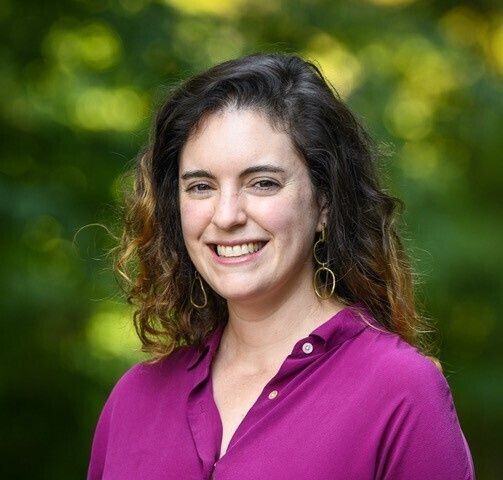
EAS Seminar: Jenny Goldstein (Cornell)
November 30, 2022
3:45 pm
Snee Hall, 2146
Land of no return: The role of non-knowledge in Indonesia’s peatlands
Millions of hectares of Indonesia’s peatlands have been drained and developed for agriculture and other uses over the past several decades, leading to extensive carbon dioxide emissions via fire and oxidation, and acute regional Southeast Asian air pollution episodes. Through analysis of Indonesia’s peatland development over the past three decades, this talk considers how state officials, scientists, and corporations have used non-knowledge strategically as a means to land access and control. Drawing on qualitative fieldwork in Central Kalimantan province in Indonesia, I look specifically at an area called the Mega Rice Project, a peat swamp forest that was first drained for rice production in the mid-1990s and has since undergone dramatic biophysical transformation. Since 2000, this area has also been the site of various state- and NGO-led interventions to repair the landscape’s hydrology, most of which have been deemed failures. I argue that through these peatland development projects, actors have generated passive and active ignorance and non-knowledge in ways that serve to protect the developmental status quo.
Bio:
Jenny Goldstein is an assistant professor in the Department of Global Development at Cornell. She has a Ph.D. in geography (UCLA) and has conducted field-based qualitative research in Indonesia for over 10 years. Her work draws from the fields of political ecology, science and technology studies, and critical development studies to look at the politics of land degradation and repair, and the intersections of digital technology and environmental governance. She is co-editor of the book The Nature of Data: Infrastructures, Environments, Politics (U Nebraska Press, 2022) and is current president of the Cultural and Political Ecology specialty group of the American Association of Geographers.
Additional Information
Program
Southeast Asia Program
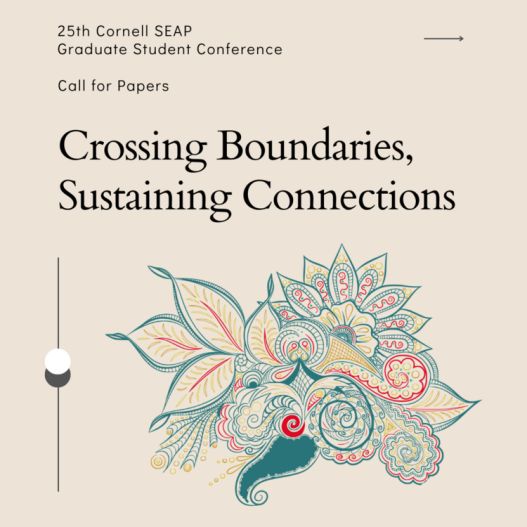
Crossing Boundaries, Sustaining Connections
March 12, 2023
12:00 am
Kahin Center
The 25th Cornell SEAP Graduate Student Conference
To be held in a hybrid format at the Kahin Center, welcoming early career scholars from Cornell and beyond.
Scholarship is forever a site of tension between the intellectual inheritance of one’s discipline and the magnificent potentiality of original research. Between opposing pulls of past and future we notch our arrows, set our sights, and take flight into newly imagined terrains of research, political struggle, and creative expression. On the occasion of the Cornell Southeast Asian Program (SEAP) Graduate Student Conference’s 25th anniversary, we reflect on origins, destinations, and all the hurdles in between.
This year’s theme—Crossing Boundaries, Sustaining Connections—calls for us to reflect on our positions as scholars of Southeast Asia. We make our own field, but we do not make it as we please. Climate change, authoritarian revanchism, pandemics, political polarization, new modes of association—these are problems which demand the adaptation of old tools for new ends. How can we connect with and draw on the collective heritage of Southeast Asian Studies without remaining bound by limitations given and transmitted from the past? We invite reflexive, boundary-transgressing, and/or connection-making submissions that arouse productive, future-oriented (re)consideration of the historical, geographical, and institutional heritage of Southeast Asian Studies.
The 25th SEAP Graduate Student Conference will be held in a hybrid format on 10–12 March, 2023 at Cornell University’s George McT. Kahin Center for Advanced Research on Southeast Asia in Ithaca, New York and on Zoom. The University’s COVID restrictions will apply and are subject to change. We welcome abstract submissions by 20 December 2022 of original work related to Southeast Asia by current graduate students. Scholars who have completed and defended a PhD prior to March 10, 2023 are not eligible.
Full conference schedule available here.
Join us at Friday, March 10th for the Conference Keynote at 430pm (registration at 4pm), with a reception to follow.
Additional Information
Program
Einaudi Center for International Studies
Southeast Asia Program
Incomplete Conquests

In Incomplete Conquests, Stephanie Joy Mawson uncovers the limitations of Spanish empire in the Philippines, unearthing histories of resistance, flight, evasion, conflict, and warfare from across the breadth of the Philippine archipelago during the seventeenth century. The Spanish colonization of the Philippines that began in 1565 has long been seen as heralding a new era of globalization, drawing together a multiethnic world of merchants, soldiers, sailors, and missionaries.
Book
34.95
Additional Information
Program
Type
- Book
Publication Details
Publication Year: 2023
ISBN: 1501770284
Between War and the State
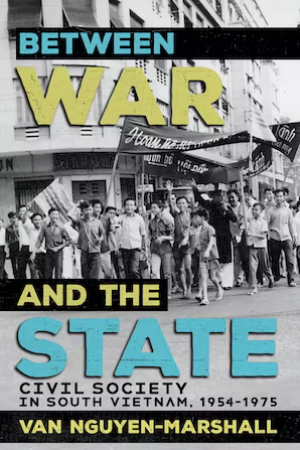
In Between War and the State, Van Nguyen-Marshall examines an array of voluntary activities, including mutual-help, professional, charitable, community development, student, women's, and rights organizations active in South Vietnam from 1954–1975. By bringing focus to the public lives of South Vietnamese people, Between War and the State challenges persistent stereotypes of South Vietnam as a place without society or agency.
Book
34.95
Additional Information
Program
Type
- Book
Publication Details
Publication Year: 2023
ISBN: 1501770608
The Drama of Dictatorship

The Drama of Dictatorship uncovers the role played by rival Communist parties in the conflict that culminated in Ferdinand Marcos' declaration of martial law in 1972. Using the voluminous radical literature of the period, Joseph Scalice reveals how two parties, the PKP and the CPP, torn apart by the Sino-Soviet dispute, subordinated the explosive mass struggles of the time behind rival elite conspirators. The PKP backed Marcos and the CPP, his bourgeois opponents.
Book
41.95
Additional Information
Program
Type
- Book
Publication Details
Publication Year: 2023
ISBN: 1501770497
Sign up for SEAP's Spring 2023 Courses

Pre-enrollment is this week!
From ancient history to modern film, regional politics to language studies, SEAP offers a variety of courses to suit many interests. In addition, you can choose from any of the six Southeast Asian languages to study right here at Cornell.
Additional Information
The 1968 Tet Offensive and South Vietnam’s Second Republic

March 30, 2023
11:25 am
In many accounts of the Vietnam War, the 1968 Tet Offensive – a sweeping series of communist attacks against military bases, provincial capitals and even the United States Embassy in Saigon – is recalled as a defining moment when American public opinion turned against the war. Long overlooked, however, is the equally significant political impact of Tet in South Vietnam itself.
Far from evincing public sympathy as Communist strategists had intended, the attacks saw a wave of anti-Communist solidarity sweep through South Vietnam’s cities and provincial towns. Partisan rivals set aside their differences, while the South Vietnamese military seized the opportunity to expand into Communist-dominated rural areas.
The post-Tet period arguably marked the zenith of anti-Communist cohesion in Vietnam. For a time, it appeared plausible that the balance might be tipping in Saigon’s favour. But the military government squandered this uniquely poised opportunity by monopolizing political power at the expense of civilian parties and institutions. This betrayed the constitutional order on which the state’s legitimacy was based, deflating post-Tet resolve, accelerating American funding cuts, and precipitating the state’s abrupt collapse from within in 1975.
Drawing on American and Vietnamese-language sources, Sean Fear explores the aftermath of the 1968 Tet Offensive in South Vietnam. Challenging conventional views of the Vietnam War as a clash between Cold War superpowers and their proxies, it also asserts the centrality of overlooked Vietnamese political actors in determining the outcome of the war.
Please join us for this virtual conversation. Register here.
About the Speaker
Sean Fear is a lecturer in international history at the University of Leeds. His research focuses on South Vietnamese domestic politics and diplomacy during the Second Republic (1967-1975). He is a 2022-23 Visiting Professor of History and Vietnam Studies at Fulbright University in Ho Chi Minh City, Vietnam.
Presented by the Reppy Institute for Peace and Conflict Studies. Co-sponsored by the Southeast Asia Program and the Gender and Security Sector Lab.
Additional Information
Program
Einaudi Center for International Studies
Reppy Institute for Peace and Conflict Studies
Southeast Asia Program
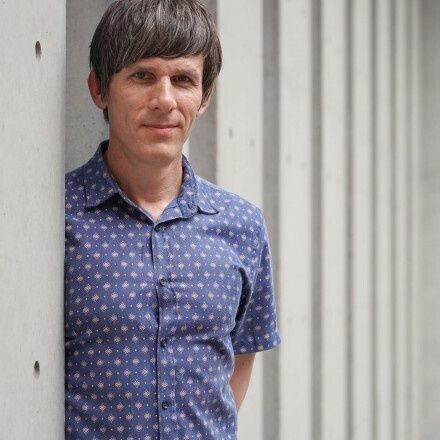
How Thai (and Burmese) Torturers Talk
December 1, 2022
12:30 pm
Kahin Center
Nick Cheesman
In 2021, a group of anti-narcotics cops in Nakhon Sawan, Thailand suffocated a man to death with plastic bags. The torture and killing would have gone unreported but that it was captured on a video, which a lawyer posted online. News reports circled around the lead protagonist, a superintendent living a playboy lifestyle, and questions about how the lawyer got hold of the video.
In this lecture, I take a different tack. The video serves as a starting point for me to revisit Elaine Scarry’s (1985) thesis that torture is characterized by the interplay between the physical torment of the captive and the verbal domination of their torturers. Put another way, torturers’ attacks on their captives’ bodies are given meaning by how they talk.
How do Thai torturers talk? And how do answers to this question present opportunities for rethinking the relation between law, violence and political order in Thailand, and elsewhere, today? I respond to these questions by describing research on torture in Thailand conducted during 2018-19 and 2022, supplemented by data from Myanmar prior to the 2021 coup there. I attend to how torturers in both countries use pronouns, other parts of speech and profanity; and, pursue recurrent tropes that give voice to the political dynamic of violent degradation in torture. I reassess Scarry’s claim that interrogation is not external to torture but internal to it, and find that critics who reject her claim as empirically unsupportable overstate their case. This leads me to speculate on whether the logic of brutality that the torturers in Nakhon Sawan performed for the world to see, far from being exceptional, might yet be coextensive with state practice. If so, then maybe in torture the category of the human is brokered so that the existence of the state is justified.
Nick Cheesman is an associate professor in the Department of Political and Social Change, Australian National University; and, in Fall 2022, a visiting professor at the Baldy Center for Law and Social Policy, University at Buffalo. His “Torture in Thailand at the limits of law” is online with Law and Social Inquiry.
Lunch will be served.
Co-sponsored by the Reppy Institute for Peace and Conflict Studies.
Additional Information
Program
Einaudi Center for International Studies
Southeast Asia Program
Reppy Institute for Peace and Conflict Studies
SEAP Assists Myanmar Scholars
by alumnus Drake Avila
In the months right after the February 1st military coup in Myanmar, a PhD student initiated a conversation with Cornell’s Southeast Asia Program (SEAP) faculty and staff about how they could help at-risk scholars come to Cornell for safety, and to participate in SEAP. Drawing on Title VI, National Resource Center funding from the Department of Education, SEAP, and other Cornell academic programs, assisted four at-risk, scholars, activists, and artists, along with their families, to find visiting fellow positions at Cornell. Thamora Fishel, Associate Director of SEAP, described this process in an interview with East-West Center Young Professional Drake Avila. One of these dissidents is May Sabe Phyu, co-founder of the Gender Equality Network (GEN), and prominent human and women's rights activist.