
Southeast Asia Program
Tacet(i) to Perform "Global Sound"
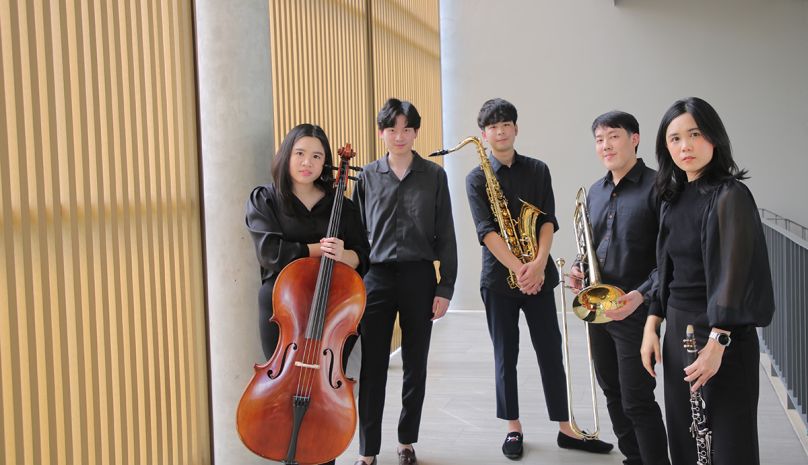
Thai ensemble visits Cornell next week
Part of Extended instruments and global sounds: This series of events will be a collaboration between Cornell composers, and Tacet(i) Ensemble from Thailand, curated by Piyawat Louilarpprasert. The project offers a series of performances and workshops centered on extended instruments and global sounds concerning the idea of sonic identities, instrumental connotation in global cultures as well as to hybridize Southeast Asian musical tradition and to transgress boundaries of sounds and instruments.
Additional Information
Program
The Musics of Southeast Asian America
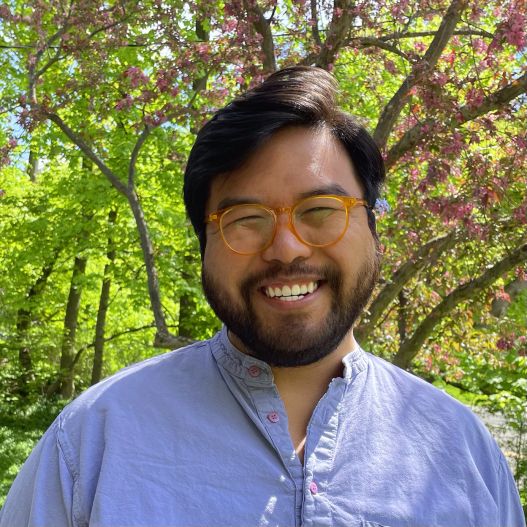
Brian V. Sengdala, PhD student, Performing and Media Arts
This is an article from the Fall 2022 SEAP Bulletin - view the full Bulletin here!
“‘Maayong gabi-i sa imong tanan’ (‘Good evening to you all,’ in Cebuano) Tonight is a celebration of struggle & survival. Tonight, we bring together two communities who have endured wars & colonialism, genocide, and extrajudicial killings, forced migrations.
And we are still here.
Through it all, music has been our sword & our sanctuary. We can think of no two better artists to remind us of this than the Southeast Asian American sisters we have with us tonight.”
Professor Christine Bacareza Balance introduced the Musics of Southeast Asian America with this rallying call.
Together in conversations with Tita Thess, Neak Kruu Hannah, and Professor Chris Miller, Professor Balance wanted to organize a concert featuring Filipino and Cambodian communities. The bridges between these communities were experienced in Balance’s own familial life in Southern California. When I came to Cornell as a graduate student, we both further appreciated how these communities could and do come and work together through shared Southeast Asian American sensibilities. Two artists came to mind to each of us: Ruby Ibarra and Bochan Huy.
This spring, we hosted musical artists Bochan Huy and Ruby Ibarra at Cornell University through the Musics of Southeast Asian America event co-organized by Associate Professor Christine Bacareza Balance (PMA, SEAP, and AASP Program Director) and myself, PhD Student Brian Veasna Sengdala (PMA, SEAP). I was excited at the possibilities of what this could mean for my fellow Asian American students—and I knew that Professor Balance wanted as much for her students and the community, broadly. It was a busy period at SEAP: The event took place during Cambodian New Years and the water festivals celebrated throughout much of Southeast Asia in April; and though this meant that there were other events elsewhere both in Cornell and Western New York, we were excited to be able to welcome the New Year with everyone.
Both of us came to this project through our own relationships—personal and academic—to music. Balance almost always teaches Ruby Ibarra’s music video “Us” as a powerful example of Asian American (and specifically, Filipino American) anti-imperialist critique and cultural resistance. Sung in both Filipino and Waray (to honor the artist’s mother’s native Bisayan tongue), Ibarra’s song spoke directly to a share heritage to Balance’s own Bisayan immigrant parentage. Likewise, Bochan Huy’s “Chnam Oun 16” is a music video I often present on and teach. In fact, it is very likely because of Bochan’s music that I am here at Cornell (and by extension, SEAP). I was studying for a PhD in (Ethno)Musicology at Rutgers on a very different topic and in my first seminar, I wrote a paper on “Chnam Oun 16” and Bochan’s use of language and aesthetic. Writing and the presenting that paper in a few conferences inspired a new project on Cambodian America which eventually led me to performance studies and then to Cornell.
The evening was conceived as a celebration of Southeast Asian American women in music. Ruby Ibarra is a Filipina American hip hop artist born in Tacloban, Philippines before moving to the San Francisco Bay Area where she now resides. She wrote her own raps when she was younger and broke out with a viral YouTube video in 2012. From there, her career continued to grow with her mixtape debuted on Eminem’s Sirius XM radio station, music in Ramona Diaz’ documentary featuring Nobel-laureate Maria Ressa called A Thousand Cuts, and on the Fox television show, The Cleaning Lady. Likewise Cambodian American Singer-Songwriter Bochan Huy comes from the Bay Area—namely, Oakland—to which she fled from Cambodia in the 1980s with her family. She grew up learning and playing music with her father, a Cambodian rock musician. Her cover of “Chnam Oun 16” became a large piece of Cambodian musical discourse with her additions of lyrics in English and the artistic direction of the videography using many Cambodian icons. Bochan has remarked on the negative feedback she received in the past from people who disagreed with any changes to beloved songs like “Chnam Oun Dop Phram Muy,” but noted that now, comments on her videos (including “Chnam Oun 16”) have been positive, especially from younger Cambodian Americans who find themselves in her songs.
The concert was in two acts. Bochan started the night with her set and performed with her longtime collaborator, Arlen Hart Ginsburg. Using the audiovisual capacities of the Kip, Bochan told her story from out of the Khmer Rouge period, laying out the context of the United States bombing campaigns in the region, making ties to the current refugee crisis out of Ukraine, and moving through a hopeful journey. She says, “I hope they connected with the story of loss and love as well as experience the healing and unity behind the music.” Bonnie Chung, a PhD Student in Literatures in English, says about the concert, “The vibe was great, and I was especially struck by how the concert brought people from the Cornell community together. It was palpable! All the songs were great, but the video/ visual presentation alongside the sonic performance was moving.”
Bochan also reflected on the performance: “Doing the narrative and creating the visuals that I did for last night's show was really an amazing experience for me because I got to deliver, and history of the fact checks with my mom and go through it. And I think when I was growing up, my parents did such a good job of making us feel like everything's okay... I couldn't imagine having your family all executed. My mom at the time of the war was in college, she was in university, she would remind me of the 70s. It was the height of Cambodian music at that point, too, as we see in the documentary _Don't Think I've Forgotten_. And my mom's like, 'I have to go grab my bell bottoms and my baby dresses.' And then, boom, her whole life changes.
I don't think I was able to grab that magnitude of trauma... until I did this project. I thought, 'Gosh! I need to give thanks to my parents so much more.'...We knew that we were war survivors, which kind of changed everything for me growing and it made me proud of it. And thats why [in] a lot of music... I can make a huge emphasis on being able to shift that paradigm from being not just the victim but the survivor. Because if you can view yourself in that way, it's so much more empowering. And yeah, so I think it just kind of taught me to really appreciate not just by parents' journey but most refugees. People come here and really struggle, and they start in a new country. And yeah, those are the joys that music brings in strange ways outside of people.”
Ruby Ibarra performed with her longtime collaborator, DJ ET_IV. Her set also told a narrative of her own story through the creative process writing her own raps and using her words to make a sense of her history, her narrative. Keeping the screen projection simple with her stylized icon “Ruby Ibarra,” she opted to use lighting effects and wove in her own narrative, even with a special shout-out to the titas of Ithaca (including SEAP faculty, Maria Theresa Savella, aka Tita Tess to her students and community). Audience members were especially engaged, joining in when Ibarra taught them audience responses to her lyrics and got their hands up.
The next morning, guests were invited to an in-person conversation with both artists and the co-organizers. Audience members included, importantly, students in Professor Balance’s U.S. Cultures of War and Empire which was a large motivating factor in the organization of the Musics of Southeast Asia event. Both artists spoke to how they used music to make sense of the world around them. Ruby Ibarra, echoing a poignant remark she made at the concert, pointed to the importance of Ethnic Studies and Asian American Studies for her and asked the students to think on this space:
“Now, thinking about as an artist after taking courses like ethnic studies, I think I now am equipped with the vocabulary to be able to say, Now, ‘Okay, here are myself, reflections. But here are words. Here are things that i've learned after taking these educational courses of how it can kind of tie in my experiences with factual things that happen, and also providing myself with the knowledge to be able to analyze why I feel the way I feel sometimes.’ And now, as an artist after I think so consciously having music and lyrics that you do insert history into the songs…
So. you know my, my hope is like with my music and Bochan's music that it'll inspire the next generation of artists to also share what their experiences are like…We’re still at a time right now where it's still not common to see ethnic studies on campus. It's still not common to see you know Filipino and Cambodian Americans in the media that we consume. So we are on stage, too. So I think that you know, having those conversations with our parents our family members, and learning about what it was like for them—you know, the experience in Cambodia and the Philippines. Those are important things that we need to continue through oral history, whether it's through the arts or even just you know, continuing those conversations and our families, because it keeps those experiences alive. I feel like when we write ourselves and our music, or we write over our own historians. We are making our existence known, and we're kind of giving some sort of permanence.”
The Southeast Asian American sisterhood celebrated that night is not celebrated enough. We were proud to be able to host this space where students could rock out to these artists and see themselves. I, as a Khmer and Lao student at Cornell, look forward more events like this on campus and made accessible to our communities. Given the response and what I learned from the mere presence of the people there, I am not alone. We are not alone. “And we are still here.”
NB: The co-organizers are also grateful for our co-sponsors who supported this event: Performing & Media Arts (PMA), Music, Asian American Studies Program (AASP), and Southeast Asia Program (SEAP). With generous funding from the Cornell Council for the Arts (CCA) and Society for the Humanities (SHC) Humanities Impact Grant. The Musics of Southeast Asian American is also part of the ongoing Critical Moves: Performance in Theory and Movement series.
Additional Information
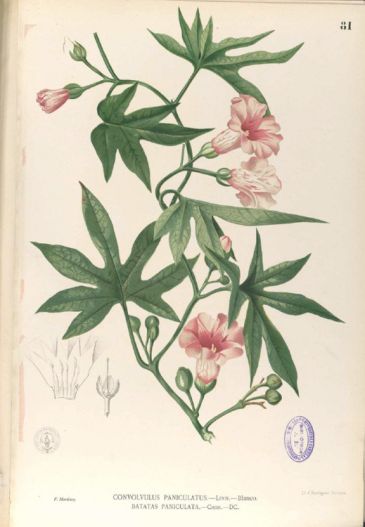
Botanical Surveying, Nation-Building, and American Empire: The Quest for a Philippine Flora in the Early Twentieth Century
October 31, 2022
3:30 pm
401 Physical Sciences
In the early decades of the twentieth century, the Smithsonian Institution, in collaboration with the U.S. National Academy of Sciences and various federal agencies, sought to oversee the preparation of a Philippine flora; that is, a taxonomical catalogue of the islands’ botanical riches. Boosters originally conceived of the project in 1903 as a means of showcasing U.S. colonial prowess and solidifying the global status of the United States as a world power. Philippine nationalism and U.S. policies of Filipinization prompted a more universalist rationale for the flora couched in the rhetoric of international science, but colonial hierarchies persisted in American conceptions of custody over Philippine botanical specimens. The U.S. quest for a Philippine flora reveals the tangled combination of competing nationalisms, civilizational discourses, and colonial anxieties that shaped the American empire and its entry into the global history of imperial botany.
Additional Information
Program
Southeast Asia Program
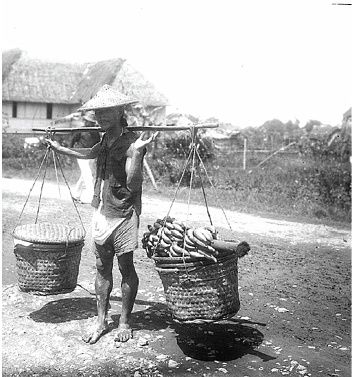
Across the Archives: Colonial Photography on the Philippines
November 19, 2022
7:00 pm
Join us for an online discussion on Cornell University's Gerow D. Brill Collection and Michigan University's Dean C. Worcester Photographic Collection, hosted by the Committee on Research Materials on Southeast Asia (CORMOSEA), the Southeast Asia Program (SEAP), and the Southeast Asia Digital Library (SEADL).
Speakers:
Claire Cororaton, PhD Candidate, Cornell University
Claire Cororaton is a 6th year Ph.D. Candidate in History at Cornell University. Her dissertation, tentatively titled “Emplotments of Freedom: Agricultural Development and ‘The Philippine Question’, 1898 – 1941” examines the relationship between ideas of agricultural development and state capitalism in the Philippines. She explores how imperial and racial understandings of land and property suffuse American and Filipino discourses of “national development” through the first half of the 20th century. The Janus-faced nature of American and Philippine exceptionalist rhetoric prior to the era of decolonization —that the Philippines was a great “democratic experiment” in Southeast Asia, amidst other colonized regions—belied the development of an authoritarian postcolonial imaginary, one that remains alive in the modern Philippine Republic. Her work draws on the fields of Southeast Asian History, US Imperialism, and European Intellectual History, working at the intersection of legal history, development studies, and settler-colonial studies.
Abstract: The Gerow D. Brill Collection, housed in Cornell University Library’s Division of Rare and Manuscript Collections, includes glass plate negatives taken by Brill during the early years of the US Occupation of the Philippines. The photographs are part of a current digitization project that explores how discourses of agricultural productivity informed the American imperial project in the Philippines. Brill’s photos from his relatively short trip in the Philippines (March 1902 - December 1902) provide a unique lens into an important moment in Philippine history, when many were still reeling from war. While most scholarship on Philippine colonial photography deal with discourses of race and savagery, these photos focus on subjects that might interest an engineer or a scientist: soil science, pests, topography, agricultural implements, infrastructure, home industries, and markets. Overall, the collection reveals the intersection between science, violence, and empire underpinning the United States' supposedly "benevolent empire" in the Philippines.
Dr. Mary Dorothy Jose, Associate Professor, University of the Philippines Manila
Mary Dorothy dL. Jose is an Associate Professor at the Department of Social Sciences and Associate Dean for Academic Affairs at the College of Arts and Sciences, University of the Philippines Manila, where she also served as the Convenor of the Manila Studies Program and Coordinator of the Office of the Gender Program. She finished her BA History, MA in Asian Studies, and PhD in Philippine Studies at the University of the Philippines Diliman. Her research interests help further the feminist perspective. In January 2018, she was awarded the University Library Fellowship by the Center for Southeast Asian Studies at the University of Michigan for her research entitled “Race, Gender, and Photography: Images of Filipino Women at the 1904 St. Louis Exposition” which was also awarded 1st Prize in the 1st Virginia B. Licuanan History Writing Contest sponsored by the Ateneo de Manila University Library of Women’s Writings in 2018. The U-M research fellowship also helped her finish her dissertation entitled “Women, Photography, and History: An Analysis of the Images of Women in American Colonial Photography” where she used photographs from the 1904 St. Louis Exposition, the Dean Worcester Collection, and American travelogues from the U-M archives as primary sources.
Abstract: In the early years of American imperialism in the Philippines, photography was extensively used to document the colony. Most of these photographs were taken by Dean Worcester while serving as the Secretary of Interior in the US colonial government from 1901 to 1913. By the end of his term, he was able to take and archive more than 15,000 photographs of the Philippines and the Filipino people. While significant studies have delved into how Worcester used these photographs to promote his imperial interests, I have decided to focus on his images of Filipino women to interrogate if they were also utilized to propagate gender ideology since gender continues to be an unexplored topic in colonial photography. After all, it has been noted that of the 5,000 images of women in his collection, many were nudes from the so-called “non-Christian tribes.” In analyzing the portrayal of women in the Worcester collection, the images become commentaries on social roles, status, and civilization (or lack of it) not only in the context of race but also gender. Looking at these photographs will show how photography has been used as an instrument to create gendered images of Filipino women.
Additional Information
Program
Einaudi Center for International Studies
Southeast Asia Program
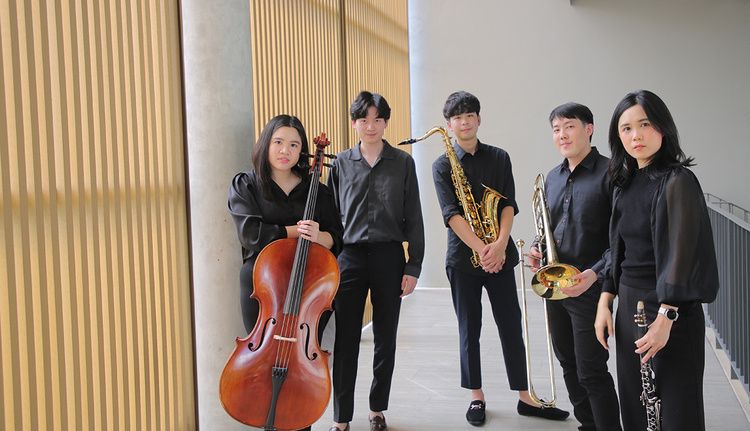
Tacet(i), "Global Sound": CU Music
November 3, 2022
8:00 pm
Barnes Hall
Tacet(i) performs “Global Sound,” a music curation of diverse composers: Daniel Sabzghabaei (Iran/US), Thanakarn Schofield (Thailand), Jia Yi Lee (Singapore), Miles Jefferson Friday (US), Travis Christopher Johns (US), Laura Cetilia (US), and John Eagle (US). Featuring Ariana Kim on violin.
Part of Extended instruments and global sounds: This series of events will be a collaboration between Cornell composers, and Tacet(i) Ensemble from Thailand, curated by Piyawat Louilarpprasert. The project offers a series of performances and workshops centered on extended instruments and global sounds concerning the idea of sonic identities, instrumental connotation in global cultures as well as to hybridize Southeast Asian musical tradition and to transgress boundaries of sounds and instruments.
Discussion: Contemporary Music from Southeast Asia
Wednesday, Nov. 2, Lincoln Hall B20, 11:25am - 12:40pm
Concert: Global Sounds and Extended Instruments
Wednesday, Nov. 2, Barnes Hall, 8:00pm - 9:30pm
Midday Music Concert: Human and Machine
Thursday, Nov. 3, Lincoln Hall B20, 12:30pm - 1:15 pm
Performance: Transcending Tradition and Collective of Resonation
Saturday, Nov. 5, Lincoln Hall B20, 8:00pm - 9:00pm
Additional Information
Program
Einaudi Center for International Studies
Southeast Asia Program
Thinking Historically & Teaching Globally
November 8, 2022
2:00 pm
Historical thinking is one of the most critical skills a college student can acquire. Teaching globally is a vital approach to understanding our contemporary world.
How do we combine the resources available to us from archives, libraries, and online collections to inform our understanding of the past and the present? In this workshop we collaborate across the expertise of librarians and historians to further conversations about teaching, history, and library materials.
Are you a post-secondary educator seeking to build connections across the State of New York? Are you faculty looking for more primary source materials? Are you interested in learning more about how to access materials from libraries at a distance? Are you a graduate student in need of resources and source materials as you construct current and future syllabi? If you have answered "yes" to any of these questions, then please do join us!
This online workshop is sponsored by the Mario Einaudi Center for International Studies, with funding support from the U.S. Department of Education Title VI NRC Program.
Speakers:
Emily Zinger, Southeast Asia Digital Librarian, Cornell University
Dr. Joshua Kueh, Reference Librarian, Asian Division, Library of Congress
Dr. Michitake Aso, Associate Professor, Department of History, SUNY-Albany
Moderator: Dr. William Noseworthy
Additional Information
Program
Einaudi Center for International Studies
Southeast Asia Program
Latin American and Caribbean Studies
Institute for African Development
South Asia Program
Global Grand Challenges Symposium: Frontiers and the Future

November 17, 2022
8:00 am
How will we meet the most pressing demands of our time?
Join us for a two-day symposium that brings together the Cornell community and international partners to discuss the most urgent challenges around the world and how we can work together to address them.
Building on the first Global Grand Challenge, Migrations, symposium participants will help identify the next university-wide research, teaching, and engagement initiative to harness Cornell's global expertise.
The symposium, hosted by Global Cornell, will focus on five interdisciplinary themes, with panelists bringing their research and perspectives to bear:
Knowledge | Water | Health | Space | International Collaboration
Register today!
If you can't attend in person, please join us virtually:
Day 1: Wednesday, Nov. 16Day 2: Thursday, Nov. 17
Wednesday, November 16
Welcome: President Martha Pollack
Panel 1: Knowledge: What Counts, for Whom, and to What Ends?
4:30–6:00 ET, Klarman Hall, Rhodes-Rawlings Auditorium
A panel of Cornell faculty and Global Hubs partners discuss innovations in higher education, social media, and legal frameworks; new forms of knowledge production and inequalities in access; and security, privacy, disinformation, and the role of knowledge in democracies.
Read about the panelists.
Remarks, Provost Michael Kotlikoff
Reception, 6:00 ET, Klarman Hall Atrium
Thursday, November 17
8:00–5:00 ET, Clark Hall, room 700 (7th floor)
Breakfast, 8:00 ET
Panel 2: Water: Worldwide Challenges and Approaches
9:00–10:30 ET
Faculty from Cornell and partner universities explore the most critical challenges related to changing global water conditions, including access to clean drinking water; water governance, norms, and customs; trade-offs between drinking water, irrigation, and hydropower; rising sea levels and water-dependent communities; and new solutions for wastewater, ocean plastics, and pollution.
Read about the panelists.
Panel 3: Health: An Integrated Global Perspective
11:00–12:30 ET
Faculty from Cornell and partner universities explore vital issues related to health, including equity, nutrition, mental health and well-being, disease, communication, new technologies, sociocultural norms, One Health, sustainable agriculture and ecosystems, elder care, and the business of medicine/health.
Read about the panelists.
Lunch, 12:30 ET
Panel 4: Space: In a Galaxy Not So Far Away
1:30–3:00 ET
Faculty from Cornell and partner universities explore urgent topics related to our global engagements with outer space, including intergovernmental collaboration and defining a new space policy; private space travel and exploration; historical lessons for colonization; new technologies, materials, and visualizations; intelligent life; resources and extraglobal markets; and access and inequalities.
Read about the panelists.
Panel 5: International Collaboration:< /b>Taking Action for Our Global Future
3:30–5:00 ET
In this final session, panelists discuss opportunities and challenges for creating truly collaborative and mutually beneficial partnerships in an unequal world. Faculty from partner universities share ideas for collaborating on the four themes introduced earlier in the symposium, and participants explore the tension between respect for local cultures and universalisms implicated in scientific inquiry.
Read about the panelists.
Register in-person or virtually for one or all sessions!
Additional Information
Program
Einaudi Center for International Studies
Reppy Institute for Peace and Conflict Studies
East Asia Program
Southeast Asia Program
Latin American and Caribbean Studies
Institute for African Development
Institute for European Studies
South Asia Program
Intern Laura Chang Featured in Inya Institute Newsletter

View her research here!
Zin Wai Yan, one of our Yangon-based interns, and Laura Chang, a Cornell University student, investigate the challenges
experienced by Myanmar students first in Myanmar when pursuing admission to U.S. community colleges and then
in the U.S. when enrolled in their programs. With few educational and job opportunities in post-coup Myanmar, a massive
number of young people in Myanmar consider studying abroad, sometimes without being fully aware of the financial, legal,
and mental health implications. This is the second part of a two-part feature.
Additional Information
Foreign Language Introduction Program Forges Ahead
As seen on the LRC podcast
The LRC podcast features Thamora Fishel, Chencong Zhu, Irfan Asgani, and Maks Tkachuk, members of the team from FLIP, Cornell’s Foreign Language Introduction Program. They share the background of the organization and their plans for community outreach.
Additional Information
Golay Lecture: Transnational Families and the Temporary Migration Regime in Southeast Asia

Brenda Yeoh (National University of Singapore) gives the 12th Frank H. Golay Memorial Lecture
Mark your calendars!
Tuesday, November 15, 2022 at 4:30pm to 6:00pm
Physical Sciences Building, 120 (245 East Avenue)
Light reception to immediately follow in PSB West Pavilion.
The prevailing neoliberal labour migration regime in Asia is underpinned by principles of enforced transience: the overwhelming majority of migrants—particularly those seeking low skilled, low-waged work—are admitted into host nation-states on the basis of short-term, time-bound contracts, with little or no possibility of family reunification or permanent settlement at the destination. As families go transnational, ‘family times’ become inextricably intertwined with the ‘times of migration’ (Cwerner, 2001). In this context, for many migrant-sending families in Southeast Asian source countries such as Indonesia and the Philippines, parental migration as a strategy for migrating out of poverty or for socio-economic advancement requires the left-behind family to resiliently absorb the uncertainties of parental leaving and returning. Based on longitudinal research on Indonesian and Filipino rural households in migrant-sending villages, the presentation investigates the vital links between the time construct of seriality in migration on the one hand, and the temporal structure of family-based social reproduction on the other. By drawing attention to the co-existence of and contradictions between multiple temporalities in the lives of migrants and their families, a critical temporalities framework yields new insights for understanding the sustainability of transnational families in the liminal times of migration.
Brenda S.A. Yeoh FBA is Raffles Professor of Social Sciences at the National University of Singapore (NUS) and Research Leader of the Asian Migration Cluster at the Asia Research Institute, NUS. Professor Yeoh made important contributions to the field of migration and transnationalism studies and was awarded the Vautrin Lud Prize for outstanding achievements in Geography in 2021. Her work is distinctly Asia-focused while also significant for theory-building more generally. She is widely recognised for her research leadership in three areas: migration-led diversification, cosmopolitanism and spatial politics; human aspiration, care migration and social reproduction among migrant households in Southeast Asia; migration infrastructures and transnational mobility of migrant workers at various skill levels. She has published widely on these topics and her recent books include Handbook of Asian Migrations (Routledge, 2018 with Gracia Liu-Farrer); Student Mobilities and International Education in Asia: Emotional Geographies of Knowledge Spaces (Palgrave Macmillan, 2019 with R.K. Sidhu and K.C. Ho) and Handbook of Transnationalism (Edward Elgar, 2022 with F.L. Collins).