
Southeast Asia Program
Mobility and Circulation across Southeast Asia
Spring GETSEA Mini-Course, apply by Feb 13
The consortium for Graduate Education and Training in Southeast Asian Studies (GETSEA) is offering one free and virtual mini-course this spring, open to all graduate students studying Southeast Asia!
Additional Information
Conference on Myanmar's Borderlands

Call for Papers
Abstracts due April 15, conference July 24-26
2026 International Interdisciplinary Conference on Myanmar's Borderlands
Additional Information
Thai Conversation Hour
April 15, 2026
6:00 pm
Join us on Zoom to practice your Thai skills and meet new people. Conversation Hours provide an opportunity to use the target language in an informal, low-pressure atmosphere. Have fun practicing a language you are learning! Gain confidence through experience! Just using your new language skills helps you learn more than you might think. Conversation Hours are open to any learner, including the public.
Join Thai Conversation Hour on Zoom!
Additional Information
Program
Southeast Asia Program
Funding for Faculty
Apply now for Einaudi research support!
Proposals are due March 16 for seed grants and new targeted support for early-career faculty with research in international studies.
Additional Information
World in Focus: Global Responses to Trump

January 27, 2026
4:00 pm
Uris Hall, G08
Join Einaudi Center experts for World in Focus Talks on global events in the news and on your mind. Our faculty's research and policy insights put the world in focus.
This year we’re hosting informal campus discussions on many Tuesday afternoons. This week’s topic:
The United States helped create the United Nations to protect the sovereignty of independent countries. Now the Trump administration is setting the tone for superpowers with imperial ambitions by waging economic war against democratic allies, violating long-standing treaties, and holding out the possibility of using military force.
What do these unprecedented actions mean for the rest of the world? How are states and peoples in different regions responding? And what may happen if tensions continue to escalate?
***
Featured Faculty
Agnieszka Nimark (PACS) | Affiliated ScholarMagnus Fiskesjö (EAP, PACS, SEAP) | AnthropologyAlexandra Blackman (SWANA) | GovernmentSeema Golestaneh (SWANA) | Near Eastern StudiesIrina Troconis (LACS) | Romance StudiesKenneth Roberts (LACS) | GovernmentPeter Katzenstein (IES, PACS) | Government
***
Conversations Matter at Einaudi
This conversation is hosted by the Mario Einaudi Center for International Studies and its regional and thematic programs. Find out what's in store for students at Einaudi!
Additional Information
Program
Einaudi Center for International Studies
Reppy Institute for Peace and Conflict Studies
East Asia Program
Southeast Asia Program
Latin American and Caribbean Studies
Institute for African Development
Institute for European Studies
South Asia Program
Migrations Program
Southwest Asia and North Africa Program
Global Challenges to Democracy: Comparative Perspectives on Backsliding, Autocracy, and Resilience
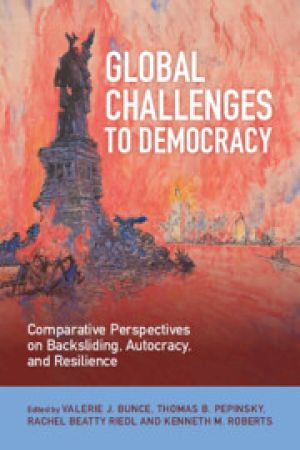
By Our Faculty
Following democracy's global advance in the late 20th century, recent patterns of democratic erosion or 'backsliding' have generated extensive scholarly debate. Backsliding towards autocracy is often the work of elected leaders operating within democratic institutions, challenging conventional thinking about the logic of democratic consolidation, the enforcement of institutional checks and balances, and the development and reproduction of democratic norms.
Book
35.99
Additional Information
Program
Institute for African Development
Institute for European Studies
Type
- Book
Publication Details
Publication Year: 2025
ISBN: 9781009602570
Geonarratives of Hope and Resistance
April 9, 2026
12:15 pm
Rockefeller Hall, 374
Gatty Lecture Series
Anti-authoritarian Counter-Cartographies of Solidarity with Human Rights Defenders (HRDs) in the Philippines
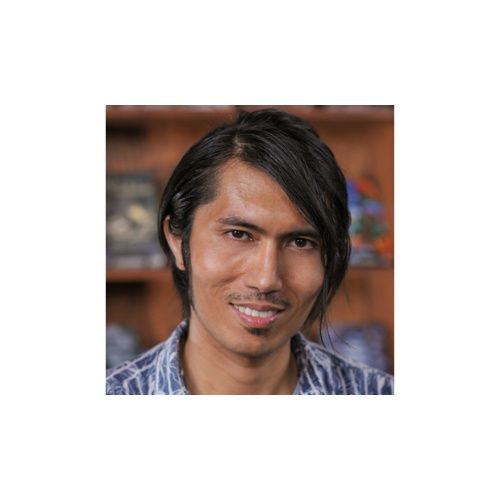
Join us for a talk by Arnisson Ortega, Associate Professor from the Department of Geography and the Environment at Syracuse University.
This Gatty Lecture will take place at Rockefeller 374, Asian Studies Lounge. Lunch will be served. For questions, contact seapgatty@cornell.edu.
Abstract
Human Rights Defenders (HRDs) in the Philippines have long endured systemic violence, making the country one of the most dangerous places for HRDs. In solidarity with HRDs in Negros Island—a key hotspot targeted by the state —me and my colleagues in the Philippines initiated a participatory mapping project grounded in HRD geonarratives: spatially anchored accounts of resistance, trauma, and survival. Working with activists, artists, and grassroots organizations, we launched a series of storytelling and sketchmapping activities, and co-created artmaps to visualize sites of struggle, care, and state repression. These maps served as tools for social media advocacy, political mobilization, and cultivating care practices. What have emerged from these initiatives are counter-cartographies of resistance and solidarity that expose the spatial logics of authoritarian violence. Through geonarrative storytelling and sketchmapping, we expose the spatial configurations of authoritarian violence that HRDs face. We traced the necropolitical spaces where HRDs confront psychological and physical violence—from surveillance and red-tagging to arbitrary arrests and extrajudicial killings—within everyday spaces such as homes, workplaces, hospitals, commercial centers, and rural farmlands. These geonarratives reveal how state and non-state actors systematically constrict safe spaces for HRDs, embedding violence into the micro-geographies of everyday life. Despite these conditions, HRDs and their communities have cultivated practices of care, resilience, and collective survival to sustain their advocacy work. The maps we generated amplified the plight of HRDs, supported public-facing campaigns, and fostered broader awareness of HRD vulnerability and resistance. By centering their geonarratives, we advance a justice-oriented geographic praxis that foregrounds solidarity and creative collaboration.
About the Speaker
Arnisson Ortega is a human geographer committed to community-engaged work that advances social justice. Arnisson’s research spans the spatial politics of urbanization, transnational migration, and uneven geographies of accumulation and dispossession. Much of Arnisson’s work focuses on the Philippines, Arnisson’s homeland, where Arnisson uses decolonial, community-engaged, and mixed-method approaches—particularly mapping and storytelling—as tools for resistance and world-making. Arnisson’s current projects examine decolonial cartographies, migrant-driven urban change in post-industrial cities, and the spatial politics of urban development in former U.S. military estates in the Philippines.
Additional Information
Program
Einaudi Center for International Studies
Southeast Asia Program
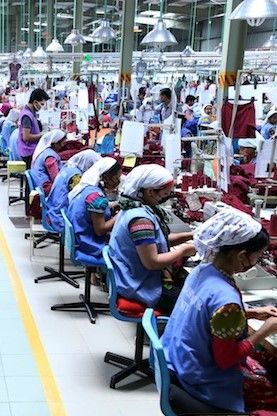
Justice for Jeyasre: How a Brutal Murder Led to a Better Deal for Garment Workers in India
Sarosh Kuruvilla, SEAP/SAP
Sarosh Kuruvilla, a Cornell University professor, provides an analysis of the Dindigul labor agreement and sourcing challenges in the Indian garment industry.
Additional Information
Unsettled Futures: Speculation, Urban Life, and Political Uncertainty in Contemporary Myanmar
March 26, 2026
12:15 pm
Kahin Center
Gatty Lecture Series
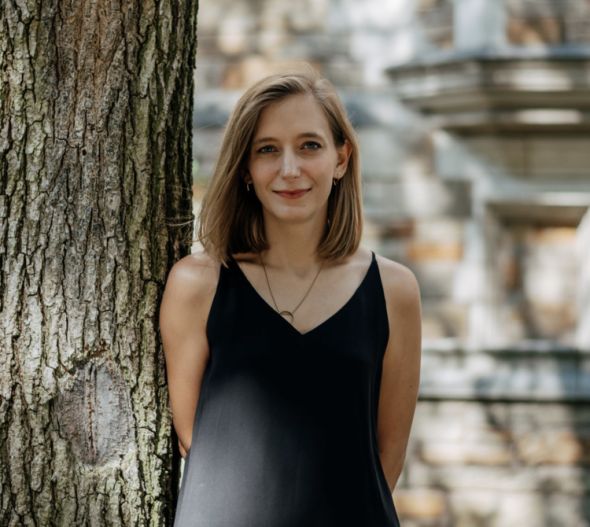
Join us for a talk by Courtney Wittekind, Assistant Professor of Anthropology at Purdue University.
This Gatty Lecture will take place at The Kahin Center, 640 Stewart Ave. Lunch will be served. For questions, contact seapgatty@cornell.edu.
Abstract
Why has speculation become a dominant way of engaging with the future in moments of profound political uncertainty? This talk takes up this question through Myanmar’s proposed 20,000-acre “New Yangon City,” launched during the country’s democratic transition of 2011-2021. Drawing on ethnographic research in peri-urban Yangon, I show how farmers living in the shadow of this urban project turned to speculation when democratic and developmental promises repeatedly faltered. I argue that this vernacular speculation was less about profit than about acting on uncertainty amid compounding crises. Over time, speculative practices reshaped political participation and shifted collective demands toward individualized wagers structured by unequal access to land, capital, and time. Extending my analysis into Myanmar’s post-coup moment, I conclude by highlighting speculation as a defining feature of political life across Southeast Asia today.
About the Speaker
Courtney Wittekind is an Assistant Professor of Anthropology at Purdue University, where she researches uneven urban development, speculative investment, and digital technologies. She received her Ph.D. in Social Anthropology, with a secondary field in Critical Media Practice, from Harvard University in 2022. From 2022 to 2024, she was a Postdoctoral Associate at Yale University with the Program in Agrarian Studies and the Council on Southeast Asia Studies. Her publications include articles in leading journals such as Cultural Anthropology and Antipode, as well as her forthcoming book, City of Speculation: Unsettled Futures in UrbanMyanmar (Stanford University Press).
Additional Information
Program
Einaudi Center for International Studies
Southeast Asia Program