
Southeast Asia Program
Joshua Umansky-Castro
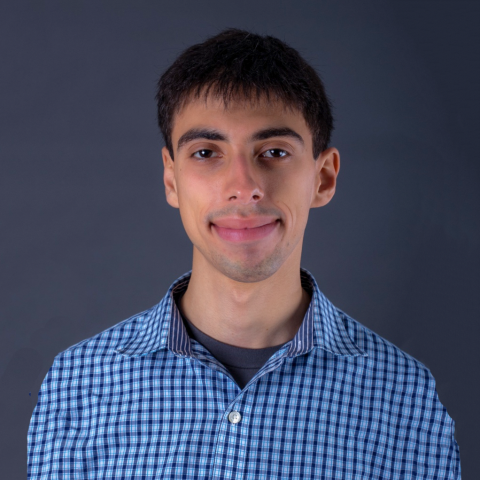
Graduate Student
Degree Pursued: PhD
Anticipated Degree Year: 2025-26
Committee Chair/Advisor: Mason Peck
Discipline: Aerospace Engineering
Primary Language: English, Spanish
Additional Information
Anke Wang

Graduate Student
Degree Pursued: PhD
Anticipated Degree Year: 2026
Committee Chair/Advisor: Mara Du
Discipline: History
Primary Language: Chinese, Vietnamese
Research Countries: Vietnam, Thailand
Additional Information
Song Han

Graduate Student
Degree Pursued: PhD
Anticipated Degree Year: Spring 2026
Committee Chair/Advisor: N/A
Discipline: Comparative Literature
Primary Language: Cantonese, Mandarin, Classical Chinese
Research Countries: Malaysia, Thailand, Singapore
Research Interests: Maritime capitalism and Sinophone/Anglophone literature in Asia
Additional Information
Evelyn Fettes

Graduate Student
Degree Pursued: PhD
Anticipated Degree Year: 2025-26
Committee Chair/Advisor: Sarah Murray
Discipline: Linguistics
Primary Language: Standard Indonesian
Research Countries: Indonesia
Research Interests: Morphology, lexical semantics, historical linguistics, reduplication in Malayic dialects
Additional Information
"Why Do Buddhist Caves Feature Meditation Images?"
May 3, 2022
2:00 pm
Please join us for a talk by Eugene Wang (Harvard).
A Buddhist cave decorated with scenes of meditation at once makes perfect sense and no sense at all. It makes sense in view of the centrality of meditation in Buddhist imagination and practice. It makes no sense in that nowhere in Buddhist discourse do we ever find the instruction that meditation involves looking at wall paintings about meditation. Current scholarship is also polarized into camps of either affirmer and deniers. Affirmers regard meditation as the central function of decorated caves. Deniers see them as sites of mortuary function, having nothing to do with meditation. Meditation and memorial are thus seen as mutually exclusive. It will be shown that they are actually mutually dependent. Meditation is not the function of decorated Buddhist caves, but its narrative frame; memorial is essential to such caves, only that it often takes the narrative form of meditation.
The Cornell Buddhist Studies Seminar Series is co-sponsored by the GPSA-FC, the Departments of Anthropology, Asian Studies and Philosophy, by the South Asia Program, and by the Society for the Humanities. The Department of the History of Art and Visual Studies also generously co-sponsors Prof. Wang's talk. The talk is open to all members of the Cornell community; for accessibility queries please contact buddhiststudies@cornell.edu
Additional Information
Program
East Asia Program
Southeast Asia Program
South Asia Program
SEA Digital Library Undergraduate Paper Award

Deadline extended!
The deadline has been extended for the Southeast Asia Digital Library Undergraduate Paper Award! You now have until June 24th to submit your research papers for consideration. First and second place winning papers will be published on the Southeast Asia Digital Library and first place will also receive a book package from SEAP Publications.
Need a refresher on the competition rules?
Applicants Eligibility
Applicants must be current undergraduate students at CORMOSEA affiliated institutions* at the time of submission. Applicants must agree that, should they win, their papers will be made openly accessible and published online on the Southeast Asia Digital Library
Paper Eligibility
Eligible papers must be within the field of Southeast Asian Studies and reference primary source materials. Papers may be written for a class or independent study within the past three academic years: Spring 2019 - Spring 2022. Papers must be between six to twenty pages in length, excluding references and figures.
Evaluation Criteria
Winning papers will demonstrate the student’s ability to support original research with analysis of primary source materials. Papers that reference materials held in Southeast Asia Digital Library collections will be given increased consideration.
Submission Materials
Submission packets should include a cover page containing the paper title, author name, author email, institutional affiliation, and date. Papers should be submitted as a separate PDF document listing only the title. No author information should be included in the paper itself to allow for blind evaluation.
Submission packets should be emailed to seadl@cornell.edu no later than June 24th, 2022
*CORMOSEA Affiliated Institutions: Arizona State University; Cornell University; Harvard University; Indiana University, Bloomington; Michigan State University; Northern Illinois University; Ohio University; University of California, Berkeley; University of California, Los Angeles; University of California, Riverside; University of Hawai’i at Manoa; University of Michigan; University of Washington; University of Wisconsin-Madison; Yale University
Additional Information
Program
GETSEA Summer Mini-Course
Applications closing soon!
Applications closing soon for GETSEA’s Summer 2022 Mini-Course!
GETSEA is offering one free and virtual mini-course this summer on topics in Southeast Asian studies, open to graduate students from a wide range of backgrounds. Current graduates students at a GETSEA member institution receive first priority in admission to the courses, though graduate students at any institution who research in and around Southeast Asia may apply for admission to take a mini-course.
GETSEA mini-courses do not offer course credit for students at their home institutions. However, students are encouraged to work with a faculty member at their home institution to count the course towards an independent/directed study/reading credit. Mini-courses have a workload roughly equivalent to that of a one-credit course – approximately 45 hours in total, including class time, readings, and other work.
Details about our previous mini-courses are available here, and any questions or proposals can be submitted to us at getsea@cornell.edu.
Anarchism and Southeast Asia
Taught by Wong Tian An, University of Michigan
Offered virtually from June 1 to July 6, 2022, Wednesdays, 8:00pm-10:00pm ET
Application deadline: May 1, 2022
Additional Information
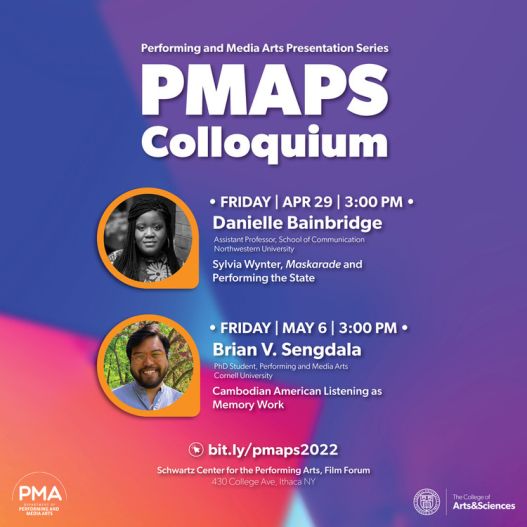
PMAPS Colloquium with Brian V. Sengdala, PhD Student, Performing and Media Arts, Cornell University
May 6, 2022
3:00 pm
Schwartz Center for Performing Arts, Film Forum
Performing and Media Arts Presentation Series
PMAPS Colloquium
Friday, May 6, 2022 3:00 P.M.
Brian V. Sengdala, PhD Student, Performing and Media Arts, Cornell University
Cambodian American Listening as Memory Work
Additional Information
Program
Southeast Asia Program
Southeast Asia Language Week Successes

Students wow at CAPSU Asia Night!
Shout out to the fabulous community of undergraduates interested in Southeast Asia!
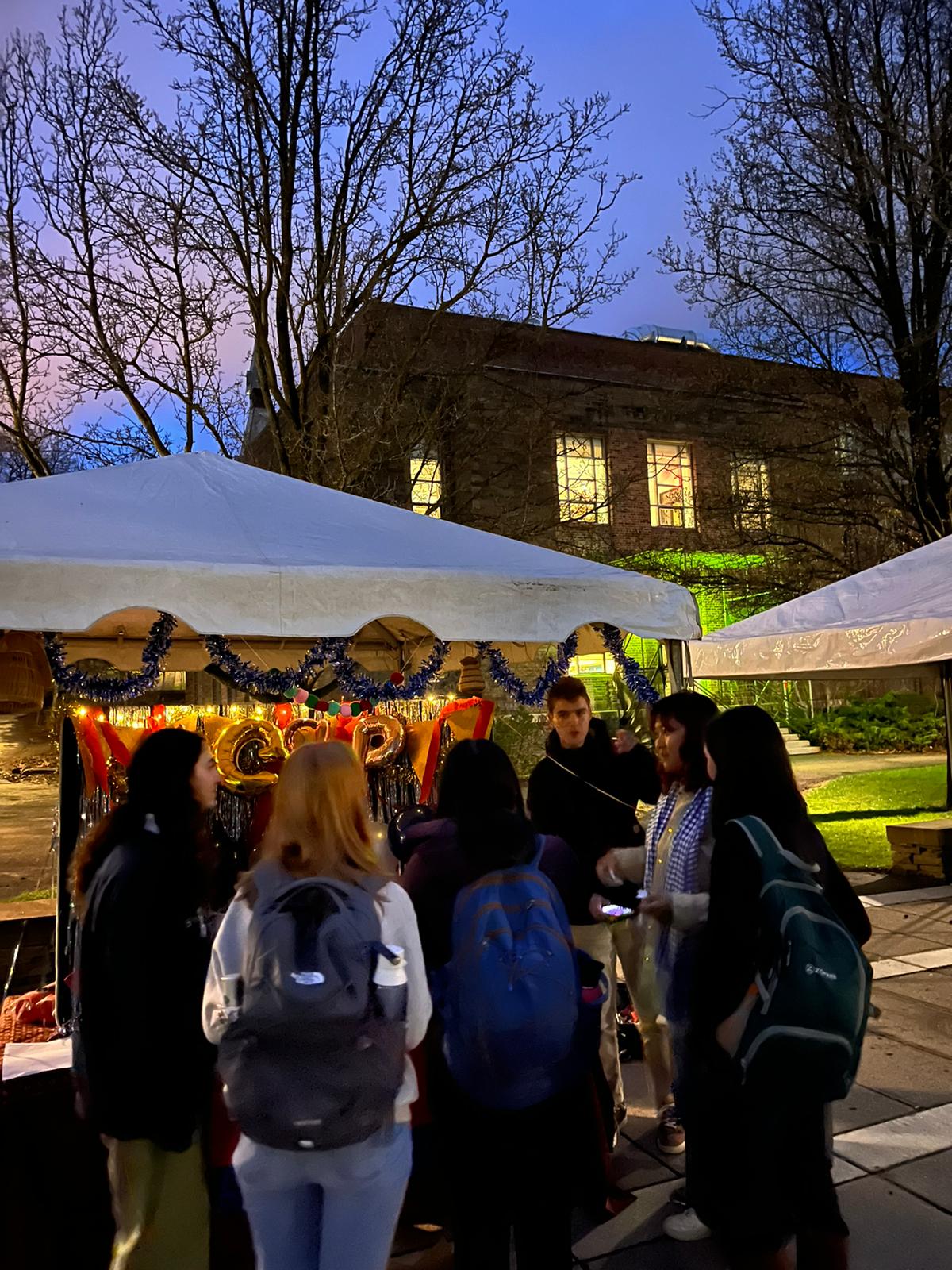
This weekend, the Cornell Myanmar Students Association (CMSA) held a Thingyan celebration at the Kahin Center. This was followed by a night of Southeast Asian American music organized by Christine Balance and Brian Sengdala.
The evening was capped off with CAPSU's annual Asia Night, with participation from SEA Club, Cornell Filipino Association, Cornell Indonesian Association, CMSA, the Cornell Vietnamese Association, and more!
Additional Information
Program
Deprovincializing the Dhamma: Internal Conversions, and the Micropolitical Management of ‘Harmony’ via Inter-Asian Buddhist Movements."

April 15, 2022
12:00 pm
Rockefeller Hall, 374
Please join us for a talk by Neena Mahadev (Yale-NUS).
The Cornell Buddhist Studies Seminar Series is co-sponsored by the GPSA-FC, the Departments of Anthropology, Asian Studies and Philosophy, by the South Asia Program, and by the Society for the Humanities. The talk is open to all members of the Cornell community; for accessibility queries please contact buddhiststudies@cornell.edu
Additional Information
Program
East Asia Program
Southeast Asia Program
South Asia Program