
Southeast Asia Program
The Revolutionary City: Urbanization and the Global Transformation of Rebellion | Einaudi Center “Author Meets Critics”
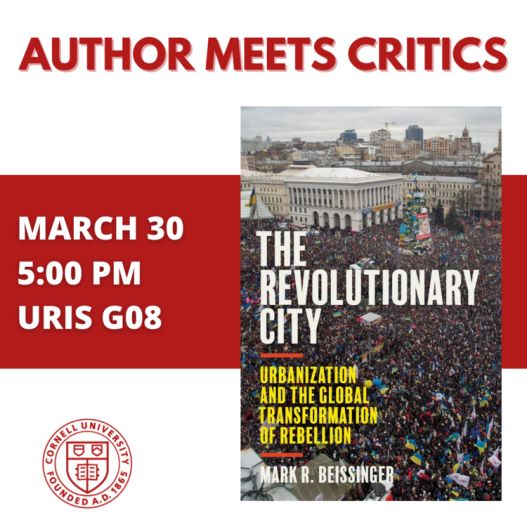
March 30, 2022
5:00 pm
Uris Hall, G08
Cities are changing sites of revolution and rebellion, contestations over forms of power and social relations. As historical and contemporary instances, revolutions present alternative views of world-making and contestations over the organization of society and relations of power. To better understand this phenomenon, the Mario Einaudi Center for International Studies has assembled a panel discussion of Professor Mark Beissinger’s book, The Revolutionary City: Urbanization and the Global Transformation of Rebellion (Princeton University Press, 2022). Join us for an exploration of how and why cities have become primary sites of revolutionary disruptions in the contemporary world.
Examining the changing character of revolution around the world, The Revolutionary City focuses on the impact that the concentration of people, power, and wealth in cities exercises on revolutionary processes and outcomes. Once predominantly an urban and armed affair, revolutions in the twentieth century migrated to the countryside, as revolutionaries searched for safety from government repression and discovered the peasantry as a revolutionary force. But at the end of the twentieth century, as urban centers grew, revolution returned to the city—accompanied by a new urban civic repertoire espousing the containment of predatory government and relying on visibility and the power of numbers rather than arms.
Using original data on revolutionary episodes since 1900, public opinion surveys, and engaging examples from around the world, Mark Beissinger explores the causes and consequences of the urbanization of revolution in the late twentieth and early twenty-first centuries. Beissinger examines the compact nature of urban revolutions, as well as their rampant information problems and heightened uncertainty. He investigates the struggle for control over public space, why revolutionary contention has grown more pacified over time, and how revolutions involving the rapid assembly of hundreds of thousands in central urban spaces lead to diverse, ad hoc coalitions that have difficulty producing substantive change.
Author of The Revolutionary City:
Mark R. Beissinger, Henry W. Putnam Professor of Politics, Princeton University
“Author Meets Critics” Expert Discussants:
Dina Bishara (Assistant Professor, School of Industrial and Labor Relations)Bryn Rosenfeld (Assistant Professor, Department of Government/A&S)Sidney Tarrow (Emeritus Maxwell Upson Professor, Department of Government/A&S; Adjunct Professor, Cornell Law School)
Moderator:
Rachel Beatty Riedl (Einaudi Center Director; Professor, Department of Government/A&S and Cornell Brooks School)
Co-Sponsors:
Institute for European Studies, Einaudi CenterSoutheast Asia Program, Einaudi CenterReppy Institute for Peace and Conflict Studies, Einaudi CenterInstitute of Politics and Global Affairs
About the Forum:
The “Author Meets Critics” forum stages scholarly conversations around the Einaudi Center’s research priority areas: Democratic Threats and Resilience, and Inequalities, Identities, and Justice.
Attendance Requirements:
In-person attendance is open to the Cornell community: Cornell ID and mask REQUIRED
Additional Information
Program
Einaudi Center for International Studies
Reppy Institute for Peace and Conflict Studies
Southeast Asia Program
Institute for European Studies
(De)Constructing Southeast Asia: 24th Cornell SEAP Graduate Student Conference
March 11, 2022
4:30 pm
Kahin Center
How do we construct, deconstruct, and maintain Southeast Asia? Who is doing this labor and why? The sinews by which we entangle Southeast Asia take many forms: from the epic to the quotidian and every shade in between and beyond; as connective strands; as resonating sounds; as adjoining bridges; as shared images; as documenting videos; as so much more. This year's Cornell Southeast Asia Program Graduate Student Conference theme, (De)Constructing Southeast Asia, thinks about the dynamic ways we come to, work with, and move from the region as a constructed space. With these considerations, (De)Constructing Southeast Asia is an inquiry which brings these strands together, tugs at them, or perhaps pulls them apart. We encourage submissions which seek to think through how Southeast Asia is formed and Southeast Asia forms geographies and ecologies.
The Graduate Student Conference will be held in a hybrid format 11–13 March, 2022 at the George McT. Kahin Center for Advanced Research on Southeast Asia, located on Cornell University’s campus in Ithaca, New York and online over Zoom. COVID restrictions will be applied as per university policy and are subject to change.
Keynote Address:
(Re)Producing Knowledge: Gamelan and Southeast Asian Music within and without Academe
Senior Lecturer, Christopher J. Miller, Department of Music
Panel 1: The Stuff of History
Nicole Yow Wei, "Melaka is Minangkabau: Oral Historical Poetics in the Hikayat Anggun Cik Tunggaland the Making of an Early Malay Regionalism"Eunike G. Setiadarma, "Feeling Strange, Feeling Home: An Annotation of Indonesian History" Indah Wahyu Puji Utami, "Conflicts and negotiations: The representation of the National Revolution in Indonesian history textbooks"Panel 2: Southeast Asian America
Bradley DeMatteo & Sokunthary Svay, "An American Samleing: Music and Multivocality in the Poetry of Sokunthary Svay"Cai Barias, "Transnational Asian America: Vietnamese International Student Ac-tivism and the Asian American Movement (1968-1975)"Sokunthary Svay, "Playing Kaa (កា): Memory Work, Music, and Song-Speaking"Panel 3: Contesting Power
Chanatip Tatiyakaroonwong, " 'Surveillance-Disinformation’ Assemblage and The Politics of Tech-Driven Counterinsurgency in Thailand's Southern Border Conflict"Matthew Venker, "Legal Engagements: Buddhist Law and the Construction of Chinese-Burmese Families in Colonial Burma"Chao Ren, "Yankees on the Irrawaddy: Race, Migration, and Plural Society in a Burmese Oilfield, 1921-27"Panel 4: Politics and Identity
Kelvin Ng, "Itineraries of Self-Respect: Urban Sociality and Tamil Reform in Interwar Malaya, 1929–1940"Jonalyn C. Paz, "Colonial Beasts and Where to Find Them: Constructs of Sex Tourism in Olongapo, Zambales Philippines"Chu May Paing, "Gali-hto-thaw Images: Dangerous Laughter as Viral Spread in Contemporary Myanmar"Film Screening
Grace Simbulan, "A is for Agustin"Panel 5: Futures of Study
Bunkueanun “Francis” Paothong, "Despot on the Spotlight: Analyzing Thailand’s Actions Against its Pro-democracy Demonstrators"Dexter Lin, "Catholic Identification as a Mode of Protection for Asian Indios across Time and Space in the Early Modern Spanish Empire"Minh-Tiến Nguyễn, "“Đây là Viet Rap?”: Contesting Americanization and internal colonialism in Vietnamese rap"Panel 6: Colonial Makes
Harry Burke, "Emiria Sunassa: Archipelagic Painter"Linh Mueller, "From “Civilizing Mission” to “Heroic Railway”: Railroad Colonialism and Infrastructural Meaning-Making in Vietnam"Jefferson R. Mendez, "Deconstructing the Colony: Filipinization of Urban Spaces and Manila’s Role in the 19th Century Global History"Panel 7: Embodiment
Andrew Hollister, "Movement and the Body: Exploring Cambodian Young Adult Experience in Kavich Neang’s Short Films"Amira Noeuv, "Girl with the Sak Yon Tattoo"Nam Nguyen, "Cannibalism, Madness, (Tw)incest, and Death: Mobilizing theVietnamese Diasporic Body in Linda Lê’s Works"Anyone seeking accommodations of any kind, including COVID safety procedures, should reach out to us at seapgatty@cornell.edu.
A pdf conference packet is available here, with more information on speakers and panels and Zoom links to attend virtually. This information is also available on the conference website.
Additional Information
Program
Einaudi Center for International Studies
Southeast Asia Program
The Graduate Student Conference Approaches!
March 11-13
Keep an eye on our website for the latest updates on the graduate conference!
Additional Information
Genealogies of Anti-Asian/Asia Violences Symposium
March 25, 2022
9:00 am
220 Eggers Hall, Syracuse University
The Cornell-Syracuse South Asia Consortium presents a symposium interrogating the histories and trajectories of anti-Asian violences.
The recent surge of racially motivated attacks on Asians in the United States brought renewed attention to the issue of anti-Asian violence. It is necessary to situate this rising tide of violence in the broader histories that have produced it. By taking up “Asia” as a fraught geopolitical category that is formed through imperialist projects, this symposium attends to the underlying logics of violence that are crucial to rendering these histories legible. Building connections that are enabled by transnational, relational, and critical lenses not only will deepen insights into the discourse of anti-Asian violence, but also will allow a meaningful consideration of the implications of this moment for solidarity and movement- building. This symposium will convene a cohort of scholars, students, and activists whose work can collectively help trace the genealogies and geographies of anti-Asian violence.
The South Asia Program is coordinating efforts for current Cornell students, faculty and staff to travel to and from Syracuse for this event on Friday March 25. Please fill out this form by March 18 if you are interested in a ride (or are able to offer others a ride) to and from Syracuse for the symposium. Space is limited.
220 Eggers Hall (Strasser Legacy Room), Syracuse University
Roundtable: Queering Solidarities: Race, Caste, and Gender
Chris Eng (Associate Professor, Department of English, University of Washington in St. Louis)
Sangeeta Kamat (Professor, Comparative and International Education, University of Massachusetts, Amherst)
William Mosley (Assistant Professor, Program for Interdisciplinary Humanities, Wake Forest University)
Esther K. (Red Canary Song Collective)
Discussant: Viranjini Munasinghe (Associate Professor, Department of Anthropology, Cornell University)
Panel: Cripping Violence, Indigeneity and Pedagogy: Global Perspectives
Juliann Anesi (Assistant Professor, Gender Studies, University of California, Los Angeles)
Deepika Meena (Research Scholar, IIT Gandhinagar)
Edward Nadurata (Graduate Student, Department of Global and International Studies, UC Irvine)
Discussant: Michael Gill (Associate Professor, Cultural Foundations of Education, Syracuse University)
Panel: Transnational Asia: Feminist & Decolonial Critiques
Juliana Hu Pegues (Associate Professor, Literatures in English, Cornell)
Danika Medak-Saltzman (Assistant Professor, Women's and Gender Studies, Syracuse University)
Deepti Misri (Associate Professor, Women and Gender Studies, University of Colorado, Boulder)
Discussant: Mona Bhan (Associate Professor, Anthropology and Ford-Maxwell Professor of South Asian Studies, Syracuse University)
Closing Keynote
Iyko Day, Mount Holyoke College
“Nuclear Antipolitics and the Queer Art of Logistical Failure”
CO-SPONSORED BY:
At Cornell University: South Asia Program, Mario Einaudi Center for International Studies, East Asia Program, Southeast Asia Program, and Asian American Studies Program
At Syracuse University: Graduate School, Humanities Center, Hendricks Chapel, Department of Cultural Foundations of Education, Department of English, Department of Religion, Department of Women’s and Gender Studies, East Asia Program, Asian/Asian American Studies Program, Disability Studies; Disability Cultural Center, Intergroup Dialogue, and Democratizing Knowledge Collective
With funding from the Department of Education Title VI Program.
FACULTY CO-ORGANIZERS:
Susan Thomas, Cultural Foundations of Education, Syracuse University
Antonio Tiongson, Department of English, Syracuse University
Additional Information
Program
Einaudi Center for International Studies
East Asia Program
Southeast Asia Program
South Asia Program
The Critical Language Scholarship (CLS) Program

Details
The Critical Language Scholarship (CLS) Program is a program of the U.S. Department of State that enables American students enrolled at U.S. colleges and universities to intensively learn a language while experiencing cultural immersion. The program lasts from 8 to 10 weeks and includes intensive language instruction of one of 15 critical languages and cultural enrichment experiences aimed at promoting rapid language study. Participants are expected to continue learning a new language after the program finishes and apply newly gained language skills in their professional careers.
Eligibility
Must be a U.S. citizen or national and if undergraduate, complete at least one full year of study.
Additional Information
The Made-Up State
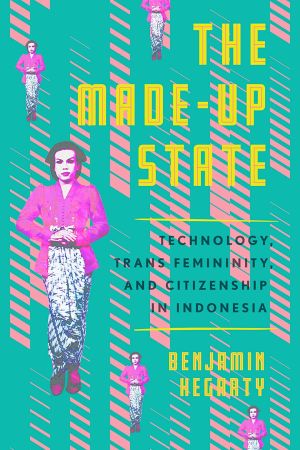
In The Made-Up State, Benjamin Hegarty contends that warias, one of Indonesia's trans feminine populations, have cultivated a distinctive way of captivating the affective, material, and spatial experiences of belonging to a modern public sphere. Combining historical and ethnographic research, Hegarty traces the participation of warias in visual and bodily technologies, ranging from psychiatry and medical transsexuality, to photography and feminine beauty.
Book
24.94
Additional Information
Program
Type
- Book
Publication Details
Publication Year: 2022
ISBN: 9781501766657
A History of Plague in Java, 1911–1942

In A History of Plague in Java, 1911–1942, Maurits Meerwijk demonstrates how the official response to the 1911 outbreak of plague in Malang led to one of the most invasive health interventions in Dutch colonial Indonesia. Eager to combat disease, Dutch physicians and officials integrated the traditional Javanese house into the "rat-flea-man" theory of transmission. Hollow bamboo frames and thatch roofs offered hiding spaces for rats, suggesting a material link between rat plague and human plague.
Book
31.94
Additional Information
Program
Type
- Book
Publication Details
Publication Year: 2022
ISBN: 9781501766831
Sounding Out the State of Indonesian Music

By Our Faculty
Sounding Out the State of Indonesian Music showcases the breadth and complexity of music in and of Indonesia. By bringing together chapters on the merging of Batak musical preferences and popular music aesthetics; the vernacular cosmopolitanism of a Balinese rock band; the burgeoning underground noise scene; the growing interest in kroncong in the United States; and what is included and excluded on Indonesian media, editors Andrew McGraw and Christopher J. Miller expand the scope of Indonesian music studies.
Book
37.94
Additional Information
Program
Type
- Book
Publication Details
Publication Year: 2022
ISBN: 9781501765223
Winning by Process

Winning by Process asks why the peace process stalled in the decade from 2011 to 2021 despite a liberalizing regime, a national ceasefire agreement, and a multilateral peace dialogue between the state and ethnic minorities.
Book
29.95
Additional Information
Program
Type
- Book
Publication Details
Publication Year: 2022
ISBN: 9781501764684
Peacebuilding, Climate Change, and Migration: Expanding the Lens
March 24, 2022
11:25 am
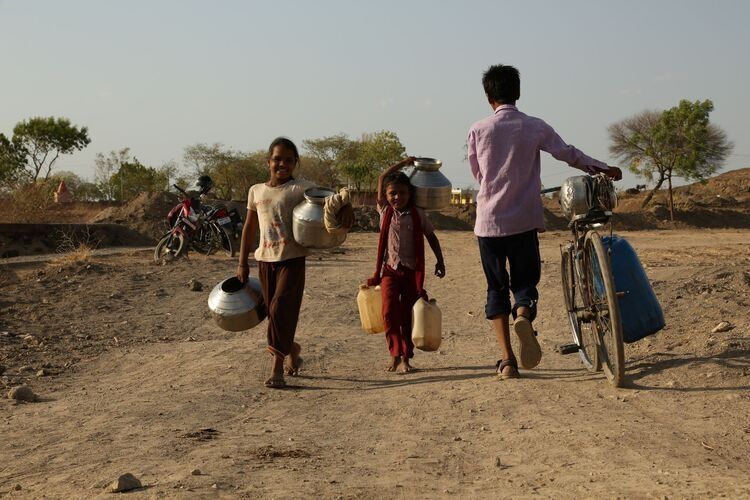
This is the second day of a two-day virtual workshop on peacebuilding, climate change, and migration. The first day of the workshop is March 22, 2022; participants are welcome to attend for just one or both days.
On this second day, we will examine understudied regions which are at substantial risk of climate change impacts, including Latin America, Southeast Asia, and South Asia. What resources, methods, and approaches can help us better understand the relationship between peacebuilding, climate change, and migration in these understudied regions? How can we achieve environmental justice in these areas?
The first day of the workshop is March 22, 2022.
WORKSHOP AGENDA
Introductory reflection
Karim-Aly Kassam
International Professor of Environmental and Indigenous Studies, Department of Natural Resources and the Environment & the American Indian and Indigenous Studies Program, College of Agriculture and Life Sciences, Cornell University
Dr. George Wilkes
Director, Religion and Ethics in the Making of War and Peace Project
Research Fellow, School of Divinity, University of Edinburgh
Presenters
Alpa Shah
Professor, Department of Anthropology, The London School of Economics and Political Science
Jonathan Padwe
Associate Professor and Undergraduate Chair, Department of Anthropology, University of Hawaiʻi at Mānoa.
Fábio Zuker
Journalist, Anthropologist, and Amazon Rainforest Journalism Fund Grantee
This workshop is being organized by Cornell University’s Reppy Institute for Peace and Conflict Studies, with support from the Migrations Initiative, and co-sponsorship from the Institute for African Development, the Latin American and Caribbean Studies Program, the South Asia Program, the Southeast Asia Program, and the College of Agriculture and Life Sciences.
Additional Information
Program
Einaudi Center for International Studies
Reppy Institute for Peace and Conflict Studies
Southeast Asia Program
Latin American and Caribbean Studies
Institute for African Development
South Asia Program