
Southeast Asia Program
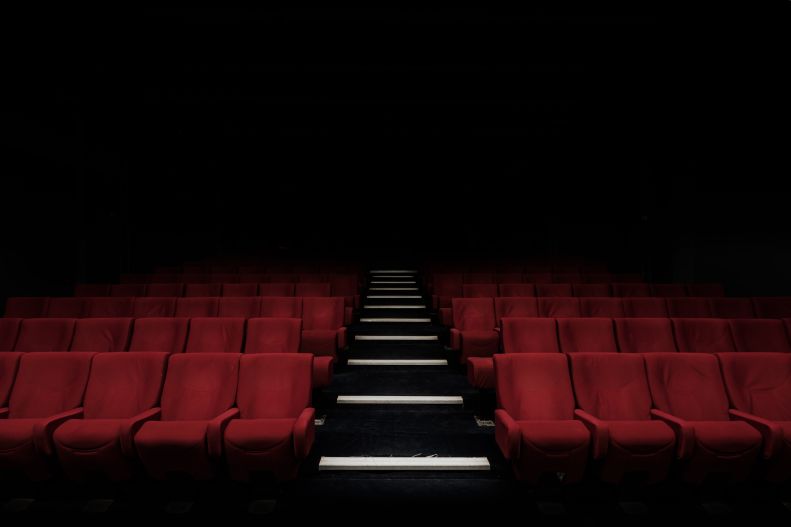
Movie Theaters Show Quiet Resistance to Thai Monarchy Is Growing
Tamara Loos, SEAP
Professor Tamara Loos, SEAP Core Faculty, is quoted here in a Bloomberg article.
Additional Information
LRC's Podcast: Cornell's Southeast Asia Program

Tom Pepinsky, SEAP
Tom Pepinsky of the Southeast Asia Program is featured on a recent episode of the Language Resource's Center Podcast.
Additional Information
Reflecting on a Challenging Year of Virtual Language Instruction

by SEAP's Language Instructors
As featured in the Fall 2021 Bulletin, SEAP's Language Instructors reflect on a challenging year of virtual language instruction by responding to the following questions: How is it to teach a language virtually? Did you try anything new? What was challenging? What did you learn?
From Thúy Tranviet, Vietnamese language instructor
Teaching online had its challenges as well as its opportunities. Lesson plans had to be organized differently to allow students to practice in the breakout rooms instead of doing pair work in class. Homework collecting and grading was also a new learning curve. I would collect homework once a week instead of every day. While I wasn't able to offer feedback right away, this also gave the students the opportunity to have more time to do the homework. Grading or correcting a foreign language on Canvas is not as efficient as doing it the old-fashioned way with a red pen.
However, online teaching also had its pluses. Most students tended to be on time because they didn't have to commute, and they didn't have clubs to attend to. While online, they seemed to be more attentive and even more engaged. Once they got the hang of doing presentations, they seemed to do them better, perhaps because they were presenting from a familiar environment such as their bedroom. In reflecting on this past year of teaching virtually, I believe a foreign language is best learned and taught in person. There is no technology that can replace human interactions when it comes to learning a foreign language.
From Yu Yu Khaing, Burmese language instructor
This year (Spring 2021) I added new materials for all Burmese levels related to the February coup and the current political situation in Myanmar. New materials included slogans and cartoons for the beginner students as well as government letters, newspaper articles, and interviews for intermediate and advanced students. All students were very interested in this topic, and it became an intense experience, both for them and for me, as they were highly motivated to acquire the necessary vocabulary and understand new ways of using the language in order to follow the dramatic and shifting situation.
It can be challenging for students to stay engaged when all classes are on Zoom, but the wealth of new online materials presented an opportunity to make the instruction highly relevant and up-to-date. The most challenging part was looking for materials related to the coup in order to find appropriate texts for each level. It was also important to use factual stories and avoid misinformation. To achieve this, I found tips through trusted sources on Facebook and had help from friends who are working for the VOA and BBC news agencies.
From Maria Theresa C. Savella, Tagalog language instructor
Many articles have been written about foreign language teaching during the COVID-19 pandemic, which was a very difficult year. Pedagogically, these include numerous challenges faced by language instructors with the switch to online platforms such as the need to adapt teaching materials within a very short turnaround time. This online adaptation involved two major components for me personally: first, the conversion of Filipino teaching materials for five classes each semester to PowerPoint/multi-media/fillable pdf files, ever mindful of preserving their interactive nature, as needed; and second, developing an effective web-based grading/assessment of students’ work on a daily basis.
Negotiating these challenges and making sure the students were always engaged in the synchronous Zoom classes day in and day out required so much more work and much longer preparation time. There have also been unsettling challenges raised by language faculty like possible violations of academic integrity with digital assessments. These still need to be addressed at some point in the near future. However, gaging from the feedback and performance of my Tagalog students, it looked like, overall, they were satisfied with the learning that they acquired in the past academic year.
But now that I can afford to have some quiet moments, I would like to reflect a little bit more on this pandemic experience. I found the blurring of personal and professional space and time both strange and interesting. For more than a year, I only needed to step out of our kitchen to get to my office in the dining room with all the plastic storage crates holding teaching files lined up underneath the piano in the living room. I shared all three meals with my husband every single day in the past year except on the one day a week that he worked in the office. Our dog, Cliburn, must have happily wondered, at first, why we were home all the time. His excited yelping at people and dogs passing by our front yard had occasionally become part of the Tagalog Zoom class landscape.
There were difficult moments, too, some more grave than others. The Tagalog Fulbright Foreign Language Teaching Assistant (FLTA) for 2020-2021 had a stressful experience of trying to rebook her flight back to the Philippines numerous times starting in mid-March 2020 when Cornell decided to switch to virtual instruction due to the pandemic. She was finally able to leave Ithaca and get home safely in late May 2020. Additionally, two Tagalog students, who during normal times were doing very well academically, experienced difficult challenges in their mental and emotional well-being last Spring semester. Thankfully, with the combined assistance and support from the Dean’s Advising Office, the counseling services, as well as their professors and families, they were able to recover completely.
And then COVID-19 hit our families in Manila in March of 2021. Things got overwhelming with the sudden passing of my husband’s brother to cancer, followed by COVID-19 infection of six family members a few months after, one of them losing the battle after only a week of hospitalization. It felt so surreal since this virus not only takes lives like a thief in the dark, but also takes away from families all the norms of grieving and traditions of honoring the dead to help them heal.
It will take time to come to terms with the trauma and havoc that this pandemic wreaked and still threatens to inflict on millions of people. But for us, sharing our grief with loved ones, and the full recovery of the other five infected family members gave us a renewed sense of hope and gratitude. The kindness and generosity of friends and relatives during those times of difficulty was also very heartwarming and reassuring. READ MORE
Additional Information
Program
"Reconsidering Renunciation: Models of Practice and Devotion in the Biography of a Buddhist Woman."

November 12, 2021
12:00 pm
Asian Studies Faculty Lounge, Rockefeller level 3
Please join us for a talk by MK Long (PhD Candidate, Department of Asian Studies).
This paper opens the historical study of initiated female Buddhist devotees (thilashin) in Myanmar through analysis of the 1982 biography of Daw Medawadi (1862-1932), founder of a Buddhist nunnery (chaung) at the turn of the twentieth century. Attending to rhetorical models of practice that reveal the stakes of the historically specific and local social worlds in which thilashin have sought to establish and maintain institutional footholds, I reconsider the assumed predominance of tropes of renunciatory asceticism in the self-presentation of thilashin and propose a more closely calibrated understanding of thilashin as non-ordained but initiated women unevenly empowered by relationships and practices that enable their advancement on a Buddhist path to liberation. In particular, I focus on the biography’s emplacement of its subject, Daw Medawadi, within a family system and within a patronage network as evidence of the meaningful persistence of highly intimate and localized networks of belonging and affiliation amidst the state-driven reorganization of Myanmar Buddhist institutions of the 1980s. Read intertextually with other contemporary, vernacular Burmese literature written by and about thilashin, Medawadi’s life narrative and other thilashin biographies offer a vital and largely untapped source that can contribute to our understanding of the social and historical underpinnings of understudied institutional forms of female Buddhist devotion in Myanmar.
The Cornell Buddhist Studies Seminar Series is co-sponsored by the GPSA-FC, the Departments of Anthropology, Asian Studies and Philosophy, by the South Asia Program, and by the Society for the Humanities. The paper can be read in advance, by those with a Cornell NetID at this link; interested parties without a NetID may contact MK directly at ml2458@cornell.edu.
The talk is in-person and open to the graduate and professional student community; for accessibility queries please contact buddhiststudies@cornell.edu
Additional Information
Program
East Asia Program
Southeast Asia Program
South Asia Program
Lingua Mater Alumni Competition Deadline
November 8, 2021
5:00 pm
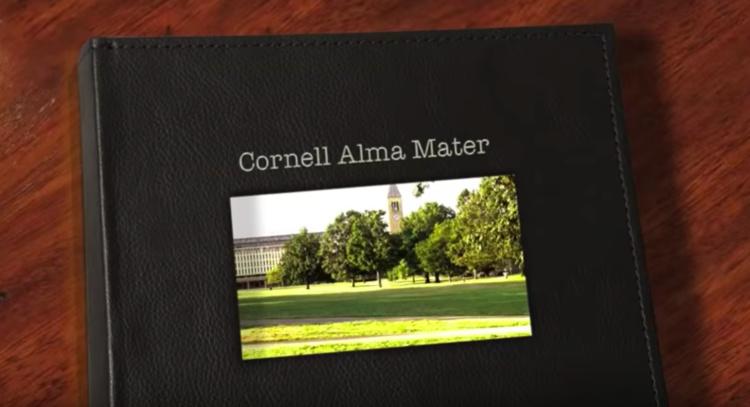
The Lingua Mater competition invites alumni to translate Cornell's Alma Mater into a different language and submit a video of the performed translation. The inaugural Lingua Mater alumni competition took place in 2018 as part of Cornell's Global Grand Challenges Symposium. Winners included the Cornell Club of Thailand 2018 and the Cornell Club of Gaeta, Italy in 2019, and won financial support of a local alumni event.
2021 competition details
Can you translate Cornell’s Alma Mater into your mother tongue (or a language you learned at Cornell) and sing it? We invite you to translate “Far Above Cayuga’s Waters” and submit a video of you (and your friends!) performing it, wherever you may be!
Translations do not need to be exact or perfectly in meter but should capture the feel and tune of our university’s Alma Mater. As is customary, include the first verse, refrain, second verse, and refrain in your video submission (for guidance, listen to a performance and read the lyrics).
Video submissions need to be MP4 files at 1920 x 1080 (1080p), in landscape mode with an aspect ratio of 16:9. Please ensure that you have copyright permission for any images/videos you use.
Entries will be reviewed by a panel of judges. Submissions will be judged equally on the translation, the musical quality, and the creativity in visual presentation.
The top entry will receive financial support and Cornell swag for a local alumni event.
Winners will be announced during International Education Week (November 15-19, 2021) via Noteworthy, and the top video will be posted online that week. Be sure to subscribe to our weekly newsletter to stay in the know of this competition and international alumni activities.
Entries may be submitted by any Cornell alumni groups outside of the United States and Canada.
Submission deadline: Monday, November 8, 2021 at 5 pm ET
SUBMIT YOUR VIDEO AND LYRICS HERE
Please contact the International Alumni Relations team if you have any questions.
The Lingua Mater competition is co-sponsored by the Office of International Alumni Relations, the Language Resource Center, and the Office of the Vice Provost for International Affairs.
Additional Information
Program
Einaudi Center for International Studies
East Asia Program
Southeast Asia Program
Latin American and Caribbean Studies
South Asia Program
ICM Global South Translation Symposium: Theory and Practice

December 4, 2021
11:00 am
The Institute for Comparative Modernities' first Global South Translation Symposium, featuring presentations by our inaugural cohort of translators (see below), remarks by translation theorist Naoki Sakai and commentary by Brett DeBary and Jan Steyn. Registation is required for this online event. Registration link:
https://cornell.zoom.us/webinar/register/WN_YiMmRJfJQPOUmiR4hK561g
With presentations from the following ICM Global South Translation fellowship recipients:
Wendy Call, on the poetry collection Stolen Flower (Guie’ ni zinebe / La flor que se llevó), from the Isthmus Zapotec and Spanish, by Irma Pineda
Guie’ ni zinebe / La flor que se llevó (Stolen Flower) is a collection of 45 poems by Irma Pineda, originally published in 2013 in a bilingual Isthmus Zapote/Spanish edition. Selected poems have been published in three languages in The Chicago Review. The collection explores gender-based violence against Indigenous communities, through multiple poetic voices. The author, Irma Pineda, is a spokesperson for the rights and autonomy of Indigenous Peoples, as well as for the families of disappeared persons.
Chamini Kulathunga, on selected poetry from Next Sweet Wines (Mīḷaṅga Mīvita), from the Sinhala, by Ruwan Bandujeewa
The work of contemporary Sri Lankan poet Ruwan Bandujeewa is highly acclaimed, particularly as writing that addresses class inequity, and describes the harsh realities groups living on the economic margins of an exploitative capitalist system. His popularity in Sri Lanka uniquely cuts across class boundaries. The poems in this collection comprise a selection of his most celebrated writing, as well as unpublished work.
David McKay, on the text We Slaves of Suriname (Wij slaven van Suriname), from the Dutch, by Anton de Kom
Wij slaven van Suriname (We Slaves of Suriname), is a classic anti-colonial work first published in 1934, but never published in English until David McKay’s translation. The author, Anton de Kom, was an Afro-Surinamese writer and left-wing political organizer who later lost his life resisting the German occupation of the Netherlands in World War II. De Kom’s historiographical book has been compared to the work of American authors such as W.E.B. Du Bois and to the anti-colonial writings of Frantz Fanon. In the Caribbean context, historians have likened We Slaves of Suriname to groundbreaking studies such as Capitalism and Slavery by Eric Williams and The Black Jacobins by C.L.R. James.
Quyen Nguyen-Hoang, on the prose poem collection Midseason Moonplay (Chơi Giữa Mùa Trăng), from the Vietnamese, by Hàn Mặc Tử
Hàn Mặc Tử is a symbolist inspired major modern Vietnamese poet as yet untranslated into English. Midseason Moonplay, published posthumously in Vietnam in 1941 is a wildly experimental and virtuosic series of prose-poems that expands the canon of Vietnamese literature. Quyen Nguyen-Hoang writes that his work “stands apart from the stereotypical body of poetry that encloses Vietnam as a country attached to the US-Vietnam war legacies or a nation under the yoke of colonization and oppressive regimes.”
Jennifer Shyue, on the short novel The Illumination of Katzuo Nakamatsu (La iluminación de Katzuo Nakamatsu), from the Spanish, by Augusto Higa Oshiro
Augusto Hiro Oshiro is a contemporary Peruvian writer born to immigrants from Okinawa. His short novels are considered vital and mesmerizing, some of the best contemporary writing in Spanish. This 2008 short novel La iluminación de Katzuo Nakamatsu invokes the complexities of Japanese-Peruvian histories, and exemplifies the writer at the height of his powers.
Remarks by Naoki Sakai, Distinguished Professor of Asian Studies Emeritus, Cornell University and commentary by Brett de Bary, Professor Emeritus, Departments of Asian Studies and Comparative Literature; and Jan Steyn, Lecturer in Literary Translation at the University of Iowa. Moderated by Natalie Melas, ICM Resident Director and Associate Professor, Department of Comparative Literature, Cornell University.
Additional Information
Program
Latin American and Caribbean Studies
South Asia Program
Southeast Asia Program
Visiting Critic Pedro X. Molina
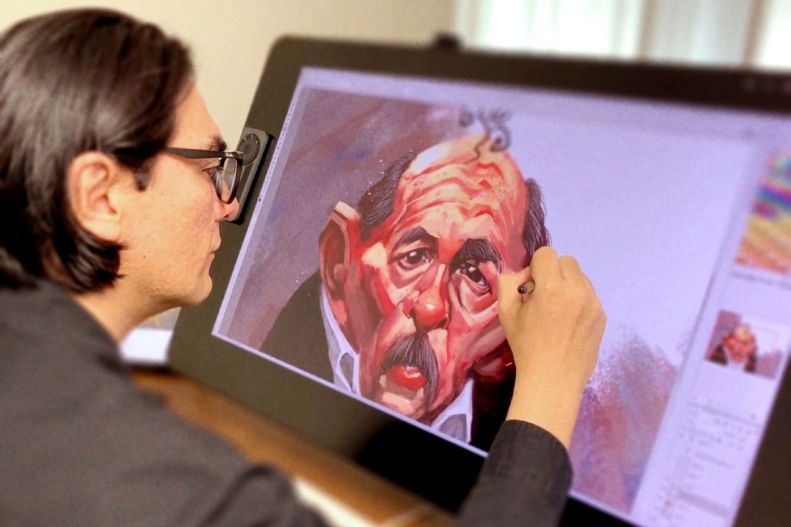
Nicaraguan Cartoonist Finds Refuge at Einaudi
The award-winning political cartoonist joined LACS this fall as a visiting critic and IIE-Artist Protection Fund fellow.
Additional Information
24th SEAP Graduate Student Conference
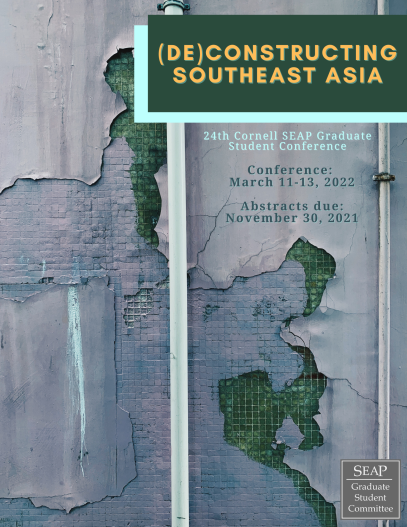
CFP now available!
The call for papers is now available for the 24th SEAP Graduate Student Conference, "(De)Constructing Southeast Asia."
Additional Information
From Luncheon Lectures to the Brown Bag to the Gatty Lecture Series, 1950-2021
By Thak Chaloemtiarana, professor, Asian literature, religion, and culture; and Asian studies
The Cornell Southeast Asia Program (SEAP) was founded by Professor Lauristan Sharp in 1950 with Professor George Kahin as its Executive Director. To help this new enterprise form an emerging field of study when there were few published texts or research, it was decided that prominent figures, be they scholars or government officials who know Southeast Asia, should be invited to campus to give lectures, seminars, and to meet with the few pioneering graduate students affiliated with the program.
In his 1952 annual report, Professor Kahin explains: A special effort was made during the course of 1952 to bring to Cornell at fairly regular intervals visiting lecturers possessing a particular knowledge of one or more of the various Southeast Asian countries. Some of these people met with scheduled seminars, while special meetings of students and staff in the Program were arranged to be addressed by others. In addition, our students were encouraged to meet with these people informally for talks in those cases where these visitors were here for more than a day.
In the very first few years of SEAP’s existence, many famous and well-known individuals came to give lectures at Cornell. These included Professor Paul Mus, US Ambassador to Thailand Edwin Stanton, Luang Bisuddhi Suriyabongs, Professor Pe Nuyent (Chairman of the Department of Political Sciences, the University of Rangoon), Sanya Dhammasak, Prince Piya Rangsit, Margaret Mead, Indonesian Ambassador to the UN Ali Sastroamidjojo, Lieutenant Governor of the Netherlands Indies H.J.van Mook, and Mom Luang Tooi Xoomsai. Amazingly, in addition to the eight Indonesian government officials who stayed at Cornell for a whole month, seventeen visitors gave lectures in 1952. In 1953, the practice of bringing notable lecturers to campus continued, among those who came to Cornell was Ngo Dinh Diem. He returned to South Vietnam the following year to become prime minister under Emperor Bao Dai.
Thus, SEAP was one of first—if not the first—to institutionalize a lecture series at Cornell in order to construct a new field of study and to educate its graduate students about Southeast Asia.
1950-1970
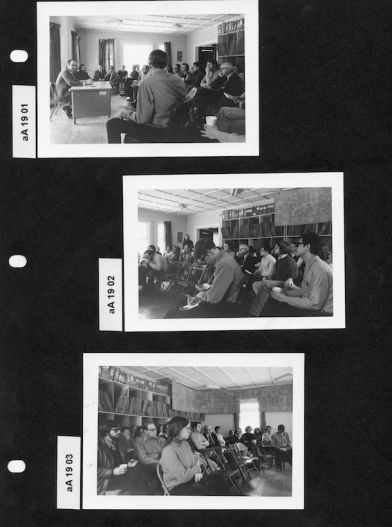
Both Professor Stanley O’Connor (SEAP 1959-1965) and Professor Charles Keyes (SEAP 1959-1965) of the University of Washington confirmed that the Brown Bag lectures were already in existence when they arrived. With the help of Emily Donald who did most of the legwork in finding data of the early years, I can now pronounce that the Brown Bag luncheon lecture program was established on February 26, 1959. Eight graduate students—Jack Carroll, Ngoc Thu Phan, Idrus Djajadiningrat, Herbert Feith, Jasper Ingersoll, Joo D. Khoo, Donald Pond, and David Wurfel—sent a note to members of the Southeast Asia Program announcing that regular meetings would be held at 102 West Avenue every other Thursday for talks during the lunch hour. Soon, however, the lectures became weekly events. The note gave the following reasons for establishing the regular lunch hour talks:
…to enable members to know each other better and to share more fully our individual experiences and interests in Southeast Asia. This would also provide a forum for speakers whom many of us have otherwise no opportunity to hear: visitors to Ithaca, Cornellians recently back from Asia, and so on.
The suggestion was that faculty and students would meet to eat lunch by bringing their own sandwiches in typical “brown (paper) bags.” SEAP would provide coffee. As an aside, by the time I arrived ten years later in 1968, in addition to coffee, there were also cookies! The Brown Bag lecture series retained its name even after free lunches were provided when I became director of SEAP in 1998. From pizza, coffee, soda, and cookies, the graduate student committees have, over time, opted for more healthy victuals and diversity of cuisines. The Brown Bag (BB) lecture series was renamed the endowed Ronald and Jeanette Gatty lecture series in 2014. SEAP’s Thursday luncheon lecture series is the only one on campus that provides free lunch for its audience.
The first BB lecture meeting was held on Thursday, March 5th at 12:15 p.m. at 102 West Avenue. The Thursday lunch hour thus became a tradition since 1959. Another important feature of the lecture series is that it is managed by a graduate student committee chaired or co-chaired by one or two of its members. In this way, students are involved in the shaping of the field by identifying speakers whose works or knowledge were either foundational, exciting, emerging, or trending. The leadership and participation of all students at the lectures and following dinner meeting also facilitated their entry into the international scholarly network beyond the SEAP community. Faculty involvement in selecting speakers has been mainly in advisory roles.
102 West Avenue is the address of the Modern Indonesia Project building where Professors Kahin, Anderson, graduate students writing dissertations (or married with children), and visiting fellows had offices. That building was a rundown (at one time condemned) former fraternity house. It was finally declared unfit for habitation, demolished, and made into a parking lot. It was the predecessor to the Kahin Center.
102 West is well-known to the early scholars of Southeast Asia because many foundational dissertations (later published as books) written there gave credit to that building. The slanting floors, rickety stairs, loose bannisters, and drafty windows surprised visitors who were amazed that this famous building that produced so much early scholarship on Southeast Asia was so dilapidated and unworthy of its reputation. However, Professor Kahin famously declared that scholarly productivity is inversely related to the underwhelming magnificence of 102 West.[i]
Professor Stan O’Connor sent me an email that succinctly summarized the importance of the early BB lectures. Professor O’Connor writes:
People were widely scattered and eager to find people with similar obsessions and experience. Several seemed quite odd, but very lively…including many European scholars and some public officials from Southeast Asia… All this had a wonderful feeling of beginnings and discovery… Almost everyone in this small community came to 102 West Avenue adding excitement to the jumble and provisionality of the building itself. These were high energy occasions. Everyone showed up for what was often quite exciting…you did have the feeling of something into being. The talks were exploratory, searching, and consequential. There was limited reading of research papers or reflection on methodological anxieties. The Brown Bags did what they were intended to do: build an intellectual community.
When I arrived in 1968, the Brown Bag lectures at 102 West were unrivalled on campus as a “must attend” and “standing-room only” events. Because of the US involvement in Southeast Asia and the anti-Vietnam War movement, interest in the region peaked from the mid-1960s until the end of the 1970s. The lectures and those in attendance—graduate students from SEAP and beyond, and almost all SEAP faculty members—were eager to witness the energy, excitement, and discovery of new knowledge that began to shape Southeast Asian Studies as a viable field of study, and to learn about a region that was important to US foreign policy. Scholars and government officials from beyond Cornell came to talk about their work and how it was relevant to our common interest. Many of the lectures, if not most, presented raw data and unfolding discoveries. In a sense, those who attended the talks were also participants of the presenter’s journey and experience.
The majority of speakers in the 1960s were professors, both well-established scholars and younger scholars who helped to shape Southeast Asian Studies as a viable field of study. Some of these scholars (now well-known) included Harry Benda, Ruth McVey, J.A.C. Mackie, Nicholas Tarling, Robert O.Tilman, Wang Gung Wu, James Peacock, Bernard Fall, A. Thomas Kirsch, William Klausner, Lucien Hanks, Elizer Ayal, Alexander Griswold, Josef Silverstein, David Wyatt, Robert Pringle, John Smail, Frederick Bunnell, Wilhelm Solheim, Stanley Tambiah, David Wilson, Herbert Philips, Ben Anderson, David Marr, Hans Dieter Evers, and James Siegel.
The tradition of enhancing the understanding of Southeast Asia also continued into the 1960s with talks given by prominent personalities and US officials who were involved in the affairs of the region. The names of speakers who were not associated with universities included, for example, Colonel Ngoc Thao Pham (Armed Forces of the Republic of Vietnam); Van Dinh Tran (Vietnam Embassy); Francis Underhill (U.S. Army War College); Sukich Nimmanhaemin (Thai Ambassador to the U.S.); Colonel George Benson (U.S. Army Attache, Djakarta); Anthony Eden (Earl of Eden and former UK prime minister who spoke about Vietnam in the international situation); Mohamad Roem (former prime minister of Indonesia); Paul Sitthi-Amnuay (Vice President, Bangkok Bank, NY); Gunnar Myrdal (author of Asian Drama); Mohammad Hatta (former prime minister and VP of Indonesia); General Carlos Romulo (former Foreign Secretary and President of the University of the Philippines); Soejatmoko (Indonesian Ambassador to the U.S.), Douglas Pike (United States Information Service), and C.V. Devan Nair (Malaysian MP and future President of Singapore).
Additional Information
Program
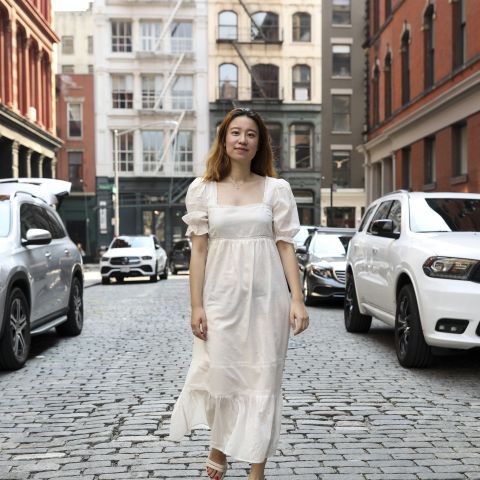
Christina Pan
Graduate Student
Degree Pursued: PhD
Anticipated Degree Year: 2025-2026
Committee chair/advisor: Jeremy Wallace
Discipline: Development, Government
Primary Language: Mandarin Chinese
Research Countries: China, Vietnam
Research Interests: Political economy, climate policy, clean energy transition in the Global South.