
Southeast Asia Program
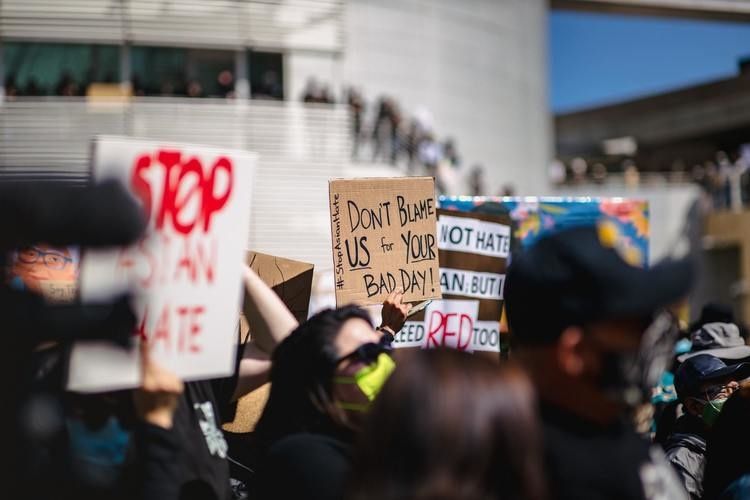
Teach-in on Confronting Anti-Asian Racism
May 7, 2021
12:00 pm
Join us for an interactive teach-in and listen-in on the history and experience of anti-Asian racism in the United States and at Cornell University. Register here.
In the first hour, perspectives and presentations from Cornell students, staff, and faculty will highlight the long history of anti-Asian racism in the United States as well as the diversity of experiences at Cornell. Participants will hear about the connections and divisions under the very broad labels of “Asian” and “Asian American” and explore ways to speak across these differences.
Speakers:
Christine Bacareza Balance, Associate Professor of Performing and Media ArtsDerek Chang, Associate Professor of HistoryAvery August, Vice Provost for Academic Affairs, Professor of Immunology Nancy Martinsen, Associate Dean of Students and Director of the Asian and Asian American CenterPanelists:
Huili Grace Xing, William L Quackenbush Professor of Electrical and Computer Engineering and Materials Science and Engineering, Associate Dean for Research and Graduate Studies in the College of EngineeringReanna Esmail, Outreach and Engagement Librarian at Olin Library and the library liaison to the Latinx Studies Program and the Asian American Studies ProgramJeannie Yamazaki, undergraduate student in Environment and Sustainability and EducationAnthony Chen, undergraduate student in Information Science and Sociology, minor in Asian American StudiesChristopher Berardino, dual MFA/Ph.D. candidate in EnglishRazima Chowdhury, Senior Lecturer, Asian StudiesThe panel moderated by Wendy Wolford, Vice Provost for International Affairs, Professor of Global Development
In the second hour, participants will meet in small breakout groups to freely express their views and generate concrete ideas in an anonymous setting (zoom profiles will be anonymized). These breakout rooms are an opportunity to set the agenda for further related programming on campus during the next academic year and beyond. Facilitated by the Intergroup Dialogue Project and Durba Ghosh, Professor of History.
This event has been co-organized with faculty and staff from the Asian and Asian American Center (A3C), Asian American Studies Program, Asian Studies, Global Cornell, Mario Einaudi Center for International Studies (including EAP, SAP, and SEAP), Graduate School, and Office of Faculty Development and Diversity.
Additional Information
Program
Einaudi Center for International Studies
East Asia Program
Southeast Asia Program
South Asia Program
Human Rights Radio Show focuses on Myanmar and Xinjiang

Interview with Magnus Fiskesjö
Updates on the human rights situation in Myanmar and in China's Xinjiang/East Turkistan, with Prof. Magnus Fiskesjö.
This interview appears on the "Human Rights and Social Justice" radio show, hosted by Ute Ritz-Deutch, on WRFI.org, & on FM 88.1 in Ithaca. Recorded April 23, 2021. Available to listen on Soundcloud.
Magnus Fiskesjö is an anthropology professor at Cornell University and faculty affiliate with the Southeast Asia Program and the Reppy Institute for Peace and Conflict Studies.
Fiskesjö gives an update on the situation in Myanmar (Burma), where the military took over the country in February, by imprisoning its elected leaders. Protests around the country continue even though the military has been killing protestors.
The professor also reviews the latest from China regarding the genocide of the Uyghurs, which the communist party denies. However, many of its practices, such as forced assimilation, sterilizations, and forced abortions of minorities are part of the definition of genocide as articulated in the UN Genocide Convention. Recently, the European Union and the United States have enacted sanctions against Chinese individuals involved in executing policies against ethnic minorities, and China in turn has sanctioned researchers and journalists from Europe. China is also targeting corporations who publicly committed to not use materials and products from the Xinjiang Uyghur Autonomous Region. In the U.S., the "Uyghur Forced Labor Prevention Act" has been introduced in Congress. For more information about the Uyghurs visit uhrp.org/.
Additional Information
Plantationocene

Conference Videos Now Available
On April 15–16, 40 panelists from around the world explored plantations' legacies. Watch the videos.
Additional Information
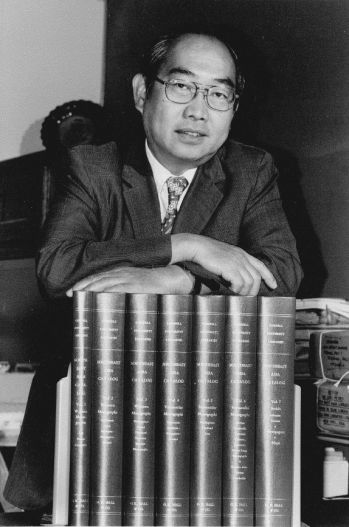
Building a Collection: Giok Po Oey and the John M. Echols Collection
by Gregory Green, curator, John M. Echols Collection
As featured in the Spring 2021 SEAP Bulletin, Giok Po Oey (1922-2010) was hired to work at Cornell in 1957 and successfully built a world-class library collection of publications from and about Southeast Asia. His efforts, in collaboration with Cornell faculty, students, and others interested in the region resulted in what is widely recognized as the leading collection of its kind in the world, the John M. Echols Library Collection.
The foundation built during those formative years created a legacy that has lasted far beyond Giok Po’s tenure as Curator when he retired in 1985, and now well beyond the span of his lifetime. During those early years, Giok Po worked closely with the founders of Cornell’s Southeast Asia Program to build up this magnificent treasure known around the world as the John M. Echols Collection on Southeast Asia.
Born on January 16, 1922, in Sukabumi on the island of Java in what was then the Dutch East Indies, Giok Po Oey, of Chinese descent, lived his early years in a period of great upheaval and change. Coming of age at the beginning of World War II, he witnessed the horrific Japanese occupation of Indonesia, an end to centuries of foreign control, and the beginnings of a tumultuous journey toward democracy.
During those difficult early years of his life, Giok Po Oey worked hard as a student, taking a wide variety of courses in high school, including many business and language courses. He did well in his required language courses, taking French, Dutch, English and German, testing “amply sufficient” in the first three, and adding those to his knowledge of Indonesian. Giok Po took the opportunity to formally engage with the Chinese language while he earned the equivalent of a Bachelor’s degree in Chinese language and literature from the Sinological Institute at the University of Indonesia from 1948 to 1951. While in school, he paid for his tuition and living expenses by managing the Institute’s library, beginning his lifetime connection with libraries.
After earning his degree from the Sinological Institute, Giok Po originally applied to come to Cornell for graduate studies in 1951, but chance intervened when he was given funding by the US embassy in Jakarta, Indonesia to attend the University of California at Berkeley for one year of graduate studies. There, he continued his coursework in Chinese language and literature. During the summer after his successful year at Berkeley, Knight Biggerstaff, then Chair of Cornell’s Department of Far Eastern Studies, arranged to fund a position for Giok Po in the Hoover Institute collections at Stanford, where he created a bibliography of every publication in Chinese relating to Southeast Asia. At the completion of that summer, Giok Po finally made his way to Cornell where he had a research assistantship waiting. He initially intended a course of study that would fall short of a Master’s degree. After some time on campus, he changed his mind and ultimately earned a Master’s degree from Cornell in August of 1953.
The rapidly expanding Southeast Asia Program at Cornell, just a few years old when Giok Po completed his Master’s work, had begun building a library collection in earnest. Realizing they would need someone in the library to help arrange and catalog the collection, and hoping to eventually create a curator position for it, they approached Giok Po with an offer to stay in the US and work at Cornell. With the promise of a good job at Cornell University Library, but lacking visa approval to stay, Giok Po returned to Indonesia with a Master’s degree in Chinese Literature focusing on Southeast Asia. He secured a promising position as a reporter at the top Chinese community newspaper in Indonesia while he applied and was denied visa approval multiple times from 1953 to 1955, due to strict limits on Chinese immigration that had been in place in one form or another since the 1880’s. During that time, he married “Tinny” Lian Hoa Tan, whom he had known for some years.
After years of work, Cornell University administration and New York Senator Irving Ives, sponsored special legislation to bring Giok Po to the United States in order to fill a position no others could. With his language training, background in libraries, and knowledge of Southeast Asia, Giok Po was uniquely qualified for the task at hand. Using a $1000 loan from the Southeast Asia Program, Giok Po and his new wife finally moved back to Ithaca and Cornell to begin what would be a life’s work of developing a world-class library collection.Additional Information
Program
Last Week of Language Month!
Discover languages, win prizes
This is the last week of our month-long celebration of the study of Southeast Asian languages at Cornell!
The full list of activities is available in the Goosechase app.
To participate and compete for a $100 Amazon gift card and other prizes:
1. Download the GooseChase App
2. Enter code 3KX9D9 (or search for "Southeast Asia Language Month")
3. Complete missions and attend events to earn points
Additional Information
Program
SEADL Undergraduate Paper Award

The Southeast Asia Digital Library (SEADL) is excited to host its inaugural Undergraduate Paper Award! Students may submit term papers they've already written on Southeast Asian topics for a chance at $200 and publication!
This competition is an excellent opportunity for undergraduates to engage with primary source materials and explore the wealth of resources available to Southeast Asian Studies scholars online.
The first place winner will receive $200 and publication of their paper on SEADL. Second place will win a selection of books from SEAP Publications as well as publication of their paper on SEADL.
This event is also a part of Southeast Asia Language Month, and participating in the SEADL competition earns points towards the Language Month Goosechase competition.
Additional Information
Program
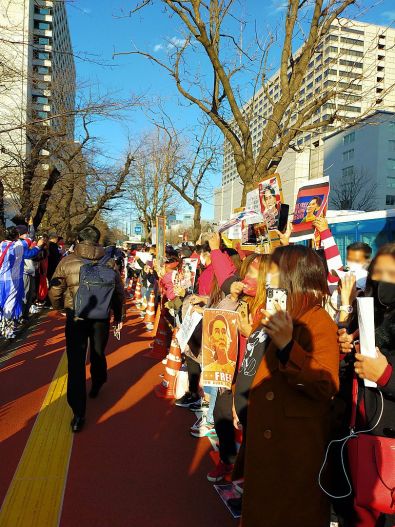
Myanmar's Bloodshed Reveals A World That Has Changed, and Hasn't
Tom Pepinsky, SEAP
"Once the military is involved in politics, it's hard to get them out if they don't want to get out," says Tom Pepinsky, professor of government.
Additional Information
Amartya Sen: Attacks on Democracy (Bartels World Affairs Lecture)
May 5, 2021
4:30 pm
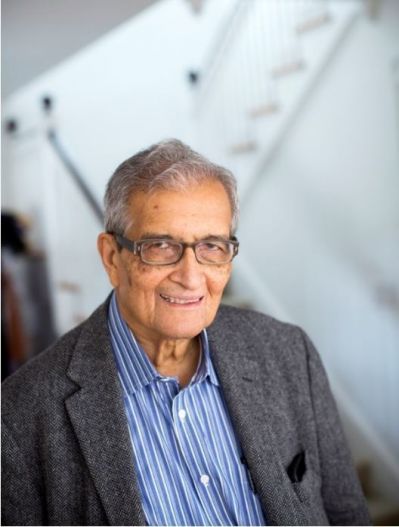
Nobel prize–winning economist Amartya Sen joins Cornell’s Kaushik Basu for the 2021 Bartels World Affairs Lecture, hosted by the Mario Einaudi Center for International Studies.
At the turn of the millennium, many would have said that understanding the need for democracy was the most important change in the world over the preceding century. Yet in the past 20 years, democracy has been treated with contempt and hostility in many parts of the world—including countries in the West (such as Hungary, Poland, and others), but also elsewhere.
It is important to ask why this is happening and how we should deal with it, Sen advises.
“Some countries seem to be undergoing a big transition in this respect, and my own country, India, may be a significant example—despite its being often described as the largest democracy in the world, which in some sense it still is,” Sen said. “As someone who is dismayed by recent developments, I would like to discuss the nature of the problems we may be facing and what can be done about them.”
Sen’s talk, “Attacks on Democracy,” will kick off a discussion with Cornell faculty and students moderated by Basu. Three faculty commentators and audience members, including several students, will join Sen for conversation and Q&A on democratic challenges—and ways forward. The event is part of the Einaudi Center’s democratic resilience global research theme.
Amartya Sen is Thomas W. Lamont University Professor and professor of economics and philosophy at Harvard University. He has served as president of the Econometric Society, American Economic Association, Indian Economic Association, and International Economic Association. Translated into more than 40 languages, Sen’s books include Collective Choice and Social Welfare (1970, 2017), Development as Freedom (1999), Identity and Violence (2006), and The Idea of Justice (2009). Sen’s awards include the Bharat Ratna (India); Commandeur de la Legion d'Honneur (France); National Humanities Medal, George Marshall Award, and Eisenhower Medal (USA); Bodley Medal and Edinburgh Medal (UK); Ordem do Merito Cientifico (Brazil); Aztec Eagle (Mexico); and the Nobel Prize in Economics.
Moderator:
Kaushik Basu is the Carl Marks Professor of International Studies, professor of economics in the College of Arts and Sciences, and former senior vice president and chief economist of the World Bank.
Faculty Commentators:
Robert Hockett, Edward Cornell Professor of Law, Cornell University
Marco Battaglini, Edward H. Meyer Professor of Economics, Cornell University
Rachana Kamtekar, Professor of Philosophy, Cornell University
The Bartels World Affairs Lecture was established in 1984 to foster a broadened worldview among Cornell students, especially undergraduates. The lecture and related events are made possible by the generosity of Henry E. Bartels ’48 and Nancy Horton Bartels ’48.
***
Our hearts are with Cornellians currently in India and South Asia, or with family or friends in the region, during the COVID-19 tragedy. Consider supporting this aid effort led by South Asian students, including Cornellians.
Additional Information
Program
Einaudi Center for International Studies
Southeast Asia Program
Reppy Institute for Peace and Conflict Studies
East Asia Program
Latin American and Caribbean Studies
Institute for African Development
Institute for European Studies
South Asia Program
Study of Southeast Asian Languages at Cornell: A History
by John Wolff, professor emeritus, linguistics and Asian studies
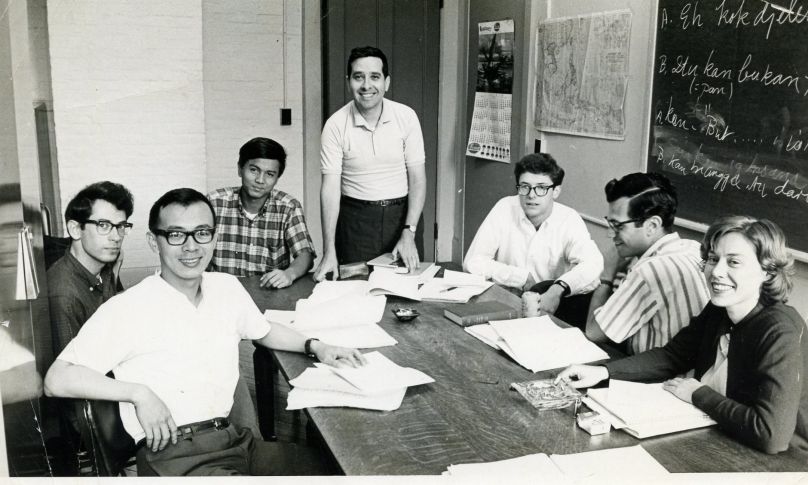
As featured in the Spring 2021 SEAP Bulletin, John Wolff, professor emeritus of linguistics and Asian studies, writes a history on the study of Southeast Asian Languages at Cornell. He recounts how and why learning the languages of Southeast Asia rose to significance in American history and within the history of academic development at Cornell.
Before World War II, Southeast Asia was of peripheral interest to American scholars. Even the Philippines, at the time a commonwealth under United States dominion, aroused meager scholarly interest. Aside from a few popular books and magazine articles that described exotic places and strange peoples, the Southeast Asian nations and their peoples were hardly written about or brought to the attention of the American public.
The war and the Japanese occupation of much of this area changed all that. The war effort brought into focus the importance to a successful defeat of our enemy that an understanding of these lands and their peoples had. This realization led the government to support the development of expertise in Southeast Asian matters, and that was the beginning of Southeast Asian area studies in the United States.
However, basic to the development of expertise in Southeast Asia was the knowledge of languages. It is impossible to learn what makes a culture tick and how a people think, if you cannot talk to them in ways that are familiar to them and inspire trust. To develop military personnel who could deal with the local populations in Southeast Asia as we pushed the Japanese back, we needed to help them develop language competence.
To meet the need for military personnel that knew languages of the countries Americans would occupy, the United States Army turned to the scholarly community to provide the pedagogical materials and instruction. The secretary of the American Council of Learned Societies (ACLS), F. Mortimer Graves, administered the project and chose Leonard Bloomfield, the foremost linguist of the day, to give the intellectual guidance for developing materials aimed at inculcating the languages of places where Americans were likely to go, including the countries of Southeast Asia.
The problem was that there was no tradition in America for teaching basic language competence in an effective way—not even in the widely studied European languages, much less in the languages of countries that were not within our ken. Bloomfield understood that the almost universal practice of the time, teaching language focusing on grammar and translation, hardly developed language competence and most certainly was wholly inappropriate for the learning of languages at that time considered exotic like Chinese and Japanese. It was no less appropriate for the languages of Southeast Asia. Under Bloomfield's direction, materials were prepared that were a sharp departure from the literature-oriented language pedagogy that was the norm throughout the United States
Bloomfield's methods involved linguists who directed native speakers. The native speaker's job was to drill dialogues that the students were supposed to memorize and to focus on conversing with the students, using the words and phrases that they had learned in the memorized dialogues. The focus was on oral use—reading and writing were secondary, in most cases totally left out. Materials were prepared for Burmese, Thai, Vietnamese (called "Annamite" in those days) and Malay, among the languages of Southeast Asia.
As American scholarship became more sophisticated and Southeast Asia became the focus of a number of scholars in a wide range of fields, the basic need for language competence became far better understood. In 1950 when Lauriston Sharp, an anthropologist with research in Thailand, applied for funds for the establishment of a program of Southeast Asian studies at Cornell University, a strong part of the proposal was that Cornell at the time had the reputation of being the center of the most advanced and successful language teaching in America.
Here is what happened to give Cornell University this reputation. In 1944-45, a language training program for Italian and Russian, using Bloomfield's methods, was set up by the army at Cornell for the training of army personnel. This program impressed the Dean of Arts and Sciences, at the time, C. W. De Kewiet, positively and after the war inspired him to propose establishing this method for teaching languages at Cornell. For this purpose he hired a member of the ACLS team, J. Milton Cowan, and De Kewiet's proposal was accepted.
Cowan brought to Cornell University linguists specializing in French and Italian, German, Spanish, Chinese, and Russian and later a number of others, who oversaw programs in these languages and also other languages, which they may not have known, but for which they found native speakers whom they could train in the Bloomfield method and direct. By 1949, Cornell’s Division of Modern Languages could boast of offering instruction (using the “Cornell Method”) in nine modern languages, including Arabic and English as a foreign language. Thai (Siamese) was added in 1951 with the advent of a Southeast Asia Program. When the Rockefeller Foundation made a grant to form a program of Southeast Asian Studies at Cornell, language instruction was a key part of the curriculum that was envisioned.[i] READ MORE
[i] The 1951 “Progress Report to the Rockefeller Foundation” states: “It is recognized that the program staff must include a mature scholar capable of taking charge of its work in linguistics and literature and of developing solutions to the problems involved in offering sound language training in an area with half a dozen major national languages"(p. 5).
Additional Information
Program
April 15: Authoritarian Trends
Roundtable on Democratic Backsliding in Southeast Asia
April 15 (8:00 p.m. ET): Experts on the politics of Myanmar, Indonesia, Thailand, and the Philippines discuss rising authoritarianism. Register now!