
Southeast Asia Program
Photo History Contributions from Alumni

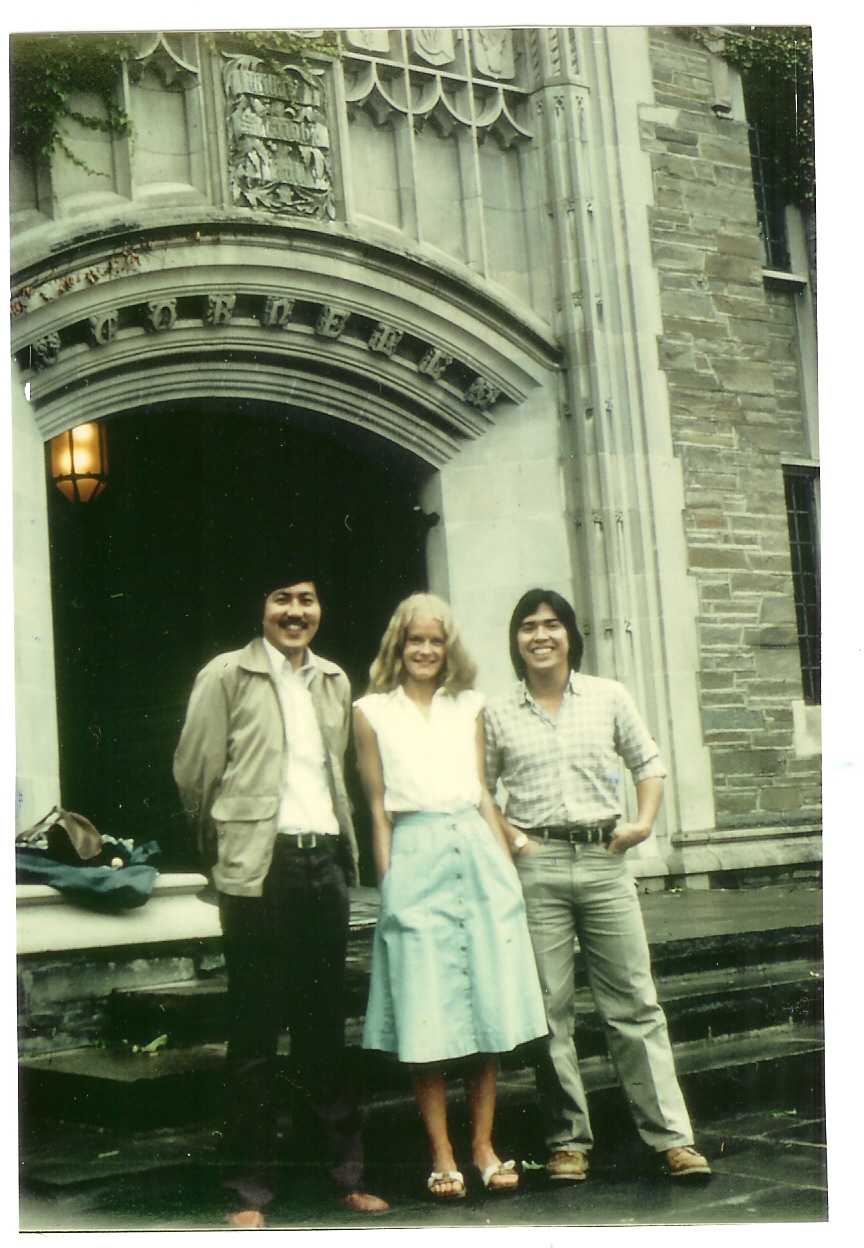
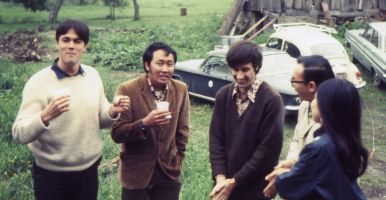
We are thrilled to share some historical photos submitted by alumni and featured in the Spring 2021 SEAP Bulletin highlighting sweet memories of the SEAP community in celebration of the program's 70th anniversary.
Since our call for submissions last fall, we have received dozens of images electronically and physically. In this brief collage, we have highlighted some contributions, and there is always room for more. We continue to welcome the submission of stories, memories, photos, audio clips, videos, and other media to fill out and enhance the history of SEAP. You may electronically submit items by using this online form. Please feel free to contact us at seaphistories@cornell.edu if you have questions or would like to talk to us about sending physical items.
Additional Information
Program
SEALC-GETSEA Language Tuition Support

Deadline July 15, 2021
Apply now for support in studying a Southeast Asian language at a different institution!
With support from the Henry Luce Foundation, The Southeast East Asian Language Council (SEALC) and The Graduate Education and Training in Southeast Asian Studies (GETSEA) consortia award financial assistance to students who incur tuition fees when studying a Southeast Asian language during the academic year at an institution other than their home institution via synchronous distance learning. This award is intended to facilitate cross-institutional collaboration and increase access to Southeast Asian language instruction. Eligibility requires that the course is credit-bearing at a North American institution and that the applicant is a full-time student at a North American institution. Priority will be given to graduate students, but all are encouraged to apply. SEALC and GETSEA encourage applicants to consider attending SEASSI which serves as an excellent resource for summer language instruction. This award is intended to improve access during the academic year so that students can obtain multi-year instruction in a timely manner.
What does the assistance cover?
The award provides partial tuition reimbursement for synchronous distance learning of a SE Asian language at a North American institution.
Application process:
The application deadline for the 2021-2022 academic year awards is July 15, 2021. Click here for the online application. Please email sealc@intl.wisc.edu with any questions you may have.
Additional Information
Program
ASIAN 2208, Introduction to Southeast Asia

SEAP Featured Summer Course
Broaden your understanding of Southeast Asia this summer; earn 3 credits and fulfill these distribution requirements: CA-AS, ALC-AS, HST-AS.
What is Southeast Asia? How does this faraway, “exotic,” region intersect with our realities? This course introduces key questions in the study of Southeast Asia (which includes Brunei, Burma, Cambodia, Indonesia, Laos, Malaysia, Philippines, Singapore, Thailand, and Vietnam) and its diasporas using cinematic, literary, historical and scholarly materials.
ASIAN 2208, Introduction to Southeast Asia will be offered June 1-17, 2021 via asynchronous distance learning, taught by Dr. Chiara Formichi.
For more information and to register visit the SCE website or the Class Roster.
Additional Information
Program
Perspectives 360 Film Festival: Virus Has No Nationality

June 11, 2021
7:00 pm
The Ithaca Asian American Association invites you to share your story through your lens, as you interpret and express your meaning of "Virus Has No Nationality."
You are encouraged to be bold in challenging issues of racism, sexism, xenophobia, ableism, heterosexism, classism, and all -isms. Through a five-minute film, we hope your creative expressions will inspire hope and possibilities for a better tomorrow.
The film festival is open to everyone regardless of age, experience, and status. All you need is a video recording device such as your phone. Films can be completed as an individual or group and must be submitted through FilmFreeway by Monday, May 31 to be screened on Friday, June 11, 2021, at 7:00 p.m. An award presentation will follow.
Filmmaking Criteria
Must be less than 5 minutes longCan be of any genreCan be created on mobile devices or digital camerasMust align with the “Virus Has No Nationality” campaign and feature a mask as a special propMust be submitted on FilmFreeway no later than May 31, 2021Awards
Six $500 Scholarship Prize awarded to best high school and college studentsTen $100 Gift Certificates to local businesses and eateries for best general submissionsSponsors
The film festival is made possible by the Park Foundation, and it is supported by:
Building BridgesCAN Cooperative Media/Sustainability SentinelCommunity Leaders of Colors (CLOC)Cornell Asian and Asian American Center (A3C)Dorothy Cotton InstituteGlobal CornellGreater Ithaca Activities Center (GIAC)Ithaca Mural AssociationKhuba InternationalLearning FarmsTompkins County's Office of the Human Rights.Please contact Ithaca Asian American Association at iaaa607@yahoo.com for more information and with any questions.
Additional Information
Program
Einaudi Center for International Studies
East Asia Program
Southeast Asia Program
South Asia Program
Einaudi Student Path Video: FLAS Recipient Nisa Burns '21

Nisa Burns '21 received a Foreign Language and Area Studies Fellowship to learn Burmese.
Due February 16: Apply for FLAS support to study a language of South Asia or Southeast Asia.
Nisa studied linguistics at Cornell and minored in Southeast Asian Studies. Her connection to the Southeast Asia Program is personal to her as a Thai American. The program has fostered her love for the region and language learning generally, and she's been able to study Burmese, Thai, and even Hungarian at Cornell.
Nisa says, "I really appreciate that SEAP is here and has this volume of knowledge and expertise to allow me to learn more about the world."
Additional Information
(Re)Collecting Southeast Asia at the Johnson Museum

by SEAP grad students Alexandra Dalferro, Anissa Rahadiningtyas, and Astara Light
When we first met with Kaja McGowan and Ellen Avril in February 2020 to begin planning for an exhibit at the Johnson Museum to commemorate the 70th anniversary of SEAP, we had already canvassed the fifth floor with excitement. We dreamed up possibilities for a physical exhibit that would include a wall of disembodied Buddha heads, an ider-ider (a Balinese temple hanging) encircling and protecting a room full of ceramics and wayang, and object pairings that juxtaposed the shifts and similarities in collection practices of SEAP-affiliated people from the past to the present.
While we continue to hold these ideas in our minds for post-pandemic opportunities, our exhibit, “Recollecting: Celebrating the 70th Anniversary of SEAP at the Johnson Museum,” has shifted to virtual space with the help of Cornell University Library Digital Scholarship program, which provided the platform to house the exhibit. This exhibit showcases a collection of objects at the Johnson Museum that have been donated by alumni and faculty of SEAP, beginning in the 1970s with gifts of Buddhist sculpture from Thailand from SEAP Visiting Professor of Southeast Asian Art and Archaeology, Alexander B. Griswold.
In creating this collection of a collection, our approach is both reflexive and reflective, emphasizing the history of collecting and its social and geopolitical underpinnings. As we consider objects in relation to the journeys that brought them to Ithaca, we attempt to foreground memories and voices of individuals who contributed to the collection or who have engaged with it in meaningful ways, especially those who may not be recognized in usual or existing coverage of the objects, like spouses, assistants, students, and faculty members who use the objects as integral dimensions of their pedagogy and coursework. In order to historicize the processes of collecting and the production of scholarship and teaching materials based on these objects, we have relied on archival materials held at Cornell’s Rare and Manuscript Collections. We have also looked to the Johnson Museum’s acquisition records and exhibition history to understand the ongoing recontextualizations of these collections as mediated by curators and SEAP faculty and students.
Sculptures donated to the museum by Alexander Griswold are often on display at the Johnson Museum, and one standing Buddha can be found at the Kahin Center, partaking in meetings and meals in the small conference room. Before they arrived in Ithaca, these objects resided at Griswold’s estate, Breezewood, in Monkton, Maryland. Griswold was sent to Thailand while serving in the US army and working for the Office of Strategic Services. He landed in Bangkok in the closing days of World War II and quickly became fascinated by Thai art history and archaeology.
In a 1976 feature on Griswold and his collection in the Baltimore Sun Magazine, Griswold related that the first pieces he ever bought in 1945 in Bangkok were small, sculpted, detached heads. “They were plentiful and cheap in those days,” he said.[i] Griswold sought to create a comprehensive collection of Thai Buddhist sculpture that could indicate historical patterns, adaptations, and transformations of aesthetics and beliefs. Following an active period of accumulation in the late 1940s and early 1950s, he stopped acquiring objects by 1954, and he gradually developed a distanced attitude towards his collection.
Some speculate that this distance was related to Griswold’s shift in research focus from art history to epigraphy. In letters he wrote to one of his mentors, George Cœdès, additional possible reasons for his detached stance emerge. Griswold was increasingly dismayed by the “alarming” and “astonishing” situation” of the “mutilation” of statues in Thailand, noting in 1966 that many Buddha images had their heads and hands cut off to meet the demands of the burgeoning antiquities market, as tourists preferred to buy these parts but not bodies.[ii] Nevertheless, many such heads were part of Griswold’s collection, material reminders of the Westward travels of potentially looted artifacts from Southeast Asia that have found their way into museums and private residences since the long period of colonization. In the late 60s and early 70s, when Griswold taught at Cornell, he held annual “Breezewood Seminars” at his home for Cornell graduate students and faculty, who spent three days amidst Griswold’s collection, learning about Thai art history through direct exposure to sculptures, paintings, and reliefs. READ MORE
Additional Information
Program
Race Matters: Research Questions in International Relations
May 20, 2021
11:00 am
The Einaudi Center’s global racial justice research team presents the inaugural session of Race Matters, a new webinar series that fosters in-depth conversations on colonial questions and racial justice across international relations.
This panel brings together global experts for a candid appraisal of disciplinary instruments (methods, archives, concepts, ontologies, and epistemologies) and institutions (practices of knowledge production and incorporation as policy). The debate centers the question: How effectively do our tools for producing and shaping knowledge and policy serve the cause of advancing racial equality and justice globally?
Some of the panelists critique methods and lines of inquiries in scholarship on race and racism. Others presume an insurgency by self-determining political communities—including in the academy—against colonizing institutional practices and in favor of the expansion of archives and imaginaries.
This conversation represents an initial framing of questions and critiques that will continue in four additional Race Matters panels through the fall 2021 semester. Read more about the series below.
Moderator: Siba Grovogui, Africana Studies, Cornell University
Panelists:
Daniel Bendix, Franziska Müller, and Aram Ziai, coeditors of Beyond the Master’s Tools? Decolonizing Knowledge Orders, Research Methods, and Teaching (2020)Mustapha K. Pasha, Meera Sabaratnam, and Robbie Shilliam, series editors of Kilombo: International Relations and Colonial QuestionsDiscussants: Oumar Ba, Political Science, Morehouse College; Sarah Then Bergh, Africana Studies PhD candidate, Cornell University
***
Race Matters: A webinar series sponsored by Cornell’s Mario Einaudi Center for International Studies, Africana Studies and Research Center, and Department of Government
Race Matters brings together international relations experts for critical conversations on colonial questions and racial justice across international relations. Join us to explore scholarship on race and racism and the policies, institutions, and systems that perpetuate racial inequality and violence worldwide. Continuing throughout 2021, Race Matters will identify opportunities for transformative change and highlight collective and individual actions toward a more just world.
Learn about the Einaudi Center’s work on racial justice and all of our global research priorities.
Register now: https://cornell.zoom.us/webinar/register/WN_hYI75wwITDOvrOW_ZTHY6Q
Additional Information
Program
Einaudi Center for International Studies
Reppy Institute for Peace and Conflict Studies
East Asia Program
Southeast Asia Program
Latin American and Caribbean Studies
Institute for African Development
Institute for European Studies
South Asia Program
Gatty Lecture Recordings Available
Check out the Global Cornell YouTube channel for more!
Recordings of several Gatty Lectures from Fall 2020 and Spring 2021 are now available on the Global Cornell YouTube channel.
If you missed a lecture, be sure to check it out now!
Additional Information
Program
LRC Happy Hour

August 11, 2021
11:00 am
Join us on Zoom throughout the summer for LRC Happy Hour. Every second Wednesday of the month. We'd love to hear how it’s going! All of it.
Bring your (language instruction) stories whether they be good, bad, amazing, or unusual. It takes all kinds of stories to make Happy Hour great!Bring your own coffee, tea, or mystery beverage.While we can't serve lunch, the LRC will provide fun, jokes, and laughs free of charge.Also, we just want to see your smiling faces, because we miss you.
More details and link posted on our website: https://lrc.cornell.edu/live-help-sessions
Additional Information
Program
Southeast Asia Program
Latin American and Caribbean Studies
South Asia Program
TODAY: Teach-in #StopAsianHate
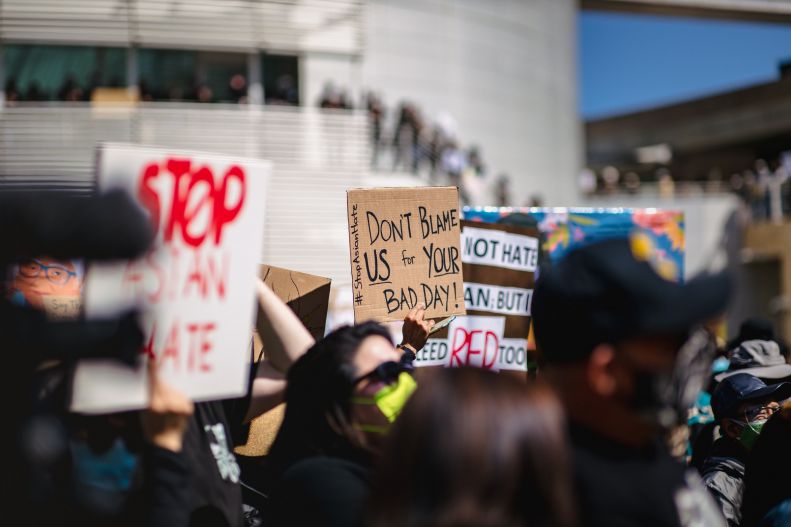
Join Us for Teaching and Listening
May 7 (noon–2:00): Join us for a teach-in and listen-in to support Cornell's Asian, Asian American, and Pacific Islander (AAPI) communities.