
Southeast Asia Program
"The Dukkha of Racism: Racial Justice Work in American Convert Buddhism." A talk by Ann Gleig (University of Central Florida)

March 5, 2021
4:00 pm
Please join us for an invited talk by Prof. Ann Gleig, generously co-sponsored by the Departments of Asian Studies, History and Philosophy; the South Asia, Southeast Asia, East Asia and Religious Studies Programs; the Society for the Humanities; and the Graduate and Professional Student Assembly. The event is open to all interested, and special accommodations can be made for access upon request.
In May 2015, 125 Buddhists gathered for the first “White House-U.S. Buddhist Leadership Conference,” during which they delivered a letter titled “Buddhist Statement on Racial Justice.” Inspired by “the courage and leadership of the people of Ferguson,” the letter is part of efforts to challenge racism in American Buddhist convert communities spanning over two decades. For much of this time, such efforts have been marginalized. Due to the combination of a network of Buddhist Teachers of Color and the impact of the Black Lives Matter movement, however, such work is being increasingly centered. This paper will highlight the pragmatic and doctrinal strategies employed to integrate racial justice into American convert Buddhism and reflect on the significance of such work for Buddhist modernism in the United States.
Ann Gleig is associate professor of religious studies at the University of Central Florida. She is co-editor of Homegrown Gurus: From Hinduism in America to American Hinduism and has published widely on contemporary Buddhism. She is the author of “American Dharma: Buddhism Beyond Modernity,” from Yale University Press, which has been called "a book that will permanently change the way that we teach and research American Buddhism and Buddhism in the West" (McNicholl 2020). Prof. Gleig received her doctorate in religious studies from Rice University, her master’s in religious studies from Lancaster University, and her bachelor’s in theology and religious studies from Bristol University.
Due to COVID-era regulations, all attendees are required to register for this event here: http://cglink.me/2ee/r987809
Upon registration you should receive an automated email with the Zoom link. If for any reason you do not receive this email, please contact Bruno at bms297@cornell.edu.
Additional Information
Program
East Asia Program
Southeast Asia Program
South Asia Program
"Is Truth a Story? A Buddhist Inquiry." A talk by Sara McClintock

May 10, 2021
4:00 pm
Please join us for an invited talk by Prof. Sara L. McClintock, generously co-sponsored by the Departments of Asian Studies, History and Philosophy; the South Asia, Southeast Asia, East Asia and Religious Studies Programs; and the Graduate and Professional Student Assembly. The event is open to all interested, and special accommodations can be made for access upon request.
Sara McClintock is Associate Professor of Religion at Emory University, where she teaches courses in Indian and Tibetan Buddhism and interpretation theory in the study of religion. She obtained her bachelor degree in fine arts from Bryn Mawr College (1983), her masters degree in world religions from Harvard Divinity School (1989), and her doctorate in religion from Harvard University (2002). Her interests include narrative, philosophy, and contemplative practices, with particular focus on issues of rationality, rhetoric, reading, embodiment, emptiness, and ethics. She is author of Omniscience and the Rhetoric of Reason: Santaraksita and Kamalasila on Rationality, Argumentation, and Religious Authority (2010) and co-editor with Georges Dreyfus of The Svatantrika-Prasangika Distinction: What Difference Does a Difference Make? (2003). Recent writings include "Compassionate Trickster: The Buddha as a Literary Character in the Narratives of Early Indian Buddhism" (2011) and an article on the status of phenomenal content (akara) in cognition in Kamalasila's Tattvasamgrahapanjika (2013). She is co-translator with John Dunne of Nagarjuna's Ratnavali.
Due to COVID-era regulations, all attendees are required to register for this event here: http://cglink.me/2ee/r992961
Upon registration you should receive an automated email with the Zoom link. If for any reason you do not receive this email, please contact Bruno at bms297@cornell.edu.
Additional Information
Program
Southeast Asia Program
South Asia Program
"Ocean of Milk, Ocean of Blood: A Mongolian Monk in the Ruins of the Qing,." A talk by Matthew King

May 7, 2021
4:00 pm
Please join us for an invited talk by Prof. Matthew William King, generously co-sponsored by the Departments of Asian Studies, History and Philosophy; the South Asia, Southeast Asia, East Asia and Religious Studies Programs; and the Graduate and Professional Student Assembly. The event is open to all interested, and special accommodations can be made for access upon request.
Matthew King is Associate Professor of Transnational Buddhism and Director of the Asian Studies program at the University of California, Riverside. His recently published work appears in journals such as JAAR, History & Anthropology, Religions, and The Journal of Religion and Violence and in numerous collected volumes, including Sources of Mongolian Buddhism (Oxford University Press, 2020). His recently published monograph Ocean of Milk, Ocean of Blood takes up the perspective of the polymath Zava Damdin (1867–1937): a historian, mystic, logician, and pilgrim whose life and works straddled the Qing and its socialist aftermath, between the monastery and the party scientific academy. Drawing on contacts with figures as diverse as the Dalai Lama, mystic monks in China, European scholars inventing the field of Buddhist studies, and a member of the Bakhtin Circle, Zava Damdin labored for thirty years to protect Buddhist tradition against what he called the “bloody tides” of science, social mobility, and socialist party antagonism. Through a rich reading of his works, King reveals that modernity in Asia was not always shaped by epochal contact with Europe and that new models of Buddhist life, neither imperial nor national, unfolded in the post-Qing ruins. The first book to explore countermodern Buddhist monastic thought and practice along the Inner Asian frontiers during these tumultuous years, Ocean of Milk, Ocean of Blood illuminates previously unknown religious and intellectual legacies of the Qing and offers an unparalleled view of Buddhist life in the revolutionary period.
Due to COVID-era regulations, all attendees are required to register for this event here: http://cglink.me/2ee/r987859
Upon registration you should receive an automated email with the Zoom link. If for any reason you do not receive this email, please contact Bruno at bms297@cornell.edu.
Additional Information
Program
Southeast Asia Program
South Asia Program
"Cognitive Illusion and Immediate Experience: Perspectives from Buddhist Philosophy?" A talk by Jay L. Garfield

April 30, 2021
4:00 pm
Please join us for an invited talk by Prof. Jay Garfield, generously co-sponsored by the Departments of Asian Studies, History and Philosophy; the South Asia, Southeast Asia, East Asia and Religious Studies Programs; and the Graduate and Professional Student Assembly. The event is open to all interested, and special accommodations can be made for access upon request.
In this talk, Prof. Garfield will explore Buddhist accounts of the illusion that our access to our own experience is immediate and largely veridical; that we have direct first-person access to our own minds; and that the duality between subject and object that structures our understanding of our experience is primordial. This is the illusion that we are subjects standing over and against a world who know the external world only through the mediation of our sensory and cognitive faculties, and in virtue of our immediate access to the output of those faculties. We will first consider Madhyamaka arguments for the mediated nature of even first-person knowledge. We then turn to Yogācāra critiques of dualistic understandings of experience and accounts of non-duality. This will set the stage for a consideration of Śāntarakṣita’s synthesis of Madhyamaka and Yogācāra. We will finish our survey of Buddhist responses to cognitive illusion with the a visit to the Zen tradition, which offers a way to understand the world free of the illusions of subjectivity while at the same time recognizing their pervasiveness and inevitability. Prof Garfield's aim is to show that the Buddhist tradition gets this issue roughly right, and that we can learn a great deal about subjectivity through careful attention to the multiple ways in which Buddhist philosophers have considered this issue.
Due to COVID-era regulations, all attendees are required to register for this event here: http://cglink.me/2ee/r987852
Upon registration you should receive an automated email with the Zoom link. If for any reason you do not receive this email, please contact Bruno at bms297@cornell.edu.
Additional Information
Program
East Asia Program
Southeast Asia Program
South Asia Program
"Epic Work: Readings of the Mahāvaṃsa." A talk by Kristin Scheible
April 23, 2021
4:00 pm
Please join us for an invited talk by Prof. Kristin Scheible, generously co-sponsored by the Departments of Asian Studies, History and Philosophy; the South Asia, Southeast Asia, East Asia and Religious Studies Programs; and the Graduate and Professional Student Assembly. The event is open to all interested, and special accommodations can be made for access upon request.
Kristin Scheible is a scholar of South Asian Religions. She received her Ph.D. from Harvard University, M.T.S. from Harvard Divinity School, and B.A. from Colby College. Her research interests include Theravāda Buddhist history, the genre of historical narrative literature (vaṃsa) in the Pāli language, rhetorical strategies employed in Pāli and Sanskrit texts, and the affective domain provoked by religious texts. Her first book, Reading the Mahāvaṃsa: The Literary Aims of a Theravāda Buddhist History (Columbia University Press, 2016), explores the work-like dimension of the fifth century Sri Lankan Mahāvaṃsa, and destabilizes the dominant reading of this text as a political charter. In 2014, after ten years at Bard College, she enthusiastically returned home to Portland to join the Reed faculty and raise her three kids under Douglas firs. She is a member of the Hum 110 faculty, and teaches courses in Buddhism, Hinduism, emotion and the arousal of faith, gender and South Asian religious nationalisms.
Due to COVID-era regulations, all attendees are required to register for this event here: http://cglink.me/2ee/r993177
Upon registration you should receive an automated email with the Zoom link. If for any reason you do not receive this email, please contact Bruno at bms297@cornell.edu.
Additional Information
Program
East Asia Program
Southeast Asia Program
South Asia Program
"Toward a History of South China Sea Buddhism." A talk by Jack Meng-Tat Chia
April 16, 2021
10:00 am
Please join us for an invited talk by Prof. Jack Meng-Tat Chia, generously co-sponsored by the Departments of Asian Studies, History and Philosophy; the South Asia, Southeast Asia, East Asia and Religious Studies Programs; and the Graduate and Professional Student Assembly. The event is open to all interested, and special accommodations can be made for access upon request.
Chinese Buddhists have never remained stationary. They have always been on the move. Why did Buddhist monks migrate from China to Southeast Asia? How did they participate in transregional Buddhist networks across the South China Sea? In this talk, Prof. Chia will tell the story of “South China Sea Buddhism,” referring to a Buddhism that emerged from a swirl of correspondence networks, forced exiles, voluntary visits, evangelizing missions, institution-building campaigns, and organizational efforts of countless Chinese and Chinese diasporic Buddhist monks. Drawing on multilingual research conducted in Indonesia, Malaysia, Singapore, China, Hong Kong and Taiwan, Prof. Chia challenges the conventional categories of “Chinese Buddhism” and “Southeast Asian Buddhism” by focusing on the lesser-known—yet no less significant—Chinese Buddhist communities of maritime Southeast Asia. By crossing the artificial spatial frontier between China and Southeast Asia, this talk brings Southeast Asia into the study of Chinese Buddhism and Chinese Buddhism into the study of Southeast Asia.
Jack Meng-Tat Chia is Assistant Professor of History and Religious Studies at the National University of Singapore. His research focuses on Buddhism and Chinese popular religion in Southeast Asia, transnational Buddhism, and Sino-Southeast Asian interactions. He is the author of Monks in Motion: Buddhism and Modernity across the South China Sea (Oxford, 2020), as well as articles in Archipel, Asian Ethnology, China Quarterly, Contemporary Buddhism, History of Religions, and the Journal of Chinese Religions.
Due to COVID-era regulations, all attendees are required to register for this event here: http://cglink.me/2ee/r987837
Upon registration you should receive an automated email with the Zoom link. If for any reason you do not receive this email, please contact Bruno at bms297@cornell.edu.
Additional Information
Program
East Asia Program
Southeast Asia Program
South Asia Program
Myanmar’s military distrusts the country’s ruling party. That’s why it staged a coup.
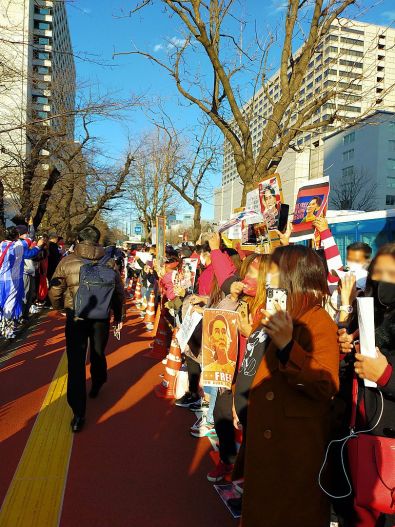
Darin Self, SEAP
Darin Self, SEAP PhD candidate in government, cowrites this opinion piece on why Myanmar’s military seized control.
Additional Information
“Early Buddhist Multilingualism.” A talk by Peter Skilling.

February 26, 2021
9:00 am
Please join us for an invited talk by Prof. Peter Skilling, generously co-sponsored by the Departments of Asian Studies, History and Philosophy; the South Asia, Southeast Asia, East Asia and Religious Studies Programs; and the Graduate and Professional Student Assembly. The event is open to all interested, and special accommodations can be made for access upon request.
Peter Skilling is a Special Lecturer at Chulalongkorn University, Bangkok. Until his retirement in 2017, he was a Professor of the French School of Asian Studies (EFEO). He specializes in the literary and material history of Buddhism in South and Southeast Asia. He publishes widely and has been visiting professor at leading universities worldwide. His forthcoming book, Questioning the Buddha (Wisdom Books, 2021), introduces and translates twenty-five Buddhist sutras.
Due to COVID-era regulations, all attendees are required to register for this event here: http://cglink.me/2ee/r987790
Upon registration you should receive an automated email with the Zoom link. If for any reason you do not receive this email, please contact Bruno at bms297@cornell.edu.
Additional Information
Program
East Asia Program
Southeast Asia Program
South Asia Program
“Creative Dimensions of Early Buddhist Textuality: The Practice of Scripture.” A talk by Eviatar Shulman (Hebrew University of Jerusalem).
February 16, 2021
12:00 pm
Please join us for an invited talk by Prof. Eviatar Shulman, generously co-sponsored by the Departments of Asian Studies, History and Philosophy; the South Asia, Southeast Asia, East Asia and Religious Studies Programs; and the Graduate and Professional Student Assembly. The event is open to all interested, and special accommodations can be made for access upon request.
Eviatar Shulman teaches Buddhist Studies at the Hebrew University of Jerusalem. Prof. Shulman's early work was on Buddhist philosophy, and he has more recently worked on religious and literary aspects of Buddhism.
Due to COVID-era regulations, all attendees are required to register for this event here: http://cglink.me/2ee/r992584
Upon registration you should receive an automated email with the Zoom link. If for any reason you do not receive this email, please contact Bruno at bms297@cornell.edu.
Additional Information
Program
East Asia Program
Southeast Asia Program
South Asia Program