
Southeast Asia Program
Myanmar’s military has a history of using deceptive tactics against protesters. Now it has social media, too.
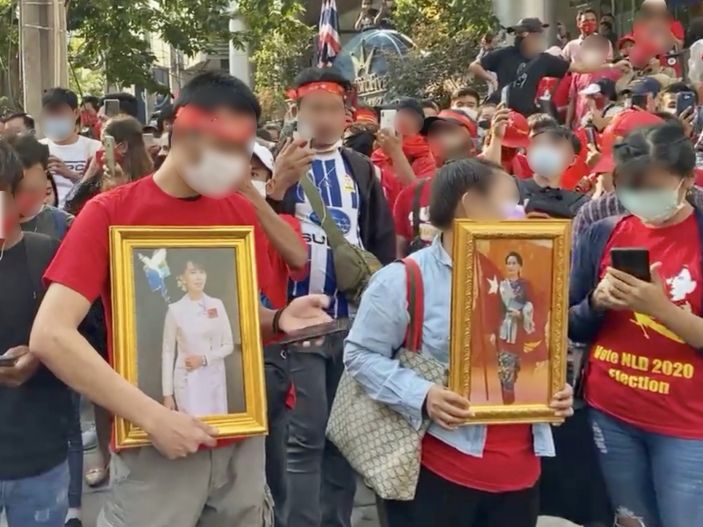
Van Tran, SEAP
View the full article by SEAP alumna Van Tran in the Washington Post.
Additional Information
Full Tuition Scholarship For SEASSI 2021!
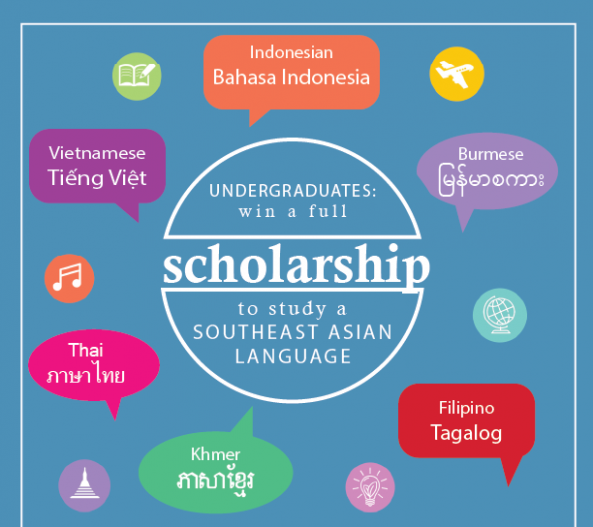
Apply by March 17!
Looking to study a Southeast Asian language this summer?
Undergraduate students are eligible to apply for a full scholarship to attend SEASSI, which teaches nine Southeast Asian languages for academic credit at three levels of instruction.
Additional Information
Building a Collection: Giok Po Oey and the John M. Echols Collection

Check out this exhibit during SEAP's 70th anniversary
As a part of the SEAP 70th Anniversary, the John M. Echols Collection has curated a digital exhibit on the life and work of Giok Po Oey. Check out the full exhibit here.
Additional Information
Studying Khmer at Cornell

Interview and article by Grace Shan
Wondering what it’s like to study a Southeast Asian language at Cornell?
Cornell is known for being one of the world's greatest centers for the study of Southeast Asia, and Cornell students have the unique opportunity to learn one (or more!) of six Southeast Asian languages from experts in their field.
Irena Rosenberg, a student from Ithaca College, studies and receives credit for Khmer at Cornell University. She currently takes Khmer classes with Professor Hannah Phan at Cornell, currently enrolled in KHMER 2202: Intermediate Khmer II. Irena says that although the classes are fast-paced, they keep you on your toes and the professor is very understanding and attentive. Her favorite part of learning Khmer is the sense of accomplishment that comes with the light-bulb moment of realizing she can actually understand and read Khmer with her basic groundwork and intermediate skills, which will continue to grow.
Irena feels that the Southeast Asian language programs have adapted well to virtual instruction through use of various media and techniques, despite the struggles the pandemic has brought. In addition, she appreciates that the classes teach the traditions, values, and proverbs of the culture in addition to the subtleties of the language itself, an integral part to immersing yourself in a new language.
This past summer, Irena participated in the Southeast Asian Studies Summer Institute (SEASSI), an eight-week intensive language training program that provides a full year of academic credit, held virtually by the University of Wisconsin-Madison, which helped her advance her skills. You can earn two semesters of language credit at the Southeast Asian Summer Studies Institute (SEASSI) this summer via synchronous remote instruction, funded by SEAP via FLAS Fellowships and SEAP scholarships!
SEASSI is an eight-week intensive summer language training program for undergraduates, graduate students, and professionals, hosted by the University of Wisconsin-Madison. Instruction is offered for academic credit in eight languages at the first, second, and third year levels: Burmese, Filipino, Hmong, Indonesian, Javanese, Khmer, Lao, Thai, and Vietnamese. Intensive instruction is given in small individualized groups taught by a team consisting of a coordinator and teachers who are native speakers of that language. Apply by April 5!
For more information on Southeast Asian languages at Cornell, visit: https://asianstudies.cornell.edu/languages
For more information on SEASSI, visit: https://einaudi.cornell.edu/learn/academics/southeast-asian-summer-studies-institute-seassi
Additional Information
Program
From Upstate New York to Foggy Bottom: Lessons from a Career in the U.S. Foreign Service, by Laura Stone

March 10, 2021
4:30 pm
Laura Stone '90 is Deputy Assistant Secretary for South Asia, overseeing U.S. policy towards and relations with India, Nepal, Sri Lanka, Bangladesh, Maldives, and Bhutan. She will discuss her wide-ranging career in the U.S. Foreign Service, as well as her perspective on diplomatic statecraft in the 21st century.
Previously, Ms. Stone served as Director of the India, Nepal, Sri Lanka, Bangladesh, Maldives, and Bhutan Affairs Office, Special Advisor to the Undersecretary of State for Economic Growth, and was Acting Deputy Assistant Secretary for China and Mongolia from 2017 to 2019. She has worked as the Director of the Office of Chinese and Mongolian Affairs; Director of the Economic Policy Office in the Bureau of East Asia and Pacific Affairs; and Economic Counselor in Hanoi, Vietnam. She served three tours in Beijing as well as tours in Bangkok, Tokyo, the Public Affairs Bureau, the Pentagon Office of the Secretary of Defense, and the Bureau of Intelligence and Research. Ms. Stone joined the Department of State in 1991 and is a career member of the Senior Foreign Service with the rank of Minister Counselor.
Ms. Stone has an M.Phil. in International Relations from Oxford University, and a B.A. from Cornell University.
This event is co-sponsored by the South Asia Center at Syracuse University.
Additional Information
Program
Einaudi Center for International Studies
South Asia Program
East Asia Program
Southeast Asia Program
"'We Were Always Buddhist:' Dalit Historiography and the Temporality of Caste." A talk by Lucinda E.G. Ramberg
March 16, 2021
4:00 pm
Please join us for an invited talk by Prof. Lucinda Ramberg, generously co-sponsored by the Departments of Asian Studies, History and Philosophy; the South Asia, Southeast Asia, East Asia and Religious Studies Programs; and the Graduate and Professional Student Assembly. The event is open to all interested, and special accommodations can be made for access upon request.
In 1956 anti-caste philosopher and statesman Dr. B.R. Ambedkar called upon his followers to convert to Buddhism as the equalitarian religion of the original inhabitants of the subcontinent. Drawing on ethnographic research, Prof. Ramberg reflects on the relationship present day Ambedkarites have to the history of ancient Buddhism. She elaborates the implications of statements by Ambedkarite Buddhists such as “we are remembering who we are” and reclaiming “our forbidden history” for the temporality of caste in relation to the politics of archaeology, gender, and history.
Lucinda Ramberg is Associate Professor of Anthropology and Feminist, Gender, & Sexuality Studies at Cornell University. Her research projects in South India have roots in longstanding engagements with the politics of sexuality, gender and religion. Her first book, Given to the Goddess: South Indian Devadasis and the Sexuality of Religion (Duke University Press 2014) explores the possibilities of vernacular religion as gendered world making and caste critique. Her current book project turns to the revival of Buddhism in South India and questions of religious conversion in relation to projects of caste radicalism, social transformation, and sexual politics. She is a 2020 Research Fellow, The ACLS/ Robert H.N. Ho Family Foundation in Buddhist Studies.
Due to COVID-era regulations, all attendees are required to register for this event here: http://cglink.me/2ee/r992603
Upon registration you should receive an automated email with the Zoom link. If for any reason you do not receive this email, please contact Bruno at bms297@cornell.edu.
Additional Information
Program
East Asia Program
Southeast Asia Program
South Asia Program
Language Instruction Grants Application Deadline

March 15, 2021
5:00 pm
The Language Resource Center offers grants for effective and innovative projects that enhance language instruction at Cornell. We welcome proposals from all languages and all levels of instruction. Lecturers, senior lecturers, and professors who are involved with language teaching and do not have visiting status are eligible to apply. Graduate students are also eligible to apply, working under the supervision of a faculty member.
Details at https://lrc.cornell.edu/funding-research
Additional Information
Program
Einaudi Center for International Studies
Southeast Asia Program
Latin American and Caribbean Studies
South Asia Program
Networked Authoritarianism at the Edge
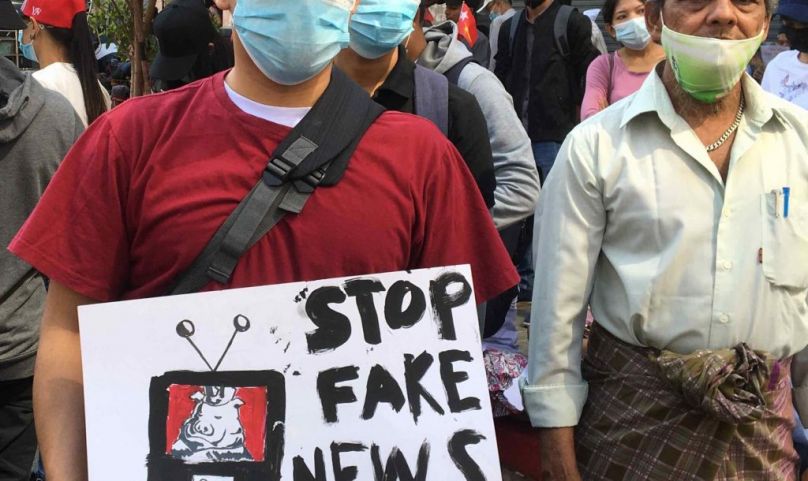
Maggie Jack, SEAP
The Tatmadaw generals’ digital strategy was a key part of their coup.
On Monday, the military government made mobile internet access intermittent. On Wednesday, the government blocked Facebook and its products (including Whatsapp and Instagram) to internet users on Myanmar-based telecoms networks. On Friday, Myanmar-based users could not access Twitter. When in-person protests raged over the weekend in Yangon, users found themselves unable to use the internet at all. The use of digital media to spread propaganda as well as internet shutdowns are now important tools of authoritarian ruling and take-over strategies. These same tools are used for surveillance and new extensions of the state into private lives. From Manila to Hanoi, governments use emerging technologies to instil fear in citizens and close down public spaces of discourse. Southeast Asian authoritarian regimes also increasingly govern through the internet, making social media a new part of civil service and a site of resistance (see Simpeng and Tapsell, 2021 for a regional view).
Read the full article on New Mandala.
Additional Information
CIAMS Lecture Series: Stephen Acabado
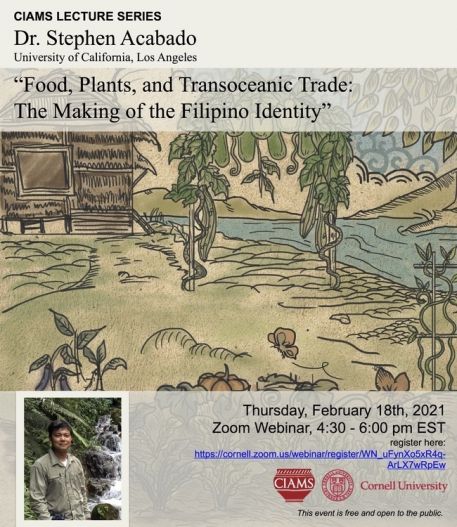
February 18, 2021
4:30 pm
"Food, Plants, and Transoceanic Trade: The Making of the Filipino Identity"
Using the quintessential Philippine garden described in the folk song, "Bahay Kubo," this presentation emphasizes how Filipinos’ ideas of food is based on an active regional interaction and a regional maritime trade that spans at least 1,000 years. “Bahay Kubo” is first learned in pre-school. It is supposed to broaden children’s knowledge of the culture of local foodways, although its Tagalog-centric focus tend to leave out local and indigenous histories. I use food and plants as backdrop to a discussion on Philippine links with the broader Asian Region and the global maritime trade in the Early Modern Period (1400-1820 CE). I also examine human-environmental interaction through a historical-ecological approach to argue that changes observed in the Philippines were part of a more extensive regional process that connected the islands to other parts of the world.
Stephen Acabado is associate professor of anthropology at the University of California, Los Angeles. His archaeological investigations in Ifugao, northern Philippines, have established the recent origins of the Cordillera Rice Terraces, which were once known to be at least 2,000 years old. Dr. Acabado directs the Bicol and Ifugao Archaeological Projects and co-directs the Taiwan Indigenous Landscape and History Project. He is a strong advocate of an engaged archaeology where descendant communities are involved in the research process.
Additional Information
Program
Einaudi Center for International Studies
Southeast Asia Program
Explore Nature Through Sound and Music Webinar: Tropical Oceans and Islands
February 16, 2021
12:00 pm
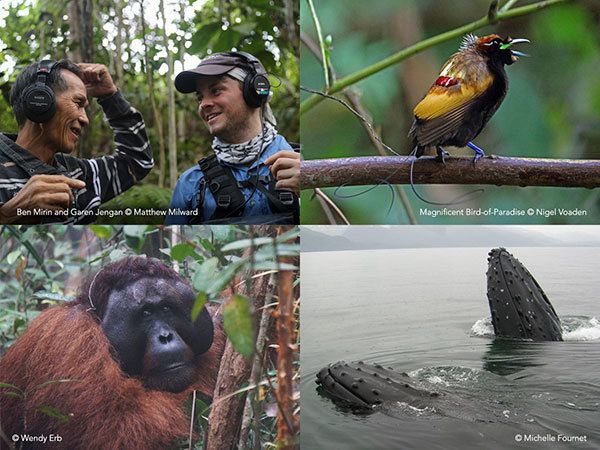
Take an auditory journey through tropical oceans and islands with the Cornell Lab’s Center for Conservation Bioacoustics as we combine science and music for an hour of entertainment, information, and audience Q&A. Our researchers show you how they study the magnificent animals of the area by capturing their wild sounds, and DJ Ecotone (Ph.D. student Ben Mirin) transforms these sounds into live music during the session. The webinar is free.
Images, clockwise from upper-left: Ben Mirin recording © Derek Rowe, Magnificent Bird-of-Paradise © Nigel Voaden/Macaulay Library, Humpback Whales © Michelle Fournet, Orangutan © Wendy Erb.
Additional Information
Program
Einaudi Center for International Studies
Southeast Asia Program