
Southeast Asia Program
Martin Gilbert

Associate Professor of Practice, Population Medicine and Diagnostic Sciences
Martin Gilbert is interested in pursuing health-related research that has direct relevance to the conservation of wildlife, particularly carnivores and scavengers. This includes approaches to understand how endangered species are impacted at a population level by infectious disease (such as canine distemper virus in free-ranging Amur tigers), as well non-infectious agents (such as the pharmaceutical diclofenac in Asian vultures).
Additional Information
Program
Role
- Faculty
- SAP Faculty Associate
- SEAP Faculty Associate
Contact
Email: m.gilbert@cornell.edu
Jeremy Foster

Emeritus/Retired Associate Professor, Architecture
Jeremy Foster is interested in the opportunities landscape thinking offers for environmental understanding, interpretation, and design practice. His publications explore how built/grown landscapes of varying scales—historical and contemporary—are produced and reproduced through the entanglement of cultural discourses, representational regimes, environmental processes, and sociomaterial practices.
Additional Information
Iwan Jaya Azis

Adjunct Professor, Applied Economics and Management
Iwan Jaya Azis is an adjunct professor of applied economics and policy in the Charles H. Dyson School of Applied Economics and Management.
Additional Information
Spring 2021 Gatty Lecture Series

We are happy to announce the Spring 2021 Gatty Lecture Series!
All lectures will be held virtually on Zoom, and more information for each talk is available below.
The full poster for the Spring 2021 Gatty Lecture Series is available here.
The timing of the lecture series has changed for this semester. Talks will still be held on Thursdays, but to accommodate speakers and audiences in Asia some will take place at 12:30pm Eastern and others at 8:00pm Eastern Please be sure to read the description for each talk to be certain which time slot it will be.
List of Speakers
- 2/11 - Joe Pittayaporn (Chulalongkorn Universityl): Old Thai and the Arrival of Thai in Central Thailand
- 2/18 - Cherubim Quizon (Seton Hall University): Beyond Bloody Reds: Notes on the Significance of Morinda in the Bagobo Textile Hierarchy
- 2/25 - John Burgess (Independent Author and Journalist): Cambodia's Angkor Temples as a Military Prize: The World War II Experience
- 3/4 - Mai Van Tran (Cornell): Activist Resilience under Repression: The Role of Bystander Protection in the Burmese Pro-Democracy Movement
- 3/11 - Alexandra Dalferro (Cornell): Knots as Nodes of Power: Practices of Pattern-making and Discourses of Copying among Silk Weavers in Surin
- 4/1 - Anthony Irwin (Cornell): Everybody Gets a Sword! The Production and Proliferation of Buddhist Ritual Weaponry in Northern Thailand
- 4/8 - Ronit Ricci (Hebrew University of Jerusalem): Title TBA, link coming soon.
- 4/22 - Gavin Douglas (UNC Greensboro): Sound, Music, and Buddhism in Myanmar/Burma
- 4/29 - Juliet Lu (Cornell): South of the Clouds, North of the Nagas: Yunnan’s Changing Role in the Mekong Region
- 5/6 - Ian Baird (University of Wisconsin-Madison): Rise of the Brao: Ethnic Minorities in Northeastern Cambodia During Vietnamese Occupation
- 5/13 - Vinh Phu Pham (Cornell): Configuring the Future in Vietnamese Francophone: Readings of Marguerite Duras, Pham Duy Khiêm, and Kim Lefèvre
Semester Poster
The poster of Gatty Lectures for Spring 2021 contains information about all lectures as well, including speaker names, affiliations, and lecture titles.
Additional Information
Program
Everybody Gets a Sword! The Production and Proliferation of Buddhist Ritual Weaponry in Northern Thailand
April 1, 2021
12:30 pm
Part of the Ronald and Janette Gatty Lecture Series
Anthony Irwin, Society for the Humanities Postdoctoral Fellow, Cornell University
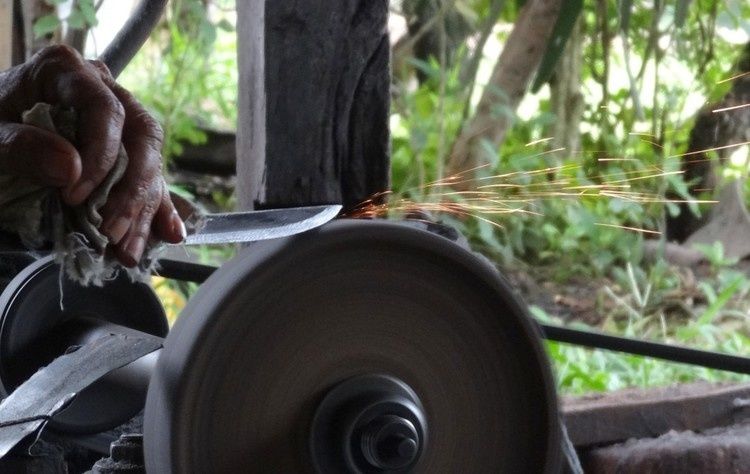
This talk focuses on the production, ritual use, and recent mass proliferation of magical swords in northern Thailand. Considered to be some of the most powerful Buddhist objects in the northern Thai ritual repertoire, magical swords constitute a category of objects that are connected to state power, ritual efficacy, divine might, and the ability to change the course of personal spiritual progression through numerous rounds of rebirth. By presenting a number of historical, ethnographic, textual, and material examples of magical swords, this talk presents how northern Thai Buddhists use swords to demarcate Buddhist space, protect their homes from malevolent forces, and liberate themselves from the unruly outcomes of desire and attachment.
Additional Information
Program
Einaudi Center for International Studies
Southeast Asia Program
Rise of the Brao: Ethnic Minorities in Northeastern Cambodia during Vietnamese Occupation

May 7, 2021
8:00 pm
Part of the Ronald and Janette Gatty Lecture series
Ian Baird, Professor of Geography and Director of the Center for Southeast Asian Studies (CSEAS), University of Wisconsin-Madison
For many Cambodians, the People’s Republic of Kampuchea (PRK) period of the 1980s is seen as a time of intense civil war, international isolation, and Vietnamese occupation: a dark period. In this presentation, which is based on my new book, Rise of the Brao: Ethnic Minorities in Northeastern Cambodia during Vietnamese Occupation, I explain the circumstances that led many ethnic Brao Amba people to join the Khmer Rouge in the 1960s. I also outline the events that resulted in most of the Brao in Taveng District, Ratanakiri Province—as well as some other ethnic minorities—turning against the Khmer Rouge, and fleeing to become political refugees in the Central Highlands of Vietnam and southern Laos in 1975. I then briefly explain the deterioration of relations between the Khmer Rouge and Vietnam, and how the refugees from Cambodia were organized into a fighting force designed to assist and especially legitimize the Vietnamese in removing the Khmer Rouge from power in 1979. For the Brao, the 1980s represented a kind of “golden age”, as their loyalty to Vietnam resulted in them being appointed to the highest positions in the government and military in northeastern Cambodia. Finally, I consider how Brao people evaluate the PRK period compared with present-day circumstances. Until recently, most modern histories related to Cambodia have been centered in the capital city of Phnom Penh. This research demonstrates the need to decenter Cambodian history and focus on what I call “marginal histories”, histories that are not marginal due to being unimportant, but rather because they are not centrally focused.
Additional Information
Program
Einaudi Center for International Studies
Southeast Asia Program
“Like China 30 years ago” Chinese Discourses of Development in Northern Laos
April 29, 2021
12:30 pm
***Formerly titled "South of the Clouds, North of the Nagas: Yunnan's Changing Role in the Mekong Region." The title and abstract of this talk have changed slightly.***
Part of the Ronald and Janette Gatty Lecture series
Dr. Juliet Lu, Atkinson Center for Sustainability Postdoctoral Fellow, Department of Development Sociology, Cornell University
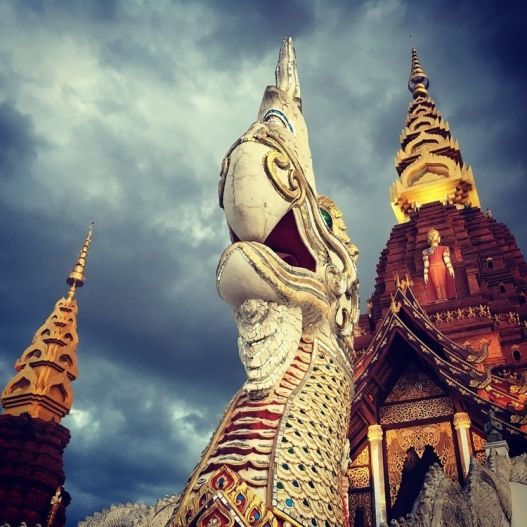
Since the late 1990s, Chinese investment in Laos has grown exponentially and is transforming many areas of the country. Chinese actors involved in driving this expansion, from traders to agribusiness firms to state officials, tend to insist that these investments are not just business endeavours but drivers of development. They often compare Laos to China 30 years ago in terms of its degree of economic development, articulating a narrative that China’s model of development can be exported and applied in other countries. In this talk, I present multiple perspectives on how ideals of development translate from China into the Lao context. I use the stories of three groups of actors engaged in the cross-border agribusiness investments and trade to show how narratives of development are rooted in personal histories and ties to China. These experiences often differ and the narratives of development that individual actors tell are motivated by their own strategic interests. Still, they demonstrate the tendency to compare the two countries as a way of understanding the rapid transformation of Laos through Chinese investment, and of considering broader implications for the future.
Additional Information
Program
Einaudi Center for International Studies
East Asia Program
Southeast Asia Program
Sound, Music, and Buddhism in Myanmar/Burma

April 22, 2021
12:30 pm
Part of the Ronald and Janette Gatty Lecture series
Gavin Douglas, Professor of Ethnomusicology and Adjunct Professor of Anthropology, UNC Greensboro
According to the seventh Buddhist precept, participation in musical events in the Theravada Buddhist world is deemed inappropriate for devote laity and those who have taken monastic vows. However, in practice, the life of lay Buddhists and monks is filled with sculpted sound. In this talk, I will examine this precept among the activities of Buddhists in Myanmar. In addition to many Buddhist inflected traditions that are recognized as music (zat theatre, thachin gyi, dhamma gita), there are numerous others situation where sound is musically organized to further Buddhist goals (paritta chants, prayers, sermons, bells and gongs to mark ritual moments). Interviews with Burmese monks, devote laity, instrument makers, and musicians documented by audio and video reveal many contradictory interpretations of the seventh precept. For Buddhist scholars, I aim to highlight the significant and largely unacknowledged role that sculpted sound plays in Buddhist practice. For music scholars, I will reveal sonics domains that have previously generated little attention.
Additional Information
Program
Einaudi Center for International Studies
Southeast Asia Program
Knots as Nodes of Power: Practices of Pattern-making and Discourses of Copying among Silk Weavers in Surin

March 11, 2021
12:30 pm
Part of the Ronald and Janette Gatty Lecture series
Alexandra Dalferro, PhD Candidate in Sociocultural Anthropology, Cornell University
Silk textiles woven in Surin Province are recognized across Thailand for the complex matmi, or ikat, patterns they bear. Matmi patterns are achieved by tying hundreds of knots around bunches of threads to prevent color from seeping in and dyeing them in stages before they are woven. Master weavers design patterns that are quickly circulated and “copied” by other weavers, much to the dismay of the business owners who hold exclusive rights to sell some masters' sought-after silks. This talk engages the materiality of knots and techniques of knotting to think about power, ownership, and expertise among weavers and other competing actors in the silk industry in Surin. Focusing on the activities of master weaver Khru Aromdi, I examine discourses and debates about matmi copying. While tacit agreement exists among most designers that certain motifs and established patterns are part of a shared heritage and can’t be claimed by any one individual, this category’s boundaries often dissolve in practice, as distinct understandings of what constitutes “copying” are mobilized to accomplish various ends. Drawing from over one year of fieldwork in Surin, I foreground the specifics of everyday articulations of matmee imitation and the strategies developed both to facilitate and prevent copying. These moments reflect how actors grapple with tensions as they knot matmi bundles whose threads can be followed to discern tangles and patterns that are both visual and graphic, and cosmological and ideological.
Additional Information
Program
Einaudi Center for International Studies
Southeast Asia Program
Activist Resilience under Repression: The Role of Bystander Protection in the Burmese Pro-Democracy Movement

March 5, 2021
8:00 pm
Part of the Ronald and Janette Gatty Lecture series
Mai Van Tran, Ph.D., Department of Government, Cornell University
What accounts for the survival and long-term commitment of activists to social movements under repression? I argue for the role of an important yet oft-neglected player: civilian bystanders and observers of opposition activism. I propose that protective support by ordinary citizens helps the activists to escape crackdowns and bolsters their attachment to their movement. To test my argument, I study hard cases for activist survival during both protest and non-protest periods under the two decades of Burmese military rule 1988-2010, with an original qualitative dataset consisting of semi-structured interviews and written testimony of more than 100 ordinary citizens and former pro-democracy activists in Myanmar. The novelty of this dataset is the unprecedented number of voices from the average, non-contentious general public, which are mostly missing in existing research on social movements. This approach generates a novel perspective to better understand opportunities and constraints around movement entrepreneurs.
Additional Information
Program
Einaudi Center for International Studies
Southeast Asia Program