
East Asia Program
Information Session: International Minors
November 3, 2026
4:30 pm
Uris Hall, G08
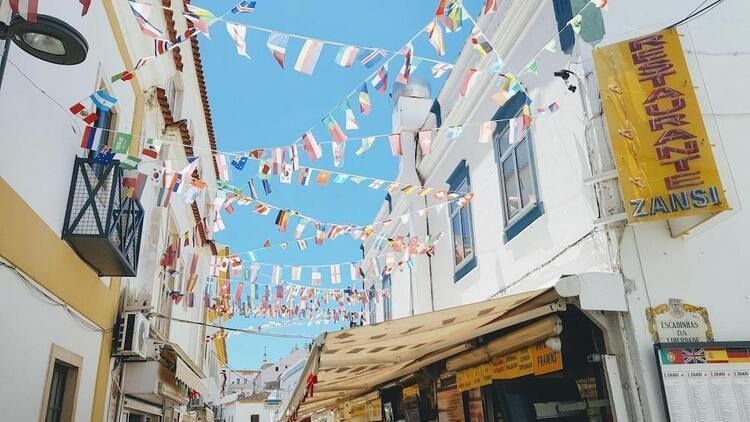
Take your learning to the next level with minors from the Einaudi Center for International Studies and our programs. In this session, you'll learn about international minors that can help you expand your global knowledge. View a full list of minors.
Caribbean Studies
The Caribbean Studies minor will equip you to better understand the sociocultural, economic, and political forces—indigenous dispossession, slavery, capitalism—that shape the region and how those forces resonate globally.
European Studies
Explore Europe’s past, present, and future and demonstrate a knowledge of European languages, culture, politics, and international relations.
International Relations
Study global governance, politics, economics, history, languages, and cultures across national boundaries.
Migration Studies
Learn about how human migration and migrant experiences shape our world on the move.
Can’t attend? Contact programs@einaudi.cornell.edu to learn more.
***
The Mario Einaudi Center for International Studies hosts info sessions for graduate and for undergraduate students to learn more about funding opportunities, international travel, research, and internships. View the full calendar of fall semester sessions.
Additional Information
Program
Einaudi Center for International Studies
Reppy Institute for Peace and Conflict Studies
East Asia Program
Southeast Asia Program
Latin American and Caribbean Studies
Institute for African Development
Institute for European Studies
South Asia Program
Migrations Program
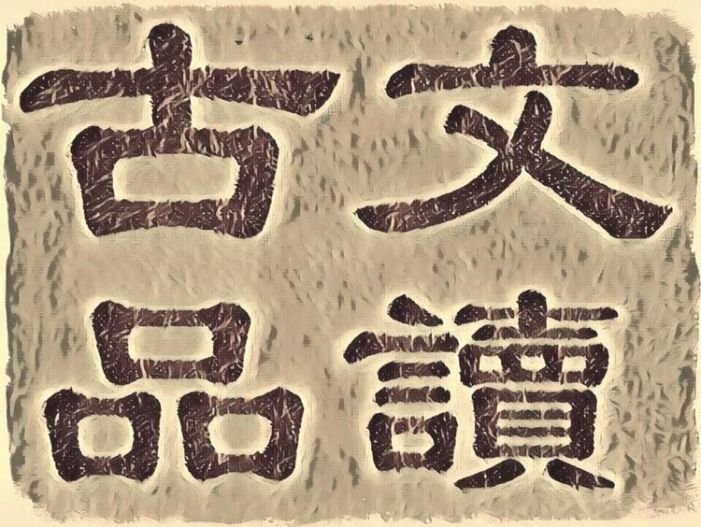
CCCC: Intimacies of the Guestless Guesthouse Diplomacy with the Departed in Post-Parhae Japan
December 4, 2026
3:30 pm
Rockefeller Hall, 374 (Asian Studies Lounge)
Speaker: Jeffrey Niedermaier, Brown University
Title: "Intimacies of the Guestless Guesthouse: Diplomacy with the Departed in Post-Parhae Japan."
Abstract:
Its name evoking the sonorous chamber of a great migratory bird bearing messages from afar, the Kōrokan 鴻臚館 guesthouse was a major node in Japan’s diplomatic infrastructure as well as a symbolic component of the Heian state’s (794–1185) bid to present itself as a “Middle Kingdom” or “Central Efflorescence” (Chūka 中華) of Chinese inspiration: an outwardly radiating civilizing force and a destination for foreign tribute from all corners of the world. In practice, though, the Kyoto Kōrokan welcomed few visitors besides fur-clad emissaries from the northerly kingdom of Parhae 渤海 (J. Bokkai, C. Bohai), a close diplomatic and commercial partner to the Japanese court. In the decades after Parhae’s collapse in 926, the guesthouse gradually fell into disuse and disrepair.
For the Japanese literati who would receive their Parhaean peers in the Kōrokan, the guesthouse and its guests carried sense and sentiments in excess of raw geopolitical expediency. This surplus sentimentality is on retrospective display in a petition penned by the poet-official Sugawara no Fumitoki 菅原文時 (899–981) and presented to the emperor in 957, “Requesting That the Kōrokan Not Be Abandoned, so as to Cherish Persons from Afar and Encourage Our Men of Letters” (Kōrokan o haishitsu sezu shite, enjin o natsuke, bunshi o hagemasamu koto o kou 請不廃失鴻臚館懐遠人励文士事). Fumitoki was the grandson of the great statesman-scholar Sugawara no Michizane 菅原道真 (845–903), who carried out diplomacy and reveled at poetic banquets with his Parhaean counterparts, but Fumitoki fretted that younger graduates would never have the chance to engage in a “battle of brushes” (fude o tatakawashimu 闘筆) in a structure he valued as a “literary arena” (bunjō 文場). In this colloquium session, we will read Fumitoki’s petition and trace its nostalgic, counterintuitive, and heavily allusive argument resituating the guestless guesthouse in an affective economy of letters.
About Cornell Classical Chinese Colloquium
The group meets monthly during the semester to explore a variety of classical Chinese texts and styles. Other premodern texts linked to classical Chinese in Japanese, Korean, and Vietnamese have also been explored. Presentations include works from the earliest times to the 20th century. Workshop sessions are led by local, national, and international scholars. Participants with any level of classical Chinese experience are welcome to attend.
o At each session, a presenter guides the group in a reading of a classical Chinese text. Attendees discuss historical, literary, linguistic, and other aspects of the text, working together to resolve difficulties in comprehension and translation.
o No preparation is required; all texts will be distributed at the meeting.
o Refreshments will be served.
Additional Information
Program
Einaudi Center for International Studies
East Asia Program
Decolonial Endurance: Indigenous Wellbeing Against Chinese Settler Colonialism
November 24, 2026
12:15 pm
Kahin Center
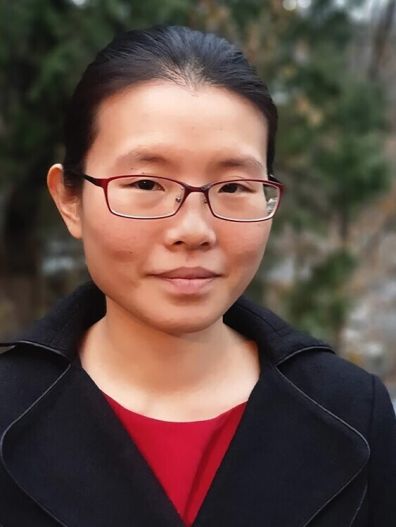
Speaker: Ting Hui Lau, Assistant Professor of Sociology and Anthropology, University of Singapore
Title: Decolonial Endurance: Indigenous Wellbeing Against Chinese Settler Colonialism
Abstract: Like many countries in Asia, China does not recognize the existence of Indigenous peoples within its borders, insisting instead on the category of ethnic minority. This denial of Indigeneity forecloses discussions of Chinese colonialism, with long-term implications for Indigenous health and wellbeing. Drawing on my new book, Decolonial Endurance: Lisu World-Making Against Chinese Settler Colonialism (Stanford University Press, 2026), I argue that Indigenous health is inextricably linked to decolonization: the return and repair of Indigenous relations to land, language, livelihood, and self-determination. I focus on Indigenous Lisu subsistence farmers on the China-Myanmar border and their experiences of Chinese development. Based on long-term ethnographic fieldwork, I show how Lisu health challenges are connected to their experiences of Chinese colonialism, carried out today in the form of state-led development. At the same time, moving beyond discourses of Indigenous victimhood, I trace Lisu practices of everyday decolonization. Through storytelling, care, play, and prayer, Lisu enact forms of decolonial worldmaking that enable them to endure colonial erasure by sustaining relationships with land, refusing assimilation, and imagining alternative futures. These practices, too, are critical to health. The refusal to recognize Indigeneity, and the collapsing of Indigenous struggles into class-based or regional problems, obscures a major dimension of Indigenous health. Public health interventions must therefore attend not only to access to health services, but also to the political conditions of Indigenous wellbeing: decolonization, cultural revitalization, and Indigenous resurgence.
Lunch is provided.
Speaker's bio:
Assistant Professor Lau Ting Hui is a sociocultural anthropologist in the Department of Sociology and Anthropology in the National University of Singapore. Her research focuses on mental health, development, and Indigeneity in Asia.
Additional Information
Program
Einaudi Center for International Studies
East Asia Program
Southeast Asia Program
Reppy Institute for Peace and Conflict Studies
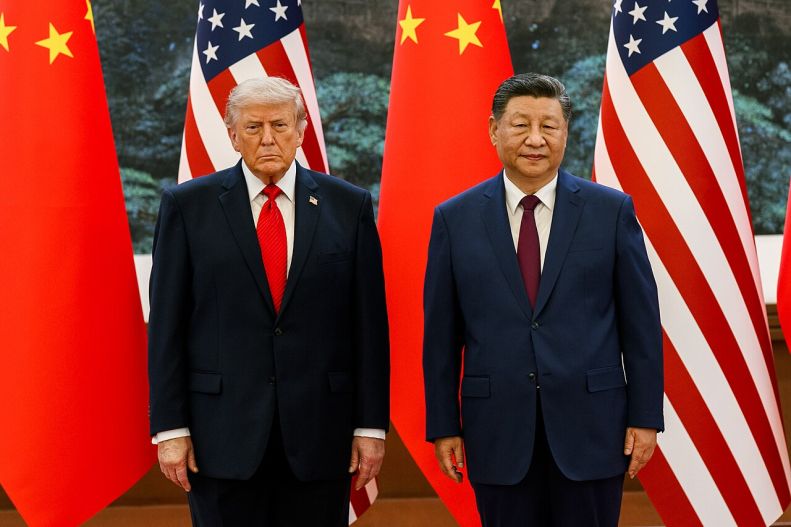
Xi Meets Trump After 10 Days Out of Public Eye Amid Health Speculation
Allen Carlson, EAP/SAP/SEAP
Allen Carlson, a Cornell University associate professor of government and expert on Chinese foreign policy, provides analysis on the U.S.-China summit and its geopolitical implications.
Additional Information
Gengrun Li
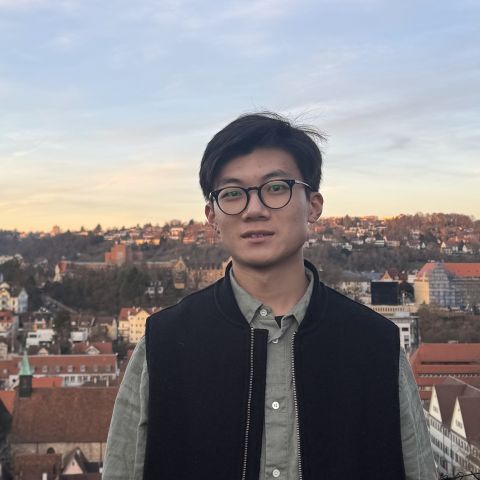
Graduate Student
Degree Pursued: PhD
Anticipated Degree Year: 2032
Discipline: Global Development
Primary Language: Mandarin, Malay, Indonesian, Thai
Research Countries: Malaysia, Thailand
Research Interests: Environmental and economic anthropology, political ecology, food studies, plantation agriculture, supply chain, labor migration, Southeast Asia, Global China
Additional Information
Fina Chu
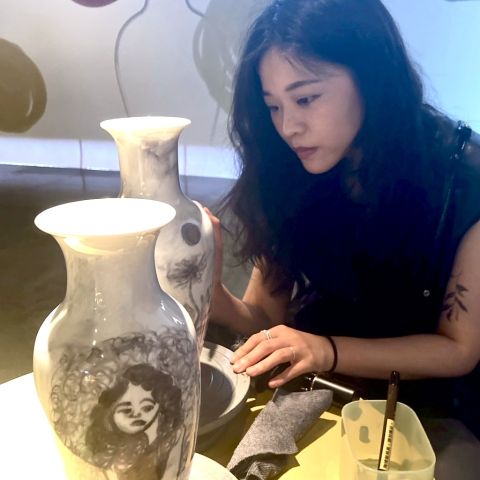
Graduate Student
Degree Pursued: PhD
Anticipated Degree Year: 2033
Discipline: Art History
Research Interests: modern and contemporary Taiwanese art and visual culture, with broader interests in East Asian art, global modernisms, and museum studies.
Additional Information
Xinyu H. Zhang

Graduate Student
Degree Pursued: PhD
Anticipated Degree Year: 2028
Discipline: Comparative Literature
Research Interests: translation, critical theory
Additional Information
Chencong Zhu
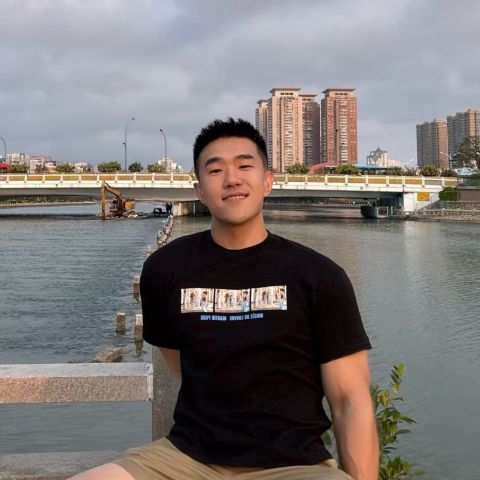
Graduate Student
Degree Pursued: PhD
Anticipated Degree Year: 2028
Discipline: Anthropology
Additional Information
Fengyue Lisa Zhao

Graduate Student
Degree Pursued: PhD
Anticipated Degree Year: 2028
Discipline: Linguistics
Research Interests: Linguistics, Speech Science
Additional Information
Xingruo Zhang
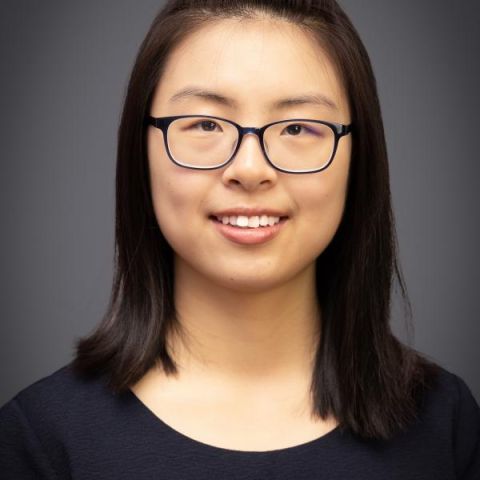
Graduate Student
Degree Pursued: PhD
Anticipated Degree Year: 2029
Discipline: ILR
Research Interests: Diversity, Equity, and Inclusion; Culture; Perception; Decision Making