
East Asia Program
November 8 Hong Kong: Global China's Restive Frontier

From shopping paradise to city of protests
The Cornell Contemporary China Initiative welcomes CK Lee, Professor, Sociology, UCLA speaking on
Hong Kong: Global China’s Restive Frontier
How did Hong Kong transform itself from a “shoppers’ and capitalists’ paradise” into a “city of protests” at the frontline of an anti-China global backlash?
Hong Kong: Global China’s Restive Frontier
More than an ideological conflict between a liberal capitalist democratizing city and its Communist authoritarian sovereign, the Hong Kong story, stunning and singular in its many peculiarities, also offers general lessons about a global force and its uneven consequences.
This talk will not be recorded.
November 8 at 4:45 p.m. ET
In the Cornell Contemporary China Initiative’s seventh year, our guest speakers and host Allen Carlson critically examine, the question “What is China?”
This topic is explored in the series through utilizing an inter-disciplinary perspective and making use of both historical and contemporary lenses. In so doing it will touch upon some of the most pressing and significant political and social issues now facing “China” and the rest of the world. In this context, particular attention will be paid to contested places, with special consideration of how they are placed within (or without) what is considered to be China. And will shed light on the impact such practices and processes have had on those living in these regions.
Hosted by Allen Carlson, CAPS Director, and Michael J. Zak, Chair, Cornell University
Co-sponsored by the East Asia Program and The Levinson China and Asia-Pacific Studies (CAPS) Program
The lecture series complements Professor Carlson’s course of the same name:
CAPS 3967 / ASIAN 3395 / GOVT 3967
Additional Information
Lingua Mater Alumni Competition Deadline
November 8, 2021
5:00 pm
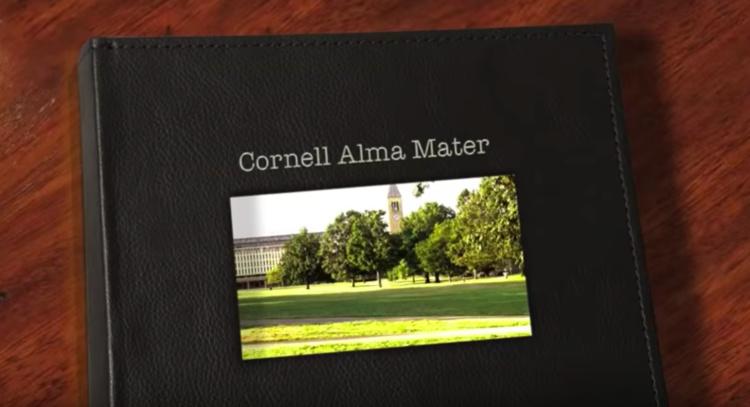
The Lingua Mater competition invites alumni to translate Cornell's Alma Mater into a different language and submit a video of the performed translation. The inaugural Lingua Mater alumni competition took place in 2018 as part of Cornell's Global Grand Challenges Symposium. Winners included the Cornell Club of Thailand 2018 and the Cornell Club of Gaeta, Italy in 2019, and won financial support of a local alumni event.
2021 competition details
Can you translate Cornell’s Alma Mater into your mother tongue (or a language you learned at Cornell) and sing it? We invite you to translate “Far Above Cayuga’s Waters” and submit a video of you (and your friends!) performing it, wherever you may be!
Translations do not need to be exact or perfectly in meter but should capture the feel and tune of our university’s Alma Mater. As is customary, include the first verse, refrain, second verse, and refrain in your video submission (for guidance, listen to a performance and read the lyrics).
Video submissions need to be MP4 files at 1920 x 1080 (1080p), in landscape mode with an aspect ratio of 16:9. Please ensure that you have copyright permission for any images/videos you use.
Entries will be reviewed by a panel of judges. Submissions will be judged equally on the translation, the musical quality, and the creativity in visual presentation.
The top entry will receive financial support and Cornell swag for a local alumni event.
Winners will be announced during International Education Week (November 15-19, 2021) via Noteworthy, and the top video will be posted online that week. Be sure to subscribe to our weekly newsletter to stay in the know of this competition and international alumni activities.
Entries may be submitted by any Cornell alumni groups outside of the United States and Canada.
Submission deadline: Monday, November 8, 2021 at 5 pm ET
SUBMIT YOUR VIDEO AND LYRICS HERE
Please contact the International Alumni Relations team if you have any questions.
The Lingua Mater competition is co-sponsored by the Office of International Alumni Relations, the Language Resource Center, and the Office of the Vice Provost for International Affairs.
Additional Information
Program
Einaudi Center for International Studies
East Asia Program
Southeast Asia Program
Latin American and Caribbean Studies
South Asia Program
Joseph Nye | The American State in a Multipolar World: The Future of U.S.-China Relations
November 1, 2021
4:30 pm
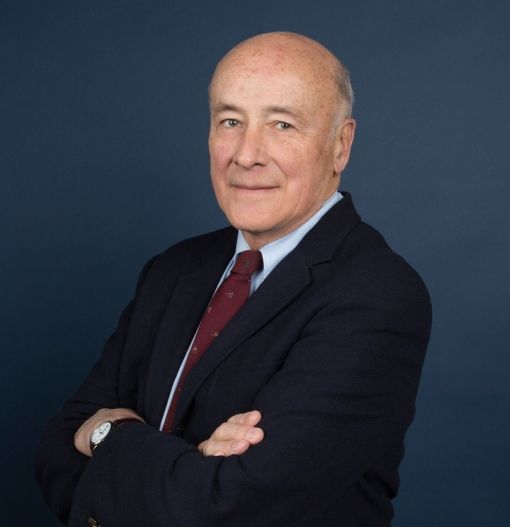
Will the rise of China lead to conflict with the United States? Or is cooperation still possible in the current political order? Joseph S. Nye, Jr., University Distinguished Service Professor, Emeritus and former Dean of the Harvard Kennedy School of Government, offers a fresh perspective on the future of U.S.-China relations, suggesting that cooperative rivalry offers a path to preventing conflict and solving crises.
Join the Center for the Study of Economy & Society for the second installment of its fall lecture series, “The American State in a Multipolar World.” The series features distinguished scholars and public intellectuals: Francis Fukuyama, Joseph Nye Jr., Jeffrey D. Sachs, and Andrew J. Bacevich as they discuss the issues and choices facing the American state in a multipolar global economy and shifting world system. Does maintaining American democracy rely on American hegemony? Is a new Cold War compatible with the priorities of climate change and the covid pandemic, which require inter-state cooperation?
What you will learn:
Whether geopolitical rivalry prevents cooperationHow empowering others helps nations achieve their own goalsThe key challenges facing the international community in the 21st centuryAbout the Speaker:
Joseph S. Nye, Jr. Is University Distinguished Service Professor, Emeritus and former Dean of the Harvard Kennedy School of Government. He earned his bachelor’s degree from Princeton University, attended Oxford University on a Rhodes Scholarship, and earned a Ph.D. in Political Science from Harvard University. He has previously served as the U.S. Assistant Secretary of Defense for Security Affairs, Chair of the National Intelligence Council, and Deputy Under Secretary of State for Security Assistance, Science and Technology. He is a fellow of the American Academy of Arts and Sciences, the British Academy, and the American Academy of Diplomacy. He has written extensively on U.S. diplomacy and foreign policy and was named as one of the top 100 Global Thinkers in 2011 by Foreign Policy. His most recent books are Do Morals Matter? (2019), Is the American Century Over? (2015), and Presidential Leadership and the Creation of the American Era (2013).
Additional Information
Program
East Asia Program
Announcing the winners of the Kyoko Selden Memorial Translation Prize for 2021

We are happy to announce the winners of the Kyoko Selden Memorial Translation Prize for 2021.
Excerpts from Shōkenkō 蕉堅稿: The Selected Poems of Zekkai Chūshin 絶海中津 (1336-1405). Written by Zekkai Chūshin (1336-1405).
Translated by Paul Atkins. Paul Atkins is Professor of Japanese, Department of Asian Languages and Literature, University of Washington,
A Dosimeter on the Narrow Road to Oku (線量計と奥の細道, 2018). Written by Durian Sukegawa (ドリアン助川).
Translated by Alison Watts. Alison Watts is a freelance literary translator living in Tōkai-mura, Ibaraki Prefecture, Japan.
The Kyoko Selden Translation Prize: https://asianstudies.cornell.edu/selden-prize
Additional Information
Program
Whose America? Our America! --- Ayukawa Nobuo and the (Lost) Origin of Postwar Japanese Poetry
November 10, 2021
12:00 pm
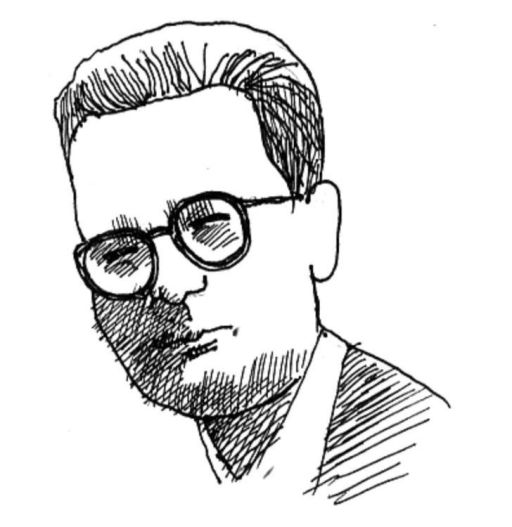
Whose America? Our America! --- Ayukawa Nobuo and the (Lost) Origin of Postwar Japanese Poetry is the focus of this Rough Work session with our guest speaker Yoshiaki Mihara (Hitotsubashi U. / Tokyo, Japan)
It is generally acknowledged that post-WWII Japanese poetry commenced with the formation of a coterie of young poets who called themselves Arechi-ha (“The Waste Land School”). It is also generally acknowledged that the coterie, as its self-naming well suggests, was heavily influenced by T. S. Eliot and his contemporary Modernist poets writing in post-WWI Europe. In this “Rough Work” session, Mihara would like to question the myth of this elective affinity by reading Ayukawa Nobuo (1920-1986), leading poet-critic of the coterie, especially his 1947 long poem “America” with the poet’s own “Notes” attached to it (in an ostensibly Eliotic fashion), together with his highly influential critical prose at that time, so as to examine what was at stake in the original moment of Sengo-shi (“Postwar Poetry”), which overshadows Japanese poetry, if not Japanese literature and criticism in general, even to this day.
Rough Work: Research in progress with an informal discussion for feedback and further exploration.
Additional Information
Program
Einaudi Center for International Studies
East Asia Program
"Legitimating the State: China,1300-present"
November 5, 2021
1:30 pm
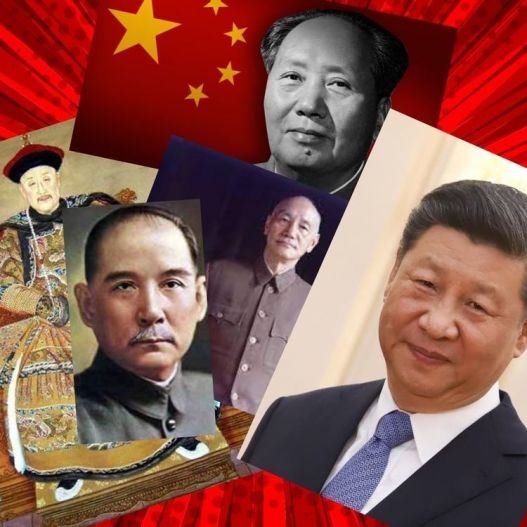
Legitimating the State: International Orders and Political Imaginations of China,1300-present
This round-table includes Prof. Tim Brook of the University of British Columbia, Professor David Robinson of Colgate University, Professor Jenny Day of Skidmore College, and Mara Yue Du of Cornell University. Panelists will discuss the evolving meaning of "China" and how the self-legitimating state in China interacted with changing domestic and global conditions from the Mongol period to the present.
This event is co-sponsored by the East Asia Program and the Central New York Humanities Corridor.
Additional Information
Program
East Asia Program
Einaudi Center for International Studies
The Pitfalls of Piety for Married Women: Two Precious Scrolls of the Ming Dynasty

The Pitfalls of Piety for Married Women shows how problematic the practice of Buddhist piety could be in late imperial China. Two thematically related "precious scrolls" (baojuan) from the Ming dynasty, The Precious Scroll of the Red Gauze and The Precious Scroll of the Handkerchief, illustrate the difficulties faced by women whose religious devotion conflicted with the demands of marriage and motherhood.
Book
55.00
Additional Information
Program
Type
- Book
- Cornell East Asia Series
Publication Details
Publication Year: 2021
ISBN: 9781501758362
Coming Home to a Foreign Country: Xiamen and Returned Overseas Chinese, 1843–1938

Ong Soon Keong explores the unique position of the treaty port Xiamen (Amoy) within the China-Southeast Asia migrant circuit and examines its role in the creation of Chinese diasporas. Coming Home to a Foreign Country addresses how migration affected those who moved out of China and later returned to participate in the city's economic revitalization, educational advancement, and urban reconstruction. Ong shows how the mobility of overseas Chinese allowed them to shape their personal and community identities for pragmatic and political gains.
Book
65.00
Additional Information
Program
Type
- Book
- Cornell East Asia Series
Publication Details
Publication Year: 2021
ISBN: 9781501756184
Disruptions of Daily Life: Japanese Literary Modernism in the World

Disruptions of Daily Life explores the mass media landscape of early twentieth century in order to uncover the subversive societal impact of four major Japanese authors: Tanizaki Jun'ichirō, Yokomitsu Riichi, Kawabata Yasunari, and Hirabayashi Taiko. Arthur Mitchell examines this literature against global realities through a modernist lens, studying an alternative modernism that challenges the Western European model.
Book
55.00
Additional Information
Program
Type
- Book
- Cornell East Asia Series
Publication Details
Publication Year: 2020
ISBN: 9781501752919
Counting Dreams: The Life and Writings of the Loyalist Nun Nomura Bōtō

Counting Dreams tells the story of Nomura Bōtō, a Buddhist nun, writer, poet, and activist who joined the movement to oppose the Tokugawa Shogunate and restore imperial rule. Banished for her political activities, Bōtō was imprisoned on a remote island until her comrades rescued her in a dramatic jailbreak, spiriting her away under gunfire. Roger K.
Book
64.95
Additional Information
Program
Type
- Book
- Cornell East Asia Series
Publication Details
Publication Year: 2021
ISBN: 9781501759994