
East Asia Program
Info Session: Fulbright Opportunities for Graduate Students
September 29, 2021
4:45 pm
The Fulbright U.S. Student Program provides full funding for graduate and professional students conducting research or teaching in any field in more than 150 countries. Open to U.S. citizens only.
The Fulbright-Hays Doctoral Dissertation Research Abroad program supports doctoral students conducting research in modern languages or area studies for six to 12 months. Open to U.S. citizens and permanent residents of the United States. Travel to Western European countries is not eligible.
Contact: fulbright@einaudi.cornell.edu
Additional Information
Program
Einaudi Center for International Studies
Reppy Institute for Peace and Conflict Studies
East Asia Program
Southeast Asia Program
Latin American and Caribbean Studies
Institute for African Development
Institute for European Studies
South Asia Program
Info Session: International Relations Minor
September 22, 2021
4:45 pm
Is the Einaudi Center's International Relations minor for you? Here's a chance to find out. Graduates go on to successful careers in fields like international law, economics, agriculture, trade, finance, journalism, education, and government service.
Contact: irm@einaudi.cornell.edu
Additional Information
Program
Einaudi Center for International Studies
Reppy Institute for Peace and Conflict Studies
East Asia Program
Southeast Asia Program
Latin American and Caribbean Studies
Institute for African Development
Institute for European Studies
South Asia Program
Info Session: Migration Studies Minor
September 8, 2021
4:45 pm
The migration studies minor is a university-wide, interdisciplinary undergraduate minor that prepares students to understand the historical and contemporary contexts and factors that drive international migration and shape migrant experiences around the globe. This minor draws on the rich course offerings found across the humanities and social sciences at Cornell, and is designed to draw students outside of their major fields and to extend their knowledge beyond a single country.
Contact: migration-minor@einaudi.cornell.edu,
Additional Information
Program
Einaudi Center for International Studies
Reppy Institute for Peace and Conflict Studies
East Asia Program
Southeast Asia Program
Latin American and Caribbean Studies
Institute for African Development
Institute for European Studies
South Asia Program
Info Session: European Studies Minor and Undergraduate Funding Opportunities
September 7, 2021
4:45 pm
Through an interdisciplinary curriculum that you can mold to your interests, the European Studies (ES) Minor provides the opportunity to explore Europe’s past, present, and future. You will cultivate a knowledge of European languages, culture, history, politics, and international relations. The minor offers the chance to take courses across colleges on subjects that shape your understanding of a globalizing world, while also providing you with an area of expertise. You will gain critical thinking skills, language abilities, and helpful frameworks for assessing today’s most pressing issues in Europe and around the world.
Several funding opportunities are available for you to pursue undergraduate research projects focused on Europe. Join the information session to learn about application requirements, deadlines, and how to construct a strong proposal.
Contact: ies@cornell.edu
Additional Information
Program
Reppy Institute for Peace and Conflict Studies
Einaudi Center for International Studies
East Asia Program
Southeast Asia Program
Latin American and Caribbean Studies
Institute for African Development
Institute for European Studies
Shifting Channels and Logistical Power: Muslim Middlemen, Low-end Trade, and Local State in Yiwu, China, by Xiang Biao

September 29, 2021
4:45 pm
In Yiwu, a town in southeast China known as the world’s largest wholesale center for manufactured commodities for daily consumption, thousands of Chinese Muslims (Hui) work as middlemen between Chinese suppliers and foreign traders. Despite their indispensable role in the trade, many of them act more like clerks than like entrepreneurs: they stick to a couple of foreign clients over years, follow paper trails with suppliers and logistical companies, repeat the same process in every deal, and make no investments and earn from commissions. This “relaxed” working life is attractive, as most middlemen had migrated from northwestern China as Arabic-Chinese translators with little capital and business experiences. More importantly, this business pattern enables large numbers of petty producers and traders across the world, regardless of their cultural backgrounds, to join the global market. This underlies Yiwu’s economic success. This essay explores how Yiwu achieves this through the notions of “channels” and “logistical power”. Traders’ channel making as their main business activity and the local state’s logistical power in turn impact religious life.
Additional Information
Program
Einaudi Center for International Studies
East Asia Program
International Fair 2021
September 1, 2021
11:30 am
Uris Hall, Terrace
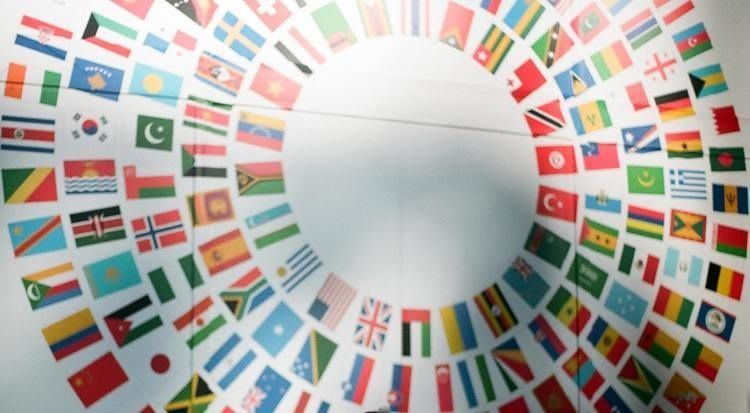
The annual International Fair showcases Cornell's global opportunities for undergraduate and graduate students. Explore the fair and find out about international majors and minors, language study, fellowships, internships, study abroad, exchanges, service learning, and more.
Due to capacity limitations at the venue, we invite you to register now to reserve priority access to this event. Walk-ins are also welcome, but there may be a wait if we reach capacity. Please wear a face mask during the event.
The International Fair is sponsored by the Mario Einaudi Center for International Studies, the Office of Global Learning (both part of Global Cornell), and Cornell's Language Resource Center.
Additional Information
Program
Einaudi Center for International Studies
Reppy Institute for Peace and Conflict Studies
East Asia Program
Southeast Asia Program
Latin American and Caribbean Studies
Institute for African Development
Institute for European Studies
South Asia Program
Alexis Shimon

Editor, Cornell East Asia Program
Alexis Shimon is the editor of the Cornell East Asia Series. They first came to Cornell in June 2019 as an acquisitions assistant and Mellon University Press Diversity Fellow at Cornell University Press. Alexis has a PhD in History, with a focus on the history of Chinese law, and works in both Chinese and Japanese. Some of their other interests include disability rights, comics, and queer speculative fiction.
Additional Information
Peidong Sun
Associate Professor of History
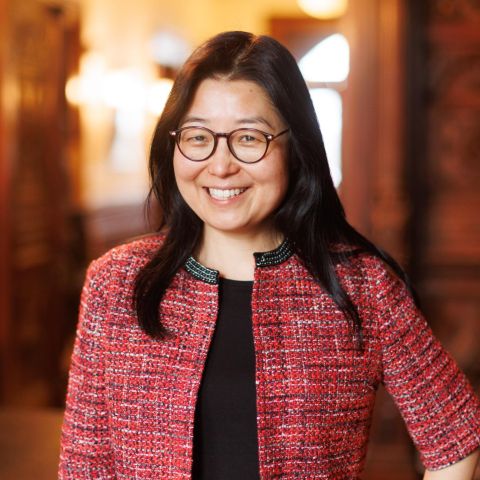
Peidong Sun is a social and cultural historian of the post-1949 period in China. Much of her research has centered on the history of and contemporary implications for Chinese everyday life by asking how quotidian practices such as clothing choices, underground reading, and mate choices of the sent-down generation were influenced by their lived experiences and memories under Mao’s socialism and Deng’s socio-economic transformation after 1978.
Additional Information
Chinese Conversation Hour

August 13, 2021
10:00 am
Join us virtually this summer to practice your language skills and meet new people. Conversation Hours provide an opportunity to use the target language in an informal, low-pressure atmosphere. Have fun listening to and speaking in a language you are learning! Gain confidence through experience! Just using your new language skills helps you learn more than you might think, without instruction or correction. Conversation Hours are are open to any learner, but are probably most useful to those at an intermediate level or above. Open to the public. Join Chinese Conversation Hour on Zoom!
Additional Information
Program
East Asia Program
Global Public Voices Fellow on Hulu

Initiative 29 Features Tao Leigh Goffe
Journey through time with Tao Leigh Goffe as she uncovers her story at the intersection of Black and Chinese culture. Watch for free on YouTube.