
Einaudi Center for International Studies
When Politicians Ignore Economic Expertise

Kaushik Basu, IES/SAP
CRADLE cofounder Kaushik Basu (IES/SAP) analyzes the consequences of political interference in economic policy using high-profile global examples.
Additional Information
World Cup Fans Boosted U.S. Service Exports

Nancy Chau, Einaudi Faculty Associate
Cornell economics professor Nancy Chau commented on the role of U.S. financial services in long-term export trends.
Additional Information
Warming Worlds, Shifting Risk: Mosquitoes in a Changing Climate

November 16, 2026
12:15 pm
Uris Hall, G08
Talk by Courtney Murdock (Entomology, Cornell University)
Mosquito-borne diseases remain one of the world’s most pressing public health challenges yet predicting where and when outbreaks will occur is becoming increasingly difficult as our climate and cities change. In India, rapid urban growth, rising temperatures, shifting rainfall patterns, and more frequent heat waves are transforming the environments where mosquitoes and the diseases they carry thrive. While malaria has declined dramatically in many Indian cities thanks to sustained public health efforts, dengue has continued to increase, raising important questions about how climate, urbanization, and mosquito control interact to shape disease risk. Our research brings together ecologists, epidemiologists, climate scientists, mathematicians, economists, and public health practitioners from the United States and India to better understand these changing risks. We are investigating how local climate conditions, human movement, and the built environment, particularly construction sites where migrant workers often live, and mosquitoes can persist year-round, contribute to the spread of malaria in rapidly growing cities. By combining field observations with climate data and mathematical models, we aim to identify where mosquitoes are most likely to survive and where disease transmission is most likely to occur before outbreaks begin. Working closely with municipal health departments and national partners, we are developing practical tools that can help guide mosquito surveillance and control of the places and times where they will have the greatest impact. Ultimately, this work will support India’s malaria elimination goals while providing a framework for protecting rapidly urbanizing communities around the world from mosquito-borne diseases in a changing climate.
Courtney C. Murdock is currently an associate professor in the Department of Entomology at Cornell University (2020-present). She received a B.S. in Biology and a minor in Spanish literature at the University of Michigan (1997-2001). She then went on to pursue a PhD in disease ecology at the School of Natural Resources and Program in the Environment at the University of Michigan (2002-2009). Murdock was a post-doc in the Departments of Biology and Entomology at Pennsylvania State University (2009-2014), after which she joined the University of Georgia as an assistant professor in the Department of Infectious Diseases and the Odum School of Ecology (2015-2020). A consistent theme of Murdock’s research program has been the application of ecological and evolutionary theory to inform our understanding of mosquito-borne disease transmission, as well as our disease management strategies. Research conducted in Murdock’s group spans multiple scales of ecological organization (from within host processes up to population and community-level dynamics) involving a combination of experiments in the lab and under semi-field conditions, as well as descriptive field studies and mathematical modeling to provide insight into relative mechanisms driving mosquito-borne disease transmission and control in the field.
Additional Information
Program
Einaudi Center for International Studies
South Asia Program
Why the U.S. Spent Billions to Prop up the Japanese Yen

Eswar Prasad, SAP
Eswar Prasad, a Cornell University professor of trade policy, explains Japan's role as a major holder and seller of U.S. Treasuries in currency stabilization efforts.
Additional Information
As Indonesia’s New Capital Rises, the Sounds of Borneo’s Rainforest Are Changing

Wendy Erb, SEAP/Migrations
Lab of Ornithology's Wendy Erb (SEAP/Migrations) leads a team documenting sound changes in Borneo's forests as Indonesia builds its new capital.
Additional Information
The Secret Lives of Forgotten Ancient Greeks

Caitie Barrett, Einaudi Faculty Associate
Caitie Barrett, a Cornell University classical archaeologist, leads excavations at Pompeii to investigate ancient Roman health and diet through domestic latrines.
Additional Information
Banning Open-Source AI Models to Protect Our Cybersecurity May Do the Opposite

Aditya Vashistha, SAP
Aditya Vashistha, professor of computer science at Cornell University, and Ayham Boucher, executive director of AI strategy and innovation at Cornell, argue that banning open-weight AI models would harm cybersecurity and innovation.
Additional Information
Julius Strunk
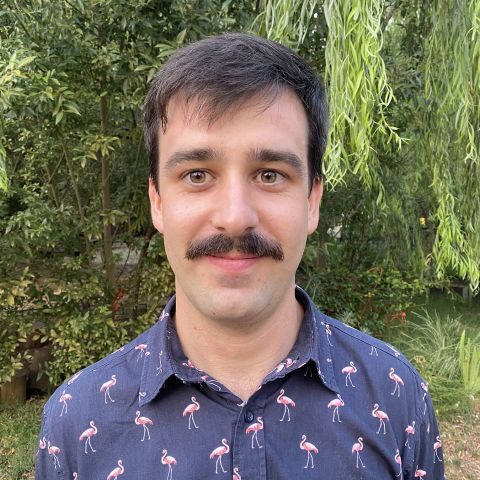
Fulbright Researcher
Additional Information
Program
Role
- Student
- Graduate Student
- Visiting Scholar
Contact
Information Session: International Research Travel Grants

September 17, 2026
4:30 pm
Do you need to travel internationally for your graduate research or fieldwork?
The Einaudi Center sponsors international travel for individual Cornell graduate students. If you’re traveling between the United States and a host country for activities directly related to your dissertation or thesis research, Einaudi can help you get there. See full details here.
Register here. Can’t attend? Contact travelgrants@einaudi.cornell.edu to learn more.
***
The Mario Einaudi Center for International Studies hosts info sessions for graduate and for undergraduate students to learn more about funding opportunities, international travel, research, and internships. View the full calendar of fall semester sessions.
Additional Information
Program
Einaudi Center for International Studies
Reppy Institute for Peace and Conflict Studies
East Asia Program
Southeast Asia Program
Latin American and Caribbean Studies
Institute for African Development
Institute for European Studies
South Asia Program
Migrations Program
Southwest Asia and North Africa Program
Voicing Aspiration: Bollywood Songs and Dreamwork in Contemporary India
November 2, 2026
12:15 pm
Uris Hall, G08
Talk by Anaar Desai-Stephens (Music, CUNY)
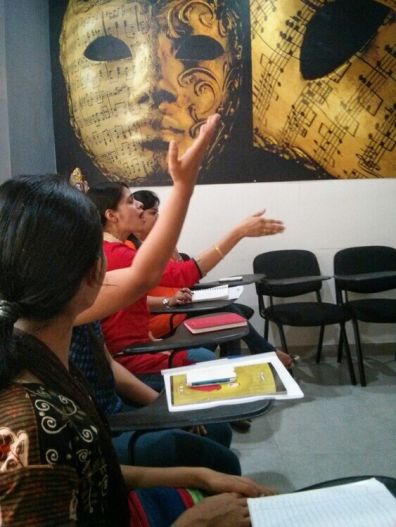
In this talk, I explore how Bollywood songs have become a powerful medium for dreaming, striving, and self-making in twenty-first-century India. Once dismissed as escapist fantasy, Bollywood’s emotionally charged songs now serve as tools for self-transformation in what has been dubbed “Aspirational India.” Drawing on more than two years of fieldwork in Mumbai, I trace how upcoming singers, amateur students, teachers, and Bollywood producers use Bollywood songs to perform what I call “dreamwork”: the musical and discursive work of promoting, imagining, and striving for desired selves and futures. Across playback singing schools, reality television shows, and the broader music industry, filmi singing is a site of both imaginative potential and precarity, promising social mobility while reinscribing inequalities of caste, class, and gender. Rather than dismissing my interlocutors’ aspirational dreams, however, I argue that we must take their musical dream work seriously in order to understand the cultural dynamics of emerging neoliberal economies. Through the lens of dreamwork, I theorize the efficacy of musical practice as a tool for shaping subjectivity while outlining a political economy of the imagination in relation to musical practice.
Anaar Desai-Stephens is Assistant Professor of Ethnomusicology at the CUNY Graduate Center, having previously served as a faculty member at the Eastman School of Music, University of Rochester. Her research focuses on popular, media economies, and aspirational subjectivity in India and her first monograph, Voicing Aspiration: Bollywood Songs and Dreamwork in Contemporary India, will be published with Wesleyan University Press (Fall 2026). Her work has appeared in Twentieth Century Music; Culture, Theory, Critique; and The Routledge Handbook of South Asian Cinema, amongst others. Current research projects focus on the intersection of whiteness, gender and sexuality in the Bollywood culture industry, and how doulas and midwives listen in New York state. Anaar is trained as a violinist and vocalist across a range of genres.
Additional Information
Program
Einaudi Center for International Studies
South Asia Program