
Einaudi Center for International Studies
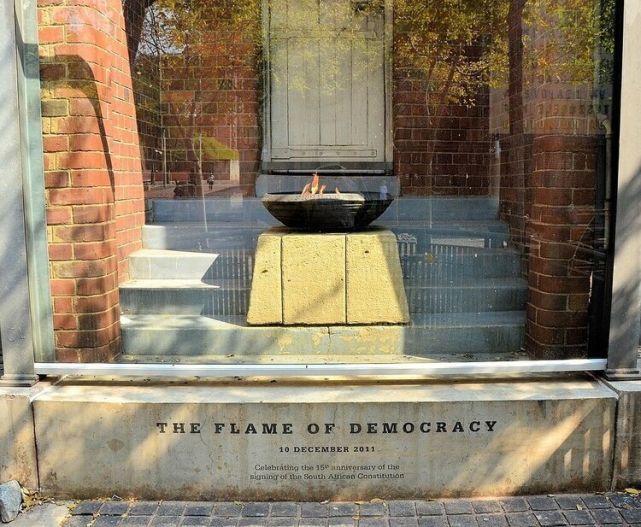
Institute for African Development Seminar Series: Constitution Making in Africa
September 26, 2024
11:15 am
Ives Hall, 109
Institute for African Development weekly seminar series examines a broad range of critical concerns in contemporary Africa including food production, human resource development, migration, urbanization, environmental resource management, economic growth, and policy guidance. The weekly presentations are made by invited specialists.
Additional Information
Program
Einaudi Center for International Studies
Institute for African Development Seminar Series: Threats to Power: Methane Extraction in Rwanda

September 19, 2024
11:15 am
Ives Hall, 109
Examines a broad range of critical concerns in contemporary Africa including food production, human resource development, migration, urbanization, environmental resource management, economic growth, and policy guidance. The weekly presentations are made by invited specialists. Students write weekly memos about the talks. Graduate students (CRP 6770/GDEV 6770) facilitate one seminar question period.
Additional Information
Program
Einaudi Center for International Studies
Institute for African Development
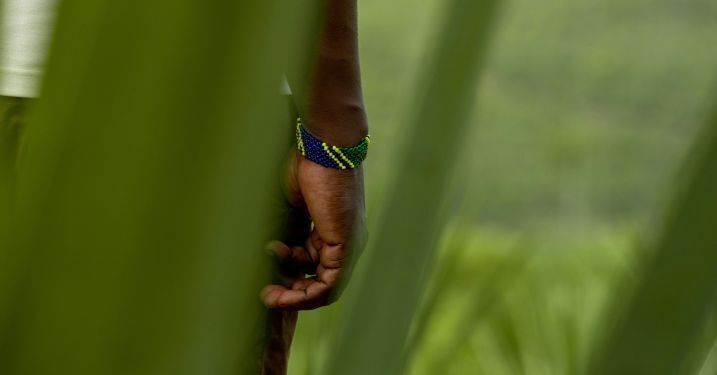
IAD Weekly Seminar: Eco-tourism and the Rural Economy: Disease, Design, and Gendered Development in Botswana
September 12, 2024
11:15 am
109 Ives Hall
The IAD seminar series examines a broad range of critical concerns in contemporary Africa including food production, human resource development, migration, urbanization, environmental resource management, economic growth, and policy guidance. The weekly presentations are made by invited specialists.
Rebecca Upton, Professor of Global Public and Environmental Health, Africana and Latin American Studies at Colgate University, is a medical anthropologist and global health scholar with research focused in southern Africa on issues of gender, migration, reproductive health and the implications of the HIV/AIDS epidemic.
Additional Information
Program
Einaudi Center for International Studies
Institute for African Development
20th Anniversary Screening of Machuca with Co-Writer Roberto Brodsky

October 17, 2024
7:00 pm
Cornell Cinema
LACS Public Issues Forum
Co-sponsored by Cornell Cinema, Literatures in English and Creative Writing, History of Art and Visual Studies, Performance and Media Arts, Romance Studies, and Society of the Humanities
Chile ’73: Fifty Years Later
Machuca follows the lives, over the course of a school year in 1972/73, of two young schoolboys in Santiago, Chile. One is from an upper-middle-class family; the other from a working-class family. Both attend the private boys school St. Patrick’s, whose principal seeks reduce the class segregation typical to Chile at the time and to follow the lead of Salvador Allende’s Popular Unity government. The story follows the boys’ friendship and its relationship to the politics of the time, including the growing tensions in the city around Allende’s government and the right-wing reaction that would eventually result in a coup d’etat on September 11, 1973. Based on a screenplay written by Roberto Brodsky and director Andrés Wood whose own experiences mirror those of the protagonists, Machuca was released to wide acclaim in 2004. For the 20th anniversary of its release, this screening will include a talkback after the film with writer Roberto Brodsky.
Additional details can be found on the Cornell Cinema site.
Additional Information
Program
Einaudi Center for International Studies
Latin American and Caribbean Studies
Sports and Nation Building in Post-Independence Jamaica

November 5, 2024
12:20 pm
Uris Hall, G08
Abstract:
Sports came to play a significant role in nation building in a number of countries – especially those newly-independent states emerging on the end of decolonising movements in the middle of the twentieth century. Jamaica was no exception. Here, the process of nation-building was one that had to confront the legacies of European colonization and enslavement. It was almost inevitable that sport would play a key role in these processes. Jamaica had intimate experience with the power of sport as a political and ideological weapon in colonial times. Cricket in particular had initially served as a tool of British cultural imperialism and was one of the main ways in which agents and agencies of this mission sought to disseminate British cultural values. It was also initially an exclusive institution characterised by significant race and class prejudices. However, cricket (and other sports) became a medium of resistance to the very ideologies it was meant to inculcate, and in so doing, had by the middle of the twentieth century come to function as an ideological weapon of an anti-colonial, creole nationalism. In post-independence Jamaica, sport increasingly featured in public policy and resources were dedicated to the promotion and development of sporting activities. This presentation seeks to examine the ways in which successive Jamaican governments have employed sport to achieve various developmental objectives; but will also look more broadly at the impact of sport on nation-building on Jamaica. It argues that while sport did indeed help to achieve a number of important objectives, we must be cognisant of ways in which this influence might be overstated as well as ways in which sport served to undermine these objectives.
Bio:
Dr Julian Cresser is Lecturer in History, and Head of the Department of History and Archaeology, University of the West Indies, Mona Campus. His main research interest is sports studies – particularly, the role of sport in nation building in the Caribbean. He has authored and co-authored journal articles on the history of cricket in Jamaica and links between participation in sport and juvenile delinquency in the Caribbean. In addition, Dr Cresser has an interest in the use of digital media in the teaching and presentation of History. His courses include: Digital History, Sport in the Caribbean since 1850, and the Idea of Caribbean Nationhood. He has also taught extensively in the Department’s Heritage programmes, and has served on the board of the Jamaica National Heritage Trust. Before joining the Department, he worked as a Senior Research Fellow at the African Caribbean Institute of Jamaica/Jamaica Memory Bank, where his work involved archival and ethnographic research on Afro-Caribbean intangible cultural expressions. In 2019, Dr Cresser was the O’Connor Visiting Assistant Professor in Caribbean Studies at Colgate University, in Hamilton, New York.
Additional Information
Program
Einaudi Center for International Studies
Latin American and Caribbean Studies
Chile ’73: Fifty Years Later

October 18, 2024
12:30 pm
A.D White House
LACS Public Issues Forum
Co-sponsored by Cornell Cinema, Literatures in English and Creative Writing, History of Art and Visual Studies, Performance and Media Arts, Romance Studies, and Society of the Humanities
Roundtable with Roberto Brodsky, Denisa Jashari, Kenneth Roberts, and Camilo Trumper moderated by Raymond Craib on Chile, the Unidad Popular, and the coup d’etat of 1973.
Writer and current Faculty Adjunct at the School of Visual Arts in NYC, Roberto Brodsky is the author of six fiction novels published in Chile and Spain, along with two essay volumes, Adiós a Bolaño (2018) and The Missing House. Enrique Lihn in the 80s (2021). A professional journalist for 40 years with broad experience in magazines and newspapers, he is also the scriptwriter of major Latin American films such as Machuca (2004), El Brindis (2007), and Mi vida con Carlos (2008). His most recent book, Balas perdidas ("Lost Bullets"), released by Rialta Publishers in September 2023 in Mexico, assembles chronicle pieces and articles written over the last 30 years about the coup d’état in Chile in 1973.
Raymond Craib is Marie Underhill Noll Professor of History at Cornell University. He is the author of Cartographic Mexico: A History of State Fixations and Fugitive Landscapes (Duke UP, 2004), The Cry of the Renegade: Politics and Poetry in Interwar Chile (Oxford Univ. Press, 2016), and most recently Adventure Capitalism: A History of Libertarian Exit, from the Era of Decolonization to the Digital Age (PM Press/Spectre, 2022).
Denisa Jashari is Assistant Professor of Latin American history at Syracuse University. Jashari’s book, tentatively titled, “Santiago’s Urban Battleground: Space and the Production of the Working Poor,” is a social and urban history of twentieth century Santiago, Chile. Jashari’s articles and essays have appeared in the Journal of Latin American Studies, Latin American Research Review, and A contracorriente. She received her Ph.D. from Indiana University Bloomington in 2020 and was a Visiting Fellow at the Kellogg Institute for International Studies at the University of Notre Dame.
Kenneth M. Roberts is the Richard J. Schwartz Professor of Government at Cornell University. His teaching and research interests explore the politics of inequality in Latin America and beyond. His published works include Changing Course in Latin America: Party Systems in the Neoliberal Era and Deepening Democracy: The Modern Left and Social Movements in Chile and Peru. His current research explores polarization and democracy in contemporary Latin American politics.
Camilo Trumper is an Associate Professor of Latin American History at the University at Buffalo (SUNY), with a specialization in urban and visual culture and the cultural history of political change in Chile. His first book, Ephemeral Histories: Public Art, Politics and the Struggle for the Street in Chile (The University of California Press, 2016), is a cultural history of political change in late twentieth-century Chile. Ephemeral Histories is a study of the myriad ways in which traditionally marginalized individuals claimed city spaces as a political act. Their often-fleeting forms of urban and visual practice generated new ways of acting on and thinking about the city as a space of fluid democratic debate and a stage for creative political citizenship in democracy and dictatorship. His second book project, “Writing in Dictatorship: Politics, Exile, and Archives in Chile,1973-1990,” explores the multiple practices of writing to offer new insight into the everyday experience of power and contest under Pinochet in Chile and abroad. “Writing in Dictatorship” maps the connection between distinct forms of dissent, in Chile and in exile, that were tied together by the political practice of writing, by the line of the pen. Defining writing capaciously and creatively, it explores often-clandestine, often-unspectacular forms of political organizing and association that Chilean citizens built immediately after the 1973 coup that brought Pinochet to power. It looks, in five different chapters at multiple places and practices of writing as dissent—prison writing; schoolhouse writing; writing on the street; writing in exile; and archival writing practices.
Additional Information
Program
Einaudi Center for International Studies
Latin American and Caribbean Studies
Interdisciplinary Graduate Student Writing Group

November 20, 2024
5:00 pm
Big Red Barn
Join Grad student writers weekly to share goals and write in community. Sessions will begin with brief goal-settings. Then, the bulk of the time will be dedicated to independent writing in community. You’ll have the opportunity to share what you accomplished with a supportive group of peers.
Additional Information
Program
Einaudi Center for International Studies
Latin American and Caribbean Studies
Climate Emergency and the Ecology of Hope

October 16, 2024
4:45 pm
G08, Uris Hall
Extractivism haunts the planet and leaves in its path the pain and tears of people who, ironically, suffer the blessing of mineral wealth. Extractivism produces invaded territories, dispossessed communities, persecuted leaders, devastated forests, annihilated biodiversity, desiccated lagoons, poisoned rivers, undrinkable waters, and unbreathable air. Ecuador, the country with the greatest biological diversity on the planet per square meter, has also been devastated by extractivism. In this planetary penumbra, the Rights of Pacha Mama or Rights of Nature in the Andes and in Ecuador are a spark that can be fanned. Pushed by indigenous peoples, ecologists, and intellectuals, in 2008 the Constituent Assembly recognized the Pacha Mama or Mother Nature as the holder of rights, and many historic fights have followed. In this talk Yaku Pérez Guartambel will present insights from his new publication Climate Emergency and the Ecology of Hope.
Presented in Spanish with English interpretation
Yaku Pérez Guartambel is a Kichwa Kañari leader, lawyer, teacher, and author of nine books. He has led historic legal proceedings in defense of the rights of nature in the Andes and the Amazon. For this work, he was detained six times and has also been the target of kidnappings and an attempted murder. He has dedicated thirty years to ecosocial fight in Ecuador for indigenous communities’ access to water, including as president of the Confederation of Kichwa Peoples of Ecuador (ECUARUNARI) and as the leader of a social movement that impeded water privatization in Ecuador. As a political leader, he has been elected the Prefect of Azuay Province and was a presidential candidate in Ecuador in 2021 and 2023 with a post-extractivist agenda focusing on the defense of water.
Additional Information
Program
Einaudi Center for International Studies
Latin American and Caribbean Studies
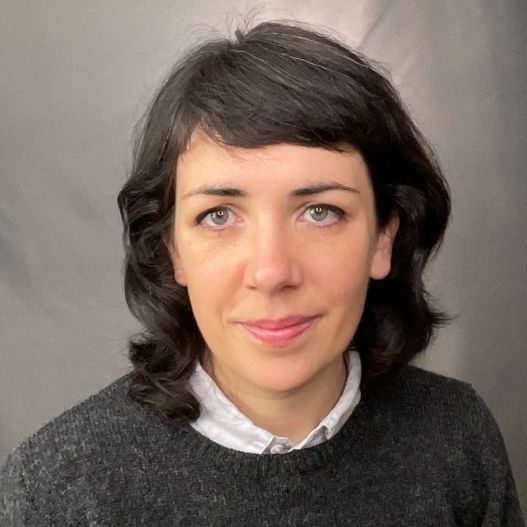
A Humanitarian Vision Lost
October 24, 2024
12:00 pm
Uris Hall, G08
North American Practices of Forced Displacement, Detention, and Humanitarian Oversight in the 1940s
Nation states abide by international humanitarian law unevenly. They misrepresent their internal operations and deceive monitoring agencies. Yet, they often feel bound to give international agents the opportunity to observe and report, thus facilitating the endeavors they evade. During the Second World War, states notoriously evaded international law to perpetrate atrocities. Even the United States and Canada, whose mistreatment of civilians never generated international alarm, obscured their domestic undertakings from an international gaze. Nevertheless, humanitarian actors gained remarkable access to sites of mass internment and displaced people across the globe. In the decades since, their reports have served as fraught documentation for survivor communities, reflecting the biases of their creators yet capturing rare moments of traumatic pasts.
This presentation investigates the engagement of the United States and Canada with international humanitarian oversight of detention during the 1940s and its legacy within survivor communities, drawing from international, national, and community archives.
Delving into one case study, this presentation examines the creation and subsequent recontextualization of humanitarian photography in survivor communities. In doing so, it reveals the making of what Cathy Schlund-Vials calls, in a different case of twentieth-century displacement, a “transnational set of amnesiac politics.” In tracking the journey of these images, this paper situates North American wartime detention within the politics of liberal internationalism and considers what their remembering and forgetting can tell us more broadly about the commemoration and representation of histories of forced displacement.
About the Speaker
Kaitlin Findlay is a doctoral student in the Cornell History Department. Her research examines forced displacement, humanitarianism, liberal internationalism, and memory in the mid-twentieth century. Her dissertation is supported by the Social Sciences and Humanities Research Council of Canada Doctoral Fellowship. Kaitlin completed her BA in History (Honours) at McGill University and her MA Thesis at the University of Victoria, Canada. She has over seven years of experience in community-engaged and public history, including with the award-winning Landscapes of Injustice project. She has published with McGill-Queen’s University Press and The Canadian Historical Review.
Host
Reppy Institute for Peace and Conflict Studies
Additional Information
Program
Einaudi Center for International Studies
Reppy Institute for Peace and Conflict Studies
The Transition Home
October 23, 2024
9:00 am
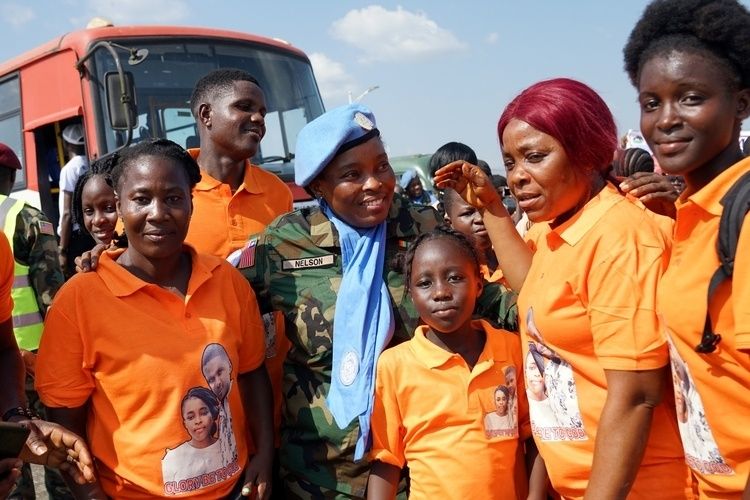
Hosted by the Gender and the Security Sector Lab, the University of Edinburgh’s Centre of African Studies, and the Reppy Peace and Conflict Studies Program, The Transition Home: Key Challenges for African UN Peacekeepers Upon Return is a unique collaborative effort, bringing together qualitative and quantitative evidence from surveys and interviews in Liberia, Senegal, Ghana, Sierra Leone, The Gambia, and Zambia.
In recent years, global shifts in peacekeeping contributions have led to African countries being some of the largest contributors of peacekeeping. Yet, many of the countries lack resources and have limited funding for their state security forces. On one hand, deployment to peacekeeping missions helps provide the country’s security forces with training, new experience, and funds. On the other hand, there is less information about the challenges that these peacekeepers face upon return.
This event is based on a policy brief that explores four potential challenges for African peacekeepers after they return from operations: relationship, psycho-social, economic, and career challenges. The report finds that the main challenges for returned peacekeepers upon their return appear to be relationship and financial. Women were more likely to experience financial challenges and social stigma whereas men had more physical and mental health problems. Psychosocial, mental health, and physical problems were more prevalent in the military than the police. The report ends with a series of policy recommendations. The policy brief will be available here after the event.
Register to attend this virtual event.
About the Panelists
Dr. Sabrina Karim is an Associate Professor in the department of Government. Her research focuses on conflict and peace processes, particularly state building in the aftermath of civil war. Specifically, she studies international involvement in security assistance to post-conflict states, gender reforms in peacekeeping and domestic security sectors, and the relationship between gender and violence. She directs the Gender and the Security Sector Lab.
Dr Maggie Dwyer is a Senior Lecturer in African Studies and International Development in the School of Social and Political Science, University of Edinburgh. She is Co-Director of the Centre for Security Research within the University of Edinburgh and is also a Global Fellow at the Peace Research Institute Oslo.
T. Debey Sayndee is Professor / Director, Kofi Annan Institute for Conflict Transformation (KAICT), University of Liberia. He has worked for many years on the complex nexuses of conflicts in West Africa, particularly Liberia and Sierra Leone. He has also served as a consultant for the UN, the University of Wyoming, and Women’s Campaign International on peace, security, and development issues. He is a Public Speaker, Facilitator, Trainer, Radio Broadcaster, and Mediator. He has contributed to several publications, most recently, Incomplete DDRR: A Prescription for Prolonged Fragility in Liberia; Post-War SSR in Liberia; and co-published: African Truth Commissions; and Social Mobilization and the Ebola Virus Disease in Liberia.
Addison Barton is a third-year PhD student and two-time Reppy Fellow whose research focuses on practices of humanitarian restraint in armed conflict. Host
Cornell University’s Gender and the Security Sector Lab
University of Edinburgh’s Centre of African Studies
Reppy Peace and Conflict Studies Program
Photo credit: Clair MacDougall.
Additional Information
Program
Einaudi Center for International Studies
Reppy Institute for Peace and Conflict Studies