
Einaudi Center for International Studies
The Public Histories that Emerged from Recording Indigenous Communism in Ecuador
October 24, 2024
4:45 pm
Uris Hall, G08
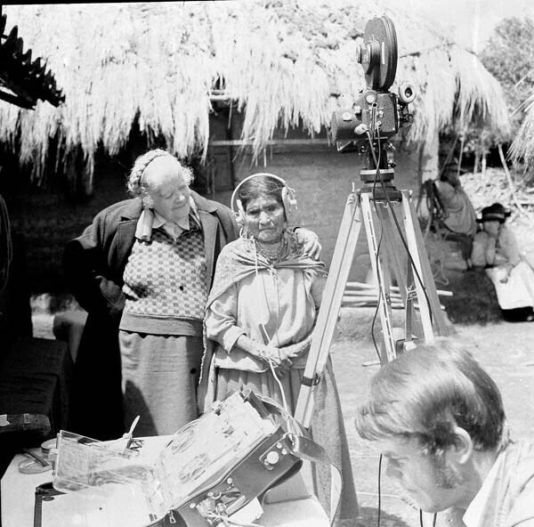
How do activists use historical memory? Examining the narratives expressed in recorded oral histories, I argue that Indigenous labor leaders from the haciendas of Cayambe, Ecuador constructed an empowering narrative politics that guided their allies as well as future activists in preserving and revitalizing the history of their local activism. In light of critiques from across the political spectrum about the waning salience of Marxist projects, I aim to show how, in mid-20th century Ecuador, Indigenous activists’ understandings of the significance of their communism were radically unorthodox, and in fact–because of the ways in which they recorded and archived their experiences of resistance– their perspectives continue to offer lessons about spaces for indigenous empowerment in the present. Understanding historical documentation as part of wider political projects allows for an analysis of historical self-representation as political action.
Marlen Rosas is assistant professor of History at Haverford College in Haverford, PA. She received her M.A. and Ph.D. in History from the University of Pennsylvania. Her book project, Recording Indigenous Resistance: Literacy, Memory, and Narrative Power in Twentieth-Century Ecuador, employs critical archive scholarship, oral history, and memory studies approaches to the examination of Indigenous mobilization in twentieth-century Ecuador, arguably the most organized Indigenous movement in the history of the Americas. She is the co-founder and convener of the Thinking Andean Studies Interdisciplinary Conference.
Additional Information
Program
Einaudi Center for International Studies
Latin American and Caribbean Studies
Naomi Klein: Doppelganger Politics
October 23, 2024
5:00 pm
Biotechnology Building, G10
Bartels World Affairs Lecture
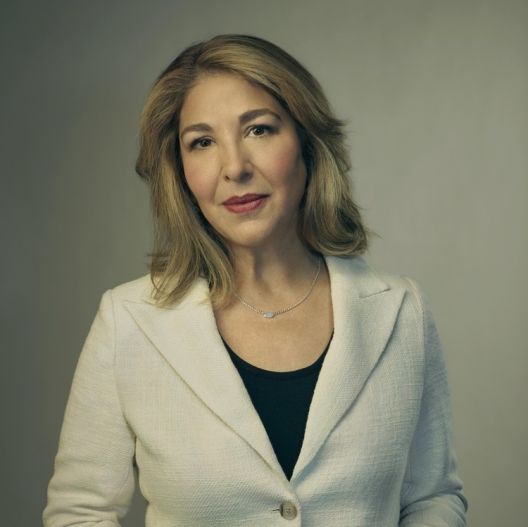
The bestselling author of Doppelganger: A Trip into the Mirror World joins us for a personal journey down the conspiracy rabbit hole to explore why our political sphere has become dangerously warped.
When author and social activist Naomi Klein discovered a writer with the same first name but radically different political views was chronically mistaken for her, it seemed too ridiculous to take seriously—until suddenly it wasn’t. As the pandemic took hold, she absorbed a barrage of insults from her doppelganger’s followers.
Klein’s 2023 book Doppelganger follows Other Naomi into a digital underworld of conspiracies, anti-vaxxers, and right-wing paranoia. Klein’s journey reveals mirrored concerns and unlikely connections between well-meaning liberals and the right-wing voices that relish “owning” them.
After a talk sharing her insights, Klein joins distinguished global democracy experts from Cornell to lift the lid on this surreal election moment and examine how our politics have become so twisted and polarized. What can we do to escape our collective vertigo and get back to fighting for what really matters?
***
Panelists
Read election remarks from the panelists in Chronicle coverage of global democracy activities on campus.
Thomas Garrett, Einaudi Center Lund Practitioner in Residence, Distinguished Global Democracy Lecturer (Jeb E. Brooks School of Public Policy)Suzanne Mettler, John L. Senior Professor of American Institutions, Department of Government (College of Arts and Sciences)Kenneth Roberts (moderator), Einaudi Center Democratic Threats and Resilience faculty fellow, Richard J. Schwartz Professor, Department of Government (A&S)
***
This event is sold out.
All free tickets are reserved. If you don’t have a ticket but would like to attend, please arrive 15 minutes early to be put on our wait list.
A reception with refreshments will follow the lecture and panel.
Lecture and Panel: 5:00 | G10 Biotechology BuildingReception: 6:30-7:30 | Biotechnology Building Atrium
***
About Naomi Klein
Naomi Klein is an award-winning journalist and international bestselling author of nine books published in over 35 languages, including No Logo, The Shock Doctrine, and her most recent book Doppelganger: A Trip into the Mirror World (2023). A columnist for The Guardian, her writing has appeared in leading media around the world. She is a tenured professor of climate justice at the University of British Columbia, founding codirector of UBC’s Centre for Climate Justice, and honorary professor of media and climate at Rutgers University.
About the Bartels World Affairs Lecture
The Bartels World Affairs Lecture is a signature event of the Mario Einaudi Center for International Studies. This flagship event brings distinguished international figures to campus each academic year to speak on global topics and meet with Cornell faculty and students, particularly undergraduates. The lecture and related events are made possible by the generosity of Henry E. Bartels ’48 and Nancy Horton Bartels ’48.
Additional Information
Program
Einaudi Center for International Studies
Reppy Institute for Peace and Conflict Studies
East Asia Program
Southeast Asia Program
Latin American and Caribbean Studies
Institute for African Development
Institute for European Studies
South Asia Program
Migrations Program
Will Directly Electing Judges Help Mexico Fight Corruption in its Justice System?

Gustavo Flores-Macias, LACS
Gustavo Flores-Macias, professor of government, says “The need to tackle corruption in the Mexican judiciary is very real. The country's legal system disproportionately favors the affluent and the well-connected. It is overburdened and slow. This is true at all levels, which is why impunity is widespread in Mexico.”
Additional Information
Honeymoon for Mexico's Sheinbaum Tainted by Mentor's Reform

Gustavo Flores-Macias, LACS
Gustavo Flores-Macias, professor of government, says “The Mexican judiciary is, by most accounts, in desperate need of reform. The question is, is this really the right way to reform it?”
Additional Information
Writing in a Time of War: Conversation with Shahla Ujayli, Award-Winning Syrian Novelist
October 7, 2024
5:00 pm
A. D. White House, Guerlac Room
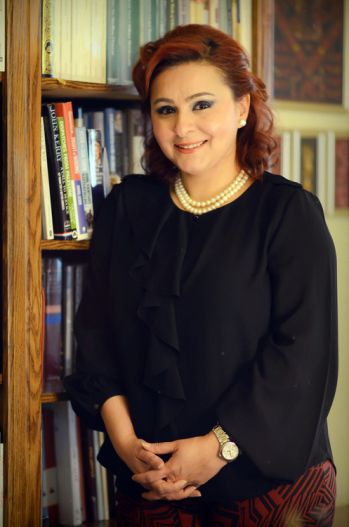
Book talk and conversation with award-winning Syrian novelist Shahla Ujayli, author of "A Sky So Close to Us" and "Summer with the Enemy," both shortlisted for the International Prize for Arabic Fiction. Joining the discussion to talk about her work and challenges of translating Arabic literature will be translator Michelle Hartman, Professor of Arabic Literature at McGill University.
In the words of Shahla Ujayli: “Writing about war means writing about oneself—the harsh fate of the family, the home, the special places, and memories. But writing about your place at war is a great challenge, since you find the whole world talking about your house, slums, and city, yet no one who debated its fate had ever visited it or known it before the war. They talk about strange, complicated, fantastic things, and you find yourself writing novels to tell them that only you know the truth.”
ABOUT THE AUTHOR:
SHAHLA UJAYLI is a Syrian writer, born in 1976. She holds a doctorate in Modern Arabic Literature and Cultural Studies from Aleppo University in Syria and is currently a professor of Modern Arabic Literature at the University of Aleppo and the American University in Madaba, Jordan. She is the author of two short-story collections The Mashrabiyya (2005) and The Bed of the King’s Daughter (2017), winner of Al Multaqa Prize, and four novels: The Cat’s Eye (2006), winner of the Jordan State Award for Literature; Persian Carpet (2013); A Sky So Close to Us, shortlisted for the International Prize for Arabic Fiction (Interlink, 2016); and Summer with the Enemy, shortlisted for the International Prize for Arabic Fiction (Interlink, 2018). She has also published a number of critical studies, including The Syrian Novel: Experimentalism and Theoretical Categories (2009), Cultural Particularity in the Arabic Novel (2011) and Mirror of Strangeness: Articles on Cultural Criticism (2006).
ABOUT THE TRANSLATOR:
MICHELLE HARTMAN is a professor of Arabic Literature at McGill University and literary translator of fiction, based in Montreal. She has written extensively on women’s writing and the politics of language use and translation and literary solidarities. She is the translator of several works from Arabic, including Asmaa Alatawna’s A Long Walk from Gaza, Radwa Ashour’s memoir The Journey, Iman Humaydan’s novels Wild Mulberries and Other Lives, Jana Elhassan’s IPAF shortlisted novels The Ninety-Ninth Floor and All the Women inside Me, Alexandra Chreiteh’s novels Always Coca Cola and Ali and His Russian Mother as well as Shahla Ujayli’s IPAF shortlisted novels A Sky So Close to Us and Summer with the Enemy.
Lecture Sponsored by:
Department of Near Eastern Studies
Cosponsors:
Department of Literatures in English
Mario Einaudi Center for International Studies and its Southwest Asia and North Africa (SWANA) initiative and Migrations Program
Society for the Humanities
Institute for Comparative Modernities
Additional Information
Program
Einaudi Center for International Studies
Migrations Program
Global Hubs Info Session: Joint Seed Grants with Zhejiang University (China)
September 18, 2024
11:00 am
The Cornell China Center, through Global Cornell and its Global Hubs initiative, is offering faculty research grants for collaboration with Zhejiang University (ZJU).
Global Hubs collaborative research seed grants bring together Cornell and partner institution faculty to develop joint projects with the potential to create new or expanded research partnerships and cutting-edge scholarship with academic and societal impact. These international seed grants provide initial financial support for early-stage research projects or capacity-building efforts to create and sustain long-term collaborations and secure external funding.
Please join us on September 18, 11:00-11:45 a.m. EDT for a joint info session to learn more about the ZJU-Cornell grant opportunity. A short presentation will be followed by time for Q&A.
Up to four (4) research proposals will be funded. Each successful proposal may receive up to $20,000 from Cornell (for Cornell expenses) and up to CNY 150,000 from ZJU (for ZJU expenses), with each university funding its own side of the project budget it its own currency.Application deadline: October 14, 11:59 p.m. EDT Project duration: January 1–December 31, 2025Register for the Cornell faculty info session on Zoom.View the grant RFP and application form here.The grant RFA and application links will be provided here shortly when available.
Learn about additional seed grants available with other Global Hubs partners.
Additional Information
Program
Einaudi Center for International Studies
East Asia Program
Southeast Asian Language Instruction: Sustainability through Collaboration

September 21, 2024
12:00 am
Africana Studies and Research Center
In a seminal conference, Southeast Asian language instructors from across the country will gather to celebrate the successes of the Southeast Asian Language Council (SEALC), and to plan for the future of Southeast Asian language instruction.
For further details and a full program of the weekend's events, visit the SEALC website.
Organized by the Southeast Asian Language Council (SEALC), hosted by the Cornell University
Southeast Asia Program (SEAP), and co-sponsored by Cornell Language Resource Center (LRC) and the Cornell Department of Linguistics.
Additional Information
Program
Einaudi Center for International Studies
Southeast Asia Program
Einaudi Welcomes Migrations Program

New Migrations, EAP, SEAP Program Directors
Cornell’s first Global Grand Challenge continues this year as Einaudi's Migrations Program. We also welcome three program directors.
We're excited to announce that Cornell's Migrations initiative is stepping into a new phase as the Migrations Program, part of the Mario Einaudi Center for International Studies. Einaudi's newest regional and thematic program will build on the work of Migrations: A Global Grand Challenge to inform real-world policies and outcomes for populations that migrate.
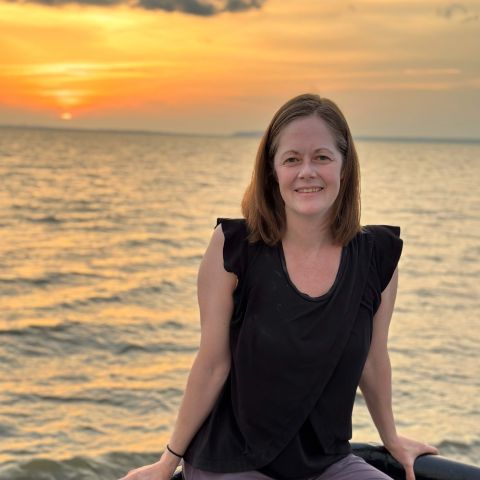
Migrations researchers and students will continue the important work of studying movement across borders, racism and dispossession, and migration of all living things under the leadership of the program's new director, Kathryn Fiorella. Fiorella is an associate professor of public and ecosystem health in the College of Veterinary Medicine.
“We look forward to building the new Migrations Program at Einaudi to advance our understanding of migration and contribute to solutions for one of the most pressing challenges of our time.”
“I am excited to join Migrations and support scholarship and learning on this critical topic,” said Fiorella.
Fiorella plans to continue expanding Migrations' campuswide footprint established since Global Cornell launched the initiative in 2019.
“Migration has a profound impact on human and wildlife health,” she said. “I'm looking forward to furthering those connections and extending our engagement with faculty in the Master of Public Health program, Department of Public and Ecosystem Health, and College of Veterinary Medicine.”
New Program Directors
Joining the Migrations Program's Kathryn Fiorella are new fall 2024 program directors in the East Asia Program and Southeast Asia Program.
East Asia Program: John Whitman
John Whitman is a professor of linguistics in the College of Arts and Sciences (A&S). His main research focus is the problem of language variation in Japanese, Korean, and other languages.
Southeast Asia Program: Marina Welker
Marina Welker is a professor of anthropology in A&S. Her research centers on the ethical relationship between business and society. She is currently studying a clove cigarette company in Indonesia founded by a Chinese immigrant and controlled by his descendants until 2005, when it was taken over by Philip Morris International.
Additional Information
Nathan Thrall: A Day in the Life of Abed Salama: Anatomy of a Jerusalem Tragedy
October 10, 2024
5:00 pm
Statler Hall, 196
Additional Information
Program
Einaudi Center for International Studies
Southwest Asia and North Africa Program
Outdoor Photo Exhibit Illustrates Migrant Workers’ Stories
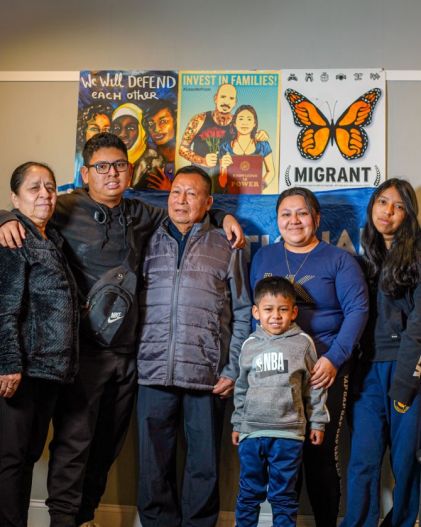
Funded by Migrations
A new outdoor exhibit of 6-foot-high interactive portraits will explore the history of migrant workers’ struggles to attain American citizenship. The project, “Stories of Belonging: Central American TPS Workers & the Defiant Struggle to Stay Home in the U.S.," was funded by the Migrations Global Grand Challenge and will be available to view on the Cornell campus Sept. 16-20.