
Einaudi Center for International Studies
Information Session: Fulbright Opportunities for Undergraduate Students

November 11, 2024
4:45 pm
The Fulbright U.S. Student Program supports U.S. citizens to study, conduct research in any field, or teach English in more than 150 countries. Students who wish to begin the program immediately after graduation are encouraged to start the process in their junior year. Recent graduates are welcome to apply through Cornell.
The Fulbright program at Cornell is administered by the Mario Einaudi Center for International studies. Applicants are supported through all stages of the application and are encouraged to start early by contacting fulbright@einaudi.cornell.edu.
Register for the virtual session.
Can’t attend? Contact fulbright@einaudi.cornell.edu.
Additional Information
Program
Einaudi Center for International Studies
Reppy Institute for Peace and Conflict Studies
East Asia Program
Southeast Asia Program
Latin American and Caribbean Studies
Institute for African Development
Institute for European Studies
South Asia Program
Migrations Program
Information Session: Fulbright Opportunities for Graduate Students

November 6, 2024
4:45 pm
The Fulbright U.S. Student Program provides full funding for graduate and professional students conducting research in any field or teaching in more than 150 countries. Open to U.S. citizens only. The Fulbright-Hays Doctoral Dissertation Research Abroad program supports doctoral students conducting research in modern languages or area studies for six to 12 months.
Open to U.S. citizens and permanent residents of the United States. Travel to Western European countries is not eligible.
Register for the virtual session.
Can’t attend? Contact fulbright@einaudi.cornell.edu.
Additional Information
Program
Einaudi Center for International Studies
Reppy Institute for Peace and Conflict Studies
East Asia Program
Southeast Asia Program
Latin American and Caribbean Studies
Institute for African Development
Institute for European Studies
South Asia Program
Migrations Program
Green Border

September 19, 2024
7:00 pm
Willard Straight Hall Theatre
In the treacherous and swampy forests that make up the so-called "green border" between Belarus and Poland, refugees from the Middle East and Africa are lured by government propaganda promising easy passage to the European Union. Unable to cross into Europe and unable to turn back, they find themselves trapped in a rapidly escalating geopolitical stand-off. An unflinching depiction of the migrant crisis captured in stark black-and-white, this riveting film explores the intractable issue from multiple perspectives: a Syrian family fleeing ISIS caught between cruel border guards in both countries; young guards instructed to brutalize and reject the migrants; and activists who aid the refugees at great personal risk.
Thirty years after Europa Europa, three-time Oscar¨ nominee Agnieszka Holland brings a masterful eye for realism and deep compassion to this blistering critique of a humanitarian calamity that continues to unfold. Winner of the Special Jury Prize at the 2023 Venice Film Festival, Green Border is a poignant and essential work of cinema that opens our eyes and speaks to the heart, challenging viewers to reflect on the moral choices that fall to ordinary people every day.
Filmmaker Agnieszka Holland will join for a Zoom Q&A with Professor Ewa Bachminska, Senior Lecturer of Polish Language in the Department of Romance Studies at Cornell, following the screening on Sunday, September 15, 2024 at noon.
Green Border screens as part of our "Doc Spots" series. Courtesy of Kino Lorber.
Additional Information
Program
Reppy Institute for Peace and Conflict Studies
Institute for European Studies
Einaudi Center for International Studies
Exploring Turkish Language and Culture series: Türkiye’s Christian Sites

September 25, 2024
5:00 pm
White Hall, B14
"Türkiye’s Christian Sites: Seven Churches of Revelation and Holy Sites, House of Virgin Mary, Early Christian Settlements and pilgrimage" lecture with Pelin Kumbet Cagman, visiting scholar at Cornell University.
Part of the "Exploring Turkish Language and Culture" lecture series.
Dr. Pelin Kumbet is currently a visiting researcher in the department of English and a Turkish language instructor at Language Resource Center at Cornell University. She is an Associate Professor in the department of Western Languages and Literatures at Kocaeli University, Turkiye. During her Ph.D. studies at Hacettepe University, Turkiye, she conducted her doctoral dissertation at the University of California, Riverside. Her dissertation discusses the cruciality of enacting dynamic, evolving, and living posthuman(ist) ethics, which embodies the acknowledgment of inherent and intrinsic values of all beings through different posthuman body representations, which was published as a book titled as Critical Posthumanism: Cloned, Toxic and Cyborg Bodies in Fiction. Dr. Kumbet’s general research interests include posthuman theory and ethics, posthuman bodies, transhumanism, medical and environmental humanities, ecocriticism in particular, the intersections between posthumanism, environmental humanities, gender issues, and science fiction. Her recent publications are “Toxic Agentic Legacy in Turkish Waters: From Sacrosanct Bodies to Toxic Bodies of Water,” “Invisible Agencies: Toxic Repercussions of Chernobyl and Bhopal,” “A Posthuman Quest for Establishing Self-Image Through Nature in Virginia Woolf’s The Waves” and “Reclaiming the ethno-divided land, identity and legacy in Elif Shafak’s The Island of Missing Trees.” She has also been teaching Turkish as second language and has been working on the intersections between Blue humanities, Turkish waters and trauma, eco-psychology and displacement.
Photo credit: Wilhelm Salzenberg (* 20. Januar 1803 in Münster; † 23. Oktober 1887 in Vernex-Montreux, Schweiz)Edited by Verlag von Ernst & Korn Berlin, 1854, Public domain, via Wikimedia Commons
Additional Information
Program
Einaudi Center for International Studies
CANCELED: BME7900 Seminar Series - Saurabh Mehta, PhD

November 1, 2024
2:55 pm
Weill Hall, 226
CANCELED: This seminar will be rescheduled for the spring semester.
Technology Ecosystem to Support Precision Nutrition and Health
Bio: Dr. Mehta is a physician with training and expertise in nutrition, epidemiology, infectious disease, and diagnostics. He is currently the Janet and Gordon Lankton Professor in the Division of Nutritional Sciences at Cornell University. He is also the Founding Director of the Cornell Center for Precision Nutrition and Health and co-director of the NIH-funded Center for Point of Care Diagnostics for Nutrition, Infection, and Cancer (U54) as part of the POCTRN+ network. Dr. Mehta is the program director of the NIH-supported training program (T32) on artificial intelligence and precision nutrition. He also co-leads the Research Coordinating Center for the NIH’s Nutrition for Precision Health Initiative (U24), and directs the Program in International Nutrition at Cornell. The central theme of his research is the interplay between nutrition and disease, including facilitating field-friendly assessment for both and elucidating how nutrition can be used as a modifiable risk factor to improve health and associated outcomes, often in the context of pregnancy and early childhood. This is achieved through a combination of active surveillance programs, the invention of point-of-care diagnostics, and randomized controlled trials primarily in India, Sub-Saharan Africa, and Latin America.
Dr. Mehta received his medical degree from the All India Institute of Medical Sciences in New Delhi, India and followed it up with doctoral degree in Epidemiology and Nutrition from Harvard University in Cambridge, Massachusetts, US. His work has been recognized with multiple awards including a NIH technology accelerator challenge prize for innovative global health diagnostics, the Norman Kretchmer memorial award for nutrition and development, the Rainer Gross Prize for innovations in nutrition and health, and the SUNY Chancellor award for scholarship and creative activities.
Additional Information
Program
Einaudi Center for International Studies
South Asia Program
IAD Weekly Seminar: Can Traditional African Cuisines & Food Systems Inspire a Model of Development?

September 5, 2024
11:15 am
109 Ives Hall
The IAD seminar series examines a broad range of critical concerns in contemporary Africa including food production, human resource development, migration, urbanization, environmental resource management, economic growth, and policy guidance. The weekly presentations are made by invited specialists.
Pierre Thiam is a chef, author, and social activist best known for bringing West African cuisine to the global fine dining world. He is the Executive Chef of the award-winning restaurant Nok by Alara in Lagos, Nigeria and the Signature Chef of the five-star Pullman Hotel in Dakar, Senegal. He is also the executive chef and co-owner of Teranga, a fast-casual food chain from New York City. His company Yolélé Foods advocates for smallholder farmers in the Sahel by opening new markets for crops grown in Africa; its signature product, Yolélé Fonio, is found in Whole Foods, Amazon, and other retailers across America.
Additional Information
Program
Einaudi Center for International Studies
Institute for African Development
Far-Right: The Crisis Itself or the Result?

Mabel Berezin in World in Focus
Institute for European Studies director Mabel Berezin joined Dora Mengüç (Dora Reports) before France's high-stakes parliamentary elections to discuss Europe's shift to the right.
“Not everyone in every country has the same problem, but they all talk about the same thing. Many people talk about identity issues or other concerns, but they talk about immigrants. They worry that they do not share the same culture. This was a big deal for France.”
In the interview, Berezin reflected on the success of conservatives, right-wing populists, and far-right candidates in early June European Parliament elections and weighed in on French President Emmanuel Macron’s decision to call for snap elections to shore up his support.
She correctly questioned the wisdom of Macron's move. “I don’t want to downplay the uncertainty of the problem, but it’s hard to see a good outcome,” she said. “Macron has not been very good at understanding and connecting with the emotions of the French people.”
After this interview, France held legislative elections to elect all 577 members of the 17th National Assembly. No party reached a majority. With his centrist party now in third place, Macron has so far refused to appoint a prime minister.
Berezin also looked ahead to the U.S. election. She downplayed the value of comparing young voters in the U.S. and Europe. “What is happening in the United States today is exceptional, and I feel terrified,” she said, stressing the impact of local communities and unique contexts of right-wing thinking.
Nevertheless, the left and right share ownership of certain vital issues, she observed—which can lead to some surprising convergences. “Economic problems reflect the conditions of many people in all these countries,” Berezin said. “The dissolution of traditional parties opens space, especially for right-wing people in left-wing parties.”
Mabel Berezin is director of Einaudi's Institute for European Studies and interim chair of the Department of Sociology in the College of Arts and Sciences. She is a frequent commentator on fascism and right-wing populist politics.
Featured in World in Focus Briefs
Additional Information
Exploring Turkish Language and Culture series: Discovering Turkey

September 11, 2024
5:00 pm
White Hall, B14
Turkish culture is a vibrant and diverse mosaic shaped by centuries of history, blending influences from the Middle East, Central Asia, and the Mediterranean. This presentation will present a general overview concerning the rich culinary traditions of Turkish culture, the beauty of the Turkish language, and the deeply engraved customs of the country. Turkish cuisine, known for its rich flavors and variety, is a reflection of the nation's cultural diversity, with dishes ranging from savory kebabs to sweet baklava. The structure of the Turkish language is unique and melodiously streams in to form a basic part of the nation's identity, carrying with itself the history and tradition of the people. That journey of exploration will be supplemented by a set of photos and short videos featuring some of the most iconic and historic sites in Türkiye-from Hagia Sophia in İstanbul to the city of Ephesus-with virtual tours into the very heart of this fascinating country.
Dr. Pelin Kumbet is currently a visiting researcher in the department of English and a Turkish language instructor at Language Resource Center at Cornell University. She is an Associate Professor in the department of Western Languages and Literatures at Kocaeli University, Turkiye. During her Ph.D. studies at Hacettepe University, Turkiye, she conducted her doctoral dissertation at the University of California, Riverside. Her dissertation discusses the cruciality of enacting dynamic, evolving, and living posthuman(ist) ethics, which embodies the acknowledgment of inherent and intrinsic values of all beings through different posthuman body representations, which was published as a book titled as Critical Posthumanism: Cloned, Toxic and Cyborg Bodies in Fiction. Dr. Kumbet’s general research interests include posthuman theory and ethics, posthuman bodies, transhumanism, medical and environmental humanities, ecocriticism in particular, the intersections between posthumanism, environmental humanities, gender issues, and science fiction. Her recent publications are “Toxic Agentic Legacy in Turkish Waters: From Sacrosanct Bodies to Toxic Bodies of Water,” “Invisible Agencies: Toxic Repercussions of Chernobyl and Bhopal,” “A Posthuman Quest for Establishing Self-Image Through Nature in Virginia Woolf’s The Waves” and “Reclaiming the ethno-divided land, identity and legacy in Elif Shafak’s The Island of Missing Trees.” She has also been teaching Turkish as second language and has been working on the intersections between Blue humanities, Turkish waters and trauma, eco-psychology and displacement.
Additional Information
Program
Einaudi Center for International Studies
Democracy at Risk: The Radical Right’s Interaction with Mainstream Parties and Its Effects in Eastern Europe

September 12, 2024
4:30 pm
Uris Hall, G08
The lecture offers an overview of the radical right's interactions with mainstream parties and the effect they have on setting political agendas in the region. The focus is on sensitive policy areas such as minority policies and asylum regulations. Based on a study of shifts in major parties’ policy positions and in minority-related policies, the lecture addresses the question to what extent the radical right has changed the quality of democracy in Eastern Europe. This question shall be answered by comparing three groups of countries that are distinct in terms of the relevance of radical right parties: Bulgaria and Slovakia; Hungary, Poland, and Romania; and the Czech Republic and Estonia.
About the speaker
Michael Minkenberg is professor of Comparative Politics at the European University Viadrina in Frankfurt (Oder). He studied Political Science, History, and Economics at the universities of Heidelberg, Freiburg/Br., Bonn and Cologne and at Georgetown University where he received his M.A. in American Government in 1984. He obtained his Ph.D. at the university of Heidelberg in 1989 and his Habilitation (venia legendi) in Political Science at the university of Göttingen in 1997.
Since 1989, he has taught comparative politics at Georgetown University, the universities of Göttingen and Heidelberg, at Cornell University and Columbia University. From 2007-10 he held the Max Weber Chair for German and European Studies at NYU.
Minkenberg's research interests include the radical right in liberal democracies; the relationship between religion and politics in Western societies; and, more recently, the role of state architecture in capital cities. He published widely on these topics in journals such as the European Journal of Political Science, Comparative Politics, Government and Opposition, West European Politics, Comparative Political Studies, East European Politics and Societies, the International Political Science Review.
His most recent publications are, with Zsuzsanna Végh, Depleting democracies: Radical right impact on parties, policies, and polities in Eastern Europe (Manchester University Press 2023), and Religion und Politik in westlichen Demokratien (Religion and politics in Western democracies) (Wiesbaden: Springer VS 2024).
Additional Information
Program
Einaudi Center for International Studies
Institute for European Studies
Strange Stability: Metaphors, Money, and the History of Arms Control
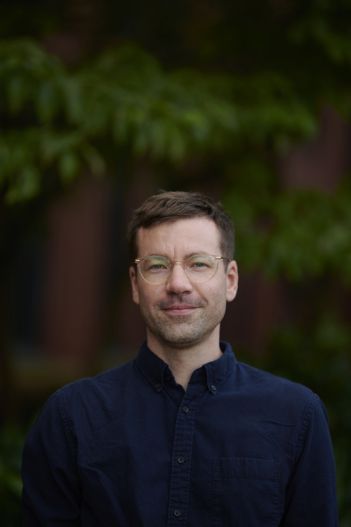
October 3, 2024
12:00 pm
Uris Hall, G08
There is an oft-told story about the concept of strategic stability and the function of arms control. The conventional story says that stability was a condition inherent to the logic of nuclear deterrence, and that arms control was a project to restrain the superpower strategic competition and promote stability. This lecture revises that story in two ways. First, it shows that stability was a metaphor introduced to security studies from distant fields having nothing to do with the study of strategy.
Second, it shows that stability was used to rationalize policies that had little to do with restraint. It turns out that key early arms control thinkers held close relationships with ballistic missile contractors. Top science advisors to the Eisenhower and Kennedy administrations served as corporate board members and paid consultants to these companies. The scientists’ dual roles as employees of weapons contractors and as policy advisors were vulnerable to a strong conflict of interest.
The talk analyzes the impact of that conflict on US arms control policy and explores the techniques of concealment scientists and policymakers used to guard privileged financial arrangements.
About the Speaker
Benjamin Wilson is an Associate Professor of the History of Science at Harvard University. In 2025, he will publish a book with Harvard University Press about US strategists and science advisors during the Cold War.
Host
Reppy Institute for Peace and Conflict Studies
Co-host
Department of Science & Technology Studies
Additional Information
Program
Einaudi Center for International Studies
Reppy Institute for Peace and Conflict Studies