
Einaudi Center for International Studies
Eami
September 22, 2024
8:00 pm
Willard Straight Hall Theatre
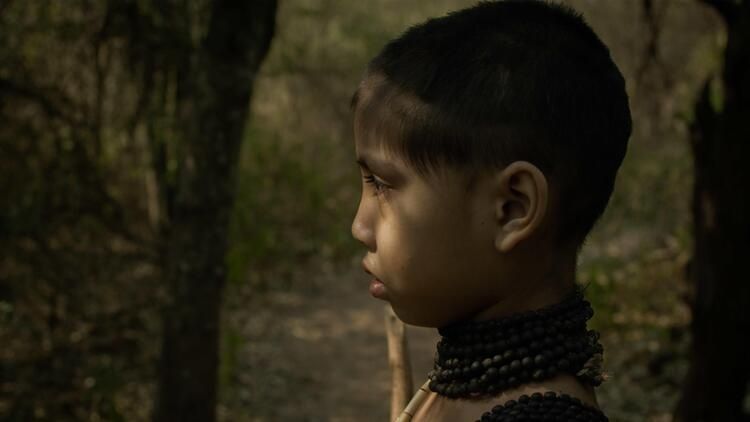
Set in Paraguayan Chaco, Eami a magic-realist film by Paraguayan director Paz Encina is the story of the Ayoreo Totobiegosode people, told from the perspective of a young girl.
Eami is a young girl and member of the Ayoreo Totobiegosode community whose homeland is invaded by settlers intent on brutally corralling the Ayoreo and driving them out of their ancestral lands. Embodying Asoj, the bird-god-woman, Eami falls into trance in which she walks slowly and stunned through her beloved forest as she prepares to leave it forever.
The trance grants Eami the ability of an omniscient and timeless look, which, from the mixture between documentary and fiction, becomes the narrator of the story. She hears the voices of her grandparents, while she is joined by one of her animal friends, the lizard, who guides her. He knows that Eami must leave the forest. She must leave everything behind, and leave, so she doesn't die there.
The film takes place in the Paraguayan Chaco, the territory with the highest deforestation rate in the world, where currently over 25,000 hectares of forest are cut down per month, or 841 hectares per day, or 35 hectares per hour. The forest barely lives on, and it does only due to a reservation that the Totobiegosode obtained by law. They call this place Chaid, which means "Ancestral place", or "the place where we have always been", and it is currently part of the Natural and Cultural Heritage of the Ayoreo Totobiegosode.
Eami is a story of the displaced. ItÕs the memory of a people that had to leave its original place, that eversmaller forest, to become ÒcooneÓ, an ayoreo word that means insensitive or insensate, and itÕs the word they use to define us.
Eami screens as part of Cine Con Cultura 2024. Courtesy of MPM Premium.
Additional Information
Program
Einaudi Center for International Studies
Buena Vista Social Club
September 21, 2024
5:30 pm
Willard Straight Hall Theatre
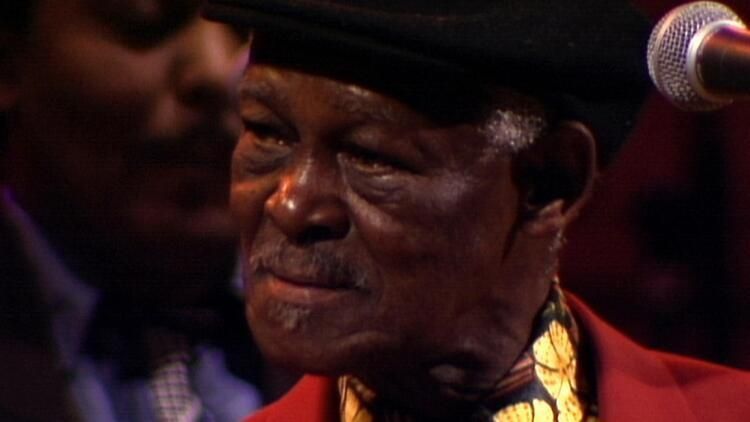
With a small film crew, Wim Wenders accompanied his old friend Ry Cooder, who had written the music for Paris, Texas and The End of Violence, on a trip to Havana, and immersed himself in the world of Cuban music. Over the course of several months, he observed and accompanied the musicians' first at home in Havana; then, weeks later, in April 1998, on their trip to Amsterdam for the first public performance of the band (who had never played together outside a studio); then, still later, in July 1998, to their triumphal concert at New York's Carnegie Hall.
The result is Buena Vista Social Club, a seductive documentary that follows the old heroes of the traditional Cuban son music on their path from being completely forgotten to becoming world famousÑwithin the period of just a few months. The music documentary became a cinematic sensation and an international success, earning an Academy Award nomination for best documentary film, the German Film Prize in Gold, Germany's Golden Camera, and the Grand Prize for Film in Brazil, as well as garnering numerous other awards.
Buena Vista Social Club screens as part of our "Party Like It's 1999" and "Cine con Cultura" series. Courtesy of Janus Films.
Additional Information
Program
Einaudi Center for International Studies
Fireside Chat Dean Andrew Karolyi and Former President of Colombia, Iván Duque

September 4, 2024
5:00 pm
Sage Hall, B01
Registration Link in person: https://cvent.me/dx9K9m
Registration Link online: https://cornell.zoom.us/s/93668620332
A fireside chat between Andrew Karolyi and Iván Duque about Duque's new book: "Our Future: A Green Manifesto for Latin America and the Caribbean", Planeta, 2024.
Andrew Karolyi, Charles Field Knight Dean of the Cornell SC Johnson College of BusinessIván Duque, Former President of Colombia (2018-2022)
A reception will be held after the fireside chat at Sage Hall atrium.
Please register to attend and keep posted about this event.
Registration Link in person: https://cvent.me/dx9K9m
Registration Link online: https://cornell.zoom.us/s/93668620332
Additional Information
Program
Einaudi Center for International Studies
Latin American and Caribbean Studies
Artist’s Talk: Hakim Karimzada

September 12, 2024
5:15 pm
Johnson Museum of Art, Robinson Lecture Hall
Master calligrapher and contemporary artist Hakim Karimzada will discuss his work, on view in the exhibition "Herat and Me," in conversation with Dr. Seema Golestaneh, associate professor in the Department of Near Eastern Studies.
Born in Afghanistan in 1972, Karimzada is known for bold and daring pieces that express his own experience of migration. For him, calligraphy celebrates his beloved hometown of Herat and through it he introduces the ancient culture and civilization of its people.
Dr. Golestaneh’s research is situated at the nexus of anthropology and religious studies. Her current project investigates the dreams and aspirations of Afghan intellectuals in the late 1980s and ’90s for forms of government and collectivity that did not come to pass.
Click here to join the webinar (pass code: 911500)
Support for this program was provided by the Stoikov Asian Art Lecture Fund.
Additional Information
Program
Einaudi Center for International Studies
South Asia Program
Language Resource Center Speaker Series - Tom Garza - Addressing Gen Z Learner Identities through Differentiated Instruction in World Languages
November 14, 2024
4:30 pm
Stimson Hall, G25
"I Belong Here: Addressing Gen Z Learner Identities through Differentiated Instruction in World Languages"
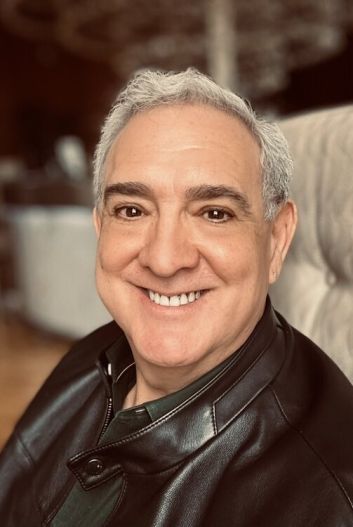
Tom Garza
UT Regent's and University Distinguished Teaching Associate Professor and Director of the Texas Language Center, UT Austin
Tomlinson et al. (2003) characterized differentiated instruction (DI) as "providing students with classroom instruction that suits to their varied readiness levels, interests, learning necessities, and preferred modes of learning." Over the past two decades, this basic definition has served to inform models of learner-centered instruction well and has been effectively applied to world languages (WL) learning, where learners in a single classroom might be at various levels of proficiency and/or have varying ways of approaching language study (visual, oral, aural, holistic, analytic, schematic, etc.). More recently, however, research on individual differences in WL classes – not only regarding proficiency levels – has focused on individual learner identities (Ortega et al., 2018; Smith & Chestnutt, 2021), allowing for greater participation of Gen Z learners in our courses and the creation of more accessible, equitable, inclusive learning environments and a sense of individual belongingness in our WL courses. For WLs, especially for LCTLs, such an approach to DI can help us maintain more robust enrollments in our courses by creating welcoming ecologies of teaching and learning that will attract a larger, more diverse Gen Z learner population to our courses.
This presentation will offer participants:
an overview of models for identifying learner differences in WL classrooms; consideration of individual identities of Gen Z learners (gender, race/ethnicity, socioeconomic status, educational access, family setting, sexual identity, neurodivergent status, ableness, etc.) in the WL classroom;examples of task variations to address learner differences;an adaptation of the flipped classroom to accommodate DI;DI models that use authentic materials to facilitate autonomous interaction with the WL; andexamples of task-based DI practices that engender participation and proficiency gains for Gen Z learners with diverse and varied identities.
Works Cited:
Ortega, D., Cabrera, J., & Benalcázar, J. (2018). Differentiating instruction in the language learning classroom: Theoretical considerations and practical applications. Journal of Language Teaching and Research, 9(6), 1220-–228.
Smith, A., & Chestnutt, C. (2021). Differentiation for equity. Journal of Higher Education Theory and Practice, 21(6), 232–241.
Tomlinson, C., Brighton, C., Hertberg, H., Callahan, C., Moon, T., Brimijoin, K., & Reynolds, T. (2003). Differentiating instruction in response to student readiness, interest, and learning profile in academically diverse classrooms: A review of the literature. Journal for the Education of the Gifted, 27(2) 119–145.
Bio: Thomas Jesús Garza is Associate Professor in the Department of Slavic and Eurasian Studies and Founding Director of the College of Liberal Arts Texas Language Center at the University of Texas at Austin. He teaches courses on Russian language, language pedagogy, Russian popular culture, and critical pedagogy in education. He received his doctorate from Harvard University in 1987. During his more than 30-year tenure at U Texas, he received numerous prizes for undergraduate and graduate teaching and was inducted into the University Academy of Distinguished Teachers in 2003, selected for a U Texas Regents' Outstanding Teaching Award in 2009, and chosen a "Texas Top Ten" instructor by the Texas Exes in 2018. He has published articles in The Modern Language Journal, Foreign Language Annuals, Slavic and East European Journal, Russian Language Journal, and Current History. He recently completed a book manuscript on filmic portraits of machismo in contemporary Russian and Mexican cultures and is currently working on an edited volume of essays with Rachel Stauffer on decolonizing Russian studies in the US.
This event will be held in person in G25 Stimson and will also be streamed live over Zoom (registration required). Join us at the LRC or on Zoom.
The event is free and open to the public.
Additional Information
Program
Einaudi Center for International Studies
Language Resource Center Speaker Series - Ilka Kostka - Generative AI in Language Education
October 21, 2024
4:00 pm
Stimson Hall, G25
"Generative AI in Language Education: Insights and Implications for Teacher Development"
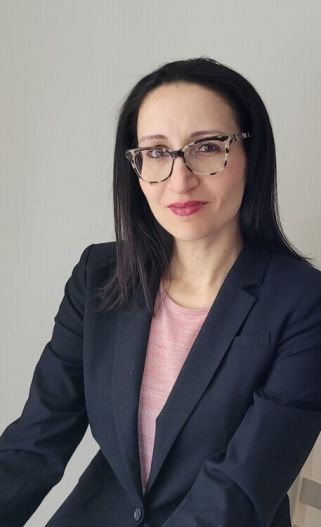
Ilka Kostka
Teaching Professor and Program Lead of the NU Immerse and Global Pathways Programs, Northeastern University
We are in a moment of immense educational transformation as generative artificial intelligence (GenAI) continues to develop and influence a range of industries and disciplines, including language education. While there is potential to leverage GenAI to innovate teaching and enhance student learning, there are new challenges that language teachers must collectively address as GenAI becomes more widely used. This presentation focuses on two main areas of GenAI in language teacher development. First, I describe findings from a research project conducted with English language teachers, focusing on their attitudes toward GenAI and their applications of GenAI to teaching. I then share examples of how I have integrated generative AI into my classes, focusing primarily on guidelines for GenAI use and ways of enhancing student-centered learning and critical thinking. Drawing from research and practice, I conclude with recommendations for professional learning and change management in an increasingly AI-focused world.
Bio: Dr. Ilka Kostka is Teaching Professor and Program Lead of the NU Immerse and Global Pathways Programs at Northeastern University in Boston, where she teaches and oversees academic English language courses for international students. Her scholarly interests focus on applications of generative artificial intelligence to English language teaching, particularly in terms of faculty development. With Dr. Rachel Toncelli, she is the co-recipient of TESOL International Association’s 2024 Ron Chang Lee Award for Excellence in Classroom Technology; she was also a semi-finalist for Magic School AI's Educator of the Year award. Dr. Kostka serves on the Board of Directors of Literacy Volunteers of Greater Worcester in Massachusetts and is a member of the first cohort of the Professors Without Borders Women in Higher Education Fellowship Programme.
This event will be held in person in G25 Stimson and will also be streamed live over Zoom (registration required). Join us at the LRC or on Zoom.
The event is free and open to the public.
Additional Information
Program
Einaudi Center for International Studies
Language Resource Center Speaker Series - Oya Topçuoğlu Judd - Collaborative Curriculum Design in LCTLs
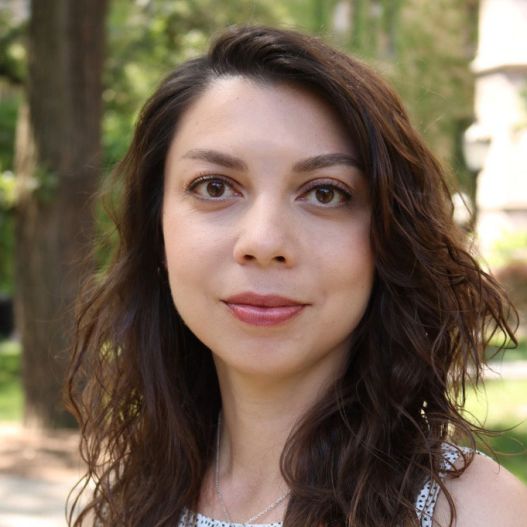
September 19, 2024
5:00 pm
Goldwin Smith Hall, G64
"Collaborative Curriculum Design in LCTLs: Student-Centered Multimodal Approaches Using Authentic Media"
Oya Topçuoğlu Judd
Associate Professor of Instruction in Turkish, Northwestern University
As LCTL instructors, we frequently face the challenge of sourcing high-quality, engaging teaching materials that transcend the limitations of traditional textbooks and rely on technology-mediated, multimodal language learning practices and methodology. This is one aspect of language instruction in LCTLs, and especially in single-instructor LCTL programs, where collaboration can be vital. Working together with colleagues, leveraging shared resources, and pooling expertise can significantly enhance the quality and impact of language instruction, both for students and instructors.
At Northwestern University’s Turkish Language Program, we have addressed this issue by collaborating across languages and institutions to develop innovative courses that integrate authentic media and cultural content to enhance language learning and cultural competence in our students. In this talk, I will discuss these collaborative efforts and present two courses that resulted from these collaborations: our first-year course Elementary Turkish through TV Shows and Istanbul: Gateway Between the East and the West, the capstone course of our two-year program.
Our elementary-level course utilizes Turkish TV shows as a core component of the curriculum to promote active engagement and cultural competence. Turkish TV shows, which reach 750 million people across 152 countries, offer enormous potential as authentic teaching materials, providing real-world language exposure and connecting students with engaging, culturally relevant content. In this talk, I will discuss the process of selecting and incorporating TV shows into our existing curriculum, the technological challenges we faced, and share examples of our teaching materials. My goal is to provide concrete tools and strategies for collaborative curriculum design within and across languages, and share materials that can be easily adapted to different skill levels and contexts.
Our capstone course, Istanbul: Gateway Between the East and West, is designed as a content-based, proficiency-oriented course aimed at Intermediate Mid-level learners. This thematic course offers a deep, multifaceted exploration of Istanbul, covering a wide array of topics, from the history and monuments of the city to its representation in modern literature and the challenges of everyday life. By focusing on these diverse subjects, the course encourages students to engage with broader cultural, political, and social issues within the context of the city. I will outline our efforts to create this innovative course content through reverse design, source authentic materials, design proficiency-oriented tasks, and adopt online and interactive tools to enhance student participation and learning.
Bio: Oya Topçuoğlu Judd is an Associate Professor of Instruction in the Middle East and North African Languages Program at Northwestern University. Dr. Topçuoğlu Judd teaches on a range of subjects, including modern Turkish language and culture, and the history and archaeology of the Middle East. She holds a Ph.D. in the Art and Archaeology of the Ancient Near East from the Department of Near Eastern Languages and Civilizations at the University of Chicago, and a B.A. in Ottoman History from Boğaziçi University in Istanbul. Dr. Topçuoğlu Judd is an archaeologist by training, who specializes in the art, archaeology, and history of ancient Iraq, Syria, and Turkey. Her research addresses issues of social identity and cultural exchange, and the effects of political change and ideology on the material record of the ancient Middle East. In addition to her work on iconography and symbolism, Dr. Topçuoğlu Judd studies the looting and illegal trafficking of antiquities from Iraq and Syria, the political uses of the ancient past, and its role in the formation of national identities in the modern Middle East. She is particularly interested in the history of archaeology and museums, and cultural heritage preservation in her native Turkey.
This event will be held in person in the Kaufmann Auditorium (G64 Goldwin Smith) and will also be streamed live over Zoom (registration required).
Co-sponsored by the Southeast Asia Program and the Southeast Asian Language Council (SEALC) conference.
The event is free and open to the public.
Additional Information
Program
Einaudi Center for International Studies
Southeast Asia Program
Peace through Law?

August 29, 2024
4:30 pm
White Hall, 104
International Law, Norms, and the Decline in Interstate War
This event focuses on a discussion paper, “International Law, Norms, and the Decline in Interstate War,” by Kathryn Sikkink and Averell Schmidt. The authors will not present the paper formally, and participants are expected to read the paper in advance. Please e-mail pacs@cornell.edu for the paper.
The authors argue that international laws governing the initiation of war – jus ad bellum – reduce the likelihood of interstate war under two conditions: when treaties are interpreted as prohibiting interstate war and when the application of treaties is not counteracted by other international norms. The development of international law in the interwar period shows that the letter of treaties is not always closely related to states’ interpretation of their normative commitments. This disjuncture is key to understanding the impact of international law on interstate war initiation.
Sikkink and Schmidt demonstrate statistically that ratification of treaties understood to reflect the norm prohibiting interstate war is associated with a decrease in states’ propensity to initiate wars deemed unlawful by treaties and illegitimate by international norms. Indeed, only three of the 64 illegal and illegitimate wars occurring between 1929 and 2010 were initiated by belligerents that had each ratified more than one anti-war treaty. They couple this statistical analysis with case studies from Latin America, demonstrating the role of laws and norms in shaping the decision to go to war.
About the Authors
Kathryn Sikkink is the Ryan Family Professor of Human Rights Policy at the Harvard Kennedy School. She works on international norms and institutions, transnational advocacy networks, the impact of human rights law and policies, transitional justice, and the laws of war.
Her publications
International, Norms, Moral Psychology, and Neuroscience (with Richard Price); The Hidden Face of Rights: Toward a Politics of Responsibilies; Evidence for Hope: Making Human Rights Work in the 21st Century; The Justice Cascade: How Human Rights Prosecutions are Changing World Politics (awarded the Robert F. Kennedy Center Book Award and the WOLA/Duke University Award); Mixed Signals: U.S. Human Rights Policy and Latin America; Activists Beyond Borders: Advocacy Networks in International Politics (co-authored with Margaret Keck and awarded the Grawemeyer Award for Ideas for Improving World Order and the ISA Chadwick Alger Award for Best Book in the area of International Organizations); and The Persistent Power of Human Rights: From Commitment to Compliance (co-edited with Thomas Risse and Stephen Ropp).
Averell Schmidt is a Postdoctoral Research Associate in International and Public Affairs at Brown University’s Watson Institute for International and Public Affairs. He received his Ph.D. in Public Policy from Harvard University in May 2024. He was previously a Transitional Justice Fellow at the Carr Center for Human Rights Policy, a Research Fellow in the International Security Program at the Belfer Center for Science and International Affairs, and a Hans J. Morgenthau Fellow at the Notre Dame International Security Center.
Host
Reppy Institute for Peace and Conflict Studies
Additional Information
Program
Einaudi Center for International Studies
Reppy Institute for Peace and Conflict Studies
Possible Landscapes -- Debut Screening

September 25, 2024
7:00 pm
Willard Straight Theatre, 104 Willard Straight Hall
POSSIBLE LANDSCAPES
Directed by Kannan Arunasalam
Produced and conceptualized by Tao DuFour and Natalie Melas
"For no one had yet written of this landscape
that it was possible.”
Derek Walcott
A collaboration between a documentary filmmaker, Kanan Arunasalam and two professors, Tao DuFour (Architecture) a spatial theorist and Natalie Melas (Comparative Literature) a postcolonial comparatist and scholar of Caribbean thought, Possible Landscapes is the outcome of the team research project, “Possible Landscapes: Documenting Environmental Experience in Trinidad and Tobago,” funded through the Cornell Migrations Initiative team research grant for the Mellon Just Futures Initiative. The aim was to develop methods of field research and representation in documentary film that foreground intergenerational lived experience of landscapes and environments in the Caribbean islands of Trinidad and Tobago, and to query the formation of environmental and climate imaginaries, with a view to getting at larger historical questions—of migration, plantation societies, extractivism, race, and the legacies of colonialism—that inform everyday practices in ways that are difficult to identify and to articulate, because they are concretely lived.
Possible Landscapes joins seven people in seven different regions of the islands in the course of their daily lives: Kevin, a fisherman on the east coast suffering the recent loss of one of his crew members at sea; four generations of the Josephs family in the steep hillsides of the northern range; Captain ‘Spaceman’ Philips and his glass-bottomed boat in Tobago from which he has witnessed the decline of the coral reefs; Crystal, a trade unionist active in supporting workers who lost their jobs when a major oil refinery was closed; Romulas, known as the “last sugar cane farmer” in the central plains and his Venezuelan workers; Stephanie a nurse who worked in the oil fields in the south starting just after World War II; Tony, originally from Jamaica, a climate change analyst, agriculturalist and rabbit farmer in St Joseph.
Co-sponsored with The College of Arts and Sciences Dean’s Office, The Society for the Humanities, Africana Studies and Research Center, Department of Architecture, Department of Comparative Literature, Department of Literatures in English, Environment and Sustainability, Latin American and Caribbean Studies, and Department of Romance Studies
Possible Landscapes is supported by a grant from Cornell University’s Migrations: A Global Grand Challenge and the Mellon Foundation’s Just Futures Initiative.
All events are free and open to the public.
If you need accommodations to participate, please contact icm@cornell.edu as soon as possible.
Additional Information
Program
Latin American and Caribbean Studies
Migrations Program
Einaudi Center for International Studies
Invisible Weapons: When Uncontentious Politics Undermine Democracy

October 17, 2024
12:00 pm
Uris Hall, G08
In a post-January 6th US, a reasonable concern of fascism is manifesting in one particular way: silencing dissent and pluralism. This talk is about identifying the ways that silencing contentious politics benefits far right extremism and harms far left pro-democratic work in this complex political environment.
Dr. Marcus Board argues that we must protect grassroots communities and advance the interests of democracy - even when they appear contradictory to the interests of the country. Using various data sources, including original surveys, in-depth interviews, and case studies, he makes the case for resistance politics as a pro-democratic staple and distinct from fascist violence.
About the Speaker
Dr. Marcus Board is an Associate Professor of Political Science at Howard University. He is the author of Invisible Weapons: Infiltrating Resistance and Defeating Movements (Oxford 2022), winner of the W.E.B. DuBois Best Book Award (NCOBPS), Best Book on Race, Ethnicity and Justice (APSA), and the Most Outstanding Book Award (Association for Ethnic Studies). Dr. Board is the Black Politics Committee Chair, Faculty Advisor for the Political Science Society, and a Scholar Coach with the Faculty Summer Academy Program - all at Howard University.
Host
Reppy Institute for Peace and Conflict Studies
Additional Information
Program
Einaudi Center for International Studies
Reppy Institute for Peace and Conflict Studies