
Einaudi Center for International Studies
A “Nuclear Umbrella” for Ukraine?

November 7, 2024
12:00 pm
Uris Hall, G08
Prospects for European Security after the War
Whatever the outcome of the Russian war against Ukraine, in its wake Ukraine will need to choose a security policy to defend its sovereignty from future threats. Its choice holds implications for broader European security. Some observers advocate Ukraine becoming a member in the North Atlantic Treaty Organization (NATO), thereby gaining protection from the U.S. “nuclear umbrella.” Others doubt the effectiveness of “extended nuclear deterrence”—the threat of U.S. nuclear retaliation for attacks, including those carried out with conventional armed forces, on an ally's territory. But nuclear deterrence was never put to the test in Cold War Europe, and today extended nuclear deterrence is an unreliable and risky approach to Russian aggression.
An examination of the role of nuclear deterrence during the 1961 Berlin Crisis demonstrates that Soviet military strategy against U.S. nuclear weapons posed the risk of escalation. In vulnerable NATO territories, such as the Estonian city of Narva, such a risk still exists. A Cold War–era alternative to nuclear deterrence offers the possibility of a non-nuclear defense for Ukraine. Proposals such as the “spider in the web” strategy draw on concepts of the security dilemma and non-offensive, confidence-building defense to provide for Ukrainian security in a Europe threatened by Russian expansion, without relying on the threat of nuclear war.
About the Speaker
Matthew Evangelista is President White Professor of History and Political Science Emeritus in Cornell’s Department of Government. His most recent book, recently published in paperback and available to download for free through Open Access, is Allied Air Attacks and Civilian Harm in Italy, 1940-1945: Bombing among Friends (Routledge, 2023).
Host:
Reppy Institute for Peace and Conflict Studies
Co-sponsor:
Institute for European Studies
Additional Information
Program
Einaudi Center for International Studies
Reppy Institute for Peace and Conflict Studies
Institute for European Studies
Global Blackness at Cornell
September 18, 2024
5:00 pm
Africana Studies and Research Center
The Global Blackness initiative aims to chart a possible future for a network of students, faculty, and staff that relationally engage the topic of Global Blackness.
Building on the momentum of Cornell’s 2023 Global Blackness Town Hall, this year, the Global Blackness initiative is organizing events guided by the question of how we create a community that embraces contradictions as well as solidarity to meet the initial interests and some of the demands that sprang from that town hall meeting.
Film Screening
10:00 a.m.-12:30 p.m.; Tuesday, September 17; Africana Studies & Research Center, Room 120
Two short films will be screened. Each short will be followed by a discussion.
Attend a screening of award-winning actor Sheldon Shepherd's most celebrated cinematic work.
Sheldon Shepherd is best known for his role in Storm Saulter's Better Mus' Come, for which he won Best Actor at the American Black Film Festival in 2012. More recently, he also starred in Idris Elba's directorial debut, Yardie, and the 2024 Bob Marley biopic Bob Marley: One Love directed by Reinaldo Marcus Green. With upwards of 20 years of experience in the creative and cultural arts field, he has been a celebrated performer from a young age.
Invocation and Dramatic Performance
10:30 a.m.-11:30 a.m.; Wednesday, September 18; Schwartz Center for Performing Arts, Black Box Theatre
Chief Gaama Gloria, "MaMa G", will lead the Cornell community in an invocation for the Global Blackness initiative followed by a dramatic performance with Sheldon Shephard. MaMa G holds a preeminent role as an African diaspora spiritual worker, community builder, and advocate for restoration of family and establishment of indigenous ways of learning in higher education.
Gathering: Global Blackness at Cornell: Main Event with Chief Gaama Gloria and Mr. Sheldon Shepherd
5:00 p.m.-7:00 p.m.; Wednesday, September 18; Africana Studies and Research Center, Room 120
followed by After Party! And Dinner Reception
Hosted by the Einaudi Center; music by DJ Ishion Hutchison
About the Speakers
Sheldon R. Shepherd, is an award-winning actor, author, and artiste, with upwards of 20 years of experience in the cultural arts field. He is a founding member of The No-Maddz, a Jamaican art collective and roots reggae dub poetry band. In 2005, he became Jamaica's Ambassador to China and in 2006 won the coveted Prime Minister Youth Award for Excellence in Arts and Culture. In 2012, Shepherd won the Best Actor Award at the American Black Film Festival for his role in "Better Mus' Come" directed by Storm Saulter. Sheldon also starred in Nabil Elderkin’s short film "Capture Land," which was part of The Power of the Word Series in collaboration with Montblanc, the Tribeca Film Institute, and the Nelson Mandela Foundation.
Gaama Gloria Simms /Tekina Nuna is an African diaspora spiritual worker and community builder rooted firmly in Maroon and Rastafari traditions. Gloria is working toward the establishment of a Women’s Museum as well as a Traditional University that aligns with indigenous ways of learning via the ethos, “What life experience has taught onto me, I will teach those who want to learn.”
She received the title of Gaama (Paramount Queen) from the Okanisi Maroons of Suriname, the title of Tekina (teacher) and Council member of Yukayeke Yamaye Guani (Jamaican Hummingbird Taino People) and is the founder of the Maroon Indigenous Womens Circle. As Gaama, Gloria continues to pursue her ultimate vision. She sees the restoration of the family as a must.
Additional Information
Program
Einaudi Center for International Studies
How Food Prices Have Changed Over the Past Four Years
Chris Barrett, IAD/SEAP
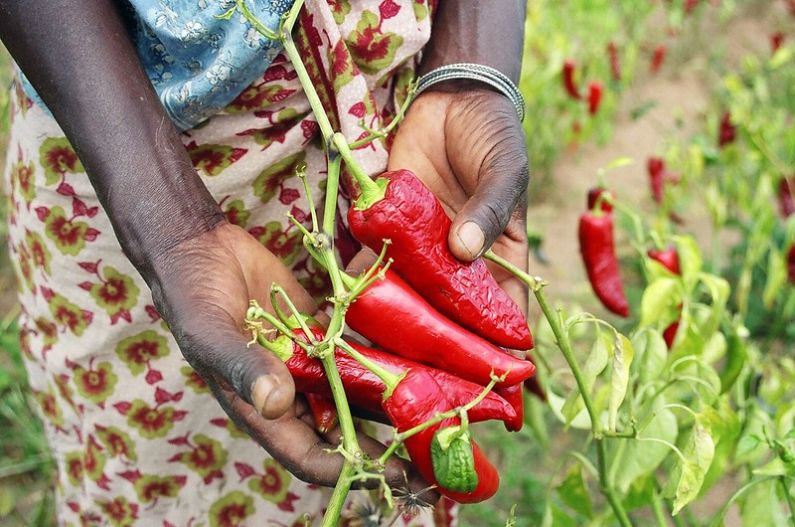
Christopher Barrett, professor of agricultural and development economics, says “Housing costs in particular are up sharply since the start of the pandemic. That crimps people’s ability to buy the food they need.”
Additional Information
As Election Nears, Four Freedoms Fund Seeks $5 Million to Support Immigrants

Stephen Yale-Loehr, Migrations
Stephen Yale-Loehr, professor of immigration law, discusses the work being done by Path2Papers.
Additional Information
How a Young Generation in Bangladesh Forced out the Leader Who Ruled for Much of Their Lives
![Bangladeshi youth participate in a townterview with U.S. Secretary of State Hillary Rodham Clinton in Dhaka, Bangladesh, on May 6, 2012. [State Department photo/ Public Domain]](/sites/default/files/styles/extra_large/public/2024-08/7006773452_69d612b7cd_c.jpg?itok=wGKIY4yI)
Sabrina Karim, PACS
Sabrina Karim, associate professor of government, comments on the resignation of Bangladesh's former prime minister.
Additional Information
Bangladesh Now: Beyond the Headlines

August 29, 2024
12:00 pm
From the beginning of the student-led quota reform movement on June 6th across the creation of an interim government upon the resignation of Prime Minister Sheikh Hasina on August 5th, a lot has been happening in Bangladesh recently. This virtual panel brings together scholars in New York and activists in Bangladesh to help add personal texture and academic analysis to the headlines and provide an opportunity for questions and discussion. What has happened? What does this mean for Bangladesh and the region? What might come next?
Participants in this virtual roundtable organized by the Cornell-Syracuse South Asia Consortium include:
Farhana Sultana, Professor of Geography, Syracuse UniversityDina M. Siddiqi, Clinical Professor, Global Liberal Studies, New York UniversityMuhib Rahman, Postdoctoral Associate in Government, Cornell UniversityKazi Farzana Shoily, PhD Candidate in History, Syracuse UniversityTasnuva Helal Bidita, Student and Human Rights & Climate Activist, BangladeshAmmar Bin Asad, Student, Photographer, and Activist, Jagannath University, BangladeshModerated by Mona Bhan, Ford-Maxwell Professor of South Asian Studies & Director, South Asia Center, Syracuse University
Photo by Rayhan Ahmed
Additional Information
Program
Einaudi Center for International Studies
South Asia Program
Information Session: Graduate Opportunities

November 4, 2024
5:00 pm
The Mario Einaudi Center for International Studies funds international graduate student research!
Research travel grants provide international travel support for graduate and professional students to conduct short-term research or fieldwork outside the United States.
Global PhD Research Awards fund fieldwork for 9 to 12 months of dissertation research.
Register for the virtual session.
Can’t attend? Contact einaudi_center@einaudi.cornell.edu.
***
The Mario Einaudi Center for International Studies hosts info sessions for graduate and for undergraduate students to learn more about funding opportunities, international travel, research, and internships. View the full calendar of fall semester sessions.
Additional Information
Program
Einaudi Center for International Studies
Reppy Institute for Peace and Conflict Studies
East Asia Program
Southeast Asia Program
Latin American and Caribbean Studies
Institute for African Development
Institute for European Studies
South Asia Program
Migrations Program
Social Critique in Javanese Wayang: Semar’s Utopia as Portrayed by Ki Anom Soeroto, Ki Mujoko Joko Raharjo and Ki Purbo Asmoro

December 5, 2024
12:15 pm
Kahin Center
atty Lecture Series
Join us for a talk by Dr. Kathryn "Kitsie" Emerson from EKALAYA Arts Cente, who will discuss the social critique in Javanese wayang. Dr. Emerson obtained PhD from the Leiden Institute of Asian Studies at Leiden University. Currently, Dr. Emerson serves as the Director of Ekalaya Performing Arts Center in Central Java, Indonesia.
This Gatty Lecture will take place at the The Kahin Center, 640 Stewart Ave. Lunch will be served. For questions, contact seapgatty@cornell.edu.
About the Talk
Many foreign observers, scholars, and students of Javanese wayang kulit know that an important aspect of this complex performance art is social critique and commentary. But how exactly does the dhalang deliver such criticism? In this lecture, I will introduce participants to a wayang story (lakon) written by the legendary Ki Anom Soeroto in the 1970s, meant to be relevant to the times and to support a certain agenda, entitled Semar Mbangun Kahyangan (Semar Builds His Own Heavens). To this day, this lakon is one of the most popular stories performed in Java, but it turns out to also be flexible. Any dhalang can easily insert his/her own vision of utopia into the fabric of the tale. We will look at how the late Ki Mujoko Joko Raharjo adapted the lakon in the late 1980s, embedding a very different idealism and social commentary to Ki Anom Soeroto’s. We will also examine how Ki Purbo Asmoro recently (July 2024) took on the challenge, of reworking Semar Mbangun Kahyangan to reflect his own hopes and dreams for the Javanese people. By examining the nature of social critique in these three examples, participants will gain an understanding of how the role of the dhalang as a revered advisor works in current-day wayang performance practice.
About the Speaker
Kathryn “Kitsie” Emerson, an alumnus of Cornell’s Music Department (1983), is the director of Ekalaya, a performance-study institute in Java, Indonesia. She has been immersed in the study of gamelan and wayang performance practice for over 30 years in Java. In 2005 she pioneered—and continues to be the sole practitioner of—a unique method for translating wayang kulit performances for foreign audiences. Her technique allows for simultaneous interpretation while the performance is unfolding, respecting the need for spontaneity on the part of the dhalang. She has worked with over 60 different dhalang in this capacity, and across four continents—most recently on a six-week tour to Central Europe with the renowned Ki Purbo Asmoro. Her recent book: Innovation, Style and Spectacle in Wayang: Purbo Asmoro’s Evolution of an Indonesian Performing Art (NUS and University of Chicago Press, 2022), examines innovations in the dramatic structure of Solonese wayang from 1960 to 2020 and won the 2024 UNIMA USA Nancy Staub Award. Originally from Kalamazoo, Michigan, she is married to master gamelan musician Wakidi Dwidjomartono of Solo, Central Java.
Additional Information
Program
Einaudi Center for International Studies
Southeast Asia Program
Implosives in Khmer: Acoustic Analysis and Phonetic Implications
November 21, 2024
12:15 pm
Kahin Center
Gatty Lecture Series
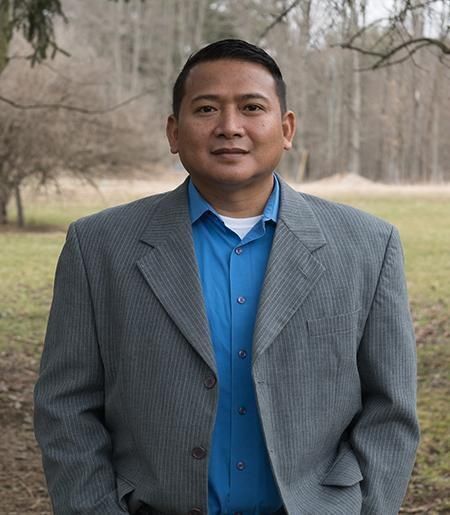
Join us for a talk by Nielson Sophann Hul, PhD Candidate in the Department of Linguistics at Cornell University, who will discuss the implosives in Khmer.
This Gatty Lecture will take place at the The Kahin Center, 640 Stewart Ave. Lunch will be served. For questions, contact seapgatty@cornell.edu.
About the Talk
Implosives are a class of consonants characterized by their unique articulation and acoustic properties. Despite their linguistic significance, their detailed analysis in Khmer, a language with a notable presence of these sounds, remains underexplored. This study aims to fill this gap by providing a comprehensive analysis of implosive consonants in Khmer. The primary objective of this research is to analyze the acoustic properties of implosives in Khmer and to understand how these properties compare to those of other consonant types within the language. We also aim to explore how implosives interact with other phonetic variables. Acoustic data were collected from native Khmer speakers in Phnom Penh, Cambodia; Long Beach, California; and Seattle, Washington focusing on implosive consonants in various phonetic contexts. Using advanced acoustic analysis techniques, including spectral and temporal measurements, I examined the characteristics of implosives. The analysis revealed distinct acoustic signatures for Khmer implosives, including specific patterns in spectral frequency and temporal duration. Significant variations were observed based on phonetic context, with differences in implosive characteristics across word positions and speaking rates. These findings highlight the complexity of implosive articulation in Standard Khmer and its interaction with other phonetic features as well as that of the American diasporic varieties of Khmer. This research provides new insights into the acoustic properties of implosives in Khmer, contributing to a deeper understanding of their role in the language's phonetic inventory. The findings have implications for both theoretical phonetics and practical applications, such as speech synthesis and language teaching.
About the Speaker
Nielson Sophann Hul was born in Cambodia during the Khmer Rouge period and escaped to the United States of America when he was very young. After High School, he joined the U.S. Army and deployed during OIF/OEF as a Combat Medic. During his breaks in service, Nielson graduated from UCLA with a BA in English Literature and the University of Hawai’i at Mānoa with an MA in Linguistics. He is currently working toward his PhD in Linguistics at Cornell and is interested in the acoustic phonetics of laryngeal sounds in Khmer.
Additional Information
Program
Einaudi Center for International Studies
Southeast Asia Program
Strangers in the Family: Gender, Patriliny, and the Chinese in Colonial Indonesia
November 14, 2024
12:15 pm
Kahin Center
Gatty Lecture Series
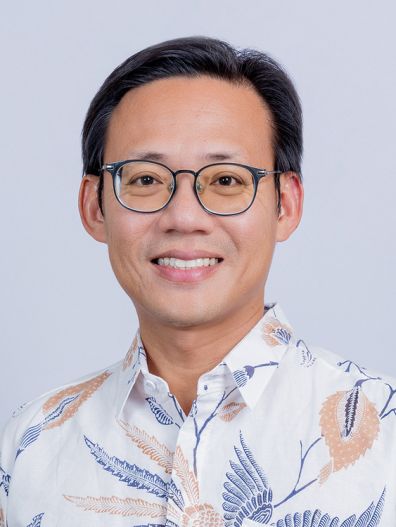
Join us for a talk by Seng Guo-Quan, Assistant Professor of History National University of Singapore, who will discuss the gendered history of the Chinese settler community in Indonesia.
This Gatty Lecture will take place at the The Kahin Center, 640 Stewart Ave. This talk is co-sponsored by the Department of History. Lunch will be served. For questions, contact seapgatty@cornell.edu.
About the Talk
In Strangers in the Family, Guo-Quan Seng provides a gendered history of settler Chinese community formation in Indonesia during the Dutch colonial period (1816–1942). At the heart of this story lies the creolization of patrilineal Confucian marital and familial norms to the colonial legal, moral, and sexual conditions of urban Java. Departing from male-centered narratives of Overseas Chinese communities, Strangers in the Family tells the history of community- formation from the perspective of women who were subordinated to, and alienated from full Chinese selfhood. From native concubines and mothers, creole Chinese daughters, and wives and matriarchs, to the first generation of colonial-educated feminists, Seng showcases women’s moral agency as they negotiated, manipulated, and debated men in positions of authority over their rights in marriage formation and dissolution. In dialogue with critical studies of colonial Eurasian intimacies, this book explores Asian-centered inter-ethnic patterns of intimate encounters. It shows how contestations over women’s place in marriage and in society were formative of Chinese racial identity in colonial Indonesia.
About the Speaker
Seng Guo-Quan is a historian of Chinese societies in Southeast Asia, with a special interest in race, gender, and sexuality structures in the region, and how they have been shaped through the forces of imperialism, nationalism, and global capitalism. Strangers in the Family: Gender, Patriliny, and the Chinese in Colonial Indonesia (Cornell University Press, November 2023) is his first single-authored monograph. He has also published in Comparative Studies in Society and History, Indonesia, and the Journal of Chinese Overseas. This is his first single-authored monograph. He is now working on a second book tentatively titled, “A Diaspora of Shopkeepers: Empire, Race and Chinese Commercial Expansion in Southeast Asia (1870-1970s)”.
Additional Information
Program
Einaudi Center for International Studies
Southeast Asia Program